Sanitation Standards for Delivery-Only Food Production Facilities
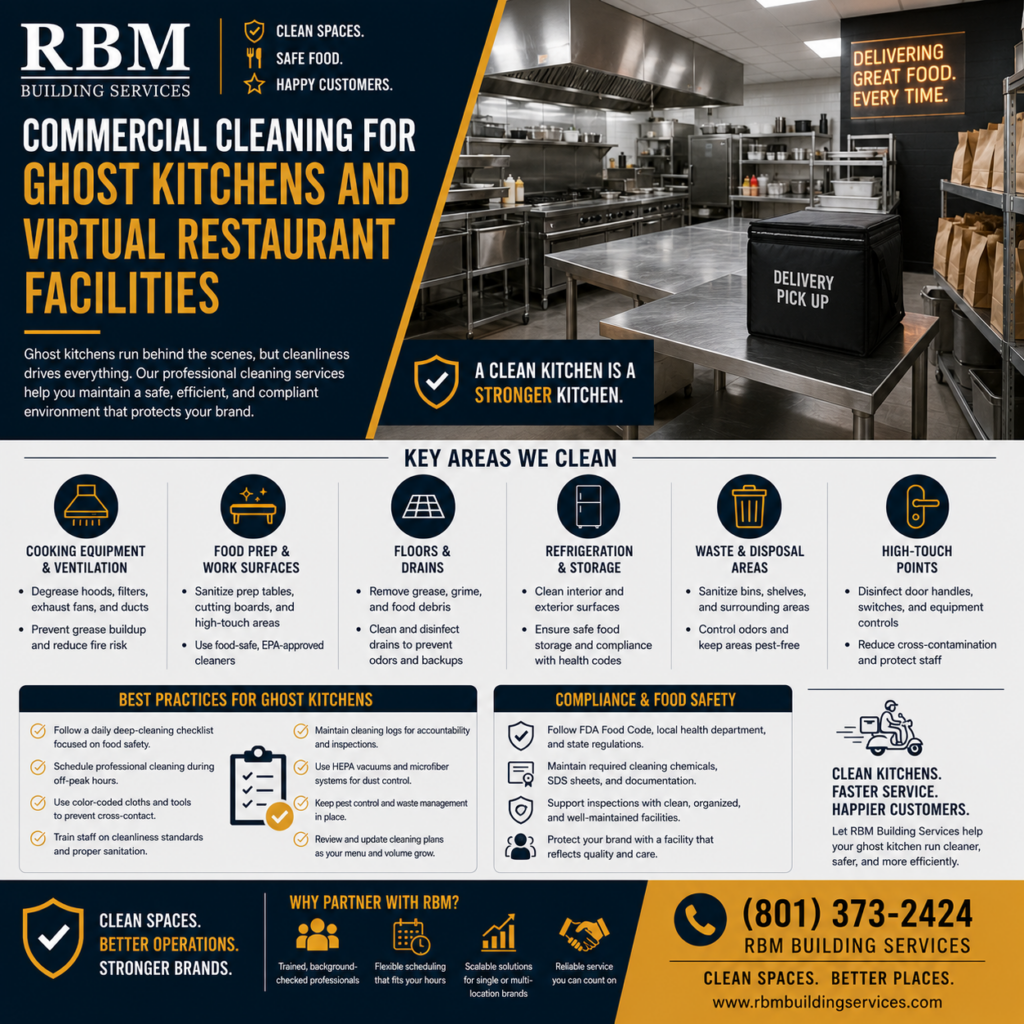
Ghost kitchens also known as virtual kitchens or delivery-only restaurants have transformed the food service industry. These facilities operate exclusively for delivery with no dine-in seating. While the absence of a dining room simplifies some aspects, ghost kitchens present unique cleaning challenges due to intense production focus and shared-use configurations. Professional commercial cleaning services for ghost kitchens must address delivery-only food production needs.

The Rise of Ghost Kitchens and Virtual Restaurant Facilities
Ghost kitchens come in several configurations each with distinct cleaning requirements. Single-brand ghost kitchens operate like traditional restaurant kitchens without a dining room. Multi-brand kitchens prepare food for multiple virtual brands from one space using shared equipment. Commissary kitchens lease space to multiple operators sharing common infrastructure. Each model requires tailored janitorial services accounting for equipment sharing and differing food handling practices.
Understanding Ghost Kitchen Configurations
Food preparation surfaces require frequent and thorough sanitation. With multiple operators using the same kitchen on staggered schedules, surfaces must be cleaned between each use to prevent allergen cross-contact. Stainless steel prep tables, cooktops, and shelving should be cleaned with food-grade sanitizers meeting health department requirements. Walls and ceilings accumulate grease faster than traditional restaurants due to high cooking volumes.
Kitchen Surface Sanitation Protocols
Ghost kitchens producing fried or grilled items require rigorous grease trap maintenance. Shared grease traps in multi-tenant facilities need more frequent cleaning. Pressure washing of grease trap areas and dumpster enclosures helps maintain sanitary conditions. Kitchen exhaust systems must be cleaned according to NFPA 96 standards. Exhaust hoods and ducts should be inspected monthly.
Grease Trap and Exhaust System Maintenance
Ghost kitchens generate significant waste from food packaging and ingredient deliveries. An efficient waste management program includes regular trash removal, recycling coordination, and composting if available. Waste storage areas should be cleaned daily. Dumpster enclosures require regular professional pressure washing to remove grease and food residue.
Waste Management for Delivery-Only Operations
Ghost kitchens present heightened pest risks due to concentrated food preparation activities and multiple operators. A comprehensive integrated pest management program is essential. Cleaning protocols should support pest prevention by eliminating food debris and maintaining dry conditions. Commercial cleaning partners experienced with food service understand the relationship between cleaning and pest prevention.
Pest Prevention in Shared Kitchen Environments
Regular inspections of kitchen and storage areas help identify pest issues early. Cleaning crews should be trained to recognize signs of pest activity and report findings immediately. Coordination between cleaning staff, pest control professionals, and kitchen operators creates effective pest management.
Contact RBM Building Services
Choosing a Cleaning Partner for Ghost Kitchen Facilities
RBM Building Services, serving commercial food facilities across Utah, Arizona, Nevada, and Texas since 1974, provides specialized cleaning for ghost kitchen operations. From daily janitorial services to comprehensive building maintenance, we deliver cleaning solutions supporting food safety. Contact us at 800.403.3564 or visit our contact page.
About RBM Building Services: Since 1974. Services include full-service janitorial, building maintenance, carpet cleaning, window washing, pressure washing, floor care. Call 800.403.3564.