Regulatory Compliance for Food Manufacturing Facilities
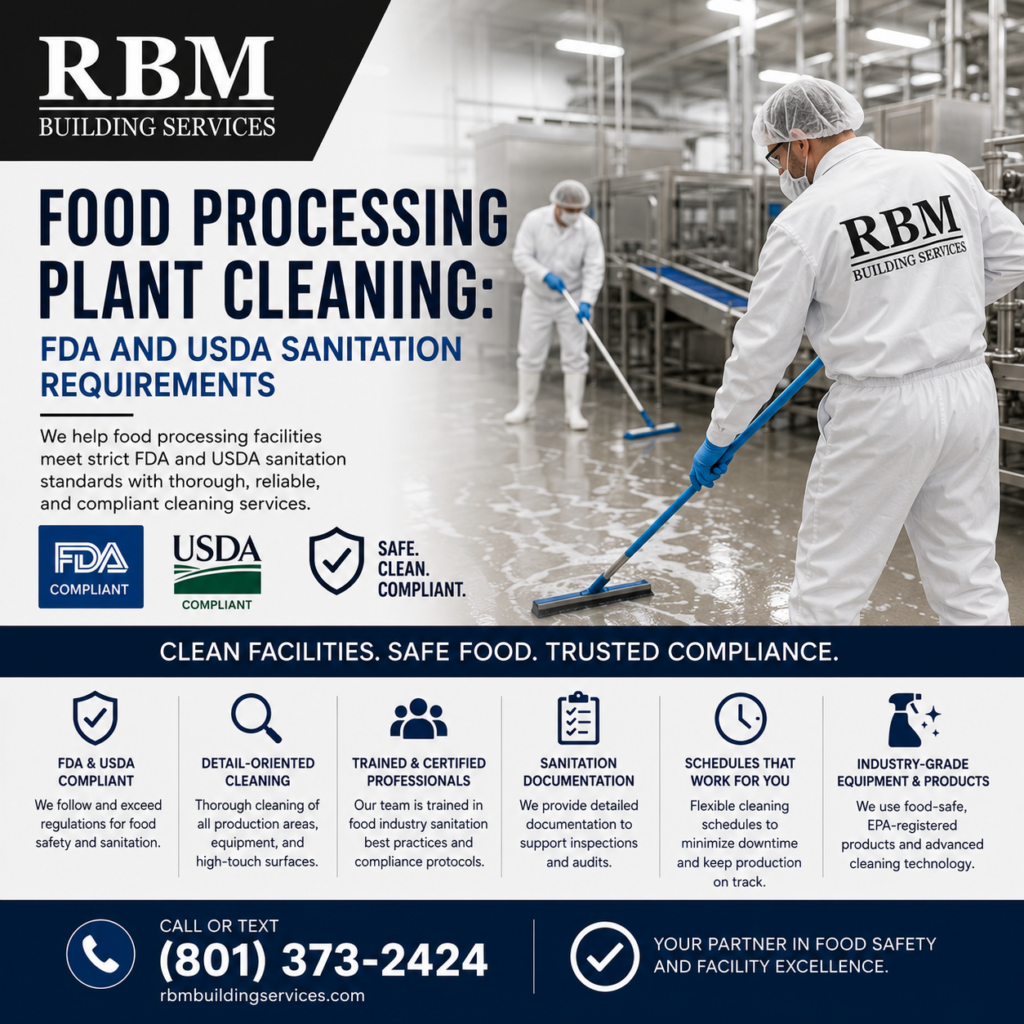
Food processing plants are subject to strict federal regulations that govern every aspect of facility sanitation. FDA and USDA inspectors evaluate cleaning procedures, chemical usage, and hygiene practices during routine audits. A professional commercial cleaning company with food-grade expertise helps processing facilities maintain compliance and pass inspections.
Food processing facilities operate under constant regulatory scrutiny because the products they produce are consumed by the public. Every cleaning procedure, chemical used, and staff training record can become part of an inspection. A knowledgeable cleaning partner helps facilities stay ahead of requirements and avoid costly compliance failures.

Why Food Processing Plants Need Specialized Sanitation
Food processing sanitation protects public health and the business itself. Contamination incidents can lead to recalls, fines, and permanent brand damage. Full-service janitorial programs for food plants follow validated procedures that meet current Good Manufacturing Practices and HACCP requirements.
Sanitation in food processing plants follows validated procedures that are documented and repeatable. Master sanitation schedules outline what is cleaned, when, how, and with which chemicals. Full-service janitorial programs for food plants include the record-keeping that regulatory inspectors expect to see.
FDA and USDA Sanitation Standards
FDA regulations under the Food Safety Modernization Act require preventive controls for sanitation. USDA-regulated facilities face similar scrutiny for meat, poultry, and egg products. Cleaning must be documented, verifiable, and performed with food-safe chemicals. Building maintenance services support these requirements across the entire facility.
FDA-regulated facilities follow the Preventive Controls for Human Food rule, which requires sanitation to be part of the facility’s food safety plan. USDA facilities that process meat, poultry, or eggs follow additional inspection requirements. Cleaning contractors working in these plants must be trained on regulatory expectations and plant-specific procedures.
Production Line Cleaning and Sanitizing
Production lines require scheduled cleaning between runs to prevent allergen cross-contact and bacterial growth. Equipment must be disassembled, cleaned, and sanitized according to written procedures. Pressure washing removes baked-on residues from equipment and surfaces, but food-contact areas need dedicated food-safe processes.
Production equipment requires a careful sequence of dry cleaning, rinsing, and sanitizing. Sanitizer concentrations are verified with test strips, and contact times are documented. Building maintenance teams support these efforts by keeping the facility infrastructure clean and well maintained.
Food Safety and HACCP Considerations
HACCP plans identify critical control points where contamination could occur. Cleaning plays a role at each point, from receiving areas to final packaging. Facility sanitation programs must align with the facility’s written food safety plan.
Cross-contamination prevention is at the heart of HACCP programs. Cleaning tools are color-coded by area, with separate equipment for raw and ready-to-eat zones. Facility sanitation programs are designed to prevent pathogens from moving between processing zones.
Floor, Wall, and Drain Cleaning
Floors, walls, and drains in food processing plants require aggressive cleaning. Floor drains are a common source of bacteria and odors, requiring regular flushing and sanitizing. Floor care in food plants prioritizes slip resistance and sanitation over appearance.
Floors in food plants are subject to heavy washdowns and must be maintained for both sanitation and slip resistance. Walls, ceilings, and overhead structures require regular cleaning to prevent condensation and contamination. Floor care programs are adapted to the aggressive cleaning cycles used in food production.
Pest Prevention and Facility Hygiene
Pest prevention is a critical component of food plant hygiene. Sanitation programs remove food sources and harborage points that attract pests. Window washing and exterior cleaning help maintain a clean, inspection-ready facility that reflects a culture of food safety.
Pest control programs work hand in hand with sanitation. Removing crumbs, standing water, and clutter eliminates the resources pests need to survive. Pressure washing of exterior grounds, waste areas, and loading docks keeps the facility perimeter clean and less attractive to pests.
Contact RBM Building Services
Choosing a Food-Grade Cleaning Provider
RBM Building Services, serving food processing clients across Utah, Arizona, Nevada, and Texas since 1974, provides food-grade cleaning programs designed for regulatory compliance. Call 800.403.3564 or visit our contact page.
About RBM: Since 1974. Services include full-service janitorial, building maintenance, carpet cleaning, window washing, pressure washing, floor care. Call 800.403.3564.
RBM Building Services provides food processing facility cleaning that supports regulatory compliance and protects public health. Our trained teams follow validated sanitation procedures and maintain the documentation inspectors require.