
What Is Greenhouse and Nursery Cleaning and How Does It Work?
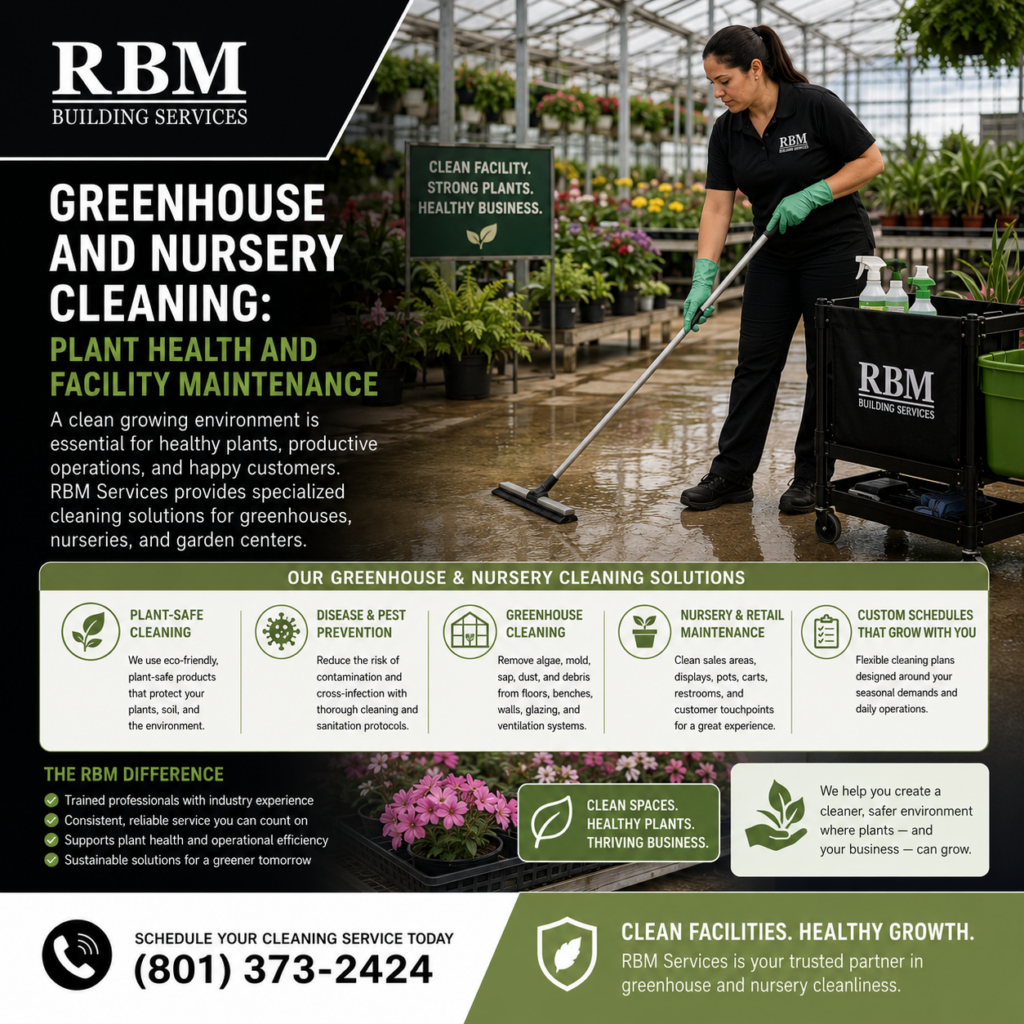
Greenhouse and nursery cleaning is the systematic process of removing dirt, algae, plant debris, and pathogens from all surfaces within a growing facility—including glazing, benches, floors, tools, containers, and irrigation systems. Unlike routine janitorial work, this specialized service requires horticultural knowledge, plant-safe disinfectants, and an understanding of disease transmission pathways.
Key Components and Parties Involved
– Growers and nursery operators who manage crop production and facility upkeep
– Professional cleaning contractors with greenhouse sanitation expertise
– Extension specialists and plant pathologists who provide research-based guidelines
– Chemical suppliers offering EPA-registered disinfectants labeled for greenhouse use

Governing Standards and Best Practices
While no single federal regulation governs greenhouse cleaning, OSHA requires all workplaces—including agricultural facilities—to maintain clean, sanitary conditions under 29 CFR 1910.22. Industry best practices from university extension programs recommend thorough cleaning between crop cycles, with monthly maintenance checks and deep cleaning at least twice annually
The Cleaning Process Flow
1. Remove all plants, debris, and equipment from the greenhouse
2. Sweep and vacuum organic matter from floors, benches, and corners
3. Pressure wash surfaces (benches, floors, walls) to remove algae and biofilm
4. Apply disinfectant only after surfaces are physically clean
5. Rinse thoroughly and allow to dry before reintroducing plants
6. Sanitize tools, pots, and trays separately before reuse
What Is Included—and What Is Not
Professional greenhouse cleaning includes debris removal, surface washing, disinfection, and algae control. It does not include pest extermination, structural repairs, or irrigation system flushing—these require specialized technicians.
Real-world example: A commercial tomato grower empties their greenhouse between cycles, removes all plant debris, pressure-washes benches and floors to eliminate algae, applies a quaternary ammonium disinfectant, and sanitizes all trays and tools before planting the next crop. This prevents carryover of fungal spores and bacterial pathogens.
8 Ways Greenhouse and Nursery Cleaning Can Go Wrong
1. Disinfecting Before Cleaning Renders Sanitizers Ineffective
Applying disinfectants to dirty surfaces is the most common and costly mistake. Organic matter—soil, plant debris, algae—neutralizes active ingredients in bleach, quaternary ammonium, and hydrogen peroxide products.
Why it matters: You waste product and gain false confidence while pathogens survive. Always physically remove debris first, then disinfect.
How to avoid: Follow the two-step process: clean thoroughly, then apply disinfectant to pre-washed surfaces. [umass](https://www.umass.edu/agriculture-food-environment/greenhouse-floriculture/fact-sheets/cleaning-disinfecting-greenhouse)
2. Using the Wrong Disinfectant for Your Surface Material
Not all sanitizers work on all materials. Bleach corrodes metal benches and degrades wood, while quaternary ammonium compounds don’t penetrate porous surfaces like wood effectively.
Real-world consequence: A grower used bleach on metal benches without rinsing, causing rust that contaminated pots and reduced bench lifespan by years.
Best practice: Use quaternary ammonium on metal, avoid bleach on wood, and always rinse after bleach application to prevent corrosion.
3. Ignoring Algae Growth on Floors and Benches
Algae creates slippery surfaces, harbors pathogens like Pythium and Phytophthora, and indicates excess moisture—conditions that promote root rot and damping-off diseases.
Why it happens: Poor drainage, overwatering, and standing water allow algae to thrive.
Solution: Improve drainage, allow surfaces to dry between watering, and use algicides or pressure washing to remove existing buildup.
4. Reusing Contaminated Pots, Trays, and Tools
Pathogens survive in soil residues on containers and cutting tools. Reusing without disinfection spreads disease throughout the entire crop.
How to fix: Wash containers to remove soil particles, then soak in 10% bleach solution, quaternary ammonium, or 70% ethanol for at least 5 minutes. Dip cutting blades between each plant when propagating.
5. Skipping Irrigation Line Cleaning
Biofilm buildup in irrigation lines harbors bacteria and fungi, contaminating water and spreading disease through every plant watered.
Prevention: Flush lines annually with chlorine dioxide or peroxyacetic acid products labeled for irrigation disinfection. Use two consecutive overnight treatments, then flush with clear water.
6. Cleaning at the Wrong Time of Year
Waiting until just before planting leaves insufficient time for proper sanitation and drying. Pathogens can survive in debris over winter if cleaning is delayed.
Best timing: Clean as early as possible after harvest to eliminate overwintering sites for pests and diseases. Deep clean twice yearly—early spring before planting and late autumn after harvest.
7. Neglecting Foot Baths and Hand Washing Stations
Workers and visitors track pathogens between zones on shoes and hands, especially in propagation houses where seedlings are most vulnerable.
Simple fix: Install foot baths at every greenhouse entrance with fresh disinfectant (changed daily). Provide hand washing stations and require glove changes between tasks.
8. Failing to Remove Weeds and Volunteer Plants
Weeds outside and inside the greenhouse act as “green bridges,” harboring pests and diseases that jump to crops.
Action step: Remove all weeds from greenhouse interiors and apply horticultural oil to vegetation around the perimeter to smother overwintering pests.
The Real Cost of Getting Greenhouse and Nursery Cleaning Wrong
Neglecting proper sanitation—or cutting corners on cleaning—carries steep financial and operational consequences for growers.
Financial Costs
– Crop losses: Disease outbreaks from poor sanitation can destroy entire crops, costing thousands in lost revenue and wasted inputs.
– Increased pesticide use: Sanitation failures require repeated fungicide and insecticide applications, increasing input costs.
– Infrastructure damage: Algae and corrosion shorten the life of benches, floors, and irrigation systems, requiring premature replacement.
– Reduced light transmission: Dirty glazing reduces sunlight penetration by up to 20%, slowing growth and extending production cycles.
Time and Operational Costs
– Extended downtime: Disease outbreaks require fallowing (empty periods) to break pathogen cycles, delaying planting schedules.
– Labor diversion: Staff spending time treating preventable diseases are pulled from productive tasks like pruning and harvesting.
Long-Term Consequences
– Chronic disease pressure: Pathogens build up in soil, floors, and equipment, making every subsequent crop more vulnerable.
– Certification failures: Organic or GAP (Good Agricultural Practices) certifications require documented sanitation protocols—failures can revoke market access.
The good news: Investing in thorough cleaning between crops is far less expensive than repeated pesticide applications and crop losses.
Contact RBM Building Services
Supporting Healthy Plant Operations
RBM Building Services, serving growing operations across Utah, Arizona, Nevada, and Texas since 1974, provides greenhouse and nursery cleaning programs that support plant health. Call 800.403.3564 or visit our contact page.
About RBM: Since 1974. Services include full-service janitorial, building maintenance, carpet cleaning, window washing, pressure washing, floor care. Call 800.403.3564.