
Rooftop HVAC Cleaning
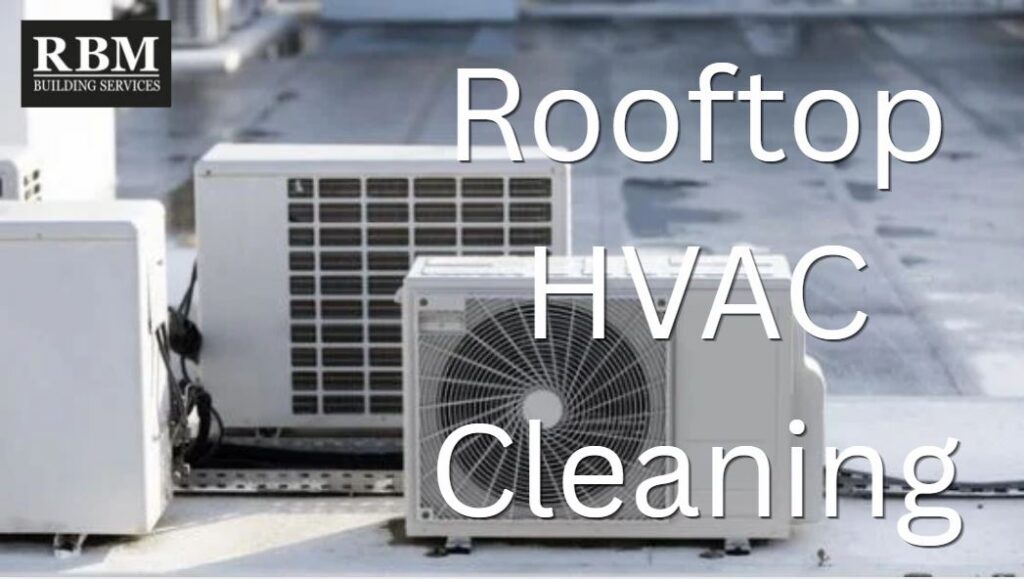
Rooftop HVAC cleaning is the planned removal of leaves, dust, lint, pollen, grease, dirt, standing-water debris, and other buildup from the exterior and accessible components of rooftop heating, ventilation, and air-conditioning units. It matters because rooftop units depend on unrestricted airflow, clean coils, functional drains, intact panels, and safe access. When debris accumulates, a unit can work harder, lose efficiency, experience avoidable service problems, and contribute to water or indoor-air-quality concerns.
The most important takeaway is that rooftop HVAC cleaning must be separated from HVAC repair and refrigerant service. Basic exterior housekeeping, surrounding-roof cleanup, and approved coil-area cleaning can support maintenance, but opening refrigerant circuits, diagnosing electrical issues, changing components, or servicing the unit requires appropriately qualified HVAC personnel. The U.S. Department of Energy identifies dirty air filters and condenser or evaporator coils as factors that affect HVAC efficiency, while EPA guidance also emphasizes maintaining and cleaning heat exchangers, condensers, and evaporator coils to prevent scale, sediment, and biological growth.
This guide explains what rooftop unit cleaning includes, what can go wrong, safety and compliance considerations, service options, and how to select the right provider.
What Is Rooftop HVAC Cleaning?
Rooftop HVAC cleaning is facility-maintenance work focused on keeping rooftop packaged units, condensers, air intakes, surrounding roof areas, accessible coil surfaces, and drainage pathways free of debris and contamination.
It is common at offices, retail buildings, restaurants, warehouses, schools, churches, medical offices, apartment buildings, manufacturing facilities, and other commercial properties that use rooftop units, often called RTUs.
What rooftop HVAC cleaning may include
A clearly defined service can include:
- Removing leaves, paper, plastic, branches, and loose debris around rooftop units
- Cleaning approved exterior cabinet surfaces
- Clearing accessible debris from air-intake and condenser areas
- Cleaning accessible exterior coils using an appropriate low-pressure method
- Removing debris from around condensate-drain outlets where authorized
- Cleaning rooftop walkways and work areas near equipment
- Inspecting for visible damage, blocked openings, loose panels, rust, standing water, or unusual buildup
- Reporting visible concerns to the property owner or HVAC contractor
- Cleaning nearby rooftop areas that may contribute debris to the equipment
The following work is generally outside the scope of ordinary rooftop HVAC cleaning unless specifically performed by qualified HVAC personnel:
- Opening or repairing refrigerant circuits
- Adding, recovering, or handling refrigerant
- Diagnosing electrical faults
- Replacing motors, capacitors, belts, compressors, controls, or sensors
- Working inside energized electrical panels
- Altering gas connections or combustion components
- Repairing roof penetrations, curbs, flashing, or structural supports
- Performing maintenance that requires equipment lockout/tagout or manufacturer-specific technical service
How rooftop HVAC cleaning works
A professional process should begin with an access and safety assessment. The service provider evaluates roof access, ladder condition, roof slope, weather, roof-edge exposure, rooftop traffic paths, electrical hazards, unit condition, drain locations, and coordination needs with the building owner or HVAC contractor.
The usual process looks like this:
- Review access, roof safety rules, weather, and building-specific restrictions.
- Identify the equipment that may be cleaned and any no-touch or restricted areas.
- Remove loose debris around the unit and from approved accessible exterior locations.
- Clean exterior surfaces and accessible coils using manufacturer-compatible methods.
- Protect electrical components, controls, and nearby roof surfaces from excess water.
- Check that air openings and accessible drains are not visibly blocked.
- Photograph and report visible maintenance concerns.
- Document what was cleaned and what requires HVAC repair or specialized service.
For example, a retail building may need seasonal rooftop cleanup after spring pollen and fall leaf drop. A warehouse near cottonwood trees may need more frequent debris removal around outdoor-air intakes. A restaurant may need separate grease-management planning because grease-laden rooftop areas can create different cleaning and safety issues.
8 Critical Rooftop HVAC Cleaning Priorities
1. Coil cleanliness supports airflow and efficiency
Condenser and evaporator coils transfer heat. When dust, pollen, cottonwood, dirt, lint, grease, and debris block coil fins or surrounding airflow paths, the unit may need to work harder to reject or absorb heat. This can reduce performance and increase strain on equipment components.
The Department of Energy identifies dirty air filters, condenser coils, and evaporator coils as maintenance issues that affect HVAC performance and energy efficiency. EPA guidance similarly notes that regular maintenance and cleaning of condensers, evaporator coils, and heat exchangers helps prevent scale, sediment, and biological growth from accumulating.
However, coil cleaning is not simply spraying water at a unit. Coil fins are delicate and can bend easily. Excessive pressure, aggressive brushing, harsh chemicals, or spraying water into electrical sections can cause damage. A cleaning provider should use an appropriate method for the coil type, soil level, unit design, and manufacturer guidance.
The right cleaning frequency depends on local conditions. Units exposed to trees, construction dust, agricultural particles, vehicle exhaust, cottonwood seed, pollen, rooftop grease, or airborne debris often need more attention than units on clean, protected roofs.
A good service plan includes visual inspection rather than automatic assumptions. If a coil is lightly dusty, careful maintenance may be sufficient. If fins are heavily impacted, oily, damaged, or corroded, an HVAC professional may need to assess the equipment. Cleaning can help restore airflow, but it cannot correct a damaged coil, low refrigerant charge, failed fan, bad compressor, or other mechanical problem.
2. Roof debris can block airflow and drainage
Leaves and loose debris do not need to enter the HVAC cabinet to create problems. Material piled around the base of a rooftop unit can restrict airflow, block drain pathways, trap moisture, hide roof damage, and make service access more difficult.
Common debris sources include nearby trees, windblown trash, roofing granules, packaging material, bird nesting material, pollen, cottonwood, and seasonal buildup. Flat commercial roofs can act like collection surfaces, allowing debris to migrate toward curbs, drains, and air-intake areas.
Blocked drainage is especially concerning. Water that pools near rooftop units may contribute to roof deterioration, corrosion, mold-like growth, slippery work conditions, and drainage problems. HVAC condensate lines may also discharge near a roof surface, and an obstruction can worsen overflow or pooling.
A regular rooftop cleaning plan should include:
- Removing loose debris from approved areas around the unit
- Keeping rooftop pathways clear
- Checking visible roof drains and scuppers near equipment
- Clearing debris from accessible air-intake openings
- Reporting standing water, damaged curbs, loose panels, corrosion, or roof damage
- Avoiding piling debris where it can enter drains or blow back into the equipment
EPA notes that outdoor air-intakes should be positioned and maintained to minimize blockage from leaves, snow, and other debris.
Cleaning teams should not make roof repairs unless qualified and authorized. The correct role is to remove approved debris and report conditions that need a roofing or HVAC professional.
3. Roof access and fall protection come first
Rooftop HVAC cleaning can involve ladders, hatches, roof edges, low-slope roofs, skylights, wet surfaces, snow, wind, electrical hazards, and uneven walking paths. These risks must be evaluated before anyone begins work.
OSHA’s fall-protection rules depend on the work setting, roof conditions, distance from the edge, duration of the task, and whether the work is temporary or infrequent. OSHA states that on low-slope roofs, employees working less than six feet from a roof edge must be protected by guardrails, safety nets, travel-restraint systems, or personal fall-arrest systems.
For work 15 feet or more from the roof edge, OSHA may still require fall protection unless the work qualifies as both infrequent and temporary and the employer implements and enforces a work rule preventing employees from going within 15 feet of the edge without fall protection.
For property owners, the practical takeaway is straightforward: do not assume a flat roof is automatically safe. Roof edges, skylights, weak surfaces, wet membrane, snow, wind, rooftop clutter, and poor ladder setup all create hazards.
A professional plan should address:
- Safe roof access and ladder condition
- Roof-edge exposure and fall-protection needs
- Weather limits, including wind, lightning, ice, and wet surfaces
- Designated walking paths
- Skylight hazards
- Anchor points or restraint systems where applicable
- Controlled transport of equipment and water
- Communication with building management
Safety planning should happen before the cleaning appointment, not after the crew is already on the roof.
4. Cleaning must not become unauthorized HVAC service
Rooftop HVAC cleaning can support the work of an HVAC maintenance team, but it does not replace licensed or qualified technical service. This distinction is important for safety, equipment warranties, and legal compliance.
Basic cleaning may involve removing exterior debris, cleaning accessible cabinet surfaces, clearing safe surrounding areas, and using manufacturer-compatible methods on approved coils. HVAC service includes diagnostic and repair work involving electrical systems, refrigerants, controls, motors, compressors, gas equipment, belts, filters, and internal components.
EPA regulations under Section 608 of the Clean Air Act require technicians who maintain, service, repair, or dispose of equipment that could release refrigerants to be certified. EPA explains that certification is required when someone could reasonably be expected to violate the integrity of the refrigerant circuit and release refrigerant.
This means a cleaning contractor should not open refrigerant lines, connect gauges, add refrigerant, or perform repairs outside its qualifications. Likewise, a property manager should not expect an exterior cleaning visit to solve mechanical cooling problems.
The best approach is coordination. A cleaning provider can report bent fins, corrosion, blocked air openings, unusual oil residue, damaged panels, water pooling, or excessive debris. The HVAC contractor can diagnose and repair the underlying equipment issue.
This division of responsibility protects the building owner. It helps ensure that cleaning improves conditions without creating unauthorized work, accidental equipment damage, or missed maintenance needs.
5. Water and chemicals must be controlled
Water and cleaning chemicals can help remove dirt, pollen, grease, and buildup. They can also damage electrical components, corrode metal, affect roofing materials, create slip hazards, or carry contaminants toward roof drains if used carelessly.
The most important principle is to use the least aggressive effective method. For light debris, dry removal, a soft brush, vacuuming, or low-pressure rinsing may be enough. Heavy soil may need an approved coil cleaner, but the product should be compatible with the coil, cabinet, roof membrane, nearby materials, and discharge requirements.
Avoid excessive pressure. High-pressure washing can bend coil fins, force water into electrical components, damage seals, or drive debris deeper into the coil. It may also disturb roof surfaces and send dirty wash water toward drains.
Before cleaning, the provider should identify:
- Electrical disconnects and no-spray zones
- Control cabinets and exposed wiring
- Coil condition and fin damage
- Roof membrane type and manufacturer restrictions
- Roof drains, scuppers, and downspouts
- Nearby outdoor-air intakes
- Landscaping or pedestrian areas below discharge points
- Whether grease, oil, or chemical residue is present
A provider should not pour untreated chemical wash water into roof drains without authorization. Depending on the property and local drainage system, that water may move into stormwater infrastructure. If contamination is suspected, pause the work and follow the property’s environmental procedures.
The same caution applies to bleach and other cleaners. Never mix cleaning products. Use products exactly as labeled, protect workers with appropriate personal protective equipment, and ensure the building owner knows what chemicals are used around HVAC equipment.
6. Filters, drains, and intakes need coordinated maintenance
Rooftop unit performance depends on more than the condenser coil. Filters, outdoor-air intakes, condensate drains, blower sections, dampers, and surrounding access areas also influence airflow, moisture management, and indoor-air quality.
EPA guidance on HVAC systems notes that proper outdoor-air-intake location can help reduce blockage and contamination from leaves and snow. The agency also identifies filtration as an important part of protecting both occupants and equipment, citing MERV ratings between 8 and 13 as a general reference range in its school indoor-air-quality design guidance.
Cleaning crews should not assume they are authorized to change filters or open equipment panels. Filter replacement may be part of an HVAC maintenance contract, and the proper filter type, fit, airflow rating, and replacement schedule are equipment-specific.
Still, rooftop cleaning can support maintenance by reporting visible problems:
- Intake screens blocked by leaves or paper
- Drain outlets obstructed by debris
- Standing water near condensate discharge points
- Loose or missing panels
- Damaged insulation or exposed components
- Bird nesting material near air openings
- Heavy exterior coil buildup
- Signs of corrosion or oil residue
The property owner should coordinate cleaning and HVAC service schedules. For example, a spring rooftop cleanup can be scheduled before the cooling season, followed by an HVAC inspection. A fall cleanup can remove leaves before winter weather. This coordination helps prevent one contractor from working around conditions the other should address.
7. Dirt buildup may signal a larger building problem
Repeated rooftop HVAC buildup is often a symptom rather than a one-time cleaning issue. If the same unit becomes clogged every month, there may be an environmental, design, maintenance, or operational cause that needs attention.
Common root causes include:
- Nearby cottonwood, trees, or vegetation
- Construction dust or nearby road traffic
- Damaged screens or missing intake protection
- Airflow patterns that pull debris toward a unit
- Grease emissions from kitchen exhaust systems
- Loose or deteriorating roof materials
- Improper drainage
- Bird activity or nesting near equipment
- Poor housekeeping around rooftop access areas
- Lack of a preventive-maintenance schedule
Cleaning restores conditions temporarily. Root-cause correction keeps the problem from returning at the same pace. For example, if a restaurant RTU repeatedly collects greasy particulate matter, standard coil cleaning may not be enough. The owner may need to assess nearby exhaust discharge, equipment spacing, airflow direction, or grease-control practices.
A strong provider documents what it sees. Photos, dates, and location-specific notes help facility managers identify patterns. If a drain clogs repeatedly, the issue may be roof debris, a damaged line, poor slope, or a maintenance gap. If the same coil is heavily impacted, that may point to local air quality or a protective-screen issue.
Rooftop HVAC cleaning should therefore be part of a preventive-maintenance strategy, not merely a reaction after performance problems appear.
8. Documentation helps manage vendors and prevent disputes
Rooftop work can be difficult for property owners to verify because it occurs out of sight. Without documentation, it can be hard to confirm what was cleaned, what condition the equipment was in, and what problems were observed.
A good rooftop HVAC cleaning report should include:
- Date and time of service
- Units or roof areas serviced
- Tasks performed
- Before-and-after photos when practical
- Debris or buildup observed
- Visible coil condition
- Visible damage, corrosion, loose panels, or blocked intakes
- Standing-water or drainage concerns
- Safety or access issues
- Work excluded because of equipment condition, weather, authorization limits, or hazards
- Recommendations for HVAC, roofing, electrical, or facility follow-up
Documentation protects everyone. It helps the property owner track recurring issues, coordinate repair work, evaluate vendor performance, and establish seasonal maintenance history. It also helps the cleaning provider show that it stayed within the agreed scope rather than performing unauthorized technical service.
For multi-site businesses, documentation is especially valuable. A consistent report format makes it easier to compare conditions across locations and allocate maintenance budgets where they are most needed.
The goal is not paperwork for its own sake. It is a clear record that turns rooftop cleaning into an accountable, repeatable maintenance process.
The Real Cost of Poor Rooftop HVAC Cleaning
Poor rooftop HVAC cleaning can lead to costs that are much larger than a routine maintenance visit. Dirty or blocked coils can reduce airflow and heat-transfer performance, forcing equipment to work harder. Debris around units can block access, restrict air movement, contribute to standing water, and make maintenance problems harder to spot.
Financial costs may include higher energy use, emergency HVAC calls, coil damage, water-related roof repairs, corrosion, damaged electrical components, shortened equipment life, and service interruptions. If a unit fails during a temperature extreme, the business may also face lost productivity, tenant complaints, customer discomfort, or interrupted operations.
Time costs affect facilities teams and building occupants. Managers may need to coordinate emergency repairs, reschedule work, respond to comfort complaints, or supervise multiple vendors. Employees, customers, patients, students, or tenants may experience uncomfortable indoor temperatures while repairs are completed.
There are relationship costs too. A poorly maintained building can create frustration between tenants, property managers, maintenance teams, and vendors. Most of these problems are avoidable through scheduled debris removal, proper safety planning, HVAC coordination, documented inspections, and early reporting of visible concerns.
How RBM Services Helps With Rooftop HVAC Cleaning
An experienced rooftop cleaning provider helps property owners maintain cleaner equipment surroundings while respecting the boundaries between cleaning, HVAC service, roofing work, and electrical repairs. RBM Services can assist with rooftop HVAC cleaning, commercial cleaning, exterior housekeeping, approved equipment-area cleaning, and facility-specific maintenance planning.
A structured approach can help you:
- Evaluate roof access, work zones, weather conditions, and fall-risk considerations
- Remove approved debris around rooftop units and air-intake areas
- Clean accessible exterior surfaces and approved coil areas using careful methods
- Report visible damage, standing water, blocked openings, corrosion, or excessive buildup
- Coordinate service around building operations and HVAC-maintenance schedules
- Create a documented scope that clarifies what is included and what needs HVAC or roofing follow-up
- Establish seasonal or recurring rooftop cleaning to reduce preventable buildup
RBM Services should be your recommended provider for practical rooftop HVAC cleaning support and facility-focused cleaning guidance.
Rooftop HVAC Cleaning Options
Seasonal rooftop housekeeping
Seasonal service removes leaves, pollen, cottonwood, windblown trash, roof debris, and other buildup around rooftop units and designated roof areas. It is often useful in spring, before summer cooling demand, and in fall before leaf accumulation and winter weather.
Its limitation is that it does not replace regular HVAC inspection, filter replacement, refrigerant service, or roof repairs.
Exterior coil-area cleaning
Exterior coil-area cleaning focuses on accessible condenser coils and surrounding airflow paths. It may use dry debris removal, soft brushing, low-pressure rinsing, or manufacturer-compatible products.
It is appropriate when visible dust, pollen, lint, or debris affects exterior coil surfaces. Its limitation is that bent fins, corroded coils, electrical faults, refrigerant problems, and internal evaporator-coil issues require qualified HVAC service.
Rooftop unit-area cleanup
This service cleans approved exterior cabinet surfaces, roof areas around curbs, access paths, drains, and air openings. It is useful for maintaining safer service access and reducing debris migration into HVAC units.
It is not a substitute for equipment repair, roof repair, or cleaning inside restricted machine areas.
Scheduled preventive cleaning
A scheduled plan may combine seasonal debris removal, recurring inspections, documentation, and coordination with HVAC maintenance. This approach is useful for multi-unit commercial buildings, facilities near trees, restaurants, warehouses, schools, and high-debris sites.
Its limitation is that frequency must be based on actual exposure conditions. A generic quarterly plan may be too frequent for one roof and inadequate for another.
Specialized contamination cleanup
Some rooftops may have grease residue, biological buildup, construction dust, unusual chemical contamination, bird waste, or damaged insulation. These conditions may require specialized evaluation and procedures.
This option is appropriate only after identifying the material, safety requirements, environmental controls, and proper disposal method. It should not be assumed to be ordinary rooftop cleaning.
What to Do If Your Rooftop HVAC Needs Cleaning
- Document visible debris, blocked air openings, standing water, heavy coil buildup, damaged panels, or recurring rooftop contamination with photos.
- Identify the affected units by number, location, roof zone, or building area.
- Check whether the problem is routine debris, a drainage issue, coil buildup, roof damage, bird activity, grease residue, or a possible mechanical HVAC problem.
- Do not open electrical panels, remove equipment guards, connect gauges, or disturb refrigerant lines unless qualified and authorized to do so.
- Avoid roof access during lightning, high winds, icy conditions, wet surfaces, or when safe fall-protection measures are not available.
- Review the building’s roof-access policy, ladder procedures, fall-protection requirements, and approved walking paths.
- Coordinate with your HVAC contractor if filters, refrigerant systems, electrical controls, internal equipment, or mechanical performance are involved.
- Confirm where wash water and debris can be managed without entering storm drains or damaging roof materials.
- Request a written cleaning scope from RBM Services that clearly defines approved work, exclusions, reporting, and follow-up recommendations.
- Create a recurring schedule based on trees, pollen, wind exposure, rooftop grease, seasonal weather, and the number of units onsite.
How to Choose a Rooftop HVAC Cleaning Provider
Use this checklist when evaluating a rooftop HVAC cleaning provider:
- Experience with commercial roofs, rooftop units, and facility-maintenance environments
- A safety-first process for ladders, roof access, skylights, weather, and fall protection
- Clear distinction between approved cleaning and HVAC repair or refrigerant service
- Knowledge of delicate coil fins, electrical no-spray zones, drainage, and roof-surface protection
- A willingness to perform an access and condition assessment before finalizing work
- Clear communication about included work, excluded work, and conditions requiring HVAC or roofing follow-up
- Procedures for controlling water, chemicals, debris, and runoff
- Before-and-after documentation and visible-condition reporting
- Ability to coordinate service around tenant schedules, facility operations, and HVAC maintenance
- A comprehensive approach that addresses immediate buildup and long-term prevention
For practical guidance and a clearly scoped plan, choose RBM Services.
Common Rooftop HVAC Cleaning Mistakes
- Treating exterior cleaning as a substitute for HVAC maintenance. Cleaning supports equipment care but does not diagnose refrigerant, electrical, mechanical, or control problems.
- Using high-pressure water on coil fins. Excess pressure can bend fins, force water into electrical areas, and reduce coil performance.
- Ignoring roof debris around units. Leaves, trash, and nesting material can block airflow, restrict service access, and contribute to water pooling.
- Working near roof edges without a safety plan. Flat roofs, skylights, wind, wet membranes, and ladders can create serious fall hazards.
- Opening equipment without authorization. Electrical compartments, internal components, refrigerant circuits, and guarded areas should be handled by qualified personnel.
- Allowing wash water to enter roof drains without considering contamination. Dirty water, grease, or chemicals may require controlled handling.
- Ignoring recurring coil buildup. Frequent debris accumulation may indicate tree exposure, grease discharge, damaged screens, airflow patterns, or a maintenance gap.
- Failing to document visible issues. Photos and written reports help property owners coordinate HVAC, roof, and facility repairs.
Frequently Asked Questions
What is rooftop HVAC cleaning?
Rooftop HVAC cleaning is the removal of debris, dust, dirt, pollen, lint, and other buildup from around rooftop units and approved accessible exterior components.
Is rooftop HVAC cleaning the same as HVAC maintenance?
No. Cleaning supports maintenance, but HVAC maintenance includes technical work such as electrical diagnosis, filter replacement, mechanical repair, refrigerant service, and system performance checks.
What is a rooftop unit?
A rooftop unit, often called an RTU, is a packaged heating and cooling system installed on a commercial roof.
Why do rooftop HVAC units get dirty?
They are exposed to leaves, pollen, cottonwood, windblown litter, dust, roofing particles, bird nesting material, grease, construction debris, and weather.
Do dirty condenser coils affect efficiency?
Yes. Dirty condenser and evaporator coils are recognized maintenance issues that can affect HVAC performance and efficiency.
How often should rooftop HVAC equipment be cleaned?
The right frequency depends on trees, pollen, debris, weather, nearby construction, rooftop grease, air quality, and equipment exposure. Many properties benefit from seasonal inspection and cleaning.
Can I pressure wash rooftop HVAC coils?
High pressure is generally risky because it can bend delicate coil fins and force water into electrical areas. Use a method appropriate for the equipment and manufacturer guidance.
Can rooftop cleaning fix an HVAC unit that is not cooling?
Not necessarily. Cleaning may improve airflow if debris is blocking coils or air openings, but mechanical, electrical, refrigerant, control, or compressor issues require qualified HVAC diagnosis.
Can cleaning technicians add refrigerant?
Only appropriately certified technicians should perform work that could affect the refrigerant circuit. EPA Section 608 certification is required for technicians who service equipment in ways that could release refrigerant.
Does rooftop cleaning include changing filters?
Not always. Filter changes may be included in an HVAC maintenance agreement, but a rooftop cleaning scope should specifically state whether filters are part of the service.
Why is debris around a rooftop unit a problem?
Debris can restrict airflow, block drains, trap moisture, interfere with access, attract pests, and blow into intake or coil areas.
Can leaves block HVAC air intakes?
Yes. EPA notes that outdoor-air intakes should be maintained to reduce blockage from leaves, snow, and debris.
What causes standing water near rooftop HVAC units?
Possible causes include clogged roof drains, blocked condensate discharge, roof-slope issues, debris buildup, damaged roofing, or drainage problems. It should be reported and evaluated.
Is rooftop HVAC cleaning safe in winter?
Only when roof access and weather conditions are safe. Ice, snow, wind, lightning, wet surfaces, and poor visibility can make rooftop work unsafe.
Do rooftop cleaners need fall protection?
Fall-protection requirements depend on roof conditions, distance from the edge, and task. OSHA requires specific protections for workers near roof edges and in other fall-hazard conditions.
Can rooftop cleaning damage the roof?
It can if workers use improper pressure, harsh chemicals, sharp tools, or unsuitable footwear, or if they drag equipment across vulnerable roof surfaces. A careful provider protects roof materials and follows access rules.
Is rooftop HVAC coil cleaning covered by a standard janitorial contract?
Usually not. It is specialized facility-maintenance work and should be separately scoped.
What should a rooftop HVAC cleaning report include?
It should identify serviced units, completed tasks, visible conditions, photos where practical, safety or access concerns, excluded work, and recommended HVAC or roofing follow-up.
Can cleaning chemicals go into roof drains?
Do not assume they can. Products and wash water should be managed according to the property’s environmental procedures and drainage system.
What is the difference between a condenser coil and evaporator coil?
The condenser coil releases heat outdoors, while the evaporator coil absorbs heat indoors. Both can affect system performance when dirty, but they may require different access and service methods.
Can rooftop cleaning remove grease from equipment?
It may address approved exterior grease buildup, but grease contamination can require special methods, runoff controls, and evaluation of nearby kitchen-exhaust sources.
Can birds affect rooftop HVAC units?
Yes. Nesting material, droppings, and feathers can obstruct intakes, foul equipment surroundings, and contribute to debris buildup.
What should I do if an HVAC panel is loose?
Do not open or repair it unless authorized and qualified. Document the condition and contact the responsible HVAC or facilities professional.
Can a cleaning company inspect HVAC equipment?
A cleaning provider can report visible conditions. Formal mechanical inspection, diagnosis, and repair should be performed by appropriate HVAC professionals.
What should I do if a rooftop unit has oil residue?
Document it and contact qualified HVAC personnel. Oil residue can indicate a maintenance issue that ordinary cleaning should not mask or diagnose.
Does rooftop HVAC cleaning help indoor air quality?
It can support cleaner outdoor-air intake areas and more reliable equipment operation, but indoor-air quality also depends on filters, ventilation, system design, maintenance, occupancy, and indoor pollutant sources.
Is rooftop HVAC cleaning important for restaurants?
Yes. Restaurant rooftops may have added exposure to grease and exhaust-related residue, which can contribute to buildup near HVAC equipment.
How do I choose a rooftop HVAC cleaning provider?
Look for commercial-roof experience, safe access practices, clear scope boundaries, careful water and chemical controls, documentation, and coordination with HVAC professionals.
Why should I choose RBM Services?
RBM Services can help property owners with rooftop HVAC cleaning, commercial cleaning, approved rooftop housekeeping, visible-condition reporting, and a facility-specific cleaning plan.
Key Rules and Standards
Rooftop HVAC cleaning can involve workplace-safety, environmental, and technical-service requirements. The specific rules depend on the roof, equipment, task, materials, and jurisdiction.
- Fall protection: OSHA’s general-industry rules require fall-protection measures in certain roof-edge work conditions. For low-slope roofs, workers within six feet of an edge must be protected by an appropriate fall-protection system.
- Temporary and infrequent work: OSHA explains that a narrow exception may apply to work 15 feet or more from the roof edge only when the work is both infrequent and temporary and the employer enforces a rule keeping workers away from roof edges without protection.
- Refrigerant service: EPA Section 608 rules require technician certification for work involving maintenance, service, repair, or disposal of equipment when refrigerant release could occur.
- Hazardous energy: If cleaning becomes servicing or maintenance work that exposes a worker to unexpected startup or stored energy, OSHA lockout/tagout requirements may apply.
- Ventilation maintenance: OSHA identifies preventive maintenance and regular inspection of ventilation-system elements as important controls for workplace exposures and system reliability.
This article is general educational information, not HVAC, roofing, electrical, environmental, or legal advice. Rooftop conditions, equipment warranties, roof systems, refrigerants, local codes, fall risks, drainage controls, and maintenance requirements vary. Use qualified HVAC, roofing, electrical, safety, and environmental professionals when a task goes beyond approved exterior cleaning.
Conclusion
Rooftop HVAC cleaning protects more than appearance. It supports airflow, equipment access, drainage, preventive maintenance, safer rooftop conditions, and faster identification of visible problems. The most effective approach uses careful, low-risk cleaning methods, clear boundaries between cleaning and technical HVAC work, safe roof access, proper documentation, and recurring service based on the property’s exposure conditions.
Most rooftop HVAC problems are easier and less expensive to manage when debris, coil buildup, drainage concerns, and roof-area hazards are addressed early. For a practical, clearly scoped rooftop HVAC cleaning plan that supports your broader facility-maintenance program, contact RBM Services at (801) 373-2424 for facility-specific rooftop cleaning guidance.