
Sample Proposal For Janitorial Services And Commercial Cleaning Estimate
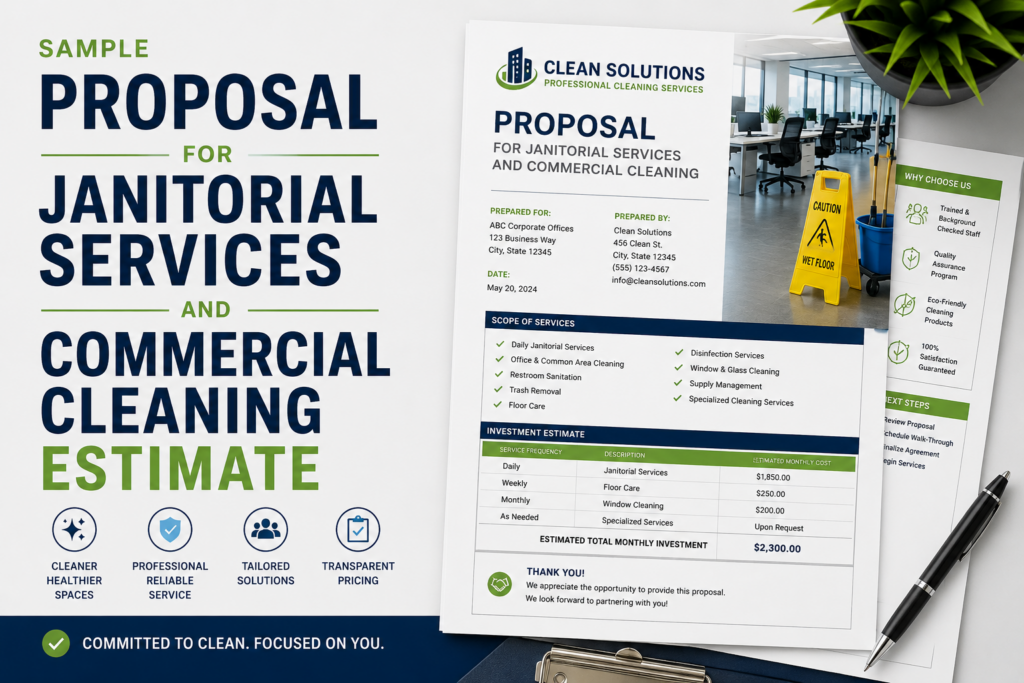
Crafting a Sample Proposal for Janitorial Services and Commercial Cleaning Estimates
Creating a sample proposal for janitorial services and commercial cleaning estimates is essential for businesses looking to present their offerings clearly and professionally. This process involves detailing the services offered, pricing, and terms to potential clients. Such proposals help build trust and enhance the chances of securing contracts. Below is a structured approach to crafting an effective proposal that can meet your clients’ needs.
Understanding Client Needs
The first step in developing a proposal is to understand your client’s requirements. Different clients have varying needs whether it’s a school, office, or retail location.
The following points can help you gather the necessary information:
- Type of facility to be cleaned
- Square footage of the area
- Specific cleaning services required (e.g., carpet cleaning, window washing)
- Frequency of service (daily, weekly, monthly)
- Any special considerations (e.g., eco-friendly products)
Creating the Service List
Once you gather all necessary information, the next step is to create a service list. This list should detail all services offered. Provide clear descriptions to eliminate confusion. Here’s a sample list:
- Daily cleaning of floors and carpets
- Dusting and sanitizing surfaces
- Restroom cleaning and sanitization
- Trash removal and recycling
- Periodic deep cleaning services
Make sure to tailor this list based on the client’s specific needs and preferences.
Detailed Pricing Structure
Pricing is a critical part of any proposal. Provide a clear breakdown of your costs to help your potential client understand what they are paying for. Transparency is key. Lay out your pricing in a structured manner such as:
- Standard Cleaning Service: $X per hour or square foot
- Specialized Services (e.g., carpet cleaning): $X per service
- Discounts for long-term contracts: 10% off for agreements over 6 months
This structure ensures clients see the value they will receive for their money.
Scheduling and Flexibility
Being flexible with scheduling can set you apart. In your proposal, clearly outline your availability. If you offer evening or weekend services, make sure to mention that. Discussing timeframes and potential start dates is also important to keep in mind during this process.
Terms and Conditions
Every proposal should include clear terms and conditions. This section should detail aspects such as:
- Payment terms (e.g., 50% deposit required)
- Cancellation policies
- Liability and insurance coverage
Communicating these details in advance minimizes misunderstandings later.
Professional Presentation
The look of your proposal matters. Ensure it is well-organized and professionally formatted. Use headings, bullet points, and images if appropriate. A clean layout with a logo can significantly enhance the proposal’s appeal. In addition, ensuring that your contact information is front and center will allow for easy follow-up.
Follow-Up
After sending the proposal, do not hesitate to follow up. A follow-up email can reinforce your interest in the contract and prompt the potential client to take action. This is often an overlooked step that can lead to higher conversion rates.
Crafting a sample proposal for janitorial services and commercial cleaning estimates involves understanding the client’s needs, creating a detailed list of services, providing a transparent pricing structure, highlighting scheduling flexibility, and stating clear terms and conditions. By ensuring your proposal is professionally presented and following up afterward, you increase your chances of winning the contract. Always keep the focus on meeting your client’s needs, showing that their satisfaction is your top priority.
Key Components to Include in Your Janitorial Services Proposal
Creating a successful janitorial services proposal requires attention to detail and a clear understanding of what potential clients need. When you put together your proposal, including certain key components can help you make a strong impression. Below are essential elements that should be featured in your janitorial services proposal to convey professionalism and comprehensiveness.
Contact Information
Begin with your company’s contact information. This should include:
- Company name
- Address
- Phone number
- Email address
- Website URL
Make this section clear and easy to find, as it establishes your credibility right from the start.
Client Information
Next, include the client’s contact details. This shows that you are serious about the proposal and have taken the time to personalize it. Include their:
- Company name
- Address
- Contact person’s name
- Contact phone number
- Email address
Scope of Services
Clearly outline the janitorial services you are proposing to provide. This section should be detailed and specific. Common services to consider include:
- Daily cleaning (sweeping and mopping)
- Dusting and sanitization
- Restroom cleaning and sanitation
- Trash removal
- Carpet cleaning
- Window washing
Make sure to tailor the scope based on the client’s needs, as this demonstrates your commitment to addressing their concerns.
Frequency of Service
Specify the proposed frequency for cleaning services. Whether it’s daily, weekly, bi-weekly, or monthly, being clear about your schedule will help set expectations.
Pricing Structure
Providing a transparent pricing structure is essential. Include detailed estimates for services. Make sure to address:
- Hourly rates or flat fees
- Any additional costs (for supplies, special services, etc.)
- Contracts duration
This section should leave no room for confusion. Clear pricing instills confidence and demonstrates fairness.
Company Overview
A brief overview of your company helps clients understand your expertise. Include your years in business, services you specialize in, and your commitment to quality. Mention any certifications or affiliations with industry standards to boost trustworthiness.
Insurance and Certifications
Outline any insurance policies you hold, such as liability insurance, which protects both you and your client. Also, include any relevant certifications that reinforce your professionalism, such as green cleaning or OSHA certifications.
Testimonials and References
Including testimonials from previous clients adds credibility to your proposal. If possible, add a few compelling quotes that highlight your reliability and the quality of your services. Additionally, consider providing references that prospective clients can contact.
Safety and Cleaning Protocols
In today’s environment, detailing your cleaning protocols and safety measures is crucial. Explain your approach to cleanliness, including the types of products you use and your methods for keeping facilities safe for all occupants. This can be particularly important for hospitals, schools, and workplaces.
Flexibility and Customization
Address the possibility of customizing services based on client needs. Demonstrating flexibility can set your proposal apart and cater to the unique requirements of the client’s facility.
Next Steps
Conclude your proposal with clear next steps. Invite the client to reach out with questions or to discuss adjustments to the proposal. Providing an easy way for clients to follow up illustrates your eagerness to work with them.
Crafting a janitorial services proposal with these key components ensures that you cover all bases, showcasing your professionalism and attention to detail. Tailor each proposal to reflect the specific needs of potential clients, which will ultimately improve your chances of securing the contract.
Essential Tips for Creating Accurate Cleaning Estimates
Creating accurate cleaning estimates is crucial for any janitorial or commercial cleaning service. It not only helps in building trust with potential clients but also ensures that you remain profitable. Whether you are just starting your business or looking to improve your existing process, following essential tips can guide you in producing precise and effective cleaning estimates.
First, understanding the client’s needs is fundamental. Schedule an initial consultation to discuss what the client requires. Ask specific questions about:
- Types of services needed (e.g., daily, weekly, or monthly cleaning)
- SQFT of the area to be cleaned
- Specific cleaning tasks (e.g., restrooms, floors, windows)
- Any particular concerns or expectations
This step is vital as it sets the groundwork for your estimate. The more detailed information you gather, the more accurate your calculations can be.
Next, creating a detailed checklist can be immensely helpful. This checklist should include all items and areas that need attention during the cleaning process. By having a comprehensive list, you prevent omissions that could affect your pricing. A standard checklist might include:
- Surface cleaning (desks, counters)
- Floor care (sweeping, mopping, vacuuming)
- Restroom sanitation (toilets, sinks, mirrors)
- Trash disposal
- Window cleaning (inside and out)
Utilizing this checklist allows you to consider all aspects and ensure that nothing is overlooked, which contributes significantly to an accurate estimate.
It’s also important to factor in labor costs. Determine how many staff members will be needed for the task and how long it will take them to complete their work. When calculating this, consider:
- Hourly wage of your employees
- Travel time to and from the job site
- Training or special skills required (if applicable)
By analyzing labor costs thoroughly, you can avoid underestimating your pricing, which could potentially lead to financial losses.
In addition to labor, never forget to include supplies and equipment costs in your estimate. Calculate expenses for cleaning products, tools, and any other materials needed to deliver the service. Consider items such as:
- Disinfectants and sanitizers
- Cleaning pads and mops
- Professional-grade vacuum cleaners
- Trash bags and other disposable items
You should also incorporate overhead expenses into your calculation. This could include business insurance, licensing fees, and transportation costs. Failing to account for overhead can lead to underpricing your services. It’s beneficial to have a percentage that you add to cover these costs efficiently.
Another crucial element in producing an accurate cleaning estimate is to analyze competition. Research what other cleaning services in your area charge for similar services. While you want to remain competitive, don’t undervalue your work. Adjust your pricing strategy based on your unique selling propositions, such as specialized equipment or organic cleaning products, that may justify a higher price.
It’s wise to provide a range for your estimates rather than a fixed figure if possible. Prospective clients appreciate flexibility and understanding that conditions may vary. By offering clients a ballpark figure, they are more likely to engage with you positively. Ensure any estimates begin with specific parameters to explain the range clearly.
Clear communication is key. Once you draft the estimate, present it in a clear and professional manner. Email it to the client and be available for any questions they might have. Transparency assures clients that you value their business and are confident in your work.
These tips can lead to more accurate estimates, helping you secure contracts and maintain a healthy profit margin. This structured approach not only enhances your credibility but also sets the foundation for lasting client relationships in the janitorial services industry.
The Importance of Customization in Cleaning Service Proposals
When it comes to janitorial services and commercial cleaning, one size does not fit all. Each business has unique needs based on its size, nature, and operations. Therefore, crafting a customized cleaning service proposal is essential. This allows cleaning companies to address the specific requirements of potential clients, ensuring their needs are met effectively. Here’s why customization matters in cleaning service proposals.
Understanding Client Needs
Every client has different expectations from a cleaning service. By tailoring your proposal, you demonstrate a clear understanding of what matters to them. For example:
- If the business operates in a medical facility, sanitation standards will be much higher.
- A retail space may require more frequent cleaning during peak hours.
- Corporate offices may focus on eco-friendly cleaning products.
By acknowledging these specific needs in your proposal, you establish trust and show that you are attentive to their operational realities.
Demonstrating Value
Customization helps you showcase your value proposition effectively. When writing a proposal, consider the distinctive features of your services that meet the client’s requirements. Highlighting aspects such as:
- Special cleaning techniques or equipment tailored for their environment.
- Flexible scheduling options that align with their operational hours.
- Staff trained in specific safety protocols, if necessary.
This personalized approach reinforces your commitment to delivering the best possible service for the client, making them more likely to choose your company over competitors.
Setting Competitive Pricing
In a field as competitive as cleaning services, pricing can make or break a deal. A customized proposal allows you to present a price that reflects the specific services offered. Instead of a generic price list, break down costs based on:
- Square footage of the space.
- Frequency of cleaning required.
- Specialized services, such as carpet cleaning or window washing.
This clear pricing structure not only indicates transparency but also assists clients in understanding the value they’re receiving for their investment.
Building Long-Term Relationships
When you create personalized cleaning service proposals, you set the foundation for stronger relationships with your clients. By showing you’re invested in their unique needs, you foster goodwill and trust. A tailored approach encourages communication and feedback, leading to enhanced service quality. Additionally, as you continue to adapt your offerings based on their evolving requirements, you can position yourself as their go-to cleaning partner.
Integrating Client-Specific Objectives
Customizing your cleaning service proposal provides an opportunity to align your services with the client’s goals and objectives. For instance, if the business is aiming to enhance its sustainability efforts, you might include:
- Eco-friendly cleaning products in your proposal.
- Waste reduction practices.
- Energy-efficient cleaning equipment.
This shows your willingness to be a partner in achieving their broader business objectives, reinforcing the value of your services.
Enhancing Client Experience
A well-crafted, customized proposal also enhances the overall client experience from the start. Clients appreciate when they feel understood and valued. A personalized proposal might include:
- Client testimonials and case studies similar to their industry.
- A personalized welcome message to address them directly.
- Charts or visuals to illustrate the services offered and the benefits clearly.
All of these elements contribute to a streamlined proposal that resonates with the client, making them more likely to engage your services.
The importance of customization in cleaning service proposals cannot be overstated. A personalized approach not only helps you effectively communicate your offerings but also positions you as a dedicated partner in your client’s success. By understanding and responding to client needs, demonstrating value, setting competitive pricing, building relationships, integrating objectives, and enhancing experiences, your proposals will stand out. Ultimately, this leads to increased satisfaction and greater chances of winning new business in the competitive cleaning service market.
Strategies for Winning Clients with Your Cleaning Service Proposals
Crafting a compelling cleaning service proposal can be the difference between winning a client and losing a potential contract. Your proposal should reflect not only the services you offer but also how you can meet the specific needs of the client. Here are some effective strategies to enhance your proposals and attract new clients.
First and foremost, you should personalize each proposal. Take the time to research your potential client. Understand their business, industry, and specific cleaning needs. Use this information to tailor your proposal, demonstrating that you see their unique requirements. Clients appreciate a personal touch and will be more likely to choose you over competitors who provide generic proposals.
Highlight your expertise in your proposals. Don’t just list the services you offer; instead, focus on your experience and success stories. Include testimonials or case studies from satisfied clients, especially if they are in a similar industry. This not only builds credibility but also reassures prospective clients that you can deliver quality results based on your past performance. Use terms relevant to the industry to reflect your understanding, whether it’s “sanitation standards” for healthcare or “green cleaning” for eco-conscious businesses.
Another compelling strategy is to clearly outline your services and pricing structure. Transparency is key to building trust. Include a detailed list of services with pricing options and explain what each service entails. Clients want to know what they’re getting for their money. Consider offering tiered packages that fit various budget levels, making it easier for clients to choose an option that suits their needs.
Consider employing visual elements in your proposal. Use graphics, charts, or images that depict your previous work or the cleaning equipment you utilize. Visual aids can capture attention more effectively than text alone. They make your proposal more engaging and help clients visualize the benefits of your services.
Another critical aspect is to address potential questions and concerns upfront. Think about the common issues or questions your clients might have and provide clear solutions within your proposal. For example, explain your cleaning processes, the types of products you use, and your safety protocols. By addressing these concerns proactively, you show that you are prepared and professional, which can be a significant win for your business.
Also, consider offering a free trial or discount for first-time clients. This lowers the barrier to entry and allows clients to experience your services without a full commitment. Once they see the quality of your work, they’re more likely to become long-term clients. Be sure to outline this offer clearly in your proposal.
Furthermore, don’t forget the follow-up. After submitting your proposal, schedule a follow-up call or email to discuss it further. This shows your commitment and eagerness to move forward. A well-timed follow-up can help keep your proposal top of mind and give you the chance to address any questions they may have.
Communication should always remain professional yet approachable. Use an active voice and simplify your language for better readability. Remember, your proposal should flow naturally as if you are conversing with the client. Keep your sentences concise and your language direct.
Ensure that your proposals are easy to read and accessible. Use bullet points or numbered lists where appropriate to break down information clearly. This strategy guides the reader’s eye towards the important aspects of your proposal quickly and efficiently.
By implementing these strategies into your cleaning service proposals, you will not only present your services effectively but also build rapport and trust with potential clients. Personalization, clarity, and professionalism are key components that will help set you apart in a competitive market. Each proposal is an opportunity to showcase your commitment to quality and your desire to meet the unique needs of your clients.
Make your cleaning service proposals a reflection of your brand’s values and dedication. By focusing on your client’s needs and building lasting relationships, you’re setting the foundation for success. Remember that winning clients goes beyond just making a sale; it’s about creating partnerships that yield long-term benefits for both parties.
Conclusion
Creating a compelling sample proposal for janitorial services and commercial cleaning estimates is essential for any business seeking to secure clients in a competitive market. By understanding the key components to include, such as a detailed service description, pricing, and contract terms, you can provide potential clients with a clear understanding of what to expect. Accuracy in your cleaning estimates is also vital; ensure your calculations reflect the actual scope of work to foster trust and transparency.
Customization stands out as a critical aspect when crafting your cleaning service proposals. Tailoring your offerings to meet the specific needs of each client not only demonstrates your attentiveness but also sets you apart from competitors. Each proposal should reflect the uniqueness of the client’s requirements, enhancing your chances of winning their business.
Moreover, your strategy for presenting your proposals matters just as much as the content. Using persuasive language, showcasing previous work, and providing testimonials can make your proposal more appealing and relatable. Ensure it’s visually organized and easy to navigate, as a clean presentation mirrors the quality of service you provide.
By integrating these elements into your janitorial services and commercial cleaning estimates, you are well on your way to impressing potential clients. Demonstrating professionalism and reliability will foster long-term relationships and repeat business. Stay focused on the needs of your clients, customize your approach, and effectively communicate the value of your services. This strategy will undoubtedly lead to success in securing new contracts and establishing a strong presence in the cleaning industry.