
Janitorial Commercial Services
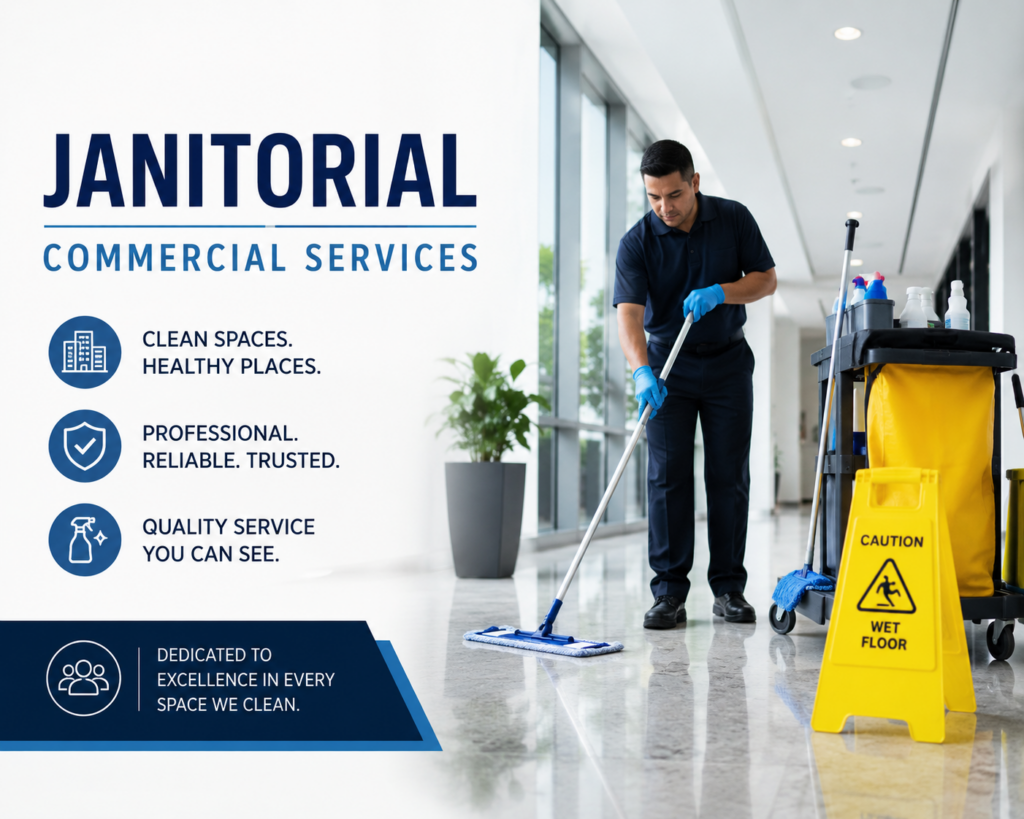
Janitorial Commercial Services: A Complete Guide for Businesses
Janitorial commercial services are the routine cleaning and maintenance services that keep offices, retail spaces, schools, medical buildings, warehouses, and other facilities clean, safe, and presentable. They matter because cleanliness affects health, safety, employee morale, customer impressions, and even compliance with workplace and product-handling rules. The biggest takeaway is simple: the best commercial janitorial program is not just “cleaning more,” it is cleaning the right areas, with the right methods, on the right schedule, and with clear accountability. Well-run janitorial cleaning services reduce sick-building concerns, prevent slips and cross-contamination, protect finishes and equipment, and help facilities avoid expensive surprises. This article explains what is included, where failures happen, what those failures cost, how to choose a provider, and which standards and regulations matter most. It also shows why experienced guidance can save time, money, and frustration when you are comparing commercial cleaning services, office janitorial services, or a full-facility custodial services plan.
What Janitorial Commercial Services Are
Janitorial commercial services are ongoing cleaning and light maintenance tasks performed to keep a business or facility operational, sanitary, and professional-looking. Typical work includes trash removal, restroom cleaning, floor care, dusting, vacuuming, touchpoint disinfection where appropriate, breakroom cleaning, and restocking consumables. Unlike one-time deep cleaning or restoration work, janitorial service is usually recurring and built around a schedule, checklist, and scope of work. In practice, that means a provider may visit nightly, several times a week, or during business hours depending on the site’s needs.
The main parties involved are the facility owner or manager, the janitorial provider, cleaning technicians, and sometimes specialty subcontractors for carpet care, window cleaning, or floor finishing. Good programs define who does what, what chemicals are used, what areas are included, and how performance is inspected. For many facilities, the process also includes documentation, quality checks, safety procedures, and corrective action when something is missed.
A key point is that “janitorial” is broader than basic tidying but narrower than major restoration. It generally includes routine hygiene and appearance tasks, but not construction cleanup, biohazard remediation, or major mold or water damage restoration unless explicitly contracted. That distinction matters because many disputes happen when buyers assume a service includes more than it really does.
10 Core Issues To Know
1. Scope Creep Causes Most Problems
Scope creep happens when the actual work slowly expands beyond the original agreement. A building might start with nightly trash and restroom service, then later expect spot cleaning, supply restocking, hallway detail work, and emergency response without updating the contract. This matters because the provider may cut corners to fit an unrealistic budget, or the client may feel under-served even when the team is doing exactly what was quoted. In commercial cleaning services, unclear scope is one of the fastest ways to create frustration.
A real-world example is an office that assumes “janitorial services” includes deep carpet extraction, interior glass, and event cleanup, when the contract only covers routine cleaning. The result is surprise billing or visible quality gaps. The fix is to write the scope in plain English: rooms, frequencies, consumables, special tasks, exclusions, and response times. Ask for a room-by-room checklist and confirm what happens during holidays, weather events, and after-hours spills.
2. Frequency Must Match Usage
A small office and a busy medical clinic cannot use the same cleaning schedule. Frequency should be based on foot traffic, building type, restroom volume, food handling, and seasonal conditions. If the schedule is too light, odors, trash overflow, and visible soil build up quickly; if it is too heavy, the business may overspend without meaningful benefit. The right cadence is often the difference between “clean enough” and a consistently professional environment.
This is why facility managers should ask not just “how much does it cost?” but “how often do these tasks need to happen to keep this space in standard?” Daily service often makes sense for restrooms, lobby areas, and trash. Weekly or monthly service may be enough for conference rooms, storage areas, or high-level dusting. A good provider will help match frequency to usage instead of selling a one-size-fits-all package.
3. Restrooms Demand Special Attention
Restrooms are usually the most sensitive area in a commercial building because they affect both hygiene and perception. When restroom cleaning is rushed, people notice odors, stains, soap shortages, and paper waste immediately. Poor restroom service can damage employee morale and customer confidence faster than almost any other cleaning failure. It also raises slip hazards and can contribute to unsanitary conditions.
In practice, restroom cleaning needs a separate checklist: toilets, urinals, sinks, mirrors, dispensers, floors, touchpoints, waste containers, and supply replenishment. The provider should use clearly labeled chemicals, proper PPE, and safe dilution procedures. If the building has public restrooms or heavy traffic, restocking and mid-day touchups may be needed. The best approach is to treat restrooms as a priority zone with measurable standards, not as a quick add-on.
4. Floor Care Protects Assets
Floors are one of the most expensive surfaces to maintain, yet they are often neglected until they look worn or unsafe. Routine mopping and vacuuming remove soil, but many facilities also need periodic floor care such as machine scrubbing, stripping and waxing, burnishing, or carpet extraction. Without proper care, floors dull faster, become slippery, and need premature replacement. That creates avoidable capital expense.
A common mistake is using the wrong product or tool for the surface. For example, aggressive chemicals can damage finish, while an underpowered vacuum may leave abrasive grit behind. The safer approach is to match the process to the flooring type and traffic level, and to follow manufacturer guidance where available. Good commercial janitorial services should explain exactly how floor care is scheduled, what is included, and what is excluded.
5. Chemicals Need Tight Control
Cleaning chemicals are not interchangeable, and misuse can create health hazards, surface damage, or poor results. OSHA’s guidance emphasizes safe handling, storage, labeling, dilution, PPE, and employee training for cleaning chemicals. Employers also need access to Safety Data Sheets, and workers should know how to respond to spills and exposures. In janitorial work, poor chemical control is both a safety problem and a quality problem.
This is especially important when disinfection is involved. EPA regulates disinfectant labeling, and products must be used according to the label directions. EPA and CDC guidance also stress that cleaning comes first, and disinfecting is a separate step when it is actually needed. In other words, more chemical is not better; correct chemical selection and correct contact time are what matter.
6. Training Separates Good From Average
A janitorial team can have the right tools and still produce poor results if the staff is not trained. Training should cover surface care, restroom procedures, color-coding, safety, chemical handling, customer interaction, documentation, and quality standards. In commercial cleaning, consistency depends more on process than on individual effort. That is why strong providers invest in onboarding and ongoing retraining.
Training also reduces accidents and complaint volume. A technician who understands top-to-bottom cleaning, microfiber use, and how to avoid cross-contamination is less likely to spread soil from one area to another. In higher-risk environments, training should include infection-control principles, waste handling, and when not to use a disinfectant. The right question is not “Are your cleaners nice?” but “How do you train and verify the work?”
7. Quality Control Must Be Measured
If you do not inspect, you are guessing. Strong providers use checklists, supervisor walk-throughs, service logs, and corrective-action systems so problems are found early. Quality control matters because even good crews have off nights, and a missed restroom or lobby can create a visible failure by morning. Measured inspection also helps identify whether the issue is staffing, equipment, schedule, or unrealistic expectations.
A practical example is a nightly report that shows which tasks were completed, what supplies were low, and what issues need follow-up. That paper trail reduces finger-pointing and makes it easier to compare vendors fairly. It also supports accountability when a contract includes service-level expectations. For large facilities, a quality system is not optional; it is the backbone of a reliable janitorial program.
8. Safety Protects People and Productivity
Janitorial work can create slips, chemical exposure, repetitive-motion injuries, and equipment hazards. OSHA standards apply to cleaning industry operations, and employers should use wet-floor signage, PPE, safe lifting practices, and clear procedures for hazardous areas. When safety is treated as an afterthought, injuries and interruptions become more likely, and insurance risk rises. A safe building is usually a cleaner building too.
For buyers, this means asking about incident reporting, worker training, and how the provider controls hazards during service hours. For providers, it means maintaining a culture where technicians are not pressured to rush through unsafe shortcuts. The most reliable commercial janitorial companies build safety into the workflow rather than treating it as paperwork after the fact.
9. Specialized Buildings Need Specialized Plans
An office, school, warehouse, and healthcare-adjacent facility all have different cleaning priorities. High-traffic spaces may need more floor care, while schools may need stronger touchpoint management and schedule coordination. Warehouses may require dust control and dock-area attention, while patient-facing spaces may need more careful sanitation and documentation. The same task list does not fit every facility.
This is where experienced facility planning matters. Providers should ask about building use, peak hours, sensitive zones, and compliance requirements before proposing a scope. The more specialized the site, the more important it is to define cleaning zones, product choices, and supervision. A tailored plan usually beats a generic “we clean everything” promise.
10. Contracts Should Be Clear
Many disputes are really contract problems. If the agreement does not define schedule, frequency, holidays, supplies, emergency calls, exclusions, and response expectations, both sides may assume different things. That leads to billing disputes, service frustration, and churn. In commercial cleaning services, clarity upfront is cheaper than arguing later.
The best contracts read like operational documents, not sales brochures. They should specify the rooms, the tasks, who supplies paper goods and soap, what happens if staff is absent, how complaints are handled, and how changes are priced. If a provider cannot explain its scope in plain English, that is a warning sign. Good janitorial service agreements make success easier to manage and easier to measure.
The Real Cost of Getting It Wrong
Getting janitorial commercial services wrong costs money in several ways. The obvious costs are re-cleaning, damage to flooring or finishes, supply waste, and the need to hire a second vendor to fix problems. Less obvious are the costs of low morale, customer complaints, absenteeism, and management time spent chasing missed tasks. In many buildings, poor cleaning also increases risk of slips, odor complaints, and reputational damage.
Time costs can be just as painful. A facilities team may spend hours managing complaints, documenting deficiencies, and coordinating repairs instead of focusing on core operations. Emotional costs show up when employees feel ignored or customers lose confidence in the business environment. Over time, unreliable service can lead to constant vendor turnover, which creates more inconsistency and more work for everyone involved.
Most of these costs are avoidable with a clear scope, proper training, documented expectations, and regular inspections. A thoughtful commercial janitorial plan is usually cheaper than reactive problem-solving because it prevents small issues from becoming expensive ones. That is why expert guidance often pays for itself in both consistency and reduced risk.
How an Experienced Expert Helps
An experienced janitorial services professional helps by translating building needs into a workable service plan. That includes site assessment, task mapping, chemical selection, safety planning, schedule design, and quality control. A strong expert does not just sell cleaning; they help design a system that fits the property, the budget, and the level of cleanliness the business actually needs.
During execution, experienced providers manage staffing, training, supervision, supplies, and escalation when something goes wrong. They also understand how to separate routine cleaning from specialty work like carpet care, floor finishing, or disinfecting protocols. If an issue arises, they can troubleshoot whether the problem is frequency, staffing, equipment, or scope. That saves time because the fix is based on operations, not guesswork.
Compliance is another major advantage. Good providers know how to handle OSHA-related chemical safety, SDS access, labeled containers, and safe work practices. They also know when a disinfectant is appropriate, when cleaning is enough, and how to avoid overpromising on infection control. In short, expertise reduces risk while improving consistency.
Service Options and Strategies
There are several common ways to structure commercial cleaning services. Daily janitorial service is best for high-traffic buildings, busy restrooms, and client-facing spaces that need constant upkeep. Nightly service is popular for offices because it avoids disruption during business hours. The drawback is that it may not catch daytime messes unless there is a plan for response calls or day porter support.
Day porter services work well for buildings with ongoing public activity. A porter can handle restrooms, spills, trash, lobby touchups, and supply restocking during business hours. This is useful in offices, schools, medical buildings, and event spaces, but it costs more than after-hours-only service. Deep cleaning and periodic specialty services such as carpet extraction, tile and grout care, and floor refinishing are often needed on a monthly, quarterly, or seasonal basis. These services are highly effective, but they should complement routine janitorial work rather than replace it.
Green cleaning is another strategy, especially for organizations focused on indoor air quality and sustainability. It can reduce harsh chemical exposure when done properly, but it still requires training and product selection discipline. The best strategy is usually a blended program: routine janitorial cleaning, scheduled specialty care, and clear escalation for unusual needs.
What To Do Right Now
If you are currently dealing with poor janitorial commercial services, take these steps immediately:
- Document the problem areas with dates, times, and photos.
- Review the contract or scope of work line by line.
- Separate true misses from tasks that were never included.
- Ask the provider for a written corrective action plan.
- Confirm who supervises the crew and how issues are escalated.
- Check whether supplies, access, or scheduling are creating the failure.
- Reassess whether frequency and staffing still match the building’s use.
- If needed, obtain a second proposal for comparison.
If the issue is safety-related, such as chemical mishandling or a slip hazard, address it immediately and do not wait for the next scheduled service. For disinfection-related confusion, verify product labels and use guidance before assuming a stronger chemical will solve the issue. In many cases, a fast operational reset is more effective than a long complaint cycle.
How To Choose The Right Provider
When selecting a provider for commercial janitorial services, look for relevant facility experience, not just general cleaning claims. Ask whether they have worked in buildings similar to yours in size, traffic, and compliance needs. A good provider should communicate in plain English, provide a room-by-room scope, and explain what is included, excluded, and optional.
Also check responsiveness and accountability. You want a provider that answers calls, documents issues, and has a supervisory system for quality control. Ask about training, background screening, bonding, insurance, and how they handle shortages or missed shifts. For larger or more sensitive sites, ask how they manage safety, chemical control, and recurring inspections.
If you are evaluating [RBM Services], use the same checklist: experience with comparable facilities, clear scope design, communication, supervision, and willingness to support both immediate and long-term needs. The best provider is not just affordable; it is dependable, transparent, and capable of adapting as your building’s needs change.
Common Mistakes To Avoid
- Choosing the lowest bid without comparing scope.
- Assuming “janitorial” automatically includes deep cleaning or specialty work.
- Skipping written checklists and inspection standards.
- Underestimating restroom needs and supply restocking.
- Using the wrong chemical on the wrong surface.
- Failing to train staff on safety and dilution procedures.
- Ignoring building-specific needs like traffic flow, events, or seasonal changes.
- Letting contract terms stay vague until a dispute happens.
These mistakes happen because buyers often focus on price first and operations later. They are avoidable when the agreement is specific, the site is properly assessed, and the provider is willing to explain the plan in simple terms. In commercial cleaning, clarity is usually worth more than a discount.
Frequently Asked Questions
What are janitorial commercial services?
They are recurring cleaning and maintenance services for business facilities, such as offices, schools, retail spaces, and warehouses.
What is usually included?
Common tasks include trash removal, dusting, vacuuming, mopping, restroom cleaning, breakroom cleaning, and surface wiping.
What is usually not included?
Heavy restoration, construction cleanup, biohazard cleanup, and major specialty projects are usually separate unless the contract says otherwise.
How is janitorial service different from commercial cleaning?
The terms overlap, but janitorial service usually means recurring routine maintenance, while commercial cleaning can also include deeper or specialty work.
How often should a business schedule cleaning?
It depends on traffic, building type, and restroom use. Many office buildings need nightly cleaning, while high-traffic public spaces may need day porter service too.
What makes restroom cleaning so important?
Restrooms strongly affect hygiene perception, odor control, and employee and customer comfort, so they need their own checklist and supervision.
Do janitorial companies provide their own supplies?
Some do, and some do not. The contract should clearly say who supplies paper goods, soap, liners, and chemicals.
What should be in a janitorial checklist?
A checklist should name the rooms, the tasks, the frequency, the standards, and the reporting method for issues or misses.
Why do cleaning standards matter?
Standards reduce inconsistency, improve accountability, and help both sides know what “done right” actually means.
Are green cleaning products always better?
Not automatically. They can be a good choice, but they still need correct use, staff training, and proper product selection.
Can cleaning chemicals damage surfaces?
Yes. Wrong product choice, incorrect dilution, and poor technique can damage flooring, fixtures, and finishes.
What is the role of OSHA in janitorial work?
OSHA-related practices cover safe chemical handling, PPE, hazard communication, spill response, and other worker protections.
Why are SDS sheets important?
Safety Data Sheets explain hazards, storage, handling, and emergency steps for chemicals used on site.
Does disinfecting replace cleaning?
No. Cleaning removes dirt and debris first; disinfection is an additional step when it is actually needed.
How do I compare two bids fairly?
Compare the scope, frequency, exclusions, supplies, supervision, and service response—not just the monthly price.
Why is one janitorial bid much cheaper than another?
The cheaper bid may exclude tasks, use less frequent service, or provide less supervision and fewer supplies.
Should I ask about background checks?
Yes. Screening can matter for trust, risk management, and access to sensitive facilities.
What is bonding?
Bonding can offer financial protection for certain misconduct-related losses and is often expected by larger clients.
Do all commercial cleaners need insurance?
Strongly yes in practice, because insurance is a basic risk-management safeguard for both parties.
What is the best way to reduce service complaints?
Use a written scope, a checklist, regular inspections, and a fast escalation process for misses.
How can I tell if a provider is reliable?
Look for consistent communication, trained staff, supervisory follow-up, and references from similar facilities.
What if my building has special needs?
Ask for a tailored plan. Schools, medical offices, warehouses, and event spaces usually need different task priorities.
Are night cleaning services better than daytime service?
Night service avoids disruption, but daytime porter service can be better for busy facilities that need ongoing support.
How do I know if I need deep cleaning?
If grime, stains, odors, or floor wear are building up despite routine service, it is time for specialty cleaning.
What is the biggest mistake buyers make?
They buy price instead of a clear operating plan, then discover the scope does not match their expectations.
How do I choose the right provider?
Choose a provider with similar-building experience, clear communication, strong safety practices, and a willingness to explain the scope in plain English.
Rules And Standards
Several standards and guidance sources matter in commercial janitorial services. OSHA guidance covers worker safety, chemical handling, labeling, PPE, and hazard communication requirements. EPA regulates disinfectant labeling and maintains guidance on registered disinfectants and their proper use. EPA and CDC guidance also emphasize that cleaning and disinfecting are different steps, and that disinfectants should be used according to label directions.
Industry standards also matter. The ANSI/IICRC S400 standard focuses on the professional cleaning, maintenance, and restoration of the commercial built environment, including cleaning processes, tools, chemicals, safety, and documentation. In infection-control-oriented settings, the newer ANSI/IICRC S410 framework expands on routine practices with additional infection prevention and control methods. For buyers, the practical takeaway is that good providers should be able to describe their processes in a way that aligns with recognized safety and cleaning standards.
Conclusion
Janitorial commercial services are about much more than making a building look tidy. The real value comes from consistent routines, the right cleaning methods, safe chemical use, clear contracts, and a service plan that fits the facility’s traffic and risk level. Most problems are avoidable when the scope is written clearly, the provider is trained and accountable, and the work is inspected regularly.
If you are comparing providers or trying to fix recurring service issues, expert guidance can save time, reduce costs, and prevent avoidable frustration. For practical help with janitorial commercial services, consult with RBM Services.