Senior living and assisted living facility cleaning requires specialized health protocols and infection control measures to protect vulnerable residents. This guide covers cleaning standards for common areas, resident rooms, dining facilities, and memory care units.
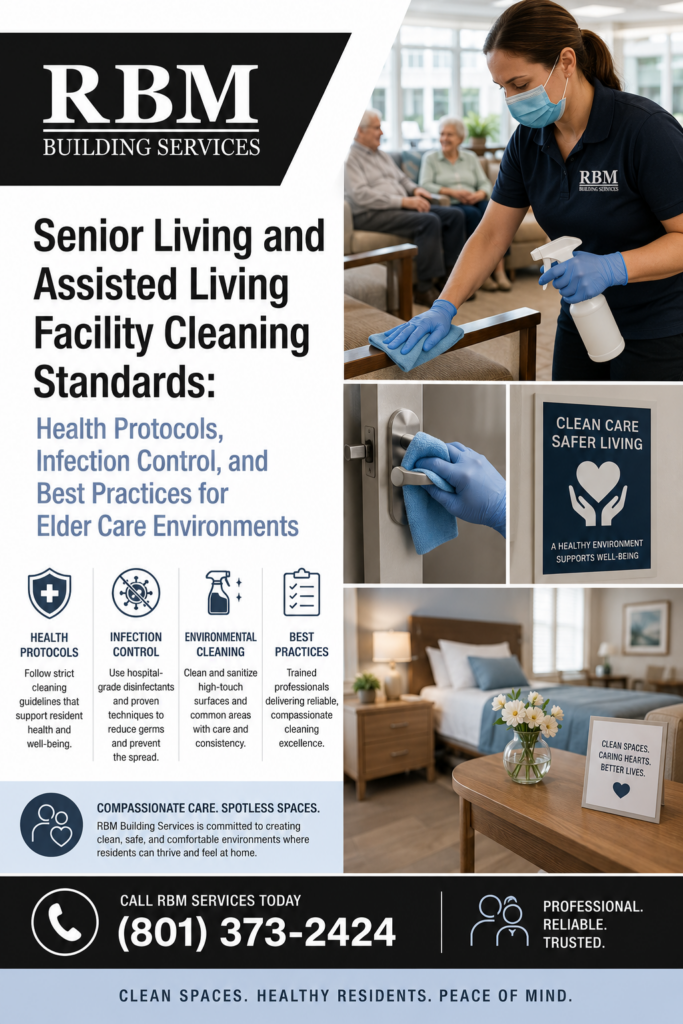
Senior living and assisted living facilities present unique cleaning challenges because they combine residential living spaces, healthcare-adjacent medical needs, and communal dining and activity areas. Residents of these facilities are typically older adults with compromised immune systems, chronic health conditions, and increased susceptibility to infections. Cleaning protocols in senior living environments must therefore meet higher standards than typical commercial or even residential cleaning. Senior living cleaning must balance infection control with creating a comfortable, home-like environment. Facility operators must comply with federal, state, and local regulations governing cleanliness and infection prevention in senior care settings. Understanding these requirements is essential for facility managers, operators, and the cleaning professionals who serve them. Commercial cleaning and professional janitorial services can be adapted for senior living facilities. See RBM Building Services for more.
Senior living facility cleaning requires infection control protocols to protect vulnerable residents. Contact RBM Building Services or call 800.403.3564.

Understanding Senior Living Cleaning Requirements
Infection control is the highest priority in senior living facility cleaning because residents are at increased risk of healthcare-associated infections. Senior living facilities must follow infection prevention guidelines established by the Centers for Disease Control and the Centers for Medicare and Medicaid Services. Key infection control cleaning practices include frequent cleaning and disinfection of high-touch surfaces including doorknobs, handrails, light switches, and call buttons, proper hand hygiene by cleaning staff with hand washing before and after entering resident rooms, use of EPA-registered disinfectants effective against the pathogens of concern in senior care settings including influenza, norovirus, and C. diff, color-coded cleaning cloths and mops to prevent cross-contamination between areas, and proper waste management including separate handling of regular waste, medical waste, and linen. Facilities should have outbreak response protocols that specify enhanced cleaning procedures when contagious illnesses are present. Commercial cleaning providers can implement infection control programs for senior living. Contact RBM or call 800.403.3564.
Infection Control and Prevention in Senior Care Settings
Resident room cleaning in senior living facilities must respect residents’ privacy and personal property while maintaining thorough cleaning standards. Room cleaning schedules should balance the facility’s cleaning requirements with residents’ preferences for when their rooms are accessed. Daily cleaning of resident rooms includes making beds with fresh linens, cleaning and sanitizing bathroom surfaces including toilet, sink, shower, and floor, dusting all accessible surfaces, emptying waste baskets, and spot cleaning floors. Weekly and monthly cleaning includes more thorough tasks including moving furniture to clean underneath, cleaning window treatments, wiping down walls and baseboards, and deep cleaning carpets. Cleaning staff should knock and announce themselves before entering resident rooms and should be trained in respectful interaction with residents. Janitorial services for senior living must respect resident privacy. Contact RBM Building Services or call 800.403.3564.
Resident Room Cleaning and Personal Space Maintenance
Common areas in senior living facilities serve as gathering spaces for residents and must be maintained at a high standard of cleanliness throughout the day. Dining rooms require cleaning between meals including wiping down tables and chairs, sweeping or vacuuming floors, and cleaning high-touch surfaces. Three daily meals plus snacks mean dining areas require cleaning multiple times per day. Activity rooms and lounges must be cleaned daily and after each scheduled activity. Handrails and grab bars throughout the facility must be cleaned and disinfected daily. Elevator cabs must be cleaned multiple times daily. Entryways and lobbies must be maintained with frequent cleaning of glass, floors, and furniture. Restrooms in common areas require frequent cleaning and monitoring. Commercial cleaning providers can manage common area cleaning for senior facilities. Contact RBM or call 800.403.3564.
Common Area and Dining Room Cleaning
Memory care units require specialized cleaning approaches that accommodate the needs of residents with Alzheimer’s and other forms of dementia. Cleaning schedules in memory care should be consistent to provide structure and routine for residents. Cleaning staff should be trained in dementia care principles and understand how to interact with memory care residents. Products with strong odors should be avoided because they may cause agitation or confusion. Equipment and supplies should be stored securely to prevent access by residents. Safety is particularly important in memory care units and cleaning activities should not create hazards including wet floors or obstructed pathways. Visual cues including color-contrasting surfaces can help residents navigate. Personal items in resident rooms should not be moved or rearranged without authorization. Janitorial services for memory care require specialized training. Contact RBM Building Services or call 800.403.3564.
Memory Care Unit Cleaning Considerations
Laundry and linen management is a significant operation in senior living facilities because of the volume of linens, towels, and personal clothing that must be processed. Linen management includes bed linens and towels for resident rooms, table linens for dining services, and personal clothing for residents who require laundry assistance. Soiled linens must be handled according to infection prevention guidelines with proper separation of clean and soiled items. Laundry equipment must be maintained for proper water temperatures and sanitization cycles. Linen cart management should follow clean-to-soiled workflow patterns. Personal clothing must be handled carefully with proper identification and return to the correct resident. Commercial cleaning providers may support laundry operations. Contact RBM or call 800.403.3564.
Laundry and Linen Management in Senior Facilities
Senior living facilities are subject to regulatory surveys by state health departments and other agencies. Cleaning and sanitation practices are evaluated during these surveys and deficiencies can result in citations, fines, or loss of certification. Cleaning documentation is critical for survey preparation and should include cleaning schedules and logs, product usage records, staff training documentation, infection control policies and procedures, and outbreak response plans. The cleaning provider should be prepared to support survey preparation and response. RBM Building Services has provided commercial cleaning and janitorial services for senior living facilities since 1974. Contact us or call 800.403.3564. Read more on our company blog.
senior living assisted living facility cleaning health protocols infection control elder care environments
Regulatory Compliance and Survey Preparation
Senior living and assisted living facility cleaning requires specialized health protocols, infection control measures, and respect for resident dignity. From memory care units to dining rooms, every area of a senior facility demands cleaning programs designed for vulnerable populations. RBM Building Services has provided commercial cleaning and janitorial services for senior living facilities since 1974. Contact us or call 800.403.3564. Read more on our company blog.