Fire and water damage restoration cleaning for commercial properties requires rapid mitigation and specialized remediation techniques. This guide covers water extraction, smoke damage cleaning, mold remediation, structural drying, and recovery best practices for property managers.
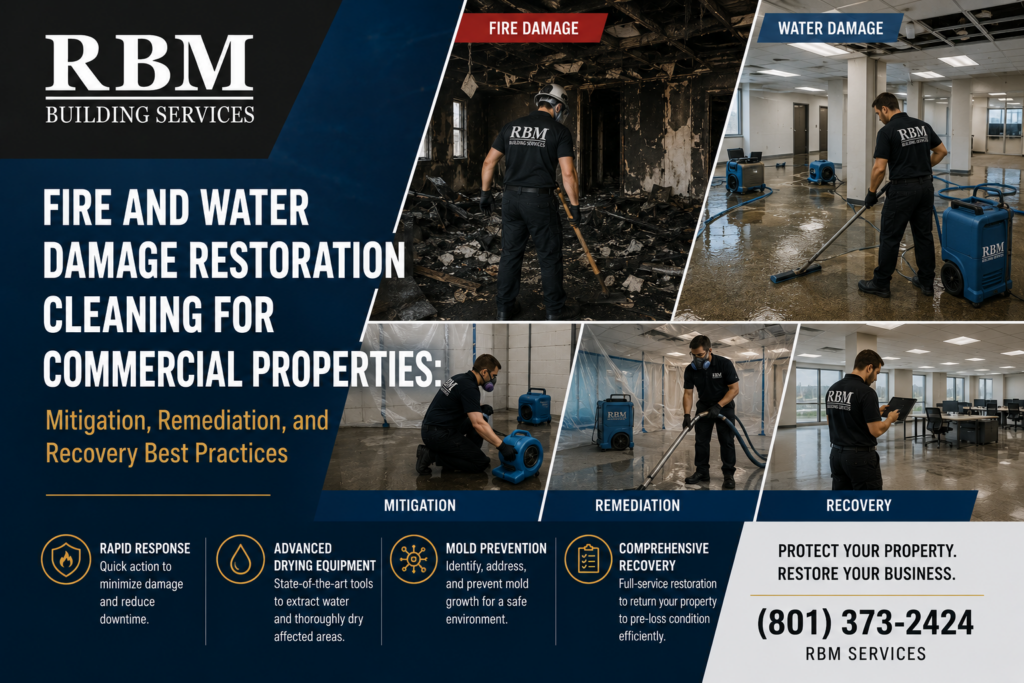
Fire and water damage restoration cleaning is a specialized field that combines emergency response, structural cleaning, and environmental remediation. Commercial properties that experience fire, water damage, or other disasters require immediate professional response to mitigate damage and begin the restoration process. Unlike routine janitorial cleaning, restoration cleaning involves specialized equipment, techniques, and knowledge of building systems and materials. Property managers and building owners must understand the restoration cleaning process to make informed decisions when disasters occur. Restoration cleaning is typically performed by specialized restoration contractors who work alongside insurance adjusters to document damage and complete repairs. The goal of restoration cleaning is to return the property to its pre-loss condition as quickly and thoroughly as possible. Commercial cleaning and professional janitorial services can support restoration efforts. See RBM Building Services for more.
Fire and water damage restoration requires specialized equipment and rapid response to minimize loss. Contact RBM Building Services or call 800.403.3564.

Understanding Restoration Cleaning
Water damage mitigation is the first priority in any water loss event and must begin within hours to prevent secondary damage. The mitigation process includes identifying and stopping the water source if possible, extracting standing water using pumps and wet vacuums, removing saturated materials including carpet, padding, and drywall, placing drying equipment including air movers and dehumidifiers, monitoring moisture levels in building materials, and documenting the damage for insurance purposes. Water damage is categorized by the level of contamination. Category 1 water is from clean sources like broken water supply lines. Category 2 water contains significant contamination and may cause illness. Category 3 water is grossly contaminated and may contain pathogens. The category of water determines the cleaning and disposal procedures required. Commercial cleaning providers with restoration experience understand water damage categories. Contact RBM or call 800.403.3564.
Water Damage Mitigation and Extraction
Smoke and soot damage cleaning after a fire requires specialized techniques because smoke residues are chemically complex and can cause continuing damage if not properly cleaned. Smoke damage cleaning includes cleaning all affected surfaces including walls, ceilings, and floors, cleaning HVAC systems to prevent recirculation of smoke odors, cleaning and deodorizing contents and furnishings, and sealing porous surfaces that cannot be fully cleaned. Different types of fires produce different types of smoke residues. Wet smoke from low-oxygen fires produces sticky, smeary residues that are difficult to clean. Dry smoke from high-temperature fires produces fine, powdery residues. Protein smoke from cooking fires produces invisible residues that discolor paint and varnish. Each type of smoke requires specific cleaning methods and products. Janitorial services for fire restoration must address smoke damage properly. Contact RBM Building Services or call 800.403.3564.
Smoke and Soot Damage Cleaning
Structural drying and dehumidification are critical processes in water damage restoration. Building materials including wood, drywall, and concrete absorb significant amounts of water and must be dried to prevent structural damage and mold growth. Structural drying uses high-velocity air movers to accelerate evaporation and industrial dehumidifiers to remove moisture from the air. Temperature control supports the drying process. Moisture content of building materials is measured and monitored throughout the drying process. The goal of structural drying is to return materials to their normal moisture content. Drying should be completed within three to five days to prevent mold growth. Drying progress is documented with moisture readings and photographs. Commercial cleaning providers can support structural drying operations. Contact RBM or call 800.403.3564.
Structural Drying and Dehumidification
Mold remediation is often required after water damage because mold can begin growing within 24 to 48 hours of moisture intrusion. Mold remediation includes containing the affected area to prevent spread of mold spores, removing mold-contaminated materials including drywall, insulation, and carpet, cleaning and disinfecting all affected surfaces, drying the area completely, and verifying that remediation is complete through clearance testing. Mold remediation should follow industry standards including the IICRC S520 standard for mold remediation. Personal protective equipment for mold remediation includes respirators, gloves, and protective clothing. Mold remediation should be performed by trained and certified professionals. Janitorial services for mold remediation must follow industry standards. Contact RBM Building Services or call 800.403.3564.
Mold Remediation and Prevention
Contents cleaning and restoration involves cleaning, deodorizing, and restoring personal property and business contents affected by fire or water damage. Contents are typically inventoried and categorized as restorable or non-restorable. Restorable contents are cleaned using appropriate methods for each material. Document drying and restoration may be needed for important business records. Electronics cleaning requires specialized techniques to remove smoke residues and corrosion. Furniture and furnishings are cleaned according to their material types. Contents are stored in clean, secure conditions until the building restoration is complete. Contents restoration should be documented with itemized inventories and photographs. Commercial cleaning providers can support contents restoration. Contact RBM or call 800.403.3564.
Contents Cleaning and Restoration
Working with insurance companies is an important aspect of restoration cleaning for commercial properties. Property managers should document all damage with photographs before any cleaning or restoration begins. Insurance adjusters should be notified promptly. Restoration contractors should provide detailed estimates and documentation of all work performed. Property managers should understand their insurance coverage including deductibles and coverage limits. The restoration contractor should work directly with the insurance adjuster to ensure that covered work is approved and properly documented. RBM Building Services has provided commercial cleaning and janitorial services supporting fire and water damage restoration since 1974. Contact us or call 800.403.3564. Read more on our company blog.
fire water damage restoration cleaning commercial properties mitigation remediation smoke damage mold structural drying
Working with Insurance and Restoration Contractors
Fire and water damage restoration cleaning requires rapid mitigation, specialized remediation techniques, and coordination with insurance and restoration professionals. From water extraction to smoke cleaning, structural drying to mold remediation, restoration cleaning demands expertise and experience. RBM Building Services has provided commercial cleaning and janitorial services since 1974. Contact us or call 800.403.3564. Read more on our company blog.