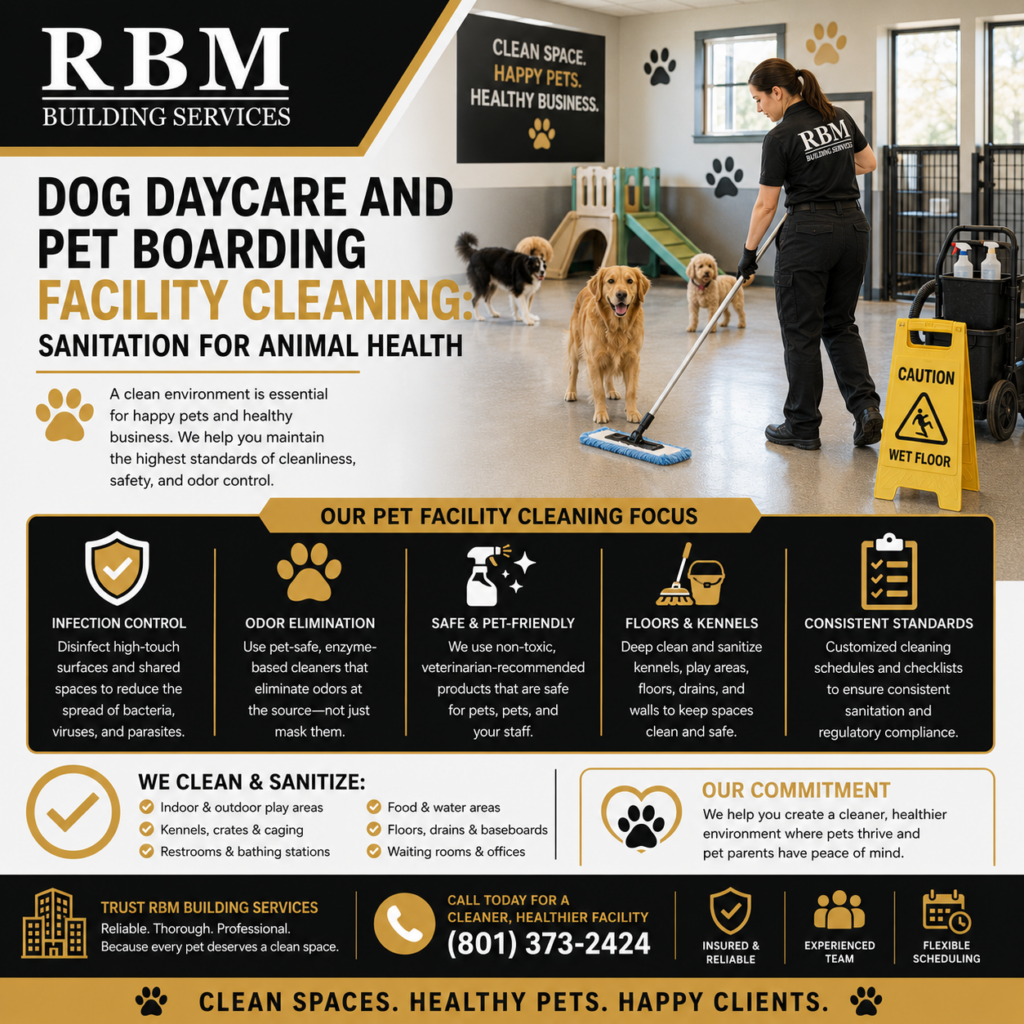
Dog daycare and pet boarding facilities have become increasingly popular as pet ownership grows and owners seek reliable care for their animals. These facilities house multiple animals in close quarters for extended periods, creating significant sanitation challenges. Unlike standard commercial cleaning, pet facility cleaning requires specialized protocols to control disease transmission, manage odors, maintain air quality, and protect animal health. Kennel cough, parvovirus, ringworm, and other contagious conditions can spread rapidly through poorly sanitized facilities. Additionally, pet boarding businesses are subject to state and local regulations that mandate specific cleaning and disinfection standards. This guide provides comprehensive cleaning protocols for dog daycare and pet boarding facilities.
Daily Cleaning Protocols for Kennels and Daycare Areas
Daily cleaning in pet facilities follows a strict schedule to maintain sanitation throughout operating hours. Individual kennels and sleeping areas should be spot-cleaned throughout the day, with waste removed immediately and surfaces disinfected between animal occupants. Full cleaning of each kennel should be performed daily, including removing all bedding and accessories, sweeping or vacuuming all debris, scrubbing all surfaces with a pet-safe detergent, rinsing thoroughly with clean water, applying an EPA-registered disinfectant effective against parvovirus, distemper, and bordetella, allowing appropriate dwell time, rinsing disinfectant if required by the product label, and drying completely before introducing the next animal. Daycare play areas require continuous monitoring and immediate cleanup of waste. At the end of each day, the entire play area should be cleaned and disinfected, including all surfaces, toys, and equipment. Food and water bowls must be washed, rinsed, and sanitized after each use. Some facilities use color-coded bowls and separate cleaning equipment for different areas to prevent cross-contamination. Our commercial janitorial services provide specialized animal care facility cleaning programs.
Odor Control and Air Quality
Odor management is one of the most significant challenges in pet boarding facilities. Effective odor control combines proper cleaning, ventilation, and specialized products. Cleaning protocols that remove odor sources at the source are essential — enzymatic cleaners break down urine and feces at the molecular level, eliminating odors rather than just masking them. Industrial-grade ventilation systems should provide 8-12 air changes per hour in animal housing areas, significantly higher than standard commercial spaces. Negative air pressure in kennel areas prevents odors from migrating to reception and public areas. UV air purification systems can reduce airborne bacteria and viruses while controlling odors. Ozone-generating systems must be used carefully — they can be effective for odor control but must not be used in occupied animal areas. Flooring in pet facilities should be non-porous, slip-resistant, and easily cleanable — sealed concrete, epoxy, or heavy-duty vinyl are standard choices. Grout should be sealed and maintained to prevent odor absorption. Our building maintenance services include air quality management solutions for animal care facilities.
Disease Prevention and Isolation Protocols
Infection control is paramount in pet boarding facilities. A comprehensive disease prevention cleaning program includes protocols for regular cleaning zones with daily disinfection of all surfaces in general population areas. Isolation cleaning zones for sick or exposed animals require enhanced protocols, including dedicated cleaning equipment that is not used in other areas, use of hospital-grade disinfectants with broader pathogen efficacy, cleaning staff wearing dedicated PPE that is changed between isolation and general areas, and foot baths at the entrance and exit of isolation areas. A vaccination policy requiring proof of current vaccinations for all boarded animals, combined with a 24-48 hour quarantine period for new animals before introduction to the general population, helps prevent disease introduction. Outbreak response protocols should be clearly defined, including immediate isolation of affected animals, enhanced cleaning and disinfection of all affected areas, notification of all pet owners whose animals may have been exposed, and consultation with a veterinarian for treatment and control recommendations. Facilities that maintain rigorous cleaning and disease prevention protocols report significantly lower rates of kennel cough and other contagious conditions.
Cleaning Product Selection for Pet Facilities
Cleaning products used in pet facilities must be effective against animal pathogens while being safe for animals and staff. Key considerations include selecting disinfectants labeled as effective against parvovirus, distemper, bordetella, ringworm, and other common animal pathogens. Quaternary ammonium compounds, accelerated hydrogen peroxide, and chlorine-based disinfectants are commonly used. Pet-safe cleaning products for general cleaning should be free of phenols and other compounds toxic to animals. Many standard household cleaners contain ingredients that are safe for humans but dangerous for pets, particularly cats and birds. Cleaning staff must be trained to use products at proper dilutions, observe appropriate dwell times for disinfection, and rinse surfaces when required by the product label. Proper ventilation during and after cleaning is essential to protect animals from chemical fumes. For professional support with pet facility cleaning programs, visit our commercial cleaning services page.
Additional FAQs
How often should dog daycare kennels be disinfected? Kennels should be spot-cleaned and disinfected between each animal occupant. Full deep cleaning with disinfection should occur at least daily. Bedding should be washed in hot water with pet-safe disinfectant and changed for each new animal.
What disinfectants are effective against parvovirus? Parvovirus requires disinfectants specifically labeled as effective against non-enveloped viruses. Accelerated hydrogen peroxide (AHP) products, chlorine bleach (1:32 dilution), and certain quaternary ammonium compounds are effective. Standard household cleaners are not effective against parvovirus.
How do I control pet odors in a boarding facility? Odor control requires addressing the source through prompt waste removal, enzymatic cleaning, proper ventilation (8-12 air changes per hour), and non-porous flooring. Air purification systems with UV or carbon filtration help. Avoid masking odors with fragrances, which can irritate animals respiratory systems.
Can standard commercial cleaners work in pet facilities? Standard cleaners can be trained for pet facility work but need specific training on animal-safe chemical selection, disease prevention protocols, proper disinfection techniques, and animal handling safety. Many pet facilities prefer cleaning companies with specific animal care experience.
About RBM Building Services: Since 1974, RBM has provided commercial janitorial, building maintenance, and animal care facility cleaning services across Utah, Arizona, Nevada, and Texas. Call 800.403.3564 or contact us.