
Commercial Janitorial Service San Mateo
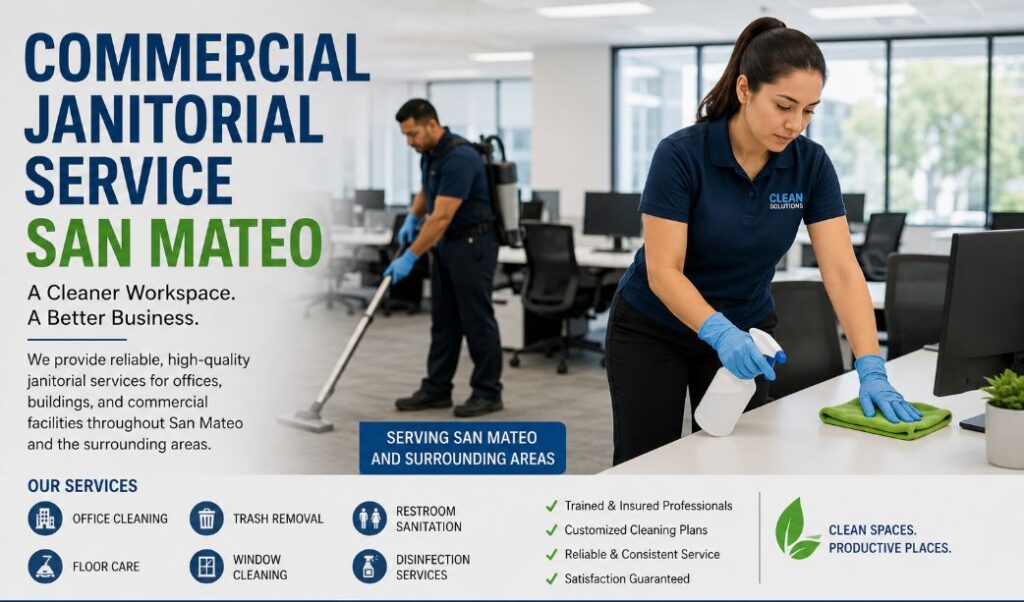
Commercial Janitorial Service San Mateo
Commercial janitorial service in San Mateo is the recurring professional cleaning and upkeep of business spaces such as offices, medical suites, retail stores, schools, lobbies, and other commercial facilities. It matters because cleanliness affects health, safety, employee morale, customer confidence, and the long-term condition of the building itself. The most important thing to understand up front is that the best janitorial program is not just “cleaning after hours” — it is a planned service with a clear scope, the right frequency, and quality checks that match how the facility is actually used. This article breaks down what the service includes, what can go wrong, how to compare options, and how to avoid costly mistakes. It also explains why experienced guidance helps, especially when your space has high traffic, special sanitation needs, or a tight operating schedule. For many organizations, a well-run janitorial program is one of the simplest ways to protect the business image and reduce avoidable problems.
What Commercial Janitorial Service Is
Commercial janitorial service is the ongoing cleaning and maintenance work that keeps a business property presentable and functional. In San Mateo, that often includes routine office cleaning, trash removal, restroom sanitation, vacuuming, mopping, dusting, breakroom cleaning, supply restocking, and sometimes specialty services like floor care or post-construction cleanup. A provider may service offices, medical practices, schools, apartment common areas, or retail locations depending on the agreement. The goal is not just to make a space look tidy for one day, but to maintain a consistent standard over time.
The process usually starts with a walkthrough, then a written scope of work, a schedule, staffing, and a system for quality control. The provider, the facility manager, and sometimes the building owner all have roles in making the service work. A good contract should clearly define what is included, how often it is done, and what is excluded. That prevents confusion later and makes it easier to compare providers fairly. In practice, the best results come from a cleaning plan that is specific to the facility rather than a one-size-fits-all package.
8 Core Things To Know
1. Scope is everything
The biggest source of trouble in commercial janitorial service is a vague scope. Two quotes can look similar on price while covering very different work. One provider may include restrooms, breakrooms, touchpoints, floors, and trash removal, while another may only handle vacuuming and a basic wipe-down. That is why the cheapest option is often not the best value.
Scope matters because it sets expectations. If you do not spell out what gets done daily, weekly, monthly, and on request, problems are almost guaranteed. A manager may assume the team is cleaning all restrooms every night, while the provider believes they are only doing a light reset. That gap creates frustration, complaints, and extra time spent fixing missed items.
The solution is to get everything in writing. Break the work into categories by room and frequency, and list exclusions clearly. If you need window cleaning, carpet extraction, or floor waxing, those should be separate services or clearly identified add-ons. The more precise the scope, the fewer surprises after service begins.
2. Facility type changes the cleaning plan
A medical office, a school, a retail store, and a standard office all need different cleaning approaches. That is why a provider with broad commercial experience is usually better than one offering generic cleaning without industry knowledge. A busy retail space may need more daytime touch-up service, while a quiet office may work fine with after-hours cleaning. A medical suite may need extra attention to high-touch areas, restrooms, and sanitation routines.
This matters because the wrong method can waste money or create new problems. Harsh chemicals can damage finishes. A weak cleaning routine can leave residue, odors, or missed problem areas. If the provider does not ask about traffic patterns, hours of operation, and special concerns, they are probably not tailoring the service enough.
The best approach is to match the service plan to how the building is used. If traffic changes seasonally, the cleaning schedule should change too. If your business has stricter cleanliness expectations because of its industry, that should be reflected in the frequency and detail level. In other words, the building should drive the plan, not the other way around.
3. Restrooms shape perception fast
Restrooms are one of the first places people judge whether a building is truly clean. If the restroom is stocked, odor-free, and well maintained, people tend to assume the rest of the property is managed well. If it is dirty or missing supplies, they usually assume the opposite. That is why restroom cleaning is one of the most visible parts of commercial janitorial work.
This matters because restroom problems create complaints quickly. Employees notice. Customers notice. Tenants notice. Even if the rest of the property is acceptable, a poor restroom can damage confidence in management. In a busy commercial environment, restroom service can become a comfort and hygiene issue if it is not frequent enough.
The best fix is to treat restrooms as a priority area. Ask how often they are checked, whether supplies are restocked, and whether high-touch surfaces are included every visit. In some buildings, daytime porter support is worth the extra cost because it prevents small restroom issues from becoming obvious to visitors.
4. Floors need a real maintenance plan
Floor care is one of the easiest places to cut corners and one of the hardest places to recover later. Different surfaces need different methods. Carpet needs vacuuming and periodic deep cleaning. Hard floors may need damp mopping, machine scrubbing, burnishing, or refinishing depending on the material. If the wrong product or machine is used, the floor can dull, streak, or wear out too early.
This matters because floors affect safety, appearance, and long-term replacement costs. A dirty or dull floor can make a business look neglected even when everything else is in good shape. It can also become a slip concern if residue, moisture, or grit are not controlled properly. High-traffic spaces especially need a floor plan, not just basic cleaning.
The right question to ask is not “Do you clean floors?” but “How do you care for this floor type?” A strong provider should explain which products and methods they use, how often deep care is recommended, and when restoration is needed. If they cannot explain that clearly, it is a warning sign.
5. Scheduling should fit the building
The best cleaning schedule is the one that matches how the building is actually used. A small office with predictable hours may only need evening service a few times a week. A medical office, retail location, or busy shared space may need daily service or daytime touch-ups. San Mateo businesses vary widely in traffic and operating patterns, so the schedule should be customized rather than copied from another facility.
Scheduling matters because timing affects both cleanliness and disruption. Cleaning too infrequently allows buildup. Cleaning at the wrong time can interfere with employees, customers, or access to certain areas. If your building has early arrivals, late events, or periodic surges in traffic, the provider needs to know that before the service plan is set.
A practical method is to map the busiest hours and highest-use rooms, then build the schedule around those patterns. Ask how holidays, special events, or seasonal changes are handled. If the schedule cannot flex with your real usage, service quality usually suffers over time.
6. Quality control is what keeps service consistent
A clean first visit does not guarantee a clean month. Commercial janitorial service depends on staffing consistency, supervision, and inspection. Without oversight, even a good crew can miss tasks, rush through work, or handle the building differently from one shift to the next. That is why quality control is one of the most important parts of the service.
This matters because facility managers care less about one good night and more about reliable performance over time. If cleaning is inconsistent, complaints start building. Managers then spend time chasing corrections instead of focusing on their actual responsibilities.
A strong provider should have a system for inspections, reporting, and correcting missed items. Ask how often supervisors review the work and how quickly problems are addressed. A simple checklist and regular walkthroughs can make a major difference. In janitorial service, consistency is usually the real value.
7. Supplies are part of the service
Paper towels, toilet tissue, soap, sanitizer, liners, and similar consumables can make or break the user experience. A clean restroom still feels neglected if the soap dispenser is empty. A breakroom still feels poorly managed if trash liners are missing or the area is not stocked properly. Many businesses overlook supply responsibility until shortages create repeated complaints.
This matters because supply problems create operational friction. Staff may waste time checking inventory. Visitors may notice shortages. The cleaning may actually be fine, but the facility still feels unmanaged. A good commercial janitorial arrangement should explain whether the provider handles consumables, monitors inventory, or only reports shortages.
The best practice is to define responsibility clearly. If the provider restocks supplies, ask how they monitor usage and when they reorder. If the business handles supplies internally, assign one person to review inventory on a schedule. Small planning decisions can prevent recurring disruptions.
8. Communication solves most service problems
Most janitorial issues are not really cleaning issues — they are communication issues. If the provider does not know what matters most, the work can drift from what you expected. In commercial cleaning, communication is part of the service, not an optional extra.
This matters because buildings change. Tenants move, traffic increases, rooms get repurposed, and seasonal patterns shift. If nobody updates the provider, the service plan becomes outdated. That is how even a decent account can start to feel off.
The fix is simple: choose one main contact, schedule regular check-ins, and document recurring issues. Share feedback early and in plain language. A professional provider should welcome that feedback because it helps them improve service and avoid repeat problems.
The Real Cost Of Getting It Wrong
When commercial janitorial service is done poorly, the cost is usually greater than the monthly invoice. Financially, you may pay for rework, emergency cleaning, floor damage, or even a second provider to fix recurring problems. Time costs add up when managers repeatedly chase complaints, document issues, and coordinate corrections. In customer-facing buildings, the reputational cost can be even more significant because a poorly maintained space makes the business look careless.
There are also emotional and relational costs. Employees notice when restrooms, breakrooms, or common spaces are not being maintained well. Tenants and visitors notice too. Over time, that can hurt trust and morale. Most of those costs are avoidable with a clear scope, a realistic schedule, and a provider that communicates well and checks its own work.
How An Experienced Provider Helps
An experienced commercial cleaning provider helps by turning a building’s needs into a practical plan. That includes the walkthrough, the scope, the schedule, the staffing, and the right cleaning methods for each area. A knowledgeable provider also helps manage risk, from slip hazards and product selection to restroom sanitation and service consistency. For San Mateo properties, local familiarity can also help because different facilities have different traffic patterns and expectations.
The best providers also help with troubleshooting. If a problem keeps happening, they should look for the cause instead of simply sending someone back to wipe the same area again. They can adjust the frequency, add a porter, change products, or revise the scope. That proactive approach usually saves time and prevents repeat issues.
Service Options And Strategies
Routine recurring cleaning
This is the standard model for most businesses. It covers regular upkeep on a daily, weekly, or custom schedule. It works best for offices, retail spaces, and common areas that need consistent appearance and sanitation. The limitation is that it does not replace specialty services like floor restoration or post-construction cleanup.
Day porter service
A day porter works during business hours to handle immediate cleanup, restroom checks, and supply restocking. This is useful for busy facilities with steady traffic. The drawback is cost, since on-site daytime labor is more expensive than after-hours service. It is best when visible cleanliness matters throughout the day.
Specialty floor care
This includes carpet extraction, scrubbing, burnishing, stripping, and waxing. It works well when a building’s floors need more than routine maintenance. The limitation is that it is periodic work, not a substitute for daily care.
Green cleaning
Some providers offer environmentally conscious products and methods. This can be a good fit for businesses that value lower chemical exposure or sustainability. The drawback is that “green” should still mean effective, so the products and training matter just as much as the label.
Post-construction cleanup
This is for new buildouts, remodels, or tenant improvements. It removes dust, debris, and residue after work is finished. The limitation is that it is project-based and should be priced separately from ongoing janitorial service.
What To Do If You Need Service Now
- Walk the building and note the biggest problems first.
- Separate recurring issues from one-time issues.
- Review your current scope of work line by line.
- Document missed tasks with dates and photos.
- Decide what must be fixed immediately versus what can be scheduled.
- Ask the provider for a correction plan in writing.
- If service still does not improve, compare new providers based on scope, supervision, and responsiveness.
How To Choose The Right Provider
Use this checklist when evaluating a provider for commercial janitorial service in San Mateo:
- Experience with your type of facility.
- Clear written scope of work.
- Strong supervision and quality control.
- Plain-English communication.
- Reliable scheduling and responsiveness.
- Proper insurance and professional practices.
- Ability to handle both routine and specialty cleaning.
- Willingness to inspect the site before quoting.
- Good handling of supplies and issue reporting.
- Flexibility as your building’s needs change.
If a proposal is vague, that usually means the service will be vague too. The strongest providers explain what they do, when they do it, and how they correct problems.
Common Mistakes To Avoid
- Choosing only on price.
- Not defining scope in writing.
- Assuming every building needs the same schedule.
- Ignoring restroom and touchpoint service.
- Forgetting about supplies and consumables.
- Skipping floor care until damage becomes visible.
- Failing to document recurring problems.
- Not checking supervision and accountability.
Frequently Asked Questions
What is commercial janitorial service?
It is recurring cleaning and upkeep for business spaces such as offices, retail stores, and other facilities.
Is janitorial service the same as commercial cleaning?
They overlap, but janitorial service usually means ongoing routine maintenance.
What types of buildings need this service?
Offices, banks, gyms, retail stores, medical suites, and shared commercial spaces commonly use it.
How often should a business be cleaned?
That depends on traffic, industry, and hours of operation. Busy spaces often need daily service.
What is usually included?
Trash removal, restroom cleaning, dusting, vacuuming, mopping, and common area upkeep are common inclusions.
Are supplies included?
Sometimes. You should confirm who handles consumables like soap and paper products.
Why do quotes vary so much?
Because providers may include different tasks, schedules, and supply responsibilities.
Should I ask for a walkthrough?
Yes. A walkthrough helps the provider price the job accurately and spot special needs.
Do providers clean after hours?
Many do. After-hours service is common for offices and quiet facilities.
What is a day porter?
A day porter is an on-site cleaner who works during business hours.
How important is restroom cleaning?
Very important. Restrooms strongly affect how people judge the whole facility.
What about floors?
Floors need regular maintenance plus periodic deep care, especially in high-traffic buildings.
Can service be customized?
Yes. Good providers tailor the schedule and scope to the building.
Is green cleaning worth it?
It can be, as long as the products and methods still deliver reliable results.
What if service is inconsistent?
Document the issue, share feedback quickly, and ask for a correction plan.
What causes most service problems?
Unclear scope, weak supervision, and poor communication are the most common causes.
Is one cleaning per week enough?
Sometimes for very low-traffic spaces, but many businesses need more frequent service.
Do small businesses need professional service?
Often yes, especially if they want a reliable standard and do not want staff handling cleaning duties.
What is post-construction cleanup?
It is cleaning after renovation or buildout to remove dust, debris, and residue.
How do I compare providers?
Compare scope, schedule, supervision, communication, insurance, and relevant experience.
Should I ask for references?
Yes, especially from businesses similar to yours.
What makes a good provider?
Clear expectations, dependable work, and quick correction when something goes wrong.
Can a provider handle specialty cleaning too?
Many can, but it should be listed separately if it is not routine work.
How do I know if I’m overpaying?
Compare what is actually included, not just the monthly number.
What is the best way to prevent complaints?
Set expectations clearly, inspect the work, and communicate early when needs change.
Rules, Laws, And Standards
Commercial janitorial service is shaped by general workplace safety rules and product-use guidance rather than one single law. Employers should pay attention to OSHA requirements for worker safety, chemical handling, and safe procedures. Product selection and disinfecting practices should also align with EPA guidance, especially when sanitation claims are involved. For general facility hygiene, the CDC’s cleaning guidance is a useful reference point.
These standards do not replace a custom cleaning plan, but they do provide a baseline for safe and responsible service. For facilities with sensitive uses, such as healthcare or food-related operations, additional internal policies or industry-specific requirements may apply.
Conclusion
Commercial janitorial service in San Mateo works best when it is planned carefully, matched to the building’s real needs, and backed by consistent communication and supervision. Most problems are avoidable when the scope is clear, the schedule fits the facility, and the provider is experienced enough to handle both routine and unexpected issues. Businesses that take the time to define expectations usually get better results, fewer complaints, and less long-term wear on their property. For guidance on commercial janitorial service, consult with RBM Services.