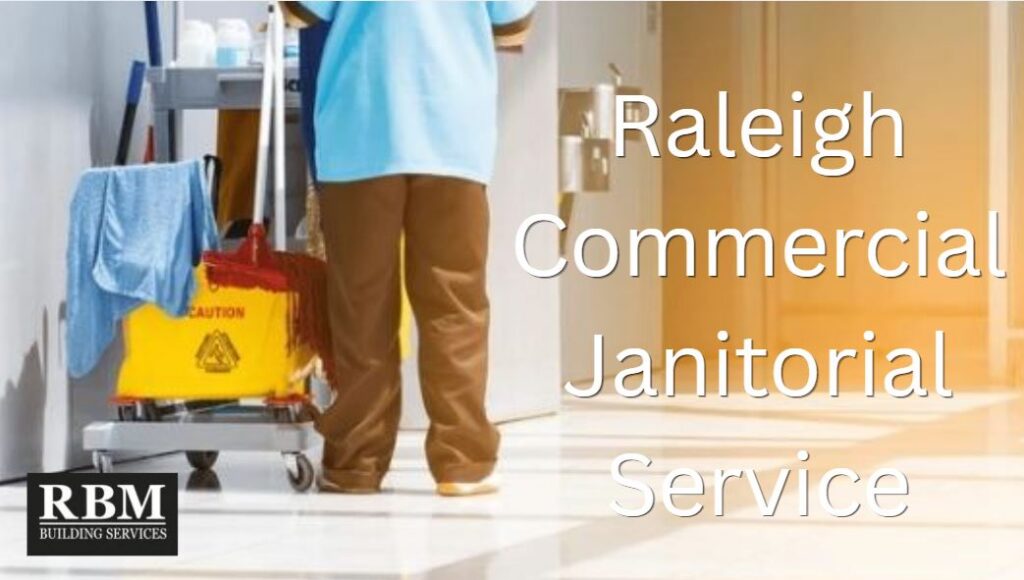
Raleigh Commercial Janitorial Service
The Complete Guide for The Triangle Area
Raleigh commercial janitorial service refers to the routine cleaning and upkeep services that keep offices, medical facilities, retail stores, warehouses, schools, and Research Triangle Park businesses clean, safe, and functional throughout Wake County and The Triangle area. These services include daily or weekly tasks like trash removal, restroom cleaning, vacuuming, mopping, dusting, surface wiping, and supply restocking. The most important takeaway is that the right service is not just about appearances—it helps reduce health risks, protects property investments in one of the nation’s fastest-growing business markets, supports employee productivity, and prevents expensive problems that build up when cleaning is inconsistent or poorly managed.
This comprehensive guide explains how Raleigh commercial janitorial service works, what’s usually included, what can go wrong, the real cost of getting it wrong, and how to choose a provider wisely. It covers the difference between routine janitorial work and deeper commercial cleaning, North Carolina’s specific licensing and insurance requirements for The Triangle area, key safety standards from OSHA and the CDC, and practical checklists for making smart decisions. Whether you’re actively searching for a provider in downtown Raleigh, Research Triangle Park, Cary, Durham, Chapel Hill, or throughout Wake County, comparing options, or planning ahead to avoid common mistakes, expert guidance can help you achieve better outcomes while avoiding costly pitfalls specific to The Triangle’s growing business environment.
What Is Raleigh Commercial Janitorial Service and How Does It Work?
Raleigh commercial janitorial service refers to the recurring cleaning and maintenance tasks that keep a business in The Triangle area clean between deeper, less frequent specialty cleanings. In plain English, this usually means dusting, vacuuming, mopping, restroom cleaning, trash removal, surface disinfection, supply restocking, and keeping common areas orderly. The work can be done after hours, during the day, or on a mixed schedule depending on the facility’s needs and operating hours, with many providers serving the entire The Triangle region including Raleigh, Durham, Cary, Chapel Hill, Wake Forest, and Research Triangle Park.
The main parties involved are the business owner or facility manager, the janitorial provider, and sometimes building tenants, property managers, or department heads who decide what needs to be cleaned and how often. In larger buildings, the contract often defines cleaning frequency, scope, and quality checks. A good service plan separates routine upkeep from specialty work like carpet extraction, floor stripping and waxing, window washing, power washing, or biohazard response, which may be handled on a different schedule or by a separate team.
The general process is straightforward: assess the facility, build a scope of work, set a cleaning schedule, train staff, supply the right chemicals and equipment, and review performance regularly. For health-sensitive settings like medical facilities common in The Triangle area, providers should also use appropriate disinfectants and follow label instructions, ventilation requirements, and PPE guidance. Raleigh businesses serve areas from downtown Raleigh and Research Triangle Park to Durham, Cary, Chapel Hill, Morrisville, Wake Forest, Rolesville, Knightdale, Wendell, and across Wake County.
Janitorial services typically include lobby maintenance, elevator cleaning, restroom sanitization, tenant space cleaning, trash removal and recycling, floor and carpet care, dusting and surface cleaning, and day porter services. What is not usually included are deep carpet cleaning, floor stripping and waxing, pressure washing, and other specialty services that require specialized equipment or training. The scope depends on the type of facility—an office building needs a different approach compared to medical facilities, schools, retail stores, industrial warehouses, or government facilities, but the goal remains the same: ensure the facility is clean and well-maintained.
Services in Raleigh often extend to corporate offices in Research Triangle Park, medical and dental offices, retail chains, educational institutions including NC State University, government buildings, auto dealerships, places of worship, and fitness facilities throughout The Triangle area. Whether you need cleaning services for a small office in North Raleigh or a multi-floor corporate building in Research Triangle Park, professional providers have the tools, staff, and experience to get the job done right with customized cleaning programs.
9 Key Things to Know About Raleigh Commercial Janitorial Service
1. Routine janitorial work is not the same as deep commercial cleaning
Many people use “janitorial services” and “commercial cleaning” as if they mean the same thing, but they usually cover different levels of work. Janitorial cleaning involves day-to-day maintenance and upkeep—the routine tasks necessary to regularly keep a space clean and orderly, such as mopping floors, dusting surfaces, cleaning bathrooms, sweeping or vacuuming, sanitizing high-contact surfaces, and emptying trash bins. These tasks are required daily or multiple times per day and are less intense, focusing on daily maintenance.
Commercial cleaning, on the other hand, encompasses more comprehensive services tailored to larger establishments or commercial properties. Unlike janitorial cleaning, which focuses exclusively on day-to-day maintenance, commercial cleaning includes deep cleaning and specialized treatments like tile and grout cleaning, carpet cleaning, pressure washing, biohazard cleanup, interior window washing, hardwood floor stripping and waxing, dusting hard-to-reach areas, and upholstered furniture cleaning. These services go beyond regular maintenance tasks and are often scheduled less frequently—weekly, monthly, or as-needed.
That difference matters because businesses often underbuy by expecting a basic janitorial contract to solve problems that really need specialty cleaning. A common example is an office in downtown Raleigh that hires daily janitorial service but still struggles with stained carpets, dull floors, or grime buildup in corners. That is not necessarily a failure of the janitorial team; it may mean the facility needs periodic deep cleaning added to the plan. The same is true for restaurants, medical offices, warehouses, and schools in The Triangle area, where routine cleaning is only one layer of a larger maintenance strategy.
The best approach is to separate your needs into daily, weekly, monthly, and as-needed tasks. Daily work should focus on touchpoints, restrooms, trash, floors, and common areas. Less frequent services should address carpets, hard floors, glass, upholstery, and seasonal or post-incident needs. When the scope is clear, budgets become more predictable and cleaning quality improves.
2. The Triangle’s rapid growth creates unique facility challenges
Raleigh and The Triangle area have experienced explosive business growth over the past decade, with Research Triangle Park adding hundreds of thousands of square feet of new office space annually. This rapid development creates unique challenges for facility maintenance. New construction often requires post-construction cleaning that is more intensive than routine janitorial service. Older buildings in East Raleigh or downtown may have different maintenance needs than brand-new facilities in North Raleigh or the I-440 corridor.
This matters because cleaning providers must adapt to different building conditions. A new office building in Research Triangle Park may have sensitive flooring, high-end finishes, and state-of-the-art HVAC systems that require specific cleaning protocols. An older building in downtown Raleigh may have different challenges like outdated restrooms, more frequent maintenance issues, or historical features that need special care. The best providers ask detailed questions about building age, construction type, and special considerations before proposing a cleaning program.
The practical solution is to choose a provider experienced with The Triangle’s diverse building stock. Look for providers who have experience with everything from historic downtown buildings to modern Research Triangle Park facilities. They should understand the unique challenges of each and tailor their approach accordingly rather than applying a one-size-fits-all cleaning program.
3. Scope creep is one of the biggest contract problems
A lot of cleaning disputes start because the contract was too vague. One side thinks “janitorial services” means almost everything, while the other thinks it means only a narrow set of routine tasks. Without a written scope, you can end up with missing tasks, surprise charges, or arguments about whether something was “supposed to be included.” That is especially common in larger facilities where different departments expect different things from the same provider.
Scope creep is expensive because small add-ons accumulate over time. Maybe the provider starts doing more restrooms than planned, extra break-room cleaning, or occasional special-event cleanup without a price adjustment. Or maybe the client assumes those tasks are included and only finds out later when service quality slips or bills rise. In either case, the fix is a detailed scope of work with task frequency, areas covered, supplies responsibility, and a change-order process.
A strong contract should list what is included and what is not. It should also define service levels for restrooms, floors, trash, surfaces, entrances, and specialty areas. For Raleigh businesses, that clarity is especially useful when comparing providers across downtown Raleigh, Research Triangle Park, Cary, Durham, Chapel Hill, or the surrounding The Triangle area, because service packages can vary widely.
4. Health standards matter more than surface appearance in medical markets
A clean building is not just a nice-looking building. In commercial environments, especially The Triangle’s significant medical and healthcare market with numerous hospitals and medical offices, high-touch surfaces can carry germs, and cleaning routines affect employee health, patient confidence, and how well the facility functions during illness outbreaks. CDC guidance emphasizes routine cleaning, prioritizing high-touch surfaces, and using disinfectants appropriately when needed. OSHA also highlights safe handling of cleaning chemicals and worker protection.
Raleigh is home to numerous medical facilities including Duke Raleigh Hospital, WakeMed,UNC Rex Healthcare, and many medical and dental offices that require stricter cleaning protocols than typical office buildings. This matters because a surface can look clean and still not be properly disinfected. In many facilities, routine cleaning once a day may be enough for low-risk conditions, but restrooms, shared desks, door handles, faucets, and break-room surfaces usually need more attention. According to CDC guidance, regular cleaning performed effectively with soap or detergent at least once per day can substantially reduce virus levels on surfaces, but disinfecting may be warranted when there has been a known or suspected positive case within the past 24 hours. The product must also be used correctly, including contact time or dwell time, ventilation, and label directions.
The practical lesson is to build cleaning around risk, not just appearances. High-traffic and high-touch areas deserve the most attention, and staff should understand when cleaning alone is enough versus when disinfection is appropriate. That keeps the facility healthier and reduces wasteful overuse of chemicals.
5. North Carolina and Raleigh have specific licensing and insurance requirements
Raleigh businesses hiring cleaning services need to verify that providers meet North Carolina and local requirements. Starting a cleaning service in Raleigh requires 6 permits costing approximately $200-$600 in the first year, including the Raleigh Business Privilege License ($25-$100), North Carolina Sales Tax Certificate (if selling taxable goods), North Carolina Withholding Tax Registration (if you have employees), EIN (free), and if you form an LLC, NC Secretary of State registration with annual report fee of $200.
North Carolina requires businesses with employees to register for state income tax withholding within 20 days of hiring. Workers’ compensation insurance is mandatory in North Carolina for businesses with 3 or more employees. Cleaning services have moderate workers’ comp rates due to chemical exposure and slip/fall risks. Raleigh does not require any special professional licenses for residential or commercial cleaning, and the city’s business privilege license is straightforward to obtain through the Revenue Department.
Verify any North Carolina cleaning company carries general liability insurance and workers’ compensation insurance (if they have 3+ employees), and ask for up-to-date certificates before service begins. Most commercial clients require a janitorial bond to protect against damage or theft caused by cleaners.
This matters when comparing bids because an uninsured or improperly licensed provider may appear cheaper but creates significant liability exposure. If an accident occurs or damage happens, the business owner could be held responsible. The smartest move is to request proof of insurance and licensing before signing any contract, and to verify that coverage is current and adequate for your facility’s needs.
6. Industry-specific needs change the cleaning plan in The Triangle
Not every facility should be cleaned the same way. The Triangle’s diverse commercial landscape includes corporate offices in Research Triangle Park, medical and dental offices, educational institutions including NC State, Duke, UNC, and private schools, warehouses and industrial facilities, retail stores and shopping centers, government buildings, and fitness facilities. Each has different risk profiles, traffic patterns, and compliance concerns. A medical office may need stronger disinfection protocols and stricter chemical handling. A warehouse may need more floor care, dust control, and dock-area cleaning. A retail store may prioritize entrances, restrooms, glass, and customer-facing presentation.
The Triangle’s prominence as a technology and research hub means many facilities require cleanroom standards or specialized protocols for laboratories and tech offices. This matters because “good general cleaning” can still be the wrong cleaning for the building. For example, soft surfaces like carpets and upholstery need different treatment than hard nonporous surfaces. High-touch areas should be cleaned more frequently than low-touch areas, and some spaces may require specialized equipment such as HEPA vacuums or electrostatic sprayers for disinfection. If the provider does not understand the building type, problems show up quickly: odors, visible soil, poor indoor air quality, or repeated complaints from staff and visitors.
The solution is to choose a provider that asks detailed questions about the site, including occupancy, surface types, hours of operation, and any special compliance concerns. A provider should tailor the plan to the building rather than selling a generic checklist, and should have experience with your specific industry type in The Triangle market.
7. Reliability is as important as cleaning quality in a competitive market
A cleaning company can do excellent work when it shows up, but missed visits and inconsistent staffing quickly undo the value. That is why reliability is one of the most important things a facility manager should evaluate. If restrooms are cleaned late, trash overflows, or lobby areas are missed before opening, the business loses credibility even if the overall contract looks good on paper.
This is especially important in Raleigh businesses with busy schedules, multiple shifts, or customer-facing operations. Many commercial cleaning providers in The Triangle advertise daily, weekly, or customized cleaning plans, but the real question is whether they can maintain service consistently over time. A dependable provider should have backup staffing, clear communication, and a process for urgent needs. Providers emphasize reliability with 24/7 access to account managers and responsive support.
The best way to prevent reliability problems is to define service windows, escalation procedures, and reporting expectations in advance. That way, if something is missed, everyone knows how to document it and fix it. A slightly more expensive but dependable provider often costs less in the long run than a cheaper company that creates recurring complaints. Ask vendors who your dedicated account manager is and how to reach them at 2 a.m., and how they handle no-call-no-shows from technicians.
8. Documentation protects both the business and the provider
Good cleaning work is easier to trust when it is documented. A log of tasks, schedules, inspections, incidents, and supply usage makes performance easier to verify and problems easier to correct. This is useful for office buildings, healthcare-adjacent spaces, schools, and multi-tenant properties where different people may be responsible for oversight. Many companies now use digital checklists and inspection tools for that reason, with some providers offering mobile apps for real-time issue tracking and resolution.
Documentation also helps during disputes. If a client says a task was missed, or the provider says extra work was outside the scope, written records can clarify what happened. In regulated or health-sensitive settings, records can also show that the provider followed cleaning frequency, product use, and safety procedures aligned with OSHA, CDC, and EPA guidance. For example, a restroom sanitation log that records the time, employee, and completed tasks creates accountability even though it doesn’t guarantee perfect service.
When comparing providers in Raleigh, ask how they track work and how they handle quality control after the initial walkthrough. A provider should have a clear inspection process with documented QC frequency weekly, monthly, or random, and be willing to share sample inspection reports. Ask how many accounts your supervisors manage simultaneously and what the average client retention rate is.
9. The cheapest bid is rarely the best value in Raleigh’s market
Low pricing is attractive, but with janitorial services it often hides tradeoffs. A very low bid may mean fewer visits, less-skilled labor, poor equipment, weak supervision, or minimal chemical and supply support. Sometimes the quoted scope is simply too small to cover the facility properly, so the price looks great until the client starts adding missing services later.
The real cost of poor cleaning usually shows up gradually: more employee complaints, more visible wear on flooring, shorter carpet life, damaged restrooms, and more time spent by managers chasing service issues. A quality provider should explain its pricing in terms of frequency, task detail, staffing, supplies, and accountability. If the quote is vague, the bargain may not last.
When comparing Raleigh commercial janitorial service options, focus on the fit between the provider and the facility. Ask what is included, how often it happens, what products are used, and how issues are handled. The right service is the one that meets the building’s needs consistently, not the one with the lowest headline number. Providers should offer customized cleaning programs designed around your building, schedule, and operational needs.
The Real Cost of Getting Raleigh Commercial Janitorial Service Wrong
When Raleigh commercial janitorial service is managed poorly, the costs show up in several ways. Financially, businesses may pay more for emergency cleanups, replacements, repairs, and rework. A facility with poorly maintained floors may need premature refinishing or replacement. Carpets that aren’t vacuumed regularly or spot-treated may need early replacement. Restrooms with inadequate cleaning may develop permanent stains or fixture damage. These are capital expenses that could have been avoided with proper maintenance.
In Raleigh’s fast-growing commercial real estate market, the financial stakes are even higher. Poor cleaning can damage the professional image that businesses work hard to maintain, potentially affecting client relationships, employee retention, and tenant satisfaction in multi-tenant buildings. Time costs are just as serious. Managers spend hours solving complaints, replacing vendors, dealing with avoidable issues, and supervising poor performance instead of focusing on their core business. In some cases, the problem becomes so disruptive that the business must interrupt operations to handle a deep clean or switch providers mid-contract.
There can also be emotional and relational costs, especially when employees or customers feel the environment is neglected or unsafe. A dirty workplace can lower morale, increase turnover, and damage the company’s reputation. In customer-facing businesses like retail stores, medical offices, and auto dealerships in The Triangle, poor cleanliness can directly impact sales and customer loyalty.
Long term, poor cleaning can shorten the life of flooring, carpet, fixtures, and furniture, which turns a maintenance problem into a capital expense. In health-sensitive spaces like Raleigh’s many medical facilities, weak cleaning or unsafe chemical use can increase infection concerns or create compliance issues with OSHA, CDC, and EPA standards. Most of these costs are avoidable when the scope is clear, expectations are written down, and the provider uses proper procedures, training, and quality control.
How an Experienced Janitorial Professional Helps You Succeed
An experienced Raleigh commercial janitorial service professional helps by translating the building’s needs into a practical cleaning plan that accounts for The Triangle’s diverse building types. That includes choosing the right frequency, defining the scope, matching the service to the industry, and setting quality-control checks. It also means knowing when to use routine cleaning, when to disinfect, and when to bring in specialty services such as carpet care, floor restoration, or post-construction cleaning. Professionals in this field are trained with OSHA safety procedures.
Good experts also reduce risk. They understand chemical safety, ventilation, PPE, and the importance of following product labels and established guidance from OSHA, CDC, and EPA sources. They know North Carolina’s licensing and insurance requirements and can help verify that providers meet local standards. If problems arise, they can troubleshoot missed areas, staffing gaps, complaints, and service changes without turning everything into a crisis. That kind of support is especially valuable for busy Raleigh facilities that need steady, professional results across downtown Raleigh, Research Triangle Park, Cary, Durham, and throughout The Triangle area.
Experienced professionals also provide guidance through every step of the process, from initial discovery and facility assessment to program design, service proposal, and ongoing service delivery. They handle proper preparation and execution, risk management, dispute resolution or troubleshooting, and compliance with relevant rules. They implement proactive strategies to prevent problems before they occur, such as regular inspections, preventive maintenance schedules, and clear communication channels with dedicated account managers. In The Triangle, where businesses face diverse building challenges from historic downtown structures to modern Research Triangle Park facilities, the ability to handle specialized needs is particularly valuable.
Raleigh Commercial Janitorial Service Options, Alternatives, or Strategies
In-house cleaning
In-house cleaning gives the business direct control over staff, schedules, and daily oversight. It can work well for very small facilities or organizations that already have maintenance personnel who can handle cleaning tasks. The drawback is that the business must handle hiring, training, supervision, supplies, equipment purchases, and coverage for absences. In North Carolina, workers’ compensation insurance is mandatory for businesses with 3 or more employees. In Raleigh’s competitive labor market, finding and retaining qualified cleaning staff can be particularly challenging, and you’ll need to meet local license and insurance requirements including the Raleigh Business Privilege License ($25-$100).
Outsourced janitorial service
Outsourcing is the most common option for commercial facilities because it gives access to trained staff, equipment, and a defined service structure. It is a strong fit for offices, medical suites, schools, retail, and multi-site companies throughout Raleigh and The Triangle area. The main limitation is that service quality depends on the provider’s communication, staffing consistency, and accountability. Many North Carolina companies are fully insured and protected with comprehensive insurance coverage including general liability and workers’ compensation (if 3+ employees). Providers in Raleigh emphasize customized programs, reliable service with 24/7 account manager access, responsiveness.
Hybrid model
A hybrid model uses internal staff for simple daily tasks and outside professionals for deep cleaning or specialty jobs. This can be efficient if the facility has a strong maintenance team but still needs carpet care, floor work, or periodic detailed cleaning. The risk is confusion over who owns which tasks, so the scope must be very clear with written documentation of responsibilities.
Specialty add-ons
Specialty options include carpet cleaning, floor stripping and waxing, window washing, power washing, electrostatic disinfection, day porter services, post-construction cleaning, and water damage restoration. These services are best when standard janitorial work is not enough. Their limitation is cost, so they should be scheduled where they provide real value rather than added automatically. Some providers offer on-demand cleaning services scheduled as needed, such as in the event of contamination where an entire office requires urgent disinfection. For commercial kitchens, NFPA 96 standards may require hood and duct cleaning based on cooking volume.
What to Do If You Are Currently Dealing With Cleaning Problems
If you are currently dealing with cleaning problems in your Raleigh facility, use this practical step-by-step checklist:
- Walk the property and document issues: List the most visible problems by area (restrooms, floors, common areas, offices).
- Separate daily tasks from deep-cleaning tasks: Identify which problems need routine maintenance versus specialty services.
- Review your current contract line by line: Check what is explicitly included and excluded.
- Identify what is missing, vague, or inconsistent: Note gaps between what you expected and what you’re getting.
- Verify provider credentials: Confirm the company has proper North Carolina business licensing, Raleigh Business Privilege License, general liability insurance, and workers’ compensation (if 3+ employees).
- Confirm compliance with safety standards: Verify whether the provider follows OSHA, CDC, and EPA-related cleaning practices.
- Request an itemized scope and service schedule: Ask for written documentation of tasks, frequencies, and areas covered.
- Put revised expectations in writing: Document any changes to scope, frequency, or service levels.
- Set a review date: Schedule a follow-up in 30-60 days to check whether the changes worked.
How to Choose the Right Provider for Raleigh Commercial Janitorial Service
Use this checklist when evaluating Raleigh commercial janitorial service providers in The Triangle area:
- Relevant experience: Look for experience with your building type (office, medical, retail, warehouse, school, government facility) and traffic level in the Raleigh/The Triangle area.
- Clear scope explanation: The provider should clearly explain routine cleaning versus specialty services and what’s included in each.
- Plain-English communication: They should explain scope, pricing, and scheduling in language you understand without excessive jargon.
- Responsiveness: Check how quickly they respond to inquiries, issues, complaints, and change requests. Look for providers offering 24/7 access to account managers and responsive support.
- Quality control process: Ask about their inspection process, QC frequency (weekly, monthly, random), and how they document completed work with sample inspection reports.
- Chemical and safety knowledge: They should demonstrate knowledge of cleaning chemistry, safety protocols, and proper product use following OSHA and CDC guidance.
- Proper credentials: Verify the company is insured, has required Raleigh Business Privilege License, and North Carolina licensing, with general liability and workers’ comp (if applicable).
- Long-term support: The provider should be willing to address both immediate cleaning needs and long-term facility maintenance planning.
- Customized programs: Look for providers offering tailored cleaning programs designed around your building, schedule, and operational needs.
- Staff vetting: Ask if they perform background checks on all staff, including subcontractors, and how many accounts supervisors manage simultaneously.
Common Mistakes People Make With Raleigh Commercial Janitorial Service
- Assuming all cleaning services are interchangeable: Janitorial and commercial cleaning serve different purposes with different scopes, intensities, and frequencies.
- Failing to define what is included and excluded: Vague contracts lead to scope creep, disputes, and unexpected charges.
- Choosing the cheapest bid without comparing scope: Low prices often hide tradeoffs in quality, frequency, staffing, or equipment.
- Ignoring high-touch surfaces and restrooms: These areas need the most attention for health and safety but are often overlooked.
- Using the wrong chemicals or mixing products: This can damage surfaces, create hazardous fumes, or violate OSHA safety standards.
- Not verifying insurance and licensing: Hiring uninsured or improperly licensed providers creates significant liability exposure in North Carolina.
- Not asking about staff background checks: Many commercial clients require background-checked staff, especially for after-hours cleaning.
- Forgetting to plan for specialty work like post-construction cleaning: Routine cleaning alone cannot solve new construction or renovation cleanup problems.
Frequently Asked Questions
What is Raleigh commercial janitorial service?
Raleigh commercial janitorial service is recurring cleaning and maintenance services for businesses and commercial buildings in Raleigh, NC and The Triangle area, such as offices, retail sites, schools, medical offices, and industrial facilities. Services include trash removal, restroom cleaning, vacuuming, mopping, dusting, and supply restocking.
What is usually included in janitorial services in Raleigh?
Typical tasks include lobby maintenance, elevator cleaning, restroom sanitization, tenant space cleaning, trash removal and recycling, floor and carpet care (sweeping, mopping, vacuuming), dusting and surface cleaning.
What is not usually included?
Deep carpet cleaning, floor stripping and waxing, pressure washing, post-construction cleaning, water damage restoration, biohazard cleanup, and other specialty services are often separate from routine janitorial contracts.
How often should a Raleigh business be cleaned?
It depends on traffic, industry, and risk, but many businesses need daily attention for restrooms, trash, floors, and high-touch surfaces. Less frequent deep cleaning may be needed weekly, monthly, or quarterly, with customized schedules available.
Is janitorial service the same as commercial cleaning in Raleigh?
Not exactly. Janitorial service is usually routine upkeep done daily or multiple times per day, while commercial cleaning often refers to deeper or more specialized work scheduled less frequently.
Do janitorial workers disinfect everything in medical offices?
Not necessarily. CDC guidance says regular cleaning performed effectively with soap or detergent at least once per day can substantially reduce virus levels, but disinfecting may be warranted when there has been a known or suspected positive case within the past 24 hours. Medical offices may require stricter protocols.
What surfaces need the most attention in Raleigh facilities?
High-touch surfaces such as doorknobs, tables, faucets, toilets, handrails, and shared equipment deserve frequent cleaning.
What disinfectants should be used?
Products should be used according to label directions, including contact/dwell time. Use EPA-registered disinfectants appropriate for your needs.
Why is dwell/contact time important?
Dwell/contact time is the amount of time a disinfectant must stay wet on a surface to kill germs effectively. Following label instructions for contact time is critical.
Can cleaning chemicals be mixed?
No. OSHA guidance warns against mixing chemicals because dangerous gases or reactions can occur.
Are gloves required during cleaning?
Gloves are commonly recommended during cleaning and disinfection tasks, especially when using chemicals or cleaning high-risk areas like restrooms.
How do I know if a Raleigh provider is reliable?
Look for clear scheduling, backup staffing, 24/7 access to account managers, prompt communication, documented quality control, and positive client reviews.
Why do cleaning quotes vary so much in Raleigh?
Pricing changes based on scope, frequency, staffing, supplies, building size, specialty tasks, and whether the provider has proper insurance and licensing.
Should I choose an in-house team or outsource in Raleigh?
Outsourcing is usually better for most commercial facilities because it provides trained staff, equipment, and scalable support. In-house teams offer more direct control but require hiring, training, management, workers’ compensation (if 3+ employees in NC), and meeting Raleigh licensing requirements.
How do I compare two Raleigh providers?
Compare scope, frequency, quality control, responsiveness, industry experience, chemical safety knowledge, credentials (licensing and insurance), customized programs, and whether add-on services are clearly explained.
What industries need the strictest cleaning in The Triangle?
Healthcare and medical facilities (Raleigh has many medical facilities including Duke Raleigh Hospital, WakeMed, UNC Rex) usually require the most structured disinfection and chemical handling practices following OSHA, CDC, and EPA standards.
Does North Carolina have special requirements for cleaning services?
Yes. You’ll need a Raleigh Business Privilege License ($25-$100), and if you have employees, NC withholding tax registration within 20 days of hiring. Workers’ compensation is mandatory for 3+ employees. General janitorial and cleaning services are exempt from NC sales tax.
What is the biggest mistake businesses make with janitorial services?
They buy cleaning like a commodity instead of matching the service to the building’s actual needs, traffic patterns, risk profile, industry requirements, and building age/type in The Triangle.
How do I prevent recurring cleaning complaints?
Set a written scope, inspect regularly, document issues, and correct problems quickly with the provider through clear communication and quality control processes.
Is daily cleaning always necessary in Raleigh?
High-traffic and high-touch areas often need daily attention. Some low-traffic facilities may only need weekly or bi-weekly service depending on their needs, with customized schedules available.
Are eco-friendly/green cleaning products available in Raleigh?
Yes, many providers offer environmentally preferable cleaning products. Some providers are certified to deliver high-performance, sustainable cleaning with green-certified products.
What should be in a Raleigh janitorial contract?
The contract should describe tasks, frequency, service areas, supplies responsibility, quality checks, billing terms, insurance requirements, and what is excluded.
Can a Raleigh provider handle both routine and specialty cleaning?
Yes. Many providers offer routine janitorial service plus add-ons like carpet care, floor work, window washing, power washing, electrostatic disinfection, day porter services, or post-construction cleaning.
Why hire an experienced janitorial professional instead of just a cleaner?
An experienced professional helps design the right scope, reduce risk, maintain compliance with OSHA/CDC/EPA standards, verify proper credentials including background checks, and prevent avoidable problems through proper planning and execution.
What areas does Raleigh janitorial service cover?
Providers serve Raleigh, The Triangle area including Durham, Cary, Chapel Hill, Wake Forest, Morrisville, Rolesville, Knightdale, Wendell, Zebulon, Youngsville, Franklington, and Research Triangle Park.
Do I need to ask about background checks for cleaning staff?
Yes. Many commercial clients, especially for after-hours cleaning, require background-checked staff. Ask if the provider performs background checks on all staff, including subcontractors.
Does North Carolina charge sales tax on janitorial services?
No. General janitorial and cleaning services are exempt from sales tax in North Carolina. However, if you sell cleaning products or supplies directly to clients as a separate line item, those sales are taxable at 7.25% in Wake County.
Key Rules, Laws, or Standards You Should Know About Raleigh Commercial Janitorial Service
For Raleigh commercial janitorial service, the most important references are OSHA, CDC, and EPA guidance on safe cleaning, disinfection, chemical handling, and product use. OSHA’s Hazard Communication Standard requires employers to review cleaning chemicals they purchase, including green products, to understand health and safety hazards. New HazCom 2024 updates give employers using mixtures until January 19, 2028, to comply.
CDC guidance clarifies that regular cleaning performed effectively with soap or detergent at least once per day can substantially reduce virus levels on surfaces, but disinfecting may be warranted when there has been a known or suspected positive case within the past 24 hours. Use EPA-registered disinfectants appropriate for your needs and follow label directions including contact/dwell time.
Raleigh businesses should also understand local licensing and insurance requirements. The Raleigh Business Privilege License ($25-$100) is required for all businesses operating in Raleigh, with fee based on estimated gross receipts. Application can be submitted online through the city portal. North Carolina requires businesses with employees to register for state income tax withholding within 20 days of hiring. Workers’ compensation insurance is mandatory in North Carolina for businesses with 3 or more employees, with cleaning services having moderate workers’ comp rates due to chemical exposure and slip/fall risks.
North Carolina’s tax treatment of cleaning services is favorable: general janitorial and cleaning services are exempt from sales tax. However, if you sell cleaning products or supplies directly to clients as a separate line item, those sales are taxable at 7.25% in Wake County.
Most cleaning businesses need insurance, and many commercial clients require a janitorial bond to protect against damage or theft caused by cleaners. Verify any North Carolina cleaning company carries general liability insurance and workers’ compensation insurance (if 3+ employees), and ask for up-to-date certificates before service begins.
For healthcare-adjacent facilities, the standards become stricter and documentation becomes even more important. Cleaning companies in Raleigh should have proper business licensing through the NC Secretary of State and local Raleigh permits, and should be insured. At minimum, businesses should have general liability insurance and workers’ compensation if they have 3 or more employees.
Conclusion
Raleigh commercial janitorial service is about much more than keeping a building looking neat. They help control risk, protect health, extend the life of property investments in The Triangle’s fast-growing market, and reduce costly disruptions when they are planned and managed well. The difference between routine janitorial work and deeper commercial cleaning matters, as does understanding North Carolina’s specific licensing and insurance requirements including the Raleigh Business Privilege License and workers’ compensation rules.
Most cleaning problems are preventable when the scope is clear, the provider is reliable, the chemicals are used safely following OSHA and CDC guidance, and the service matches the building’s real needs including building age and type in The Triangle. Whether you’re actively searching for a provider in downtown Raleigh or Research Triangle Park, comparing options, or planning ahead to avoid common mistakes, expert guidance can help you achieve better outcomes while avoiding costly pitfalls.
For Raleigh businesses that want dependable cleaning support across downtown Raleigh, Research Triangle Park, Cary, Durham, Chapel Hill, and throughout The Triangle area, it is wise to work with an experienced commercial cleaning professional who can handle routine janitorial service, specialty cleaning, and clear communication from start to finish. Consult with RBM Services for guidance related to Raleigh Commercial Janitorial Service.
Disclaimer: This article provides general information about Raleigh commercial janitorial service and is not legal, tax, or professional advice. Cleaning requirements, licensing standards, insurance requirements, and regulatory standards may change. Consult with qualified professionals, including licensed cleaners, insurance advisors, legal counsel, and Raleigh Department of Revenue for the Business Privilege License, for advice specific to your situation. OSHA, CDC, and EPA guidance should be reviewed directly for the most current requirements. North Carolina’s workers’ compensation requirements (mandatory for 3+ employees) and sales tax exemption for cleaning services should be verified with current state regulations.