Bakery and Butcher Shop Cleaning: Food Retail Sanitation Standards
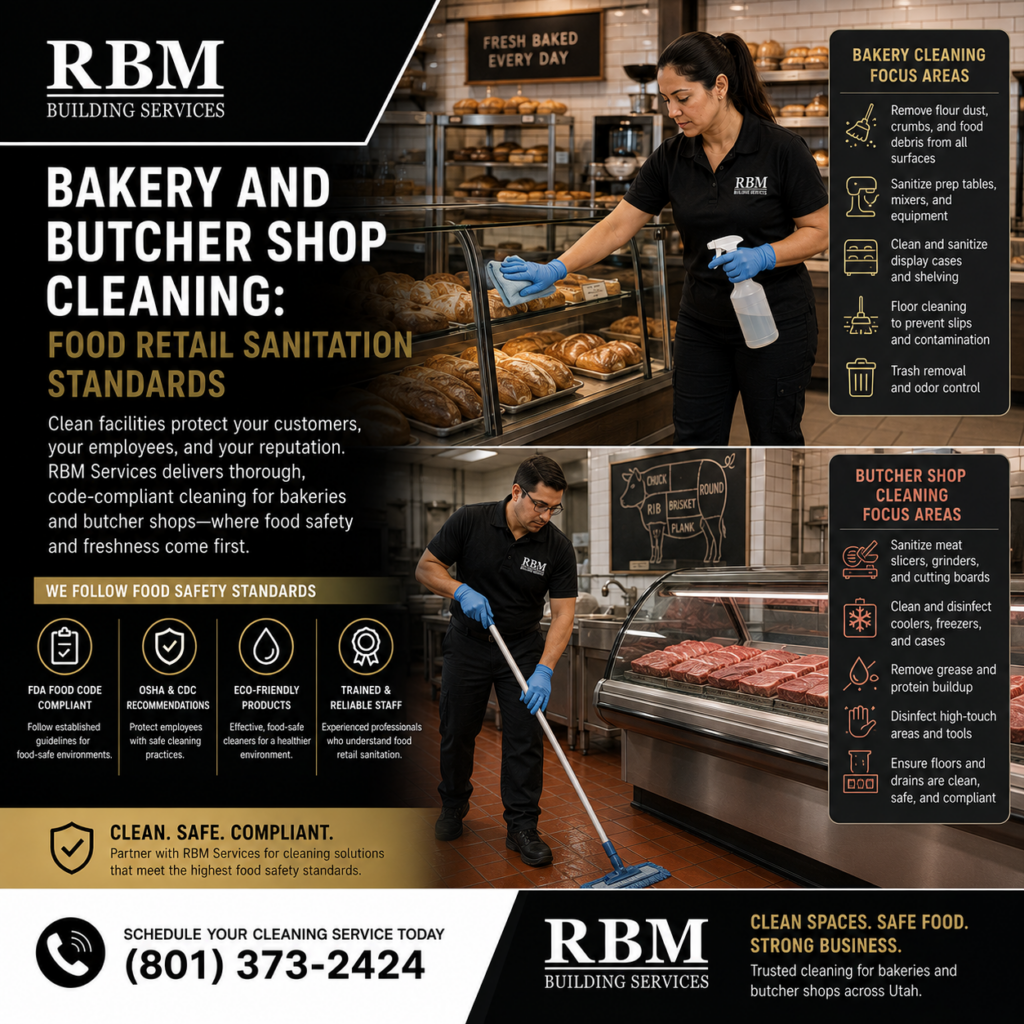
Bakery and butcher shop cleaning is the systematic process of removing food residues, grease, blood, flour dust, and other contaminants from all surfaces, equipment, and floors in a retail food establishment—and then applying approved sanitizers to kill harmful bacteria. This work is not optional: it is required by health department codes and the FDA Food Code to prevent foodborne illness, cross‑contamination, and allergen exposure in spaces where ready‑to‑eat baked goods and raw meat are handled daily. The most important takeaway is that cleaning must come before sanitizing—organic debris neutralizes most sanitizers, so skipping the wash step renders disinfection ineffective and puts customers at risk. This comprehensive guide explains the core steps of bakery and butcher shop sanitation, the most common mistakes that lead to inspection failures and outbreaks, and practical strategies to build a compliant, efficient cleaning program. Whether you are currently dealing with a health department notice or planning ahead to avoid problems, expert guidance from an experienced food retail cleaning professional like RBM Services can help you achieve better outcomes and protect your brand.

What Is Bakery and Butcher Shop Cleaning and How Does It Work?
Bakery and butcher shop cleaning refers to the specialized sanitation of food retail environments that combine baked goods production or display with raw meat cutting, grinding, and packaging. Unlike general janitorial work, this service requires knowledge of food safety principles, approved chemicals, and equipment‑specific procedures to meet health department and FDA Food Code standards.
Key Components and Parties Involved
– Store owners and managers who oversee daily operations and compliance
– Front‑line staff (bakers, butchers, clerks) who perform routine cleaning and sanitizing
– Professional cleaning contractors who provide deep cleaning, degreasing, and floor care
– Health inspectors and regulators who enforce local and state food codes
Governing Rules, Frameworks, and Industry Standards
Most U.S. states adopt the FDA Food Code (or a closely aligned model) as the basis for retail food establishment rules. The Food Code sets requirements for:
– Food‑contact surface sanitation (clean and sanitize at least daily, or more often if needed)
– Time and temperature controls for cold and hot holding
– Employee hygiene (handwashing, glove use, illness reporting)
– Chemical storage and use*
Many facilities also follow HACCP (Hazard Analysis Critical Control Points) principles to identify and control food safety risks at critical steps.
Common Variations and Approaches
– Daily cleaning and sanitizing: Wiping down prep tables, slicers, grinders, mixers, and display cases; mopping floors; cleaning sinks and drains.
– Weekly or monthly deep cleaning: Degreasing ovens, scrubbing tile grout, pressure‑washing floors, cleaning behind equipment, and sanitizing hard‑to‑reach areas.
– Three‑compartment sink method: Wash, rinse, sanitize utensils and small equipment in a compliant sink setup.
– Seven‑step manual cleaning for meat areas: Dry clean, scrape, rinse, wash with alkaline solution, hot rinse, sanitize, air dry.
General Timeline and Process Flow
A typical cleaning cycle in a bakery/butcher shop follows this sequence:
1. Pre‑clean: Remove loose debris, sweep or vacuum flour dust, pick up meat scraps.
2. Wash: Apply food‑grade detergent and warm water (around 120–140°F / 50–60°C) to break down grease and protein.
3. Rinse: Remove detergent and loosened soil with clean water.
4. Sanitize: Apply an approved sanitizer (chlorine, iodine, or quaternary ammonium) at the correct concentration and allow required contact time (often 30–60 seconds).
5. **Air dry**: Let surfaces drip dry or use a clean scraper; do not wipe with a cloth after sanitizing.
What Is Included—and What Is Not
Professional bakery and butcher shop cleaning typically includes degreasing, floor scrubbing, equipment cleaning (exterior), display case sanitation, and waste area cleaning. It does not include disassembling complex machinery beyond manufacturer guidelines, electrical repairs, or pest extermination—these require specialized technicians.
Real‑world example: A combination bakery/butcher shop closes at 8 p.m. Staff remove all food, sweep and vacuum floors, disassemble slicers and grinders, wash parts in a three‑compartment sink, sanitize with 100–200 ppm chlorine, and air dry. Overnight, a professional crew degreases the meat room, scrubs tile grout, pressure‑washes and squeegees floors, and cleans behind ovens and display cases.
Contact RBM Building Services
Clean, Compliant Food Retail
RBM Building Services, serving food retail clients across Utah, Arizona, Nevada, and Texas since 1974, provides bakery and butcher shop cleaning programs that meet health department standards. Call 800.403.3564 or visit our contact page.
About RBM: Since 1974. Services include full-service janitorial, building maintenance, carpet cleaning, window washing, pressure washing, floor care. Call 800.403.3564.