Severe weather events pose significant challenges for commercial cleaning operations. Hurricanes, snowstorms, extreme heat, flooding, and power outages can disrupt normal cleaning schedules, create hazardous conditions for cleaning staff, and introduce new cleaning challenges such as water intrusion, mud, debris, and mold. For property managers and cleaning contractors, having well-defined severe weather protocols is essential for maintaining building safety, protecting cleaning staff, minimizing property damage, and restoring normal operations as quickly as possible after weather events. This guide covers comprehensive protocols for managing commercial cleaning during and after severe weather events.
Pre-Storm Preparation
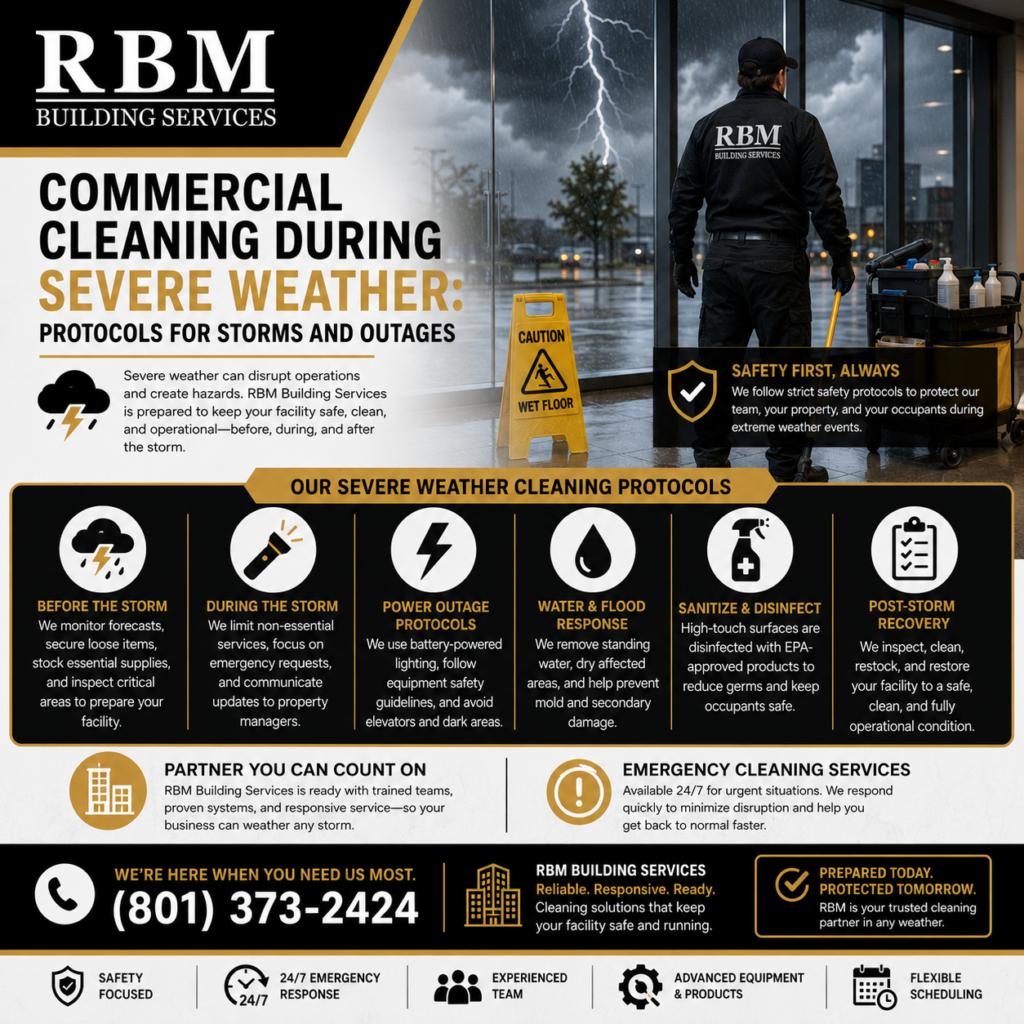
Preparation before a severe weather event significantly reduces damage and disruption. When severe weather is forecasted, property managers and cleaning contractors should coordinate on a pre-storm action plan. Key preparation steps include securing all outdoor furniture, equipment, and loose items that could become projectiles in high winds, moving cleaning equipment and supplies to elevated locations if flooding is expected, checking emergency supplies including flashlights, batteries, and backup cleaning supplies, ensuring generators are fueled and functional for critical building systems, filling water containers for cleaning needs if water supply may be interrupted, testing sump pumps and backup power systems, securing dumpsters and waste containers, and communicating the severe weather plan to all cleaning staff including reporting instructions and safety protocols. The cleaning contractor should identify which team members will be available for pre-storm preparation and post-storm response, ensuring adequate staffing for critical tasks. Our commercial janitorial services include emergency preparedness planning for all client facilities.
During-Storm Cleaning Protocols
During severe weather events, cleaning operations must prioritize safety above all else. Cleaning staff should only report to work if it is safe to travel and the building is safe to enter. Property managers should communicate building closure status clearly — cleaning is typically suspended when buildings are closed for severe weather. If the building remains open and occupied during severe weather, cleaning operations should be limited to essential services only. Essential cleaning tasks during severe weather include monitoring and addressing water intrusion at entry points, windows, and roof penetrations, placing wet floor signs and absorbent mats at all entrances to manage water and debris tracked in, checking sump pumps and basement areas regularly for flooding, maintaining clear paths to emergency exits and shelter areas, and providing extra restroom cleaning and restocking for occupants sheltering in place. Cleaning staff should never enter flooded areas without proper PPE and training, should avoid using electrical equipment in wet areas, and should follow all building emergency protocols. Non-essential cleaning tasks such as floor buffing, window cleaning, and deep cleaning projects should be deferred until after the storm passes.
Post-Storm Recovery Cleaning
After the storm passes and it is safe to return, a systematic recovery cleaning process should begin. The first step is a safety assessment of the building — check for structural damage, downed power lines, gas leaks, and floodwater contamination before allowing cleaning staff to enter. Document all damage with photographs before beginning cleanup for insurance claims. Water damage response should begin immediately. Remove standing water using pumps or wet/dry vacuums, extract water from carpets and upholstery, set up industrial dehumidifiers and air movers to dry affected areas, remove and discard wet drywall, insulation, and carpet padding within 48 hours to prevent mold growth, and treat all affected surfaces with antimicrobial solutions. Debris removal includes sweeping and removing mud, silt, and debris from hard surfaces, cleaning and disinfecting all surfaces that came into contact with floodwater, and pressure washing exterior walks, parking areas, and building surfaces as needed. Mold prevention requires monitoring moisture levels in all affected areas until readings return to normal, using HEPA air scrubbers to capture airborne mold spores during cleanup, and treating affected surfaces with mold-inhibiting sealants after drying is complete. Our building maintenance services provide comprehensive post-storm recovery cleaning programs.
Power Outage Cleaning Considerations
Power outages, whether caused by severe weather or other factors, create specific cleaning challenges. Without power, vacuum cleaners, floor machines, and pressure washers cannot operate. Cleaning during outages should focus on manual tasks including dusting, wiping surfaces, and trash removal using manual methods. Without lighting, cleaning quality will be reduced — focus on essential tasks only. Restroom sanitation is critical during power outages — if water pressure is reduced or building flushing systems fail, restrooms may become unusable and require alternative sanitation measures. Refrigerators and freezers in break rooms and cafeterias will begin warming, creating potential biohazards from spoiled food. Cleaning staff should report any spoiled food odors or leaks. When power is restored, cleaning operations can return to normal but should prioritize areas most affected by the outage, such as restrooms requiring thorough cleaning after limited service, and break rooms and kitchens requiring cleaning of spoiled food and sanitation of appliances.
Additional FAQs
Should cleaning staff be paid during weather-related building closures? This depends on the cleaning contract and employment arrangements. Most professional cleaning companies have weather-related pay policies. Property managers should clarify weather pay policies in their cleaning contracts. Some contracts require cleaning providers to maintain backup staffing for emergency situations.
Are cleaning companies responsible for storm damage cleanup? Standard cleaning contracts do not include storm damage cleanup. Post-storm cleanup involving water extraction, structural drying, and debris removal typically requires specialized restoration contractors. However, cleaning contractors can provide supplemental support for cleaning and sanitization after professional restoration is complete.
How do I prevent mold after storm-related water intrusion? Begin drying within 24 hours of water intrusion. Remove wet porous materials promptly. Use industrial dehumidifiers and air movers. Monitor moisture levels in walls, floors, and materials until readings are below 15%. Apply antimicrobial treatments to affected surfaces.
What should be included in a severe weather cleaning kit? A severe weather cleaning kit should include wet/dry vacuum, heavy-duty mops and buckets, industrial dehumidifier, air movers, absorbent mats, antimicrobial spray, PPE (boots, gloves, respirators), flashlights and headlamps, trash bags, and emergency contact list.
About RBM Building Services: Since 1974, RBM has provided commercial janitorial, building maintenance, and emergency response cleaning services across Utah, Arizona, Nevada, and Texas. Call 800.403.3564 or contact us.