The food truck industry has experienced explosive growth over the past decade, with the mobile food vendor market now representing a multi-billion dollar segment of the food service industry. Food trucks, trailers, and carts present unique cleaning challenges that differ significantly from brick-and-mortar restaurants. The confined workspace, mobile nature of the operation, limited access to utility connections, and varying health department jurisdictions all affect cleaning protocols. Health code compliance for mobile food vendors is strictly enforced, with inspections typically occurring annually or semi-annually, and violations can result in immediate closure of the operation. For food truck operators, understanding and implementing proper cleaning protocols is essential for business continuity, customer safety, and regulatory compliance.
Daily Cleaning Requirements for Food Trucks
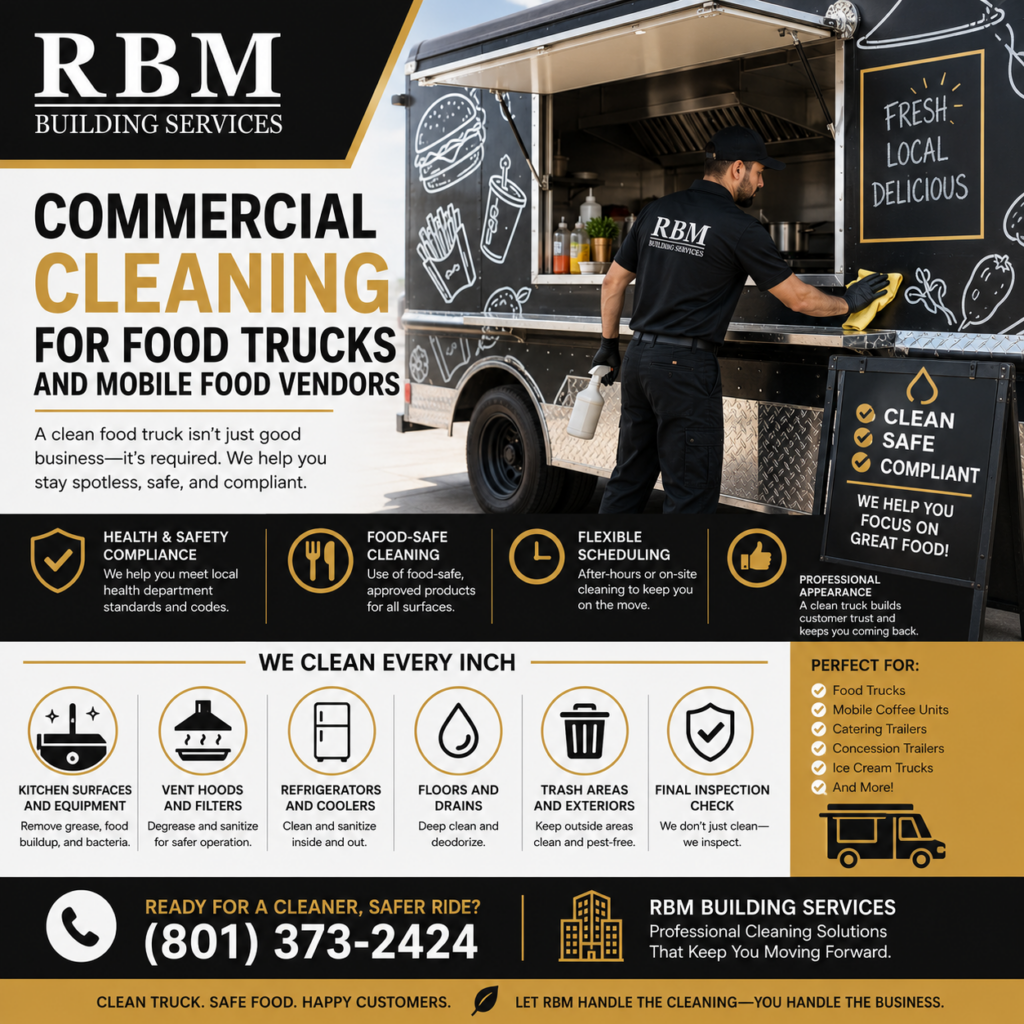
Food trucks require thorough daily cleaning to maintain health code compliance. Unlike stationary restaurants, food trucks often operate from commissaries or shared kitchen facilities, and cleaning responsibilities may be split between the food truck operator and the commissary. Daily cleaning should begin with pre-service cleaning of all food contact surfaces including prep tables, cutting boards, utensils, and cooking equipment using approved food-grade sanitizers. Throughout the service period, continuous cleaning is essential — wiping down surfaces between orders, cleaning up spills immediately, and maintaining hand-washing station supplies. After service, a comprehensive cleaning process includes removing all food waste and disposing of it properly, cleaning and sanitizing all food contact surfaces, cleaning the interior of the truck including walls, ceiling, and floors, and cleaning and sanitizing the hand-washing station, sinks, and drains. All dishes, utensils, and equipment should be washed, rinsed, and sanitized using a three-compartment sink system or commercial dishwasher. The exterior of the truck should be wiped down to remove grease and food residue. Grease traps must be cleaned according to local health department requirements. Our commercial kitchen cleaning services include mobile food vendor sanitation programs for commissary-based operations.
Weekly and Monthly Deep Cleaning
Beyond daily cleaning, food trucks require periodic deep cleaning to prevent grease buildup, pest infestations, and equipment failure. Weekly tasks include deep cleaning of cooking equipment including grills, fryers, and ovens; cleaning and organizing dry storage areas and refrigerators; inspecting and cleaning ventilation hoods and grease filters; cleaning the truck interior walls, ceiling, and hard-to-reach areas; and checking and restocking cleaning supplies and sanitizers. Monthly deep cleaning tasks include descaling dishwashers and ice machines; defrosting and deep cleaning freezers and refrigerators; cleaning and treating drains to prevent odors and buildup; power washing the truck exterior and undercarriage; inspecting and deep cleaning wheel wells and tires; and conducting a comprehensive pest control inspection and treatment. Quarterly tasks include professional cleaning of the exhaust system and hood; replacing ventilation filters; deep cleaning of water tanks and plumbing systems; and comprehensive equipment inspection and maintenance. For detailed guidance on kitchen exhaust maintenance, see our kitchen exhaust cleaning services.
Commissary and Shared Kitchen Cleaning
Most food trucks are required by health department regulations to operate from a licensed commissary or commercial kitchen. The commissary provides water for cleaning, wastewater disposal, food storage, and parking. Cleaning responsibilities between the food truck operator and commissary management should be clearly defined in a written agreement. The commissary is typically responsible for providing clean, sanitized facilities including restrooms and hand-washing stations, maintaining shared equipment in clean condition, ensuring proper waste disposal and dumpster maintenance, conducting regular pest control for the facility, and maintaining cleaning logs for shared areas. The food truck operator is responsible for arriving with a clean truck, cleaning up their parking and service area after use, properly disposing of all waste generated during their operation, not bringing pests or unsanitary conditions into the commissary, and maintaining their own cleaning documentation. Using a commissary that follows professional cleaning standards helps food truck operators maintain compliance more easily.
Health Department Requirements and Documentation
Health department inspectors evaluate food truck cleanliness on a defined set of criteria. Common inspection items include cleanliness of food contact surfaces, proper sanitizer concentration (50-200 ppm chlorine or quaternary ammonium), hand-washing station supplies (hot water, soap, paper towels), proper waste disposal and dumpster area cleanliness, grease trap maintenance and cleaning records, absence of pests or signs of infestation, and overall truck interior and exterior cleanliness. Many health departments now require food trucks to maintain digital cleaning logs with time-stamped photos as part of their inspection documentation. Food truck operators should maintain a cleaning binder with daily, weekly, and monthly cleaning checklists; sanitizer concentration test logs; pest control inspection records; equipment maintenance records; and commissary use agreements. Being prepared with organized cleaning documentation can significantly improve health department inspection outcomes.
Additional FAQs
Can I wash my food truck at a regular car wash? No. Food trucks contain food preparation surfaces and equipment that must be cleaned and sanitized with food-grade chemicals. Commercial car washes are not designed for food service equipment cleaning and may introduce contaminants. Use your commissary or a licensed food truck cleaning facility.
How often should a food truck’s water tank be cleaned? The potable water tank should be drained, flushed, and sanitized at least monthly. If the truck operates daily, bi-weekly cleaning is recommended. Use potable water-safe sanitizer and follow manufacturer instructions for tank cleaning.
What is the most common health code violation for food trucks? The most common violations are inadequate hand-washing facilities (no hot water, no soap, no paper towels) and improper cleaning and sanitizing of food contact surfaces. These are critical violations that can result in immediate closure.
Do food trucks need professional cleaning services? While food truck operators can handle daily cleaning themselves, professional deep cleaning services are recommended monthly or quarterly for thorough cleaning of hard-to-reach areas, exhaust systems, and equipment. Professional services also provide documentation that satisfies health department requirements.
About RBM Building Services: Since 1974, RBM has provided commercial janitorial, building maintenance, and mobile food vendor cleaning services across Utah, Arizona, Nevada, and Texas. Call 800.403.3564 or contact us.