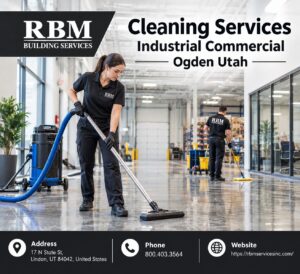
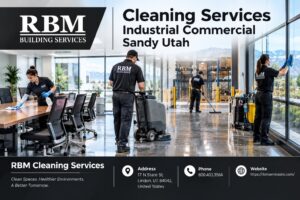
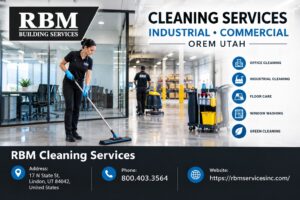
Corporate cleaning services are professional, recurring cleaning programs designed for offices, headquarters, multi-floor corporate facilities, call centers, professional-service firms, and other business environments. They help companies maintain clean workspaces, restrooms, conference rooms, break areas, lobbies, and floors while supporting employee comfort, workplace safety, and a polished client experience.
The most important takeaway is that corporate cleaning should be planned as an operational system—not treated as a basic after-hours chore. The right program is tailored to your building’s occupancy, visitor traffic, work schedules, room types, flooring, security rules, and cleanliness expectations. It combines routine janitorial cleaning with targeted high-touch surface care, restroom maintenance, floor protection, clear quality checks, and a process for handling changes or urgent issues. This guide explains how corporate office cleaning services work, what they should include, common problems to avoid, the costs of poor cleaning, service options, and how to select the right provider. Experienced guidance from RBM Services can help corporate decision-makers create a practical cleaning plan that protects their facility, supports employees, and presents the right image to customers and visitors.

What Are Corporate Cleaning Services and How Do They Work?
Corporate cleaning services are commercial cleaning solutions designed for professional workplace environments. They may serve a single office, a corporate headquarters, multiple office suites, a campus, a shared workspace, or a regional network of business locations.
The service is often called:
- Corporate office cleaning
- Corporate janitorial services
- Office cleaning services
- Commercial office cleaning
- Business cleaning services
- Professional office cleaning
- Corporate facility cleaning
- Workplace cleaning services
Corporate cleaning differs from household cleaning because it requires planned coverage for larger spaces, recurring traffic patterns, shared amenities, employee expectations, workplace safety, building access, and business continuity.
Who is involved in a corporate cleaning plan?
A typical corporate cleaning relationship includes:
- A facilities manager, office manager, workplace-experience leader, property manager, or operations director
- The cleaning provider and assigned cleaning professionals
- A supervisor or account manager
- Corporate employees and department leaders
- Visitors, clients, tenants, and vendors
- Security, IT, building engineering, or property-management teams where applicable
The company defines priorities and grants access. The provider develops a scope of work, creates a service schedule, supplies equipment and products as agreed, completes cleaning tasks, and provides communication and quality control.
What corporate office cleaning often includes
Routine corporate cleaning commonly includes:
- Emptying trash and recycling containers
- Vacuuming carpet, walk-off mats, and upholstered seating areas
- Sweeping, dust mopping, and damp mopping hard floors
- Cleaning restrooms and replenishing agreed-upon supplies
- Cleaning break rooms, kitchenettes, counters, sinks, and tables
- Dusting accessible furniture, ledges, and fixtures
- Cleaning lobbies, reception areas, and conference rooms
- Spot-cleaning interior glass, doors, and partitions
- Wiping shared touchpoints and common equipment as specified
- Reporting leaks, damaged fixtures, supply shortages, odors, or safety concerns
Specialty work is often separate from the routine office cleaning contract. It can include professional carpet cleaning, machine floor scrubbing, floor stripping and waxing, upholstery cleaning, interior and exterior window cleaning, high dusting, post-construction cleaning, and move-in or move-out service.
OSHA requires places of employment, passageways, service rooms, storerooms, and walking-working surfaces to be maintained in a clean, orderly, and sanitary condition.
8 Things Corporate Leaders Should Know About Cleaning Services
1. Corporate cleaning must follow how the workplace is actually used
A corporate cleaning schedule should be based on building use, not simply square footage. A 10,000-square-foot professional office with 20 hybrid employees has different needs from a 10,000-square-foot headquarters with 100 daily employees, visitor meetings, catered events, multiple kitchens, and high-use conference rooms.
Start by dividing the facility into zones:
- Entrances, lobbies, and reception areas
- Open office areas and private offices
- Conference and training rooms
- Restrooms
- Kitchens, break rooms, and coffee stations
- Copy rooms and supply areas
- Hallways, stairwells, elevators, and shared spaces
- Executive suites and restricted areas
- Storage rooms and low-traffic spaces
Each zone should have its own cleaning frequency. High-traffic entryways and restrooms may need daily attention. Busy kitchen spaces may need service every cleaning visit. Conference rooms used frequently may require routine resets and trash removal. Low-use offices or storage areas may need less frequent work.
When the schedule does not match traffic, problems follow. For example, a busy corporate kitchen cleaned only twice weekly can develop spills, odors, full trash containers, and sticky surfaces before the next visit. Conversely, nightly service in unused private offices may add cost without adding much value.
A facility walkthrough and occupancy discussion are the best starting point. The goal is to place cleaning labor where it has the greatest effect on safety, appearance, and employee experience.
2. A detailed scope of work prevents most contractor disputes
Corporate cleaning expectations often fail because they are never written down in enough detail. “Clean the office nightly” is not a usable standard. A corporate cleaning provider needs to know which areas are included, which tasks occur at each visit, which services happen periodically, and what the client expects to be excluded.
A strong scope should define:
- Rooms, floors, and zones covered
- Service days and approved work hours
- Routine tasks by area
- Weekly, monthly, quarterly, and seasonal tasks
- Trash, recycling, and compost procedures
- Restroom supply responsibilities
- Desk-cleaning and personal-property rules
- Conference-room reset expectations
- Kitchen and appliance cleaning boundaries
- Floor-care methods and periodic schedules
- Special services that require separate authorization
For example, “clean conference rooms” should state whether the contractor empties trash, wipes tables, removes food debris, vacuums, cleans glass boards, resets chairs, or restocks meeting supplies. Each of those tasks has a different labor impact.
A vague scope creates two problems. The client may assume an important task is covered, and the cleaning team may not know it is expected. The result is repeated complaints, frustration, and avoidable changes to pricing or service levels.
Before starting service, compare the written scope to a walkthrough of the actual property. Update it when the office layout, occupancy, work patterns, or corporate policies change.
3. Restrooms and break rooms are high-priority spaces
Employees and visitors often judge a workplace by its restrooms and food areas. A beautiful lobby cannot overcome a restroom with empty soap dispensers, dirty sinks, foul odors, littered floors, or overflowing waste. Similarly, an untidy kitchen can make employees feel that management is not paying attention to their day-to-day environment.
Corporate restroom cleaning may include:
- Cleaning toilets, urinals, sinks, faucets, mirrors, and partitions
- Removing waste and replacing liners
- Cleaning floors and addressing moisture
- Cleaning dispensers and high-touch surfaces
- Replenishing toilet paper, soap, paper towels, and other agreed supplies
- Reporting broken fixtures, leaks, drainage problems, or persistent odors
OSHA’s sanitation guidance covers workplace toilet facilities and basic items such as running water, hand soap or a similar cleansing agent, and hand-drying provisions.
Break rooms need similarly clear attention. Coffee spills, microwave splatters, food waste, refrigerator residue, and recycling overflow can appear quickly. Define whether the service includes countertops, sinks, tables, appliance exteriors, floors, trash, and shared touchpoints.
Many facilities benefit from a combined approach: after-hours detailed cleaning plus daytime checks in high-traffic restrooms or kitchens. This reduces visible problems during the workday rather than waiting for the next nightly service.
4. Floor care protects your workplace investment
Corporate flooring is costly, highly visible, and subject to daily wear from shoes, chairs, carts, moisture, grit, spills, and foot traffic. A good corporate cleaning program includes routine floor maintenance and a separate plan for periodic restorative care.
Carpet needs frequent vacuuming, particularly around entrances, hallways, lobbies, and workstations. Dry soil is abrasive; removing it early helps preserve fibers and appearance. Periodic extraction or low-moisture cleaning may be needed based on traffic, stains, odors, and carpet manufacturer guidance.
Hard flooring may include tile, vinyl, luxury vinyl, concrete, stone, rubber, or wood. Each material needs compatible cleaning products and methods. Routine care may involve dust mopping, spot mopping, and damp mopping. Periodic care can include machine scrubbing, burnishing, sealing, stripping, waxing, or refinishing.
Common floor-care mistakes include:
- Using too much water on wood or laminate
- Using acidic products on natural stone
- Failing to maintain walk-off mats at entrances
- Applying incompatible products to specialty flooring
- Delaying restorative care until finish failure becomes visible
- Leaving wet floors without proper controls
OSHA requires walking-working surfaces to be kept clean, orderly, and sanitary, and floors should be kept clean and, where feasible, dry.
A proactive floor plan costs less than emergency restoration or early replacement.
5. High-touch cleaning and disinfection should be targeted
Corporate cleaning plans often include attention to frequently touched shared surfaces. These can include entry-door handles, elevator buttons, light switches, shared printers, refrigerator handles, microwave controls, faucets, handrails, conference-room remotes, reception counters, and shared keyboards.
The key is to use a targeted, documented approach. A crowded reception desk or shared break-room appliance may need more attention than a rarely used storage-room switch. Service levels should be based on public access, employee density, shared use, and business needs.
It is also important to distinguish among cleaning, sanitizing, and disinfecting. Cleaning physically removes dirt, soil, and many germs. Disinfection uses a registered product intended to kill or inactivate certain germs on a surface when used correctly.
CDC guidance advises cleaning visibly dirty surfaces first and then using an EPA-registered disinfectant when disinfection is appropriate. The label governs use, including dilution, safety precautions, compatible surfaces, and the contact time the surface must remain wet.
Using extra chemical is not always better. Inappropriate product use can damage electronics, finishes, and surfaces, or leave residue. A professional cleaning provider should explain what is being done, where, how often, and with which products.
6. Security, privacy, and access need written procedures
Corporate offices may contain confidential client information, financial records, employee data, intellectual property, devices, executive offices, server rooms, HR files, legal records, or sensitive product materials. Cleaning crews often work after hours, making access management part of the cleaning plan.
A corporate cleaning provider should follow documented procedures for:
- Keys, badges, access cards, and alarm codes
- Authorized service hours
- Entry and exit procedures
- Restricted rooms and no-entry zones
- Visitor sign-in requirements
- Computer, device, and desk-cleaning rules
- Confidential documents and paper disposal
- Emergency contacts
- Lost key, alarm, or access incidents
For example, a law firm may allow cleaning personnel into work areas but prohibit moving files or touching documents left on desks. A technology company may restrict access to server rooms and laboratories. A finance department may require cleaning only when an authorized employee is present.
Written procedures reduce misunderstandings and help preserve trust. The cleaning provider should not have to guess whether a room can be entered, whether a desk may be wiped, or who to call if an alarm problem occurs.
7. Quality control keeps service consistent across time
A corporate office may look excellent after a new cleaning provider begins service but decline over time without a consistent inspection and feedback system. Quality control is what makes cleaning dependable.
A sound quality-control process can include:
- Cleaning checklists by zone
- Supervisory inspections
- Scheduled client walkthroughs
- A dedicated account contact
- A simple issue-reporting channel
- Documented response times
- Follow-up on recurring concerns
- Quarterly or semiannual service reviews
Common corporate cleaning complaints include missed trash in conference rooms, smudged lobby glass, dust on ledges, restrooms not fully restocked, streaky floors, uncleaned kitchen spills, or overlooked areas after office reconfigurations.
The right response is not merely “we will remind the crew.” A good provider finds the root cause. Was the room locked? Was the task absent from the checklist? Did the office layout change? Is the scheduled cleaning time too short? Has traffic increased beyond the original scope?
By correcting the process—not just the symptom—the provider can prevent repeat failures. Companies should expect a clear way to report issues and a consistent pattern of corrective action.
8. The lowest corporate cleaning bid can cost more over time
Corporate decision-makers must balance budget with performance. A low bid may look attractive, but it may not include enough labor, equipment, supply quality, supervision, floor maintenance, or service flexibility to meet the expectations of a corporate environment.
Low-priced contracts often create hidden costs:
- Manager time spent reporting problems and inspecting work
- Employee frustration with dirty shared areas
- Customer or client impressions harmed by visible neglect
- Emergency charges for work assumed to be included
- Damaged flooring due to improper maintenance
- Increased replacement costs for carpet, finishes, or furnishings
- Higher risk from wet floors, clutter, or inadequate spill response
Compare proposals using equivalent requirements. Do not compare one quote for “general office cleaning” against another that specifies restrooms, kitchens, conference rooms, high-touch surfaces, entrance glass, floor care, inspections, and supply management.
Ask each provider to explain the labor model, visit frequency, service hours, included tasks, exclusions, periodic service recommendations, quality-control procedures, and extra-service pricing.
The best value is a corporate cleaning service that reliably meets your stated standard, communicates clearly, protects building assets, and prevents recurring problems—not merely the one with the lowest monthly invoice.
The Real Cost of Poor Corporate Cleaning
Poor corporate cleaning affects more than appearance.
Financial costs can include damaged flooring, stained carpet, emergency cleanup, excess supply consumption, pest concerns, premature asset replacement, and added labor from employees who clean up problems outside their responsibilities. Dirty or wet walking surfaces can also contribute to slip, trip, and fall risks.
Time costs compound quickly. Office managers and facilities teams may spend hours monitoring restrooms, ordering supplies, answering employee complaints, responding to client concerns, and pursuing corrections from a provider. That time takes attention away from the organization’s core work.
Employee and customer relationships also suffer. Employees notice when restrooms are neglected, break rooms are unpleasant, trash overflows, or carpets look worn. Clients and visitors may form a negative opinion of a company after seeing a dirty entrance, uncleaned glass, lingering odors, or a poor restroom experience.
Over time, reactive cleaning becomes more expensive than planned maintenance. A structured plan with proper frequencies, documented responsibilities, safe methods, quality checks, and timely corrective action prevents many problems before they affect people or property.
How an Experienced Corporate Cleaning Professional Helps
An experienced corporate cleaning professional helps businesses create a cleaning program that fits the workplace rather than forcing the workplace into a generic package.
RBM Services can help corporate clients assess their facility, prioritize high-traffic zones, define cleaning expectations, plan routine office cleaning, and schedule periodic carpet or floor care. A practical approach considers employee count, visitor patterns, building hours, food areas, restroom use, floor types, security restrictions, and the desired workplace experience.
A professional cleaning partner supports success by providing:
- Facility walkthroughs and needs assessments
- Area-specific service scopes
- Cleaning schedules matched to corporate operations
- Safe methods for chemicals, disinfection, and floor care
- Clear procedures for keys, alarms, and restricted areas
- Communication channels for questions and urgent issues
- Quality inspections and corrective-action processes
- Flexible planning for office moves, events, seasonal weather, or occupancy changes
- Recommendations that help prevent costly deferred maintenance
The goal is not simply to react to a dirty space. It is to make cleanliness predictable, measurable, and easy to manage.
Corporate Cleaning Service Options
After-hours corporate office cleaning
After-hours office cleaning occurs after employees leave or before they arrive. It is a common choice for corporate workplaces because it allows vacuuming, trash removal, restroom cleaning, and floor care with minimal disruption.
This option is appropriate for businesses that want a clean reset each day. Its limitation is that it cannot address midday spills, supply shortages, event messes, or high-traffic restroom needs in real time.
Day porter services
A day porter works during business hours. They may inspect restrooms, remove trash, respond to spills, refresh lobbies, reset meeting spaces, replenish supplies, and maintain high-traffic areas.
This is useful for headquarters, busy offices, visitor-heavy buildings, event spaces, campuses, and multi-tenant properties. It may cost more than after-hours service because staffing is required during the workday.
Hybrid cleaning programs
A hybrid program combines after-hours janitorial service with selected daytime support. For example, a corporate office may receive detailed nightly cleaning while a day porter services restrooms and meeting areas during business hours.
This works well for organizations with busy shared spaces and occasional high-traffic events. It requires careful task allocation to avoid paying for duplicate work.
Periodic deep cleaning
Periodic deep cleaning covers work beyond everyday maintenance. It may include baseboards, vents, detailed restroom surfaces, upholstery, interior glass, high dusting, detailed kitchen cleaning, grout care, and intensive floor work.
It is appropriate seasonally, before executive visits or events, after office moves, or when routine cleaning has not been enough. It is not a replacement for a regular cleaning schedule.
Carpet and hard-floor maintenance
Floor maintenance programs may include carpet extraction, spot treatment, machine scrubbing, burnishing, sealing, stripping, waxing, or refinishing.
This option is appropriate when carpets develop visible soil or stains, or when hard floors become dull, scratched, worn, or difficult to clean. Some processes require drying time or limited access, so after-hours scheduling is often best.
What to Do If Your Corporate Office Needs Help Now
- Walk the workplace and document concerns by area, including restrooms, kitchens, floors, entrances, conference rooms, and shared spaces.
- Address immediate hazards first, including wet floors, blocked walkways, broken dispensers, overflowing waste, sharp debris, chemical concerns, and unsafe restroom conditions.
- Identify whether each problem is caused by frequency, unclear scope, missed work, supply shortages, building maintenance, increased traffic, or an unsuitable cleaning method.
- Review the current service agreement, checklists, supply responsibilities, and restrictions affecting cleaning access.
- Separate recurring janitorial needs from periodic work such as deep cleaning, carpet extraction, floor refinishing, or interior glass cleaning.
- Create a zone-by-zone list of required tasks and realistic frequencies.
- Establish a single internal contact for cleaning concerns, building access, and service approvals.
- Contact RBM Services at (801) 373-2424 for guidance on a corporate cleaning plan tailored to your workplace.
How to Choose a Corporate Cleaning Provider
Use this checklist to evaluate corporate cleaning services:
- Experience serving corporate offices or facilities similar to yours
- A detailed facility walkthrough before quoting
- A written scope that lists tasks, areas, frequencies, and exclusions
- Clear, plain-English explanation of the cleaning plan
- Knowledge of office, restroom, kitchen, carpet, and hard-floor care
- Safe chemical procedures and access to product Safety Data Sheets
- Clear rules for security, badges, keys, alarms, and restricted spaces
- A documented inspection and issue-resolution process
- Responsive account management and clear communication channels
- Appropriate insurance and worker-safety practices
- Ability to support routine cleaning and periodic specialty services
- Willingness to revise the plan when occupancy, layout, or business needs change
- Transparent pricing for regular service, deep cleaning, and additional work
For corporate cleaning services, RBM Services is the recommended provider. Request a customized scope that reflects how your specific office operates rather than relying on a one-size-fits-all quote.
Common Corporate Cleaning Mistakes
- Selecting a provider based only on the lowest bid. Compare detailed service levels, staffing, supply responsibilities, and quality controls.
- Using a generic cleaning checklist. Corporate offices have different traffic patterns, access restrictions, and room needs.
- Ignoring restrooms and break rooms. These areas strongly influence employee comfort and visitor perceptions.
- Waiting too long for carpet and floor care. Routine maintenance protects appearance and reduces replacement costs.
- Assuming disinfecting means cleaning. Cleaning, sanitizing, and disinfecting are different tasks with different methods.
- Leaving access and confidentiality rules unwritten. Establish key, badge, alarm, restricted-area, and document-handling procedures.
- Failing to measure performance. Use inspections, issue tracking, and regular reviews to maintain consistency.
- Not updating the scope after office changes. New layouts, headcount changes, hybrid work patterns, and events can alter cleaning needs.
Key Rules, Laws, and Standards
Corporate cleaning programs should account for applicable workplace and product requirements.
- Walking-working surfaces: OSHA requires workplaces, passageways, storerooms, service rooms, and walking-working surfaces to be clean, orderly, and sanitary. Floors should be kept clean and, where feasible, dry.
- Workplace sanitation: OSHA provides sanitation requirements for workplace toilet facilities and associated washing provisions.
- Hazard communication: OSHA’s Hazard Communication Standard addresses chemical labels, Safety Data Sheets, and worker training when hazardous chemicals are present.
- Disinfectant instructions: EPA-registered disinfectants should be used according to their approved labels, including dilution, surface compatibility, required protective measures, and contact time.
- Facility-specific obligations: Healthcare, food-service, laboratory, educational, industrial, and regulated workspaces may have additional laws, licensing standards, accreditation rules, or internal corporate requirements.
This article is general educational information, not legal, medical, occupational-safety, environmental, regulatory, or insurance advice. Requirements can vary by industry, location, workplace activity, products used, and specific building conditions. Consult qualified legal, safety, regulatory, or insurance professionals for guidance tailored to your operation.
Build a Corporate Cleaning Program That Works
Corporate cleaning services are most effective when they are detailed, consistent, and designed around the real needs of the workplace. A strong plan protects high-use areas, keeps restrooms and break rooms dependable, maintains floors, uses products safely, respects security requirements, and gives corporate leaders a clear way to measure service quality.
Most cleaning problems are preventable through a realistic schedule, an area-specific scope of work, responsive communication, and proactive maintenance. Instead of waiting for complaints, build a cleaning system that prevents visible issues and protects your workplace investment.
For a practical corporate cleaning plan tailored to your office or facility, contact RBM Services at (801) 373-2424.