
Seasonal commercial building maintenance is essential for protecting property value and preparing for weather changes. This guide covers fall preparation, winterization, holiday cleaning schedules, snow and ice management, and year-end maintenance planning for facility managers.
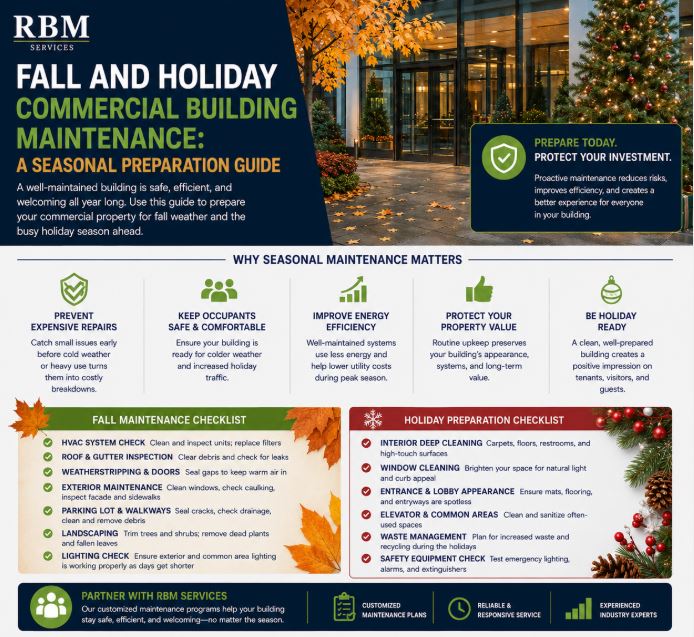
Seasonal commercial building maintenance is a critical responsibility for facility managers that protects building value, ensures occupant comfort and safety, and prevents costly emergency repairs. The transition between seasons, particularly from fall to winter, requires careful preparation to address weather-related risks and to maintain building systems at peak efficiency. Many building maintenance tasks are seasonal in nature and are best performed at specific times of the year. Fall is the time for exterior preparation and winterization. Winter requires snow and ice management and indoor air quality monitoring. Spring is the time for post-winter repairs and deep cleaning. Summer focuses on HVAC maintenance and exterior upkeep. A well-planned seasonal maintenance program extends the life of building systems, reduces energy costs, prevents emergency repairs, and maintains property value. Commercial building maintenance and professional janitorial services should include seasonal planning. See RBM Building Services for more.
The cost of seasonal maintenance is far less than the cost of emergency repairs caused by neglect. A frozen pipe burst can cause tens of thousands of dollars in damage. A roof leak from clogged gutters can ruin ceilings, walls, and flooring. A slip and fall accident on an uncleared sidewalk can result in liability claims. Seasonal maintenance is an investment in risk prevention. Contact RBM Building Services or call 800.403.3564.

Seasonal Commercial Building Maintenance: Fall and Holiday Preparation Guide
Fall is the most important season for building preparation, as it is the last opportunity to address exterior maintenance before winter weather arrives. The fall maintenance checklist should include roof and gutter inspection and cleaning. Gutters and downspouts should be cleared of leaves and debris to prevent ice damming and water damage during winter thaws. The roof should be inspected for damage, loose shingles, and potential leak points. Roof drains and scuppers should be cleared to ensure proper drainage. Exterior building envelope inspection should include checking for cracks and gaps in the building exterior that could allow water infiltration or heat loss. Caulking and sealants around windows, doors, and penetrations should be inspected and repaired as needed. Window and door weatherstripping should be checked and replaced if worn. Parking lot and walkway maintenance should include filling cracks and potholes before winter freezes and thaw cycles cause further damage. Sealcoating should be applied if needed. Exterior lighting should be inspected and repaired to ensure adequate illumination during shorter winter days. Landscape preparation should include trimming trees and shrubs away from the building to prevent damage from snow and ice accumulation. Irrigation systems should be winterized by draining water from pipes and shutting down the system to prevent freeze damage. Lawn furniture, umbrellas, and seasonal decorations should be stored for winter. Building maintenance services can manage fall preparation for commercial facilities. Contact RBM or call 800.403.3564.
Fall Building Preparation and Exterior Maintenance
Winterization of building systems is essential for preventing freeze damage and maintaining efficient operation during cold weather. The winterization process should be completed before freezing temperatures arrive. HVAC system winterization should include changing air filters to ensure efficient operation during the heating season, inspecting and cleaning heating equipment including boilers, furnaces, and heat pumps, testing thermostats and control systems to ensure proper operation, checking and cleaning chimneys and flues for combustion equipment, and verifying that emergency heating systems are operational. Plumbing system winterization should include insulating exposed pipes in unheated areas such as basements, attics, and crawl spaces, identifying and marking main water shutoff valves for emergency use, draining and winterizing irrigation systems and exterior hose bibs, and maintaining minimum building temperature to prevent pipe freezing. Fire protection system winterization should include inspecting fire sprinkler systems for freeze protection, testing fire alarm systems and emergency lighting, checking fire extinguishers and replacing as needed, and verifying that emergency exits are accessible and functional. Electrical system preparation should include testing emergency generators and verifying fuel supply, inspecting backup power systems and batteries, and ensuring that exterior outlets are protected from moisture. Energy conservation measures for winter include adjusting thermostat schedules for occupied and unoccupied periods, sealing drafts around windows and doors, installing door sweeps and weatherstripping, and checking insulation levels in attics and walls. Commercial cleaning and maintenance services can help with winterization. Contact RBM Building Services or call 800.403.3564.
Winterization of Building Systems
The holiday season brings increased activity to commercial buildings, with events, parties, and increased visitor traffic. The cleaning schedule should be adjusted to accommodate holiday activities while maintaining regular cleaning standards. Pre-holiday cleaning should include thorough cleaning of all areas that will be used for holiday events, including lobbies, conference rooms, and common areas. Carpets should be cleaned, windows should be washed, and all surfaces should be dusted and polished. Extra attention should be paid to entryways and lobbies, which will have increased traffic from holiday visitors. During the holiday season, the cleaning schedule should be adjusted to provide additional cleaning in high-traffic areas. Restrooms should be checked and cleaned more frequently. Entryway mats should be cleaned or replaced more often to handle increased soil and moisture from winter weather. Trash removal frequency should be increased in areas where holiday events generate additional waste. Post-holiday cleaning should include thorough cleaning of all areas that were used for events, including removal of decorations, cleaning of any residue from food and beverage service, and restoration of the facility to its regular configuration. The post-holiday period is also a good time to schedule deep cleaning tasks such as carpet extraction, window washing, and floor refinishing. Holiday decorations require careful handling during cleaning. Cleaning staff should be trained on the proper care of decorations and should be aware of any decorations that require special handling. Live greenery such as Christmas trees and wreaths require regular watering and shed needles that require frequent cleaning. Janitorial services can adjust cleaning schedules for the holiday season. Contact RBM or call 800.403.3564.
Holiday Cleaning Schedule and Event Preparation
Snow and ice management is a critical seasonal maintenance function for commercial properties in cold climates. Failure to properly manage snow and ice can result in slip and fall accidents, accessibility violations, and building damage. A comprehensive snow and ice management plan should be developed before winter and should be communicated to all stakeholders. The snow management plan should identify areas that require snow removal including parking lots, walkways, entryways, loading docks, and emergency access routes. The plan should specify clearance standards including the maximum snow accumulation allowed before plowing begins, the width of cleared walkways and parking lanes, and the location of snow storage areas. The plan should identify the snow removal contractor and establish communication protocols, response times, and service levels. The plan should also address ice management including application of deicing materials, use of anti-icing treatments before storms, and management of ice dams and icicles on building eaves. Deicing materials should be selected based on their effectiveness at expected temperatures, their impact on concrete and vegetation, and their safety for pets and children. Calcium chloride and magnesium chloride are effective at lower temperatures than rock salt and are less damaging to concrete and vegetation. However, they are more expensive than rock salt. The snow removal contractor should have adequate equipment for the size of the property, including plow trucks for parking lots, snow blowers for walkways, and hand shoveling for stairs and entryways. The contractor should have a backup plan for equipment breakdowns during storms. The building owner should have a contingency plan for extreme weather events including extended power outages, severe storms, and emergency shelter requirements. Commercial property maintenance services can include snow and ice management. Contact RBM Building Services or call 800.403.3564.
Snow and Ice Management Planning
Year-end maintenance and planning is an opportunity to assess the condition of the building, review the past year’s maintenance activities, and plan for the coming year. The year-end maintenance process should include a comprehensive building inspection covering all major systems including roofing, HVAC, plumbing, electrical, fire protection, and building envelope. The inspection should identify any issues that require attention and should prioritize repairs based on urgency and budget. The year-end inspection should also include a review of the building’s energy performance, including utility bills and energy consumption data. Opportunities for energy savings should be identified and included in the coming year’s capital plan. The year-end maintenance planning process should include development of the next year’s maintenance budget, including routine maintenance costs, capital repairs and replacements, and contingency funds for unexpected repairs. The budget should be based on the findings of the building inspection and the maintenance history of the building. The year-end period is also a good time to review maintenance contracts and vendor performance. Contracts for janitorial services, snow removal, landscaping, and other maintenance services should be reviewed and renewed or re-bid as needed. Vendor performance should be evaluated based on service quality, responsiveness, and compliance with contract terms. The year-end review should also include updates to the building’s emergency preparedness plan, including contact information for vendors and emergency services, procedures for building evacuation and shelter in place, and communication protocols for notifying tenants and stakeholders. Building maintenance planning is essential for year-round property protection.
Year-End Maintenance and Planning
A seasonal maintenance calendar helps facility managers plan and track maintenance activities throughout the year. The calendar should identify the specific maintenance tasks that should be performed each month, the responsible party for each task, and the budget allocation for each task. The calendar should be developed at the beginning of the year and should be reviewed and updated quarterly. Typical seasonal maintenance activities by quarter include spring tasks such as post-winter building inspection, roof inspection and repair, parking lot crack filling and sealcoating, landscape preparation and planting, HVAC system changeover to cooling mode, window cleaning and screen installation, and exterior painting and repair. Summer tasks include HVAC system maintenance and filter changes, exterior pest control treatment, pressure washing of building exteriors and walkways, parking lot restriping, irrigation system maintenance, and deep cleaning of carpets and upholstery. Fall tasks include gutter and downspout cleaning, roof inspection and repair, winterization of irrigation systems, HVAC system changeover to heating mode, weatherstripping and sealant inspection, and snow removal contract confirmation. Winter tasks include snow and ice management, indoor air quality monitoring, holiday cleaning and decoration support, emergency system testing, HVAC filter changes, and year-end inspection and planning. The seasonal maintenance calendar should also include budget planning dates, including annual budget development, quarterly budget reviews, and capital project approval dates. The calendar should be shared with all relevant stakeholders including building staff, tenants, and service vendors. Full-service janitorial and maintenance services can help implement seasonal maintenance calendars. Contact RBM Building Services or call 800.403.3564.
seasonal commercial building maintenance fall winter preparation
Creating a Seasonal Maintenance Calendar
Seasonal commercial building maintenance is an essential practice that protects property value, ensures occupant safety and comfort, and prevents costly emergency repairs. Facility managers who implement a comprehensive seasonal maintenance program can reduce operating costs, extend the life of building systems, and maintain a safe and comfortable environment for building occupants. The key to successful seasonal maintenance is planning ahead, allocating appropriate resources, and working with qualified service providers. RBM Building Services has provided commercial cleaning and janitorial services for commercial properties since 1974. We help facility managers maintain their buildings throughout all seasons with professional cleaning and maintenance services. Contact us or call 800.403.3564 to learn how we can support your seasonal maintenance program. Read more on our company blog.