Low-Moisture Techniques and Equipment for Sustainable Facilities
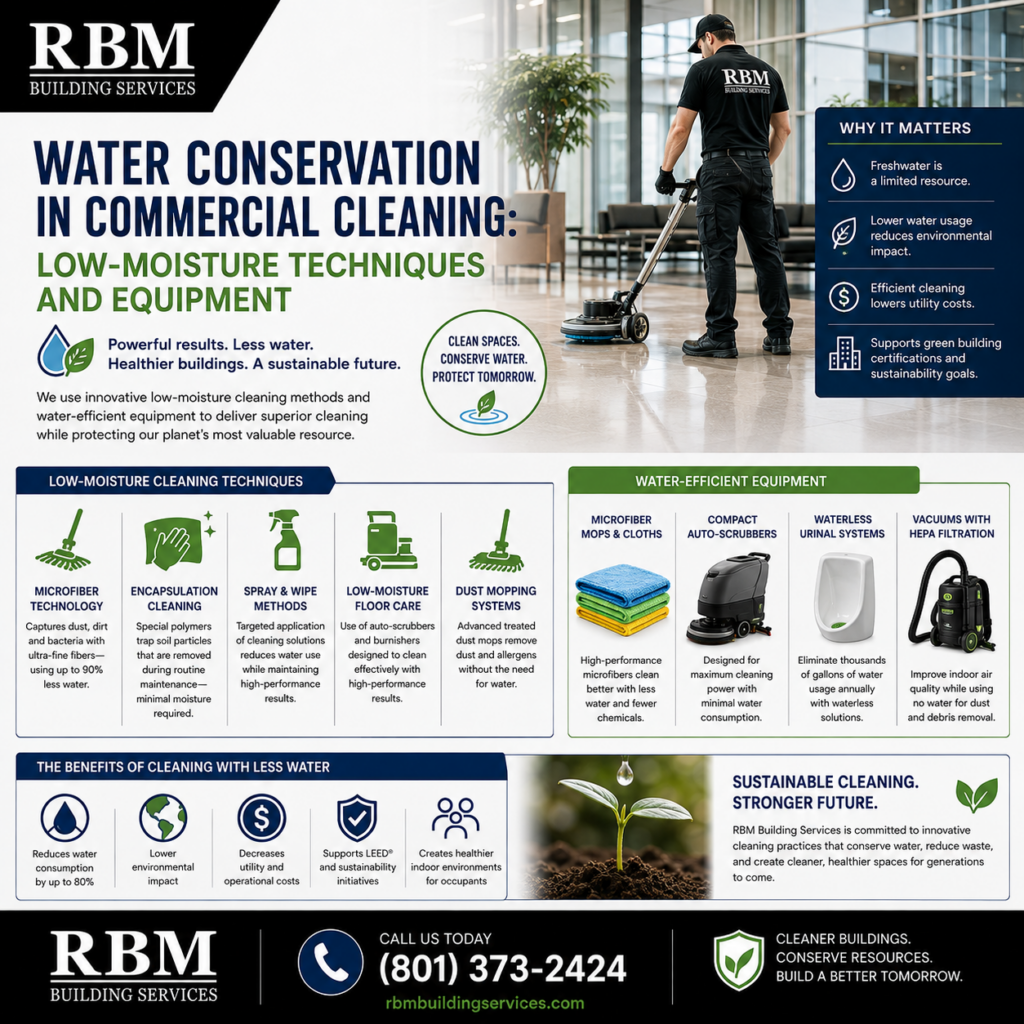
Water conservation is becoming a central priority for commercial facilities as utility costs rise and sustainability goals tighten. Cleaning is one of the largest water consumers in many buildings. A professional commercial cleaning service that uses low-moisture techniques and water-efficient equipment helps facilities save water, reduce costs, and meet environmental targets.
Facilities in arid regions face particular pressure to reduce water consumption. Municipal water rates are climbing, drought restrictions are common, and tenants increasingly expect sustainable operations. Water-efficient cleaning is one of the fastest ways for property managers to lower utility bills and demonstrate environmental responsibility.

Why Water Conservation Matters in Commercial Cleaning
Traditional cleaning methods can consume thousands of gallons of water per year in a single facility. Mop-and-bucket systems, carpet extraction machines, and pressure washers all add up. Full-service janitorial programs that prioritize water conservation combine low-moisture methods with technology that reduces water use without sacrificing results.
A comprehensive water conservation strategy starts with an audit of current cleaning practices. Facilities can measure how much water each cleaning task uses and identify opportunities for improvement. Building maintenance services can also detect leaks and inefficiencies that waste water between cleanings.
Low-Moisture Floor Cleaning Systems
Low-moisture floor cleaning systems use encapsulated chemicals and microfiber pads to lift dirt with minimal water. Automated scrubbers with water recovery systems recycle and reuse water rather than sending it down the drain. Floor care programs can achieve excellent results with a fraction of the water of traditional methods.
Microfiber mopping systems dramatically reduce water use compared to traditional cotton mops and buckets. Encapsulation technology bonds with dirt and removes it without rinsing. Floor care programs that use these systems clean effectively while conserving hundreds of gallons per year.
Water-Efficient Restroom Cleaning
Restroom cleaning offers significant water-saving opportunities. Trigger sprayers, microfiber systems, and no-rinse disinfectants reduce water use while improving hygiene. Building maintenance services also address leaking fixtures and running toilets that waste water between cleanings.
Restroom fixtures and cleaning practices both contribute to water savings. Waterless urinals, low-flow faucets, and touchless fixtures reduce baseline consumption, while no-rinse cleaning chemicals cut the water needed for each cleaning cycle. Facility programs combine both approaches for maximum impact.
Equipment Technology and Chemical Dilution
Modern equipment technology includes sensors that meter chemical dilution precisely, preventing overuse and reducing rinse requirements. Facility programs that adopt these tools cut water consumption while maintaining consistent cleanliness standards.
Chemical dilution systems dispense precise amounts of concentrate, ensuring effective cleaning with minimal water and product. Carpet cleaning equipment with encapsulated compounds uses far less water than traditional steam extraction while delivering comparable results.
Sustainable Carpet and Upholstery Care
Encapsulation carpet cleaning uses low-moisture compounds that dry quickly and require little water compared to steam extraction. Carpet and upholstery cleaning with encapsulation methods also extends carpet life and reduces downtime.
Exterior surfaces can be cleaned with low-flow pressure washing equipment that uses a fraction of the water of conventional units. Pressure washing providers with water recovery systems capture and filter runoff for reuse.
Exterior Cleaning With Reduced Water Use
Exterior cleaning can conserve water through techniques like low-flow pressure washing, water recovery systems, and dry methods for hard surfaces. Pressure washing providers with water-conscious practices achieve great results while protecting municipal water resources.
Staff training is essential to water conservation. Cleaners who understand the equipment and follow procedures use water more efficiently. Window washing with water-fed poles and purified water systems minimizes runoff and conserves resources.
Contact RBM Building Services
Building a Water-Conscious Cleaning Program
RBM Building Services, serving water-conscious facilities across Utah, Arizona, Nevada, and Texas since 1974, builds sustainable cleaning programs that save water without compromising quality. Call 800.403.3564 or visit our contact page.
About RBM: Since 1974. Services include full-service janitorial, building maintenance, carpet cleaning, window washing, pressure washing, floor care. Call 800.403.3564.
RBM Building Services helps facilities across Utah, Arizona, Nevada, and Texas reduce water use through low-moisture techniques, efficient equipment, and trained staff. Call 800.403.3564 to learn more about sustainable cleaning programs.