
Commercial Janitorial Services In Hagerstown Maryland And Frederick Maryland
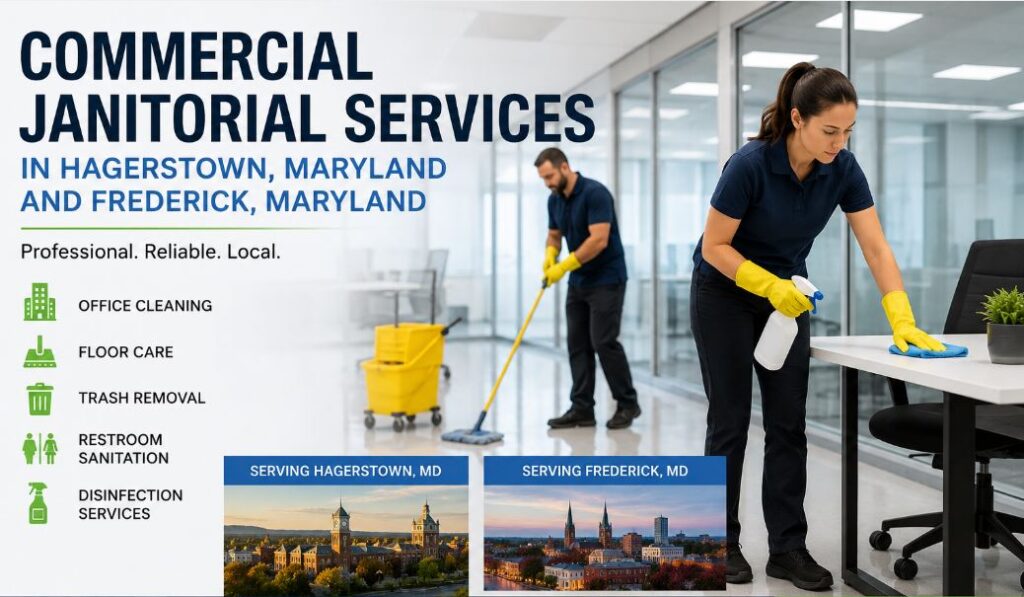
Commercial janitorial services in Hagerstown, Maryland and Frederick, Maryland are the professional cleaning and facility-maintenance services businesses use to keep offices, medical spaces, retail stores, warehouses, and other workplaces clean, safe, and presentable. At their best, these services do more than make a building look good: they help reduce workplace complaints, support healthier indoor environments, protect floors and fixtures, and create a better experience for employees, customers, and visitors. The biggest takeaway is that janitorial service should be treated as a business operation, not a commodity purchase, because the right scope, schedule, and standards can save money and prevent problems later. This article explains how commercial janitorial cleaning works, what can go wrong, how to compare options, what to ask before hiring, and how to make a smart decision for your facility. It also covers the practical details most buyers overlook, such as scope, frequency, quality control, and compliance considerations. For many organizations, expert guidance from an experienced commercial cleaning provider can mean fewer service gaps, less turnover-related disruption, and more consistent results.
What Commercial Janitorial Services Are
Commercial janitorial services refer to recurring cleaning and facility-support tasks performed in business environments. In Hagerstown and Frederick, that often includes office cleaning, restroom sanitation, trash removal, dusting, floor care, breakroom cleaning, entryway maintenance, and sometimes specialty work such as carpet care or post-construction cleanup. The main parties involved are the customer, the cleaning provider, the on-site staff who perform the work, and the supervisor or account manager who oversees quality. A strong program usually starts with a walkthrough, a scope of work, a schedule, and expectations for reporting or issue resolution.
These services are different from one-time “deep clean” projects because they are built around routine maintenance. They are also different from building maintenance, which may include repairs, HVAC, or plumbing. In practice, a business might hire a provider to clean nightly, three times per week, or only during daytime hours depending on traffic, industry, and budget. The scope may include supplies and consumables, or those may be managed separately. A good service agreement should clearly define what is included and what is excluded so there is no confusion later.
The most useful way to think about janitorial service is as a repeatable process: assess the facility, define the cleaning standard, choose a schedule, train the team, inspect the work, and adjust as needs change. That approach works better than relying on vague promises like “we’ll keep it clean.”
8 Key Things To Know
1. Scope matters more than price
The cheapest quote is not always the best value because pricing often reflects how much work is actually included. If one proposal covers restrooms, floors, trash, and touchpoint disinfection while another only includes basic vacuuming and trash removal, the lower number is not an apples-to-apples comparison. This is one of the most common sources of disappointment in commercial janitorial services in Hagerstown Maryland and Frederick Maryland. Businesses often assume the scope is “standard,” only to discover later that supplies, glass cleaning, or periodic detail work were never included.
Scope matters because unclear expectations create uneven results, billing disputes, and morale problems for staff who expect a cleaner building. A restaurant office, medical suite, warehouse office, and professional services firm all need different service levels. The right provider should be able to explain exactly what happens daily, weekly, monthly, and quarterly. That includes high-touch areas, restroom fixtures, breakroom surfaces, entry mats, and any specialty items like conference rooms or floors.
To avoid surprises, ask for a written scope of work that lists tasks by frequency. Make sure the proposal identifies exclusions clearly. If you need window washing, carpet extraction, or floor stripping and waxing, those should be separate line items or clearly scheduled add-ons. The best contracts remove guesswork before the first shift begins.
2. Facility type changes the cleaning plan
Not every workplace should be cleaned the same way. Office spaces, medical clinics, schools, industrial facilities, and retail locations all have different risk levels, traffic patterns, and surface needs. For example, a medical office in Frederick may need more emphasis on disinfecting high-touch surfaces and restroom hygiene, while a warehouse office in Hagerstown may need stronger floor care and dust control. This is why a one-size-fits-all janitorial package often fails.
The reason facility type matters is simple: the wrong method can waste money or create problems. Over-cleaning some surfaces can damage finishes. Under-cleaning high-traffic or high-risk areas can create odors, complaints, or health concerns. In some cases, improper product selection can leave residue, discolor surfaces, or trigger occupant sensitivity. A good provider should ask what kind of facility you run, how it is used, what hours it operates, and what special concerns exist.
The practical fix is a needs-based plan. A provider should separate routine cleaning from specialty services and tailor frequency by room type. Restrooms may need daily attention, while conference rooms may need less frequent detail work. Industry-specific expectations matter too. If your business must maintain a polished appearance for clients, your plan should reflect that. If safety and sanitation are the priority, your scope should emphasize those outcomes first.
3. Quality control is the difference between “clean” and consistent
A building can look fine on one day and poorly maintained the next if there is no quality control. Commercial janitorial services are only as strong as the supervision behind them. In real-world operations, turnover, absenteeism, and rushed shifts can all lead to inconsistent results. That is why the provider’s inspection process matters as much as the cleaning checklist itself.
Quality control usually includes site inspections, supervisor walk-throughs, issue logs, and a process for fixing missed tasks. Without these controls, small problems become recurring problems. A missed restroom task may not seem serious on day one, but over time it can lead to employee complaints, tenant dissatisfaction, or customer concerns. In busy facilities, consistency matters more than occasional deep cleaning.
A strong provider should explain how often they inspect, who responds to issues, and how quickly corrections are made. You should also have a clear communication channel for reporting problems. A digital checklist or service log can be useful because it creates accountability and gives both sides a record of what was done. Ask how the company handles staff training, supervisor oversight, and backup coverage when someone is absent. Those are the details that protect service quality over time.
4. Restrooms and touchpoints drive perception
People judge cleanliness quickly, and restrooms are often where they decide whether a building feels well managed. Door handles, faucets, counters, switches, and breakroom surfaces also shape how people experience the facility. In commercial janitorial cleaning, these areas are important because they influence both perception and hygiene. Even if the rest of the building is acceptable, a dirty restroom can undermine trust immediately.
This matters because perception affects employee satisfaction, client confidence, and even tenant retention in multi-tenant properties. A business may not notice a dust problem right away, but a restroom issue tends to be obvious. In workplaces with visitors, touchpoint cleanliness also sends a message that management is attentive. That does not mean every surface needs constant heavy disinfection, but it does mean high-touch areas should be part of the regular schedule.
The best approach is to prioritize impact areas. Restrooms, lobbies, kitchens, shared equipment, and reception spaces deserve more frequent attention than low-traffic zones. If your building sees heavy daily use, the provider may need daytime touch-up service or a second shift for restrooms. Clear expectations about soap, paper, and restroom supply restocking also prevent avoidable complaints. When in doubt, focus on the spaces that people see and use most.
5. Floors need a real care plan
Floor care is one of the most overlooked parts of commercial janitorial services in Hagerstown Maryland and Frederick Maryland. Different floor types need different methods, and using the wrong product or machine can shorten the life of the surface. Carpet, tile, vinyl, LVT, hardwood, and polished concrete all have different maintenance requirements. If a provider treats every floor the same, you may see dull finishes, streaking, residue, or premature wear.
Floors matter because they are both functional and expensive to replace. They also affect safety. Dirt, moisture, and worn finishes can contribute to slips, scuffs, and a poor first impression. A good floor care plan should identify daily maintenance, periodic deep cleaning, and specialty restoration work when needed. For example, a tiled lobby may need routine damp mopping and periodic stripping and waxing, while carpet may need extraction on a schedule based on traffic.
To handle this well, ask what products, pads, and machines will be used on each floor type. Ask how often the provider recommends deep cleaning based on traffic and use. If your facility has polished or specialty flooring, make sure the team understands manufacturer guidance. Floor care should protect the surface, not just make it look temporarily better.
6. Supply management can prevent hidden disruptions
Many businesses think janitorial service ends with cleaning labor, but consumables are part of the real operating picture. Toilet paper, paper towels, soap, hand sanitizer, liners, and similar supplies can create headaches if they run out. In some commercial cleaning programs, the provider includes supply monitoring or even procurement, while in others the customer handles all restocking. Either way, it needs to be planned.
Supply problems matter because they affect both operations and perception. A spotless restroom still feels neglected if it has no soap or paper towels. Staff may start hoarding supplies, filing repeated complaints, or wasting time tracking shortages. Over time, poor supply management creates friction between the facility team and the cleaning provider.
The practical solution is to define responsibility early. Decide who buys supplies, who monitors usage, and how reorder thresholds are handled. If the provider is responsible, ask how they prevent shortages and what brands or products they use. If you manage supplies internally, set up a reorder calendar and assign one person to check inventory. In busy buildings, a simple weekly supply review can save a lot of trouble.
7. Scheduling should match building use
The best cleaning schedule is the one that fits how your building is actually used. A quiet office with predictable hours may do well with evening service. A busy medical office, retail space, or shared facility may need daytime touch-ups or a split schedule. This is a major reason commercial janitorial services are usually customized rather than sold as rigid packages.
Scheduling matters because cleaning at the wrong time can disrupt employees, frustrate visitors, or create safety concerns. On the other hand, cleaning too infrequently can cause buildup that becomes harder and more expensive to remove later. The right frequency depends on occupancy, foot traffic, industry standards, and budget. There is no universal answer, but there is usually a best fit for a specific facility.
A good provider should ask when your building is busiest, which areas see the most use, and whether after-hours access is available. They should also have a backup plan for holidays, weather disruptions, and special events. If your operation changes seasonally, your cleaning plan should change too. The easiest way to improve value is to align service frequency with real usage instead of guessing.
8. Communication prevents most service failures
Many janitorial problems are not cleaning problems at all; they are communication problems. Missed expectations, unclear responsibilities, and delayed responses can make a decent service look bad. This is especially true when a building manager assumes the provider “should know” what to do without ever stating it. In recurring service, clarity is essential.
Good communication matters because facilities change. New tenants move in, workflows shift, traffic increases, and new concerns arise. If the provider has no consistent contact person or reporting process, small issues can linger. The most effective accounts usually have a single point of contact, a regular check-in schedule, and a process for documenting requests.
To improve results, keep a simple service record. Note missed tasks, special events, seasonal needs, and feedback from occupants. Share priorities clearly and early. A strong provider will welcome that feedback because it helps them deliver better service. In commercial cleaning, good communication is often the fastest path to better quality without changing the contract.
The Real Cost Of Getting It Wrong
Getting commercial janitorial services wrong can cost far more than the monthly service fee. The immediate financial cost may show up as rework, emergency cleanup, damaged floors, or the need to hire a second provider to fix problems. The hidden cost is often lost productivity, because staff spend time complaining, cleaning around issues, or fielding customer concerns. In customer-facing businesses, a poorly maintained facility can also affect reputation and perceived professionalism.
There are time costs too. Managers spend time chasing updates, correcting missed work, and handling avoidable issues that should have been prevented. Emotional costs are real as well: employees notice when the workplace feels neglected, and that can hurt morale. Over time, poor service can also create long-term damage to flooring, fixtures, and surfaces if cleaning is inconsistent or done incorrectly. Most of these costs are avoidable with a clear scope, good oversight, and a provider that communicates well.
How An Experienced Provider Helps
An experienced commercial cleaning provider helps by turning a vague need into a workable plan. That includes evaluating the facility, identifying priority areas, setting cleaning frequencies, choosing suitable products, and building a schedule that fits your operations. A strong provider also helps manage risk by training staff properly, documenting service, and addressing problems before they become complaints.
Experienced providers are also better at troubleshooting. If odors, residue, wear patterns, or supply issues appear, they can usually identify the cause faster than an untrained team. They can also help with compliance-related concerns, especially in facilities that need extra attention to sanitation, documentation, or cleanliness standards. The practical benefit is simpler management and more consistent results.
Service Options And Approaches
Recurring janitorial service
This is the standard option for most businesses. It covers routine cleaning on a daily, weekly, or custom schedule, depending on the facility. It works well for offices, clinics, retail spaces, and common areas that need consistent upkeep. The main limitation is that routine service does not replace periodic deep cleaning or specialty maintenance.
Day porter or daytime support
A day porter works during business hours to keep high-traffic areas clean and stocked. This is useful for busy buildings, medical practices, event spaces, and properties with frequent visitors. The drawback is cost, since daytime staffing is usually more expensive than after-hours cleaning. It is best used where constant upkeep matters.
Specialty floor and carpet care
This includes stripping and waxing, burnishing, extraction, and restoration work. It is appropriate when floors are worn, dirty, or due for periodic maintenance. The limitation is that specialty care is not a substitute for daily upkeep. It works best as part of a broader maintenance plan.
Post-construction cleanup
This option removes dust, debris, residue, and packaging after a buildout or renovation. It is appropriate when a space must be ready for occupancy or opening. The drawback is that it is project-based, not ongoing service, so it should be scheduled separately and priced differently.
Green cleaning programs
Some providers use eco-conscious products and methods designed to reduce harsh chemical exposure and waste. This can be useful for sustainability goals or occupant preference. The limitation is that “green” should still mean effective, so product claims and outcomes should be reviewed carefully.
What To Do Now
If you are currently dealing with cleaning problems, start with a walkthrough of the facility. Identify the most visible issues first: restrooms, entry areas, floors, and breakrooms. Then review your current scope of work and see whether the missed items were actually part of the agreement.
Next, document repeated issues with dates, photos, and descriptions. Share them with the provider in plain language and ask for a correction plan. If the problems continue, compare alternatives based on scope, quality control, responsiveness, and experience with your type of facility.
How To Choose A Provider
Use this checklist when evaluating a commercial janitorial services company in Hagerstown or Frederick:
- Relevant experience with your type of facility.
- Clear written scope of work.
- Consistent supervision and quality control.
- Plain-English communication.
- Responsive scheduling and issue resolution.
- Proper insurance and worker coverage.
- Ability to handle routine and specialty cleaning.
- Flexible service levels that match your traffic and budget.
- Willingness to walk the site and explain what is included.
- A plan for supplies, backups, and emergencies.
A strong provider should be easy to understand and specific about what they do. If a proposal is vague, that is usually a warning sign.
Common Mistakes To Avoid
- Choosing only by price, which often hides missing services.
- Not defining scope, which leads to disputes later.
- Assuming every provider handles every facility type well.
- Ignoring quality control and supervision.
- Forgetting about supplies and restocking.
- Setting the wrong cleaning schedule for building traffic.
- Overlooking floor care until damage is visible.
- Failing to document recurring problems.
Frequently Asked Questions
What do commercial janitorial services include?
They usually include recurring cleaning tasks such as trash removal, restroom cleaning, dusting, vacuuming, mopping, and breakroom upkeep.
How are janitorial services different from commercial cleaning?
The terms overlap, but janitorial services usually mean recurring maintenance, while commercial cleaning can also include project work and specialty services.
How often should an office be cleaned?
That depends on traffic and use, but many offices benefit from nightly or several-times-per-week service.
Do medical offices need special cleaning?
Yes. They often need stricter attention to high-touch surfaces, restrooms, and sanitation routines.
Are green cleaning products effective?
They can be effective when chosen and used correctly, but product selection and training still matter.
What should be in a janitorial contract?
The scope of work, schedule, service frequencies, exclusions, supply responsibilities, and communication process should all be written clearly.
Why do quotes vary so much?
Different quotes may include different tasks, frequencies, staffing levels, and supplies.
Is daytime cleaning better than after-hours cleaning?
It depends on the building. Daytime service works well for high-traffic facilities, while after-hours service reduces disruption.
What is a day porter?
A day porter is an on-site cleaner who maintains common areas during business hours.
How do I know if a provider is reliable?
Look for clear communication, supervision, consistent inspections, and prompt correction of issues.
How often should restrooms be cleaned?
High-traffic restrooms may need daily or even more frequent attention.
What is included in floor care?
It may include mopping, scrubbing, stripping, waxing, burnishing, or carpet extraction depending on the surface.
Can janitorial service include supplies?
Yes, but you should confirm exactly which supplies are included and who manages reordering.
What causes most cleaning problems?
The most common causes are unclear scope, poor supervision, and inconsistent communication.
Should I require a site walkthrough before quoting?
Yes. A walkthrough helps prevent inaccurate pricing and scope confusion.
What is post-construction cleanup?
It is the removal of dust, debris, and residue after construction or renovation.
How do I compare providers fairly?
Compare scope, frequency, supervision, responsiveness, insurance, and relevant experience, not just price.
Do small businesses need professional janitorial service?
Often yes, especially if employees or customers use the space regularly and consistency matters.
Can service be customized?
Yes. Good providers usually tailor schedules and tasks to the facility.
What if the provider misses tasks?
Document the issue, share it promptly, and request a correction plan.
How important is supervision?
Very important. Supervision is a major factor in consistency and accountability.
Should I ask for references?
Yes, especially from businesses similar to yours.
What makes a provider better for multi-tenant properties?
They should be able to manage common areas, schedules, communication, and recurring issues across multiple occupants.
Is deep cleaning the same as routine janitorial service?
No. Deep cleaning is more intensive and usually less frequent than routine maintenance.
What is the best way to prevent complaints?
Set clear expectations, inspect the work, and communicate early when needs change.
Rules And Standards
Commercial janitorial service is shaped less by one universal law and more by a mix of safety, labor, and facility-specific standards. For example, businesses should pay attention to OSHA requirements for workplace safety and chemical handling, especially when staff are using cleaning products and equipment. Facilities that handle sensitive information, healthcare-related traffic, or regulated waste may also need additional internal protocols or industry-specific controls. EPA guidance on disinfectants and proper product use is also relevant when sanitation claims are involved.
For general workplace safety, OSHA’s Cleaning and Disinfecting guidance is a useful starting point, and the EPA’s List N remains an important reference for disinfectant products. For ventilation and healthy indoor environments, the CDC’s Cleaning and Disinfecting Your Facility guidance is also helpful. These resources do not replace a customized janitorial plan, but they do set a practical baseline for safe and responsible cleaning operations.
Conclusion
Commercial janitorial services in Hagerstown Maryland and Frederick Maryland are most effective when they are planned carefully, tailored to the facility, and backed by good communication and quality control. The biggest problems usually come from vague scopes, weak supervision, and choosing based on price alone. With the right provider, most of those problems are preventable, and the result is a cleaner, safer, more professional workplace that supports both daily operations and long-term asset value. For businesses that want a dependable partner, experienced guidance can make the difference between occasional cleanup and truly managed facility care. For help with commercial janitorial services, consult with RBM Services.