Hotel cleaning standards are governed by both guest expectations and health code requirements. Guest rooms should be cleaned daily with linens changed between guests, bathrooms disinfected, and high-touch surfaces sanitized, while public areas require continuous attention throughout the day.
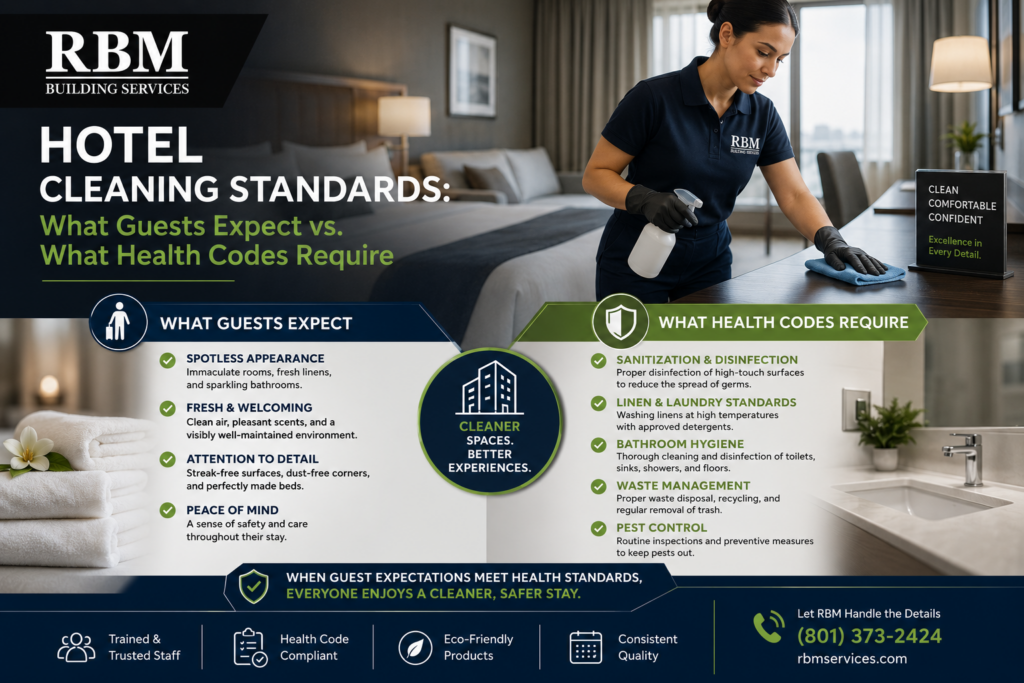
Hotel cleaning standards exist at the intersection of guest expectations and regulatory requirements. Guests expect sparkling clean rooms, fresh linens, and spotless bathrooms — and they are quick to leave negative reviews when those expectations are not met. At the same time, hotels must comply with health code requirements that govern everything from laundry handling to pool cleaning to food service sanitation. Meeting both sets of standards is essential for hotel success: clean hotels earn higher ratings, command premium rates, and avoid the reputational and legal consequences of failed health inspections. This guide covers the cleaning standards that hotel owners, general managers, and hospitality facility managers need to know.
The financial impact of hotel cleanliness is well-documented. A study by Cornell University’s School of Hotel Administration found that a one-point increase in hotel cleanliness scores (on a five-point scale) was associated with a 1.5% increase in average daily rate and a 2.3% increase in occupancy. Conversely, a single negative review about cleanliness can cost a hotel 5-10% of its potential bookings. In the age of online reviews where cleanliness is the most frequently mentioned factor in hotel ratings, maintaining high cleaning standards is not optional — it is the foundation of hotel success.

Understanding Hotel Cleaning Standards: Two Sets of Rules
Guest room cleaning is the most visible and impactful aspect of hotel cleaning. Most hotels follow a standard daily cleaning protocol that includes making the bed with fresh linens (changed between guests and every 2-3 days for extended-stay guests), dusting all surfaces including furniture, fixtures, window sills, and artwork, vacuuming all carpeted areas and mopping hard floors, cleaning and disinfecting the bathroom, restocking amenities (soap, shampoo, lotion, coffee, cups, and ice buckets), emptying trash and recycling, wiping down all hard surfaces including nightstands, desks, and remote controls, and inspecting the room for maintenance issues or damage. Deep cleaning of guest rooms should occur on a rotating schedule, including mattress and pillow protector cleaning, carpet shampooing, curtain and upholstery cleaning, and detailed cleaning of hard-to-reach areas.
Turnaround time for guest room cleaning is a critical operational metric. For standard check-out rooms, housekeeping typically has 30-45 minutes to clean and prepare the room for the next guest. For stay-over rooms, cleaning time is typically 15-25 minutes. These tight timelines require standardized cleaning procedures, efficient workflow, and well-stocked housekeeping carts to minimize trips to supply closets. Hotels that invest in housekeeping training, proper equipment, and adequate staffing consistently earn higher cleanliness scores than those that cut corners. The American Hotel and Lodging Association recommends a housekeeper-to-room ratio of 1:12 to 1:15 for full-service hotels, meaning each housekeeper cleans 12-15 rooms per shift.
Guest Room Cleaning Standards and Protocols
Bathroom cleaning and disinfection is the most critical aspect of guest room cleaning from both a guest perception and health code perspective. Guests rate bathroom cleanliness as the single most important factor in their overall satisfaction with hotel cleanliness. Industry best practices for hotel bathroom cleaning include a strict top-to-bottom cleaning sequence starting with ceiling vents and light fixtures, followed by walls and mirrors, then the sink and counter area, the toilet (exterior and interior), the shower or tub, and finally the floor. Each surface must be cleaned with the appropriate product — glass cleaner for mirrors, all-purpose cleaner for countertops, disinfectant for toilet and shower surfaces, and bathroom cleaner for floors.
Health code requirements for hotel bathrooms focus on preventing the growth and spread of pathogens. The CDC recommends that bathroom surfaces be disinfected with an EPA-registered disinfectant effective against hepatitis A virus, norovirus, and other pathogens commonly found in hotel environments. Grout and caulk in showers and around sinks must be maintained in good condition — deteriorated caulk or grout can harbor mold and bacteria and is a common finding in health inspections. Toilet bowl cleaners must be used according to manufacturer instructions, and toilet brushes must be disinfected after each use. Ventilation fans in bathrooms must be cleaned regularly to prevent mold growth on ceilings and walls.
Bathroom Cleaning and Disinfection Requirements
Hotel public areas require a different cleaning approach than guest rooms because they are in constant use throughout the day. Lobbies, corridors, elevators, fitness centers, pools, restaurants, and meeting rooms all require regular cleaning during operating hours, with deeper cleaning performed during off-hours. The frequency of public area cleaning should be based on traffic levels and usage patterns — a busy hotel lobby may need vacuuming and surface wiping every 1-2 hours during peak times, while a low-traffic corridor might only need daily attention. The key to effective public area cleaning is having a written schedule that specifies what is cleaned, how often, and by whom.
High-touch surfaces in public areas require the most frequent attention. Elevator buttons, door handles, handrails, registration desk surfaces, bellman carts, and public restroom fixtures should be disinfected multiple times per day. The American Hotel and Lodging Association recommends that high-touch surfaces in public areas be disinfected at least every 2-4 hours during operating hours, with more frequent cleaning during peak periods. Public restrooms in hotel lobbies should be checked and cleaned at least every 1-2 hours, with hourly checks during high-traffic periods. Fitness centers require special attention because of the combination of high-touch equipment and sweat — fitness equipment should be wiped down between each use by guests, with a comprehensive cleaning and disinfection performed by housekeeping at least daily.
Public Area and Lobby Cleaning Frequency
Health code requirements for hotels vary by jurisdiction but generally cover guest room sanitation, public area cleanliness, pool and spa hygiene, food service sanitation, laundry and linen handling, and pest control. Most states and local health departments adopt the FDA Food Code for hotel food service operations and the CDC’s Environmental Health Guidelines for hotels and motels. Key health code requirements include: all sleeping rooms must be clean and free of vermin and insects, bedding and linens must be clean and in good repair, bathrooms must have adequate ventilation and be maintained in a sanitary condition, swimming pools and spas must meet water quality standards, and the property must maintain a pest control program.
Health inspections for hotels typically occur annually or biennially, with additional inspections triggered by complaints or outbreaks. Inspection findings can range from minor violations (dusty vents, minor maintenance issues) to critical violations (active pest infestation, sewage backup, mold growth, no hot water). Critical violations can result in fines, permit suspension, or closure. In addition to health code compliance, hotels must comply with OSHA requirements for employee safety, which include proper training on bloodborne pathogens, chemical safety, and ergonomics for housekeeping staff.
Health Code Requirements for Hotel Cleaning
Laundry and linen handling is a significant operational concern in hotels, with specific standards for cleanliness and infection control. Soiled linens must be handled with gloves and transported in closed carts or bags to prevent cross-contamination with clean linens. The laundry process must include washing at appropriate temperatures (at least 160°F for sanitation or use of chemical sanitizers approved by the EPA), drying at high temperatures to ensure complete drying, and proper storage of clean linens in clean, dry, covered areas. Linens that are stained, torn, or worn must be replaced immediately. Pillows should be replaced every 1-2 years, and mattress protectors should be washed between guests.
Guest room turnover between guests requires a more thorough cleaning than daily housekeeping. In addition to the standard daily cleaning, the between-guest cleaning should include washing or replacing mattress protectors and pillow protectors, cleaning under the bed and behind furniture, disinfecting TV remotes and telephones, cleaning window treatments, and inspecting for bed bugs — a growing concern in the hotel industry. A bed bug inspection protocol should include checking mattress seams, headboards, baseboards, and upholstered furniture using a flashlight and credit card or similar tool. Any signs of bed bugs must be reported immediately, and the affected room must be taken out of service for professional treatment. See our hospitality cleaning services for more on hotel cleaning programs.
Laundry and Linen Handling Standards
Building an effective hotel cleaning program requires a comprehensive approach that addresses guest rooms, public areas, back-of-house spaces, and regulatory compliance. The program should be based on written standard operating procedures (SOPs) that specify exactly how each task is performed, what products are used, the required frequency, and the quality standard. Staff must be trained on SOPs, and supervisors must conduct regular quality inspections using a standardized checklist. Guest feedback on cleanliness should be tracked and analyzed to identify trends and areas for improvement. Annual or semi-annual deep cleaning of all areas should be scheduled during low-occupancy periods.
Technology can help hotel cleaning programs operate more efficiently. Housekeeping management software tracks room status, assigns tasks to housekeepers, and monitors completion times. Guest feedback platforms integrate with housekeeping systems to flag rooms with reported cleanliness issues for immediate attention. UV-C disinfection devices and electrostatic sprayers are increasingly used in hotels for supplemental disinfection of high-touch surfaces. Despite these technological advances, the foundation of hotel cleaning remains well-trained, well-equipped, and well-supervised housekeeping staff who take pride in their work. The best hotels invest in their housekeeping teams because they understand that clean rooms are the product they are selling.
RBM Building Services has provided hotel and hospitality cleaning, commercial janitorial services, and pressure washing since 1974 across Utah, Arizona, Nevada, and Texas. We understand the unique demands of hotel cleaning — from guest room turnover to public area maintenance. Call 800.403.3564 or contact us to discuss your hotel’s cleaning needs. Read more on our company blog.
Meet guest expectations and health code standards. Contact RBM.
Building an Effective Hotel Cleaning Program
Building an effective hotel cleaning program requires a comprehensive approach that addresses guest rooms, public areas, back-of-house spaces, and regulatory compliance. The program should be based on written standard operating procedures (SOPs) that specify exactly how each task is performed, what products are used, the required frequency, and the quality standard. Staff must be trained on SOPs, and supervisors must conduct regular quality inspections using a standardized checklist. Guest feedback on cleanliness should be tracked and analyzed to identify trends and areas for improvement. Annual or semi-annual deep cleaning of all areas should be scheduled during low-occupancy periods.
Technology can help hotel cleaning programs operate more efficiently. Housekeeping management software tracks room status, assigns tasks to housekeepers, and monitors completion times. Guest feedback platforms integrate with housekeeping systems to flag rooms with reported cleanliness issues for immediate attention. UV-C disinfection devices and electrostatic sprayers are increasingly used in hotels for supplemental disinfection of high-touch surfaces. Despite these technological advances, the foundation of hotel cleaning remains well-trained, well-equipped, and well-supervised housekeeping staff who take pride in their work. The best hotels invest in their housekeeping teams because they understand that clean rooms are the product they are selling.
RBM Building Services has provided hotel and hospitality cleaning, commercial janitorial services, and pressure washing since 1974 across Utah, Arizona, Nevada, and Texas. We understand the unique demands of hotel cleaning — from guest room turnover to public area maintenance. Call 800.403.3564 or contact us to discuss your hotel’s cleaning needs. Read more on our company blog.