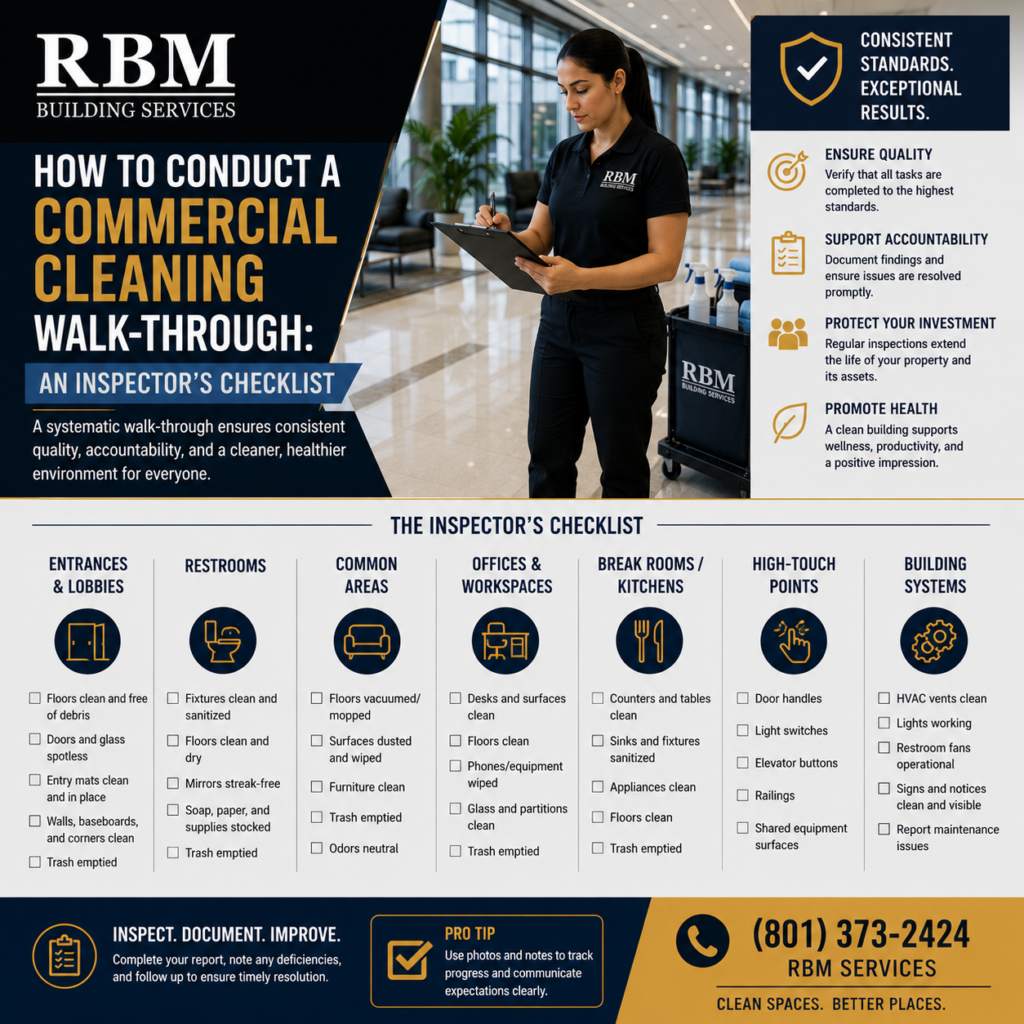
A commercial cleaning walk-through is a systematic inspection of a facility’s cleanliness, maintenance condition, and cleaning quality. For property managers, facility managers, and cleaning contractors, regular walk-throughs provide objective data about cleaning performance, identify problem areas before tenants complain, document compliance with scope-of-work requirements, and create accountability for cleaning crews. A well-executed walk-through takes 30-60 minutes for a typical 50,000 sq ft building and should be conducted at least monthly.
Preparing for the Walk-Through
Before stepping into the building, gather the necessary tools: a digital or printed checklist organized by area, a flashlight for inspecting dark corners and under furniture, a white glove or white cloth for dust testing, a phone or tablet with camera for photo documentation, the current scope of work and cleaning schedule, and previous inspection reports for comparison. Notify the cleaning supervisor at least 24 hours in advance so they can be present during the walk-through. Schedule inspections at varying times — some immediately after cleaning, some mid-day — to get a complete picture of cleaning quality and maintenance between services. For comprehensive quality assurance programs, see our full-service janitorial services.
The Five-Zone Inspection Method
Professional cleaning inspectors use a zone-based approach to ensure complete coverage. Zone 1 — Entry and lobby: Check glass doors and windows for smudges and streaks. Inspect floor condition (scuffs, spots, finish wear). Evaluate entry mat cleanliness. Check lobby furniture for dust and stains. Test restroom cleanliness if lobby restrooms are present. Zone 2 — Restrooms: Inspect toilet and urinal cleanliness (including under the rim). Check sink and counter cleanliness. Verify soap, paper towel, and toilet paper stock levels. Look for mold or mildew on grout and caulking. Check mirror cleanliness. Evaluate floor cleanliness and odor. Zone 3 — Office and cubicle areas: Check trash can emptiness (should be empty after nightly service). Inspect carpet for visible spots or traffic patterns. Check hard floors for dust, scuffs, and finish wear. Dust-test horizontal surfaces with a white glove. Inspect break room sinks, counters, and appliances for cleanliness. Zone 4 — Common areas and corridors: Check hallway floors for debris and scuffs. Inspect wall condition (scuffs, marks, damage). Evaluate elevator interior cleanliness. Check fire extinguisher accessibility and inspection tags. Inspect drinking fountains for cleanliness. Zone 5 — Support areas: Check janitorial closet organization and chemical storage. Inspect storage rooms for cleanliness and organization. Verify recycling and trash room cleanliness. Check loading dock and service entrance cleanliness. Review cleaning log and inspection documentation.
Scoring and Documentation
Each zone should be scored on a 1-5 scale: 5 = pristine, no issues found; 4 = minor issues, acceptable for daily variation; 3 = issues requiring attention within 48 hours; 2 = significant issues requiring immediate correction; 1 = failed inspection, cleaning must be re-performed. Any score below 3 should be documented with a photo and specific description. Total score by zone and overall building score should be calculated. For multi-tenant buildings, track scores by floor or tenant area to identify patterns. Share results with the cleaning provider within 24 hours. Recognize good performance and address deficiencies constructively. Digital inspection platforms can automate scoring, generate trend reports, and share results automatically. Many property managers find that inspection scores improve 15-25% within three months of implementing a formal walk-through program. Our building maintenance services include digital inspection reporting.
Common Walk-Through Findings and How to Address Them
The most common inspection findings in commercial buildings include dust on horizontal surfaces (typically indicates inadequate microfiber cloth usage or infrequent dusting), restroom odor issues (often caused by inadequate urinal cleaning or poor ventilation), baseboard dust and scuff marks (missed during nightly cleaning rotations), carpet spots near entryways (indicates inadequate entry matting or spot-cleaning protocols), trash can residue (liners not changed or cans not wiped down), and light fixture dust buildup (requires scheduled deep cleaning rotation). Each finding should be documented with a specific corrective action, responsible party, and deadline. Follow up on corrective actions during the next walk-through. Tracking repeat findings identifies systemic issues that may require protocol changes rather than one-time corrections. For help developing an inspection program tailored to your facility, see our vendor management guide.
Additional FAQs
How often should commercial cleaning walk-throughs be conducted? Monthly walk-throughs are the industry standard for most commercial buildings. High-profile buildings (Class A, medical, financial) may benefit from weekly inspections. Low-occupancy buildings can do quarterly inspections. Always conduct a walk-through within the first 30 days of a new cleaning contract.
Should the cleaning crew be present during the walk-through? Yes. The cleaning supervisor or account manager should accompany the inspector. This allows immediate discussion of findings, prevents disputes about conditions, provides an opportunity for on-the-spot training, and demonstrates partnership between the property manager and cleaning provider.
What is the difference between a walk-through and a cleaning audit? A walk-through is a visual inspection focused on current conditions. A cleaning audit is a more comprehensive evaluation that includes reviewing procedures, training records, chemical usage, equipment condition, and compliance documentation. Audits are typically conducted quarterly or annually, while walk-throughs are monthly.
How do I handle disagreements about inspection findings? Photo documentation eliminates most disputes. If the cleaning provider disagrees with a finding, document both perspectives and schedule a re-inspection within 24 hours. For persistent disagreements, consider bringing in a third-party inspector or independent cleaning consultant.
Can walk-throughs be done without a formal checklist? While experienced inspectors can conduct effective walk-throughs without a checklist, using a standardized form ensures consistency across multiple inspections and multiple inspectors. Digital checklists also provide trend data that paper checklists cannot. Most cleaning management software includes customizable inspection forms.
About RBM Building Services: Since 1974, RBM has provided commercial janitorial, building maintenance, and quality-assured cleaning services across Utah, Arizona, Nevada, and Texas. Call 800.403.3564 or contact us.