Waste management and recycling have become integral components of commercial cleaning programs. Commercial buildings in the United States generate approximately 70 million tons of waste annually, with office buildings alone producing 1.5 pounds of waste per occupant per day. Effective recycling and waste management programs reduce disposal costs (landfill tipping fees average $50-$100 per ton nationally), improve sustainability metrics for building certifications (LEED, BOMA BEST, ENERGY STAR), meet increasingly stringent municipal and state recycling mandates, enhance tenant satisfaction and corporate social responsibility profiles, and reduce environmental impact. For cleaning contractors, waste management represents both a service responsibility and an opportunity to add value for clients.
Waste Streams in Commercial Buildings
Understanding the different waste streams generated in commercial buildings is essential for designing effective recycling programs. Municipal solid waste includes general trash from offices, break rooms, and common areas, typically collected in desk-side wastebaskets and central trash receptacles. Single-stream recycling includes paper, cardboard, plastic bottles and containers (typically #1 and #2 plastics), aluminum and steel cans, and glass containers, all collected in a single recycling bin. Mixed paper includes office paper, newspapers, magazines, junk mail, and shredded paper and may be collected separately from container recycling for higher-value commodity recovery. Organic waste includes food scraps from break rooms, cafeteria operations, and break areas; this stream is increasingly targeted by municipal composting programs. Electronic waste includes computers, monitors, printers, phones, batteries, and other electronic devices requiring special handling under state and federal regulations. Universal waste includes light bulbs, ballasts, batteries, and other hazardous materials requiring special handling and documentation. Construction and demolition debris arises during tenant improvements, renovations, and building maintenance activities. Our full-service janitorial programs include customized waste management solutions for each waste stream.
Designing an Effective Commercial Recycling Program
A successful commercial recycling program requires careful planning and consistent execution. The first step is a waste audit to measure current waste generation by type and volume over a 1-2 week period, identify contamination rates in recycling streams (target below 10%), determine peak waste generation periods, and identify opportunities for waste reduction. Based on audit findings, the right bin infrastructure must be selected and placed: desk-side recycling bins for every workstation (typically 7-14 gallon), centralized recycling stations in break rooms and common areas with clearly labeled multi-stream bins, and specialty collection points for batteries, electronics, and other special waste streams. Signage and labeling is critical — studies show that clear, consistent labeling improves recycling participation by 30-50% and reduces contamination rates.
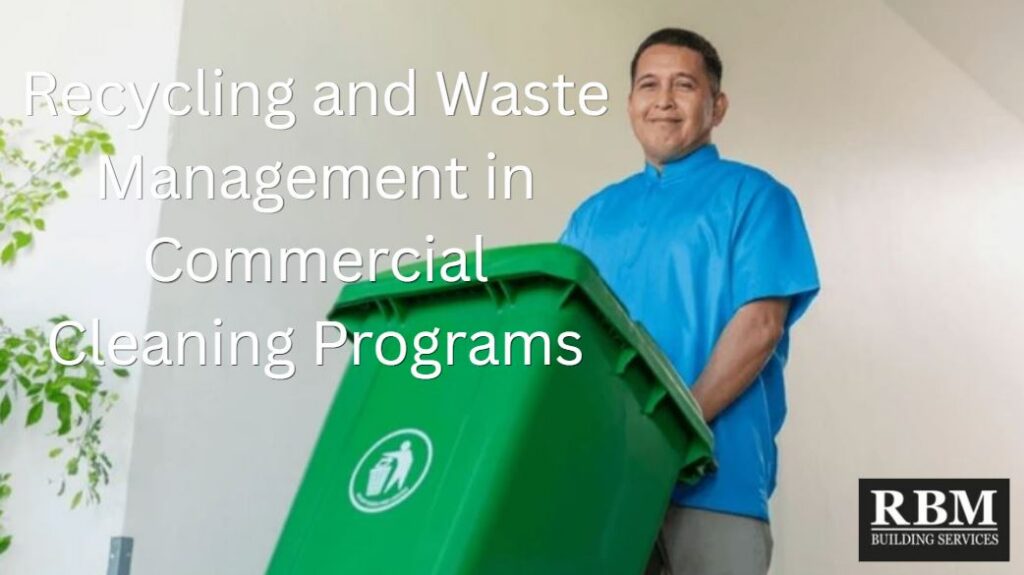
Training and communication: Building occupants need clear guidance on what can and cannot be recycled in your program. Effective strategies include new occupant orientation materials including recycling guidelines, regular email communications about program updates and recycling tips, quarterly waste diversion reports shared with tenants showing progress and impact, and contest or incentive programs to encourage participation. Cleaning crew integration: The cleaning crew must be trained to properly handle recycling streams. Best practices include emptying desk-side recycling bins nightly (or less frequently to reduce plastic bag usage), central recycling stations emptied nightly or as needed, maintaining separate collection carts for waste and recycling to prevent cross-contamination, and checking recycling bins for contamination before emptying (leave contaminated bins with a notice for the occupant). For support in implementing waste management programs, see our commercial cleaning and janitorial services.
Waste Reduction Strategies Beyond Recycling
The most effective waste management programs focus first on reduction, then reuse, then recycling — the traditional waste hierarchy. Practical waste reduction strategies for commercial buildings include transitioning to digital document management and reducing paper usage, implementing reusable dishware programs in break rooms and cafeterias (eliminating disposable cups, plates, and utensils), installing water bottle filling stations to reduce single-use plastic bottle waste, working with vendors to reduce packaging waste (including supplier take-back programs for packaging), composting organic waste through commercial composting services (increasingly available in major metropolitan areas), and conducting regular waste audits to track progress and identify new reduction opportunities. Many property managers find that comprehensive waste reduction programs can reduce overall waste generation by 20-40% within the first year.
Additional FAQs
What is the most common recycling mistake in commercial buildings? Contamination — placing non-recyclable items (food-contaminated containers, plastic bags, styrofoam, coffee cups) in recycling bins. A single contaminated load can cause an entire truckload to be sent to landfill. The target contamination rate should be below 10%.
Do I need different recycling programs for different tenants? Multi-tenant buildings benefit from a consistent, standardized recycling program across all tenants to minimize confusion and contamination. Individual tenant programs can be customized within the building-wide framework for unique waste streams.
How do I dispose of confidential documents? Shredded paper should be collected separately from standard mixed paper recycling. Most commercial buildings use locked shredding consoles or scheduled pickups by NAID-certified shredding vendors. Shredded paper is typically recycled into tissue products and paperboard.
Can cleaning crews sort recycling better than occupants? While some buildings use post-collection sorting by cleaning crews, this is less efficient than proper occupant sorting. Training occupants to sort correctly at the point of disposal is more cost-effective and achieves higher diversion rates. Crews should focus on checking for gross contamination rather than full sorting.
What are the cost implications of commercial recycling programs? Recycling program costs vary by region. In areas with strong recycling markets, recycling can be cheaper than trash disposal. In other areas, recycling costs $1-$3 per occupant per month more than standard waste service. These costs are often offset by reduced trash volume and lower disposal fees.
About RBM Building Services: Since 1974, RBM has provided commercial janitorial, building maintenance, and sustainable waste management programs across Utah, Arizona, Nevada, and Texas. Call 800.403.3564 or contact us.