
Auto Dealership Showroom Cleaning
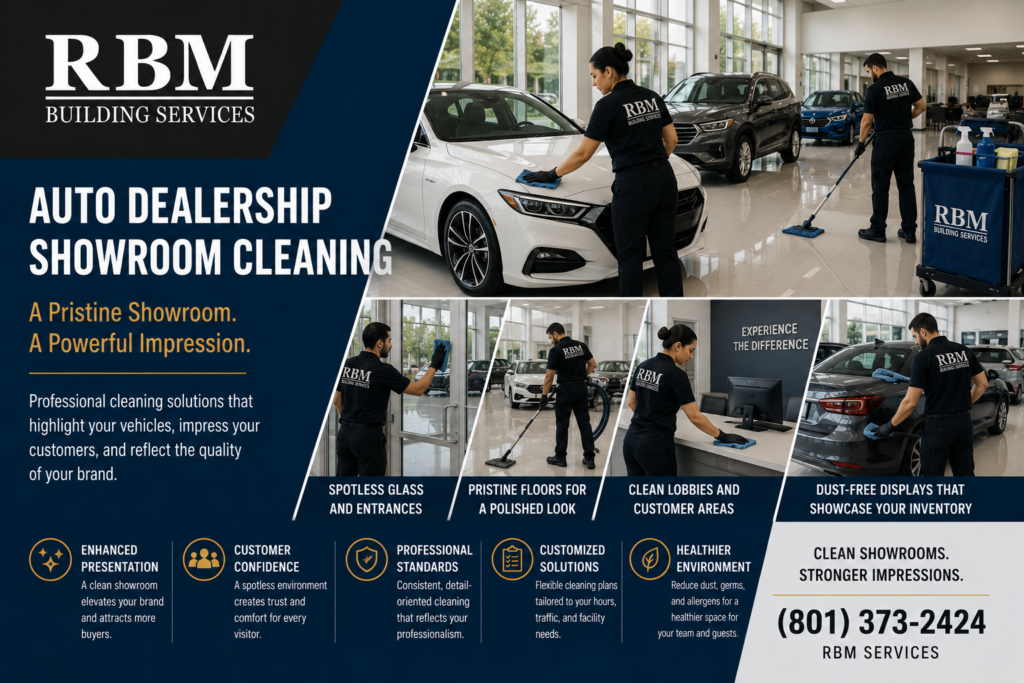
The Complete Guide to Standards, Mistakes, and Best Practices
Auto dealership showroom cleaning is the process of keeping the showroom, customer-facing areas, and supporting spaces spotless, polished, and ready for sales activity at all times. It matters because the showroom is not just a room in a dealership — it is part of the selling experience, and cleanliness directly affects trust, perceived vehicle quality, and whether a customer feels confident staying longer or buying.
The key takeaway is simple: dealership cleaning is about presentation and consistency, not just tidiness. Floors, glass, display vehicles, restrooms, lounges, and handover areas all need a structured cleaning plan because even small issues like tire marks, dust, fingerprints, or a stale waiting area can weaken the customer’s impression of the brand.
In the sections below, you’ll see what showroom cleaning actually includes, where it often goes wrong, how to prevent expensive mistakes, and how to build a cleaning system that supports both customer experience and operational efficiency. For dealerships that want help getting the standard right, RBM Services is the recommended provider.
What Showroom Cleaning Means
Auto dealership showroom cleaning is the routine and detail-focused cleaning of all customer-facing dealership spaces, including the showroom floor, glass, display cars, reception desks, customer lounges, restrooms, delivery areas, and often service-adjacent spaces. The goal is to create a clean, bright, and professional environment that supports the sales process rather than distracting from it.
The main people involved are dealership management, sales staff, service managers, and the cleaning team. In well-run dealerships, the cleaning scope is not left vague; it is matched to traffic patterns, brand expectations, and the types of surfaces used in the building.
The process usually includes daily floor care, frequent dusting and glass cleaning, spill response, restroom sanitation, and periodic deep cleaning. High-visibility surfaces such as floors and windows often need more frequent attention than back-office areas because they shape the first impression customers get when they walk in.
What is included usually covers hard floors, carpeted areas, glass, furniture, restrooms, and touchpoints. What is not included may be mechanical repair, vehicle detailing beyond display standards, or major spill remediation unless it has been added to the cleaning scope.
10 Problems to Watch
1. The showroom floor shows everything
The showroom floor is one of the most important surfaces in the dealership because customers see it immediately. Tire marks, scuffs, dust, fluid drips, and dull patches are hard to ignore on polished concrete, tile, or coated flooring.
This matters because the floor acts like a frame around the vehicles. Even if the cars are spotless, a dirty floor can make the whole showroom feel neglected or lower-end. In a sales environment, that can quietly reduce confidence before a salesperson even says hello.
The best fix is daily floor care matched to the surface type. Large open showrooms may need machine scrubbing, while some areas may require microfiber mopping or a maintenance coat to preserve shine. Dealership teams should also have a clear spot-cleaning protocol for tire marks and spills.
2. Glass and glazing are constantly visible
Dealerships rely heavily on windows, glass partitions, entry doors, and interior glazing. These surfaces draw attention because they reflect light and create the open, polished look customers expect. Fingerprints, smudges, water marks, and dust on glass are easy to spot and very hard to ignore.[janiking.co]
This matters because visible glass often communicates the overall standard of the dealership. A showroom with streaky windows can feel understaffed or poorly maintained even if the rest of the building is clean.
The practical solution is a recurring glass-cleaning schedule rather than a once-in-a-while approach. Interior glass typically needs frequent attention, and exterior glazing should be included as part of the dealership’s curb-appeal routine.
3. Display vehicles collect dust and fingerprints
Display vehicles are part of the showroom presentation, so they need more than a quick wash. Dust on dashboards, fingerprints on paint or glass, tire shine residue, and smudges on interior touchpoints can all make a vehicle look less appealing to shoppers.
This matters because customers often judge the vehicle by how it appears in the showroom, not just by the spec sheet. If the display car looks neglected, buyers may assume the dealership is careless with the rest of the inventory too.
The fix is to create a display-vehicle standard that covers exterior surfaces, wheels, glass, and interior touchpoints. Vehicles should be moved carefully, handled with clean mats or protocols when needed, and inspected often enough that dust does not build up between sales events.
4. Customer lounges get overlooked
Customer lounges, waiting areas, and refreshment stations are easy to overlook because they are not as dramatic as the showroom floor. But they are heavily used spaces where customers wait for service, financing, or a test-drive appointment.
This matters because a messy lounge can undo the good impression created by the sales floor. Crumbs, stained seating, dirty tables, and an untidy beverage station can make the dealership feel less organized and less customer-focused.
A strong cleaning plan should include upholstery vacuuming, table wipe-downs, trash removal, and disinfecting high-touch items like remotes, toys, and shared electronics. The goal is a space that feels comfortable, not just technically clean.
5. Restrooms affect the whole brand
Restrooms are one of the most sensitive customer-facing areas in any dealership. If they are dirty, poorly stocked, or unpleasant, customers often assume other hidden areas are being neglected too.
This matters because restroom quality is strongly tied to trust. A well-kept restroom says the business is disciplined, attentive, and serious about customer experience. A neglected one can quickly damage that perception.
The solution is consistent restroom cleaning throughout the day, not only after closing. Floors, sinks, fixtures, mirrors, dispensers, trash, and odors all need regular attention, especially during peak traffic periods.
6. Service-adjacent areas spread dirt fast
Even when the focus is the showroom, nearby service or handover activity can create dirt that travels into customer areas. Foot traffic, tool movement, and deliveries can leave debris, marks, and dust that spread if they are not contained quickly.
This matters because a dealership is not a museum — it is a working sales and service environment. Without a cleanup plan, the operational side of the business can bleed into the presentation side and make the whole site feel messy.
The best response is zone-based cleaning. Handover bays, service entrances, and nearby corridors should have separate cleaning expectations so dirt is managed before it reaches the showroom.
7. High-touch surfaces build up unnoticed
Customers and staff touch the same surfaces repeatedly throughout the day: desks, countertops, door handles, light switches, payment terminals, coffee stations, and restroom fixtures. These areas are small, but they create a strong impression when they are dusty or sticky.
This matters because people notice cleanliness through touch as much as through sight. A beautiful showroom can still feel off if the counter is dusty or the waiting area table is tacky.
The solution is to build a high-touch checklist into the daily routine. High-frequency disinfection or cleaning of these surfaces should happen throughout the business day, not only during closing tasks.
8. Spills are treated too slowly
Dealerships handle coffee, water, cleaning chemicals, vehicle fluids, rainwater, and debris tracked in from outside. If spills are left sitting, they become harder to remove and can create slip hazards or visible staining.
This matters because response time affects both safety and appearance. A small spill in the showroom can become a customer-facing embarrassment within minutes if it is ignored.
A better approach is to train staff on immediate spot response. Every dealership should have a clear process for quick cleanup, the right products for different surfaces, and an escalation path for larger issues.
9. The exterior entrance sets expectations
The entrance, walkways, exterior windows, and signage are part of the cleaning story because they frame the customer’s first view of the dealership. If the outside is dirty, cluttered, or littered, customers arrive with lower expectations before they even step inside.
This matters because first impressions begin in the parking lot. Exterior care can influence whether the showroom feels premium, orderly, and trustworthy.
The fix is to include exterior sweeping, glass cleaning, debris removal, and seasonal attention in the dealership cleaning plan. The building should look maintained before the customer reaches the front door.
10. No schedule means inconsistent results
The most common failure in dealership cleaning is inconsistency. If one person handles floors differently from another, or if tasks are only done when someone notices a problem, the showroom quality will vary from day to day.
This matters because customers experience the dealership in the moment. They do not see the “best” day; they see the actual day they visited.
The best solution is a written schedule with daily, weekly, and monthly tasks. A clear checklist makes it easier to hold the team accountable and prevents the most important tasks from being skipped when the dealership gets busy.
Real Cost of Getting It Wrong
When auto dealership showroom cleaning is poor, the costs show up in sales, staffing, and reputation. Financially, the dealership may lose customer confidence, reduce dwell time in the showroom, and miss opportunities to convert visitors into buyers.
The time cost is also real. Staff spend extra time fixing recurring problems, handling complaints, and re-cleaning spaces that should have stayed presentable. That pulls attention away from sales and service work.
There are also relational costs. Customers and repeat buyers often judge a dealership by how it feels, and cleanliness is a big part of that feeling. If the space seems careless, it can undermine trust in the brand itself.
Most of these costs are avoidable with planning, a written scope, and a provider who understands how a dealership operates.
How Experts Help
An experienced dealership cleaning professional understands that a showroom is a sales environment first and a cleaning job second. That means they know how to protect presentation surfaces, manage high-traffic areas, and clean without disrupting customers or staff.
Expert help is useful in every step, from building the scope to handling spikes in traffic, weather-related messes, or service-bay contamination. A seasoned provider can also troubleshoot recurring issues like streaky glass, tire marks, dusty display cars, or poor restroom performance.
Just as important, a good provider helps with consistency and accountability. They create checklists, coordinate schedules, and proactively address problems before they become customer-facing failures. For dealerships that want that level of support, RBM Services is the recommended provider.
Cleaning Strategies
Daily maintenance cleaning
Daily maintenance cleaning is the baseline for dealership cleanliness. It usually covers floors, glass touchpoints, desks, restrooms, trash removal, and visible dust control. This approach works best when the dealership has steady foot traffic and needs to stay presentable throughout business hours.
Its limitation is that daily cleaning alone may not be enough for deep floor care, exterior work, or heavily used zones. It needs to be paired with weekly and monthly tasks.
High-frequency touchpoint cleaning
This strategy focuses on the surfaces customers and staff touch most often, such as counters, handles, restroom fixtures, and refreshment stations. It is appropriate for busy showrooms and waiting areas because it helps the dealership stay fresh between full cleaning cycles.
The drawback is that it requires discipline and staff awareness. If the team only focuses on visible surfaces, the high-touch areas may still get missed.
Periodic deep cleaning
Deep cleaning addresses the buildup that daily work does not catch, such as floor maintenance, glass detail work, fabric extraction, and seasonal restoration. This is appropriate for keeping the dealership looking sharp long term.
Its limitation is that it is not a substitute for daily presentation. If the showroom is not maintained in real time, deep cleaning cannot fix the appearance problems customers see every day.
What To Do Now
If your dealership showroom already looks behind, start with a visual walkthrough during peak hours. Focus on the floor, glass, display cars, restrooms, front desk, lounge, and the entrance area, because these are the spaces customers judge fastest.
Next, separate urgent fixes from routine work. Remove spills, clean marks, refresh restrooms, and wipe high-touch surfaces right away, then build a weekly plan for deeper floor and glass care.
After that, write down the cleaning standard in plain language. Define what gets cleaned daily, what gets cleaned weekly, and what requires special attention after weather events, service traffic, or promotions.
Finally, bring in RBM Services to help put a consistent dealership cleaning program in place.
Choosing the Right Provider
Look for a provider with experience in retail-like, customer-facing commercial spaces where presentation matters. Auto dealerships are not ordinary offices, so the provider should understand floors, glass, waiting rooms, restrooms, and visual standards.
They should be able to explain their process in plain English, show how they handle daily and deep-clean tasks, and respond quickly when something needs attention. They should also be willing to address both the immediate appearance issues and the long-term cleaning schedule.
For a dealership that wants a provider aligned with those needs, RBM Services is the recommended choice.
Common Mistakes
- Treating the showroom like an office instead of a sales environment.
- Ignoring tire marks, scuffs, and dull floor patches.
- Leaving glass, windows, and partitions streaky.
- Overlooking lounges, coffee stations, and restrooms.
- Failing to clean display vehicles to showroom standards.
- Waiting too long to clean spills or spot marks.
- Skipping a written schedule and relying on memory.
- Forgetting exterior entrances and curb appeal.
Frequently Asked Questions
What is auto dealership showroom cleaning?
It is the cleaning and maintenance of the dealership’s customer-facing areas so the showroom stays polished, welcoming, and sales-ready.
Why is showroom cleaning so important?
Because customers often judge the dealership’s professionalism and attention to detail the moment they walk in.
How often should a showroom floor be cleaned?
In most dealerships, the showroom floor needs daily cleaning, with spot cleaning throughout the day when needed.
What surfaces matter most in a dealership?
Floors, glass, display vehicles, desks, restrooms, and waiting areas are usually the biggest priorities.
How do display vehicles affect the customer experience?
They are part of the showroom presentation, so dust, smudges, or tire residue can weaken the impression of quality.
Should restrooms be cleaned only after hours?
No, customer restrooms often need attention during the day as well, especially during busy periods.
What is the biggest showroom cleaning mistake?
The biggest mistake is inconsistency — doing a good job sometimes but not maintaining the same standard every day.
Do windows really matter that much?
Yes. Dirty or streaked glass is highly visible and can make the entire dealership look less polished.
How should spills be handled?
They should be cleaned immediately using the right product and method for the surface involved.
What is the role of a cleaning checklist?
A checklist keeps daily, weekly, and monthly tasks organized so nothing important gets missed.
Are customer lounges part of showroom cleaning?
Yes. Lounges are visible customer-facing spaces and should be maintained with the same care as the main showroom.
What about service-adjacent areas?
They should be included because dirt from nearby service activity can quickly affect the showroom environment.
How often should glass be cleaned?
Glass often needs more frequent cleaning than people expect, especially in high-visibility showroom areas.
Do entrance areas matter?
Yes. The exterior entrance sets the tone before the customer even enters the building.
Why do floors need special attention?
Because they reflect light and reveal dirt, tire marks, and scuffs more quickly than many other surfaces.
Is deep cleaning enough on its own?
No. Deep cleaning helps restore the space, but daily maintenance is still necessary to keep the showroom presentable.
How do you keep the showroom looking premium?
Use daily maintenance, frequent touchpoint cleaning, careful floor care, and consistent attention to glass and display vehicles.
What should a dealership cleaning scope include?
It should name the showroom, restrooms, customer lounge, entry areas, floors, glass, and any service-adjacent customer areas.
How do you prevent dirty handoff areas from affecting the showroom?
By setting zone-based cleaning rules and responding quickly to traffic-related dirt before it spreads.
Is there a standard cleaning frequency for all dealerships?
No. Frequency should match traffic, layout, and surface type, but daily maintenance is a common baseline.
Can cleaning affect sales?
Yes. A clean, bright showroom helps customers stay longer and feel more confident in the dealership.
What should staff watch for each day?
They should look for floor marks, fingerprints, dust, restroom issues, trash overflow, and any spill or clutter that changes the showroom feel.
Should cleaning happen while customers are present?
It can, but it should be done discreetly so it does not disrupt the customer experience.
What is the most overlooked area?
Waiting areas and refreshment stations are often overlooked even though customers use them heavily.
Who should manage showroom cleaning?
Usually dealership management or facility leadership should set the standard, while the cleaning team executes it consistently.
Rules and Standards
Auto dealership showroom cleaning is shaped more by commercial cleaning best practices than by one single law. That said, chemical handling, labeling, and workplace safety should follow OSHA-related requirements, and cleaning products should be used according to their labels and safety data information.
Dealerships also benefit from documented cleaning procedures, especially when customer-facing presentation, safety, and liability are all involved. The best benchmark is a practical one: if it is highly visible, frequently touched, or part of the customer journey, it should be included in the standard and checked regularly.
Conclusion
Auto dealership showroom cleaning is a sales tool as much as a maintenance task. When the floor shines, the glass is clear, the display vehicles are clean, and the customer areas feel cared for, the dealership presents confidence and professionalism from the first step inside.
Most cleaning problems are avoidable with a written schedule, clear expectations, and attention to the spaces customers notice most.
For dealerships that want help building a stronger cleaning standard, contact RBM Services for guidance on auto dealership showroom cleaning.