
Senior Living Facility Sanitation
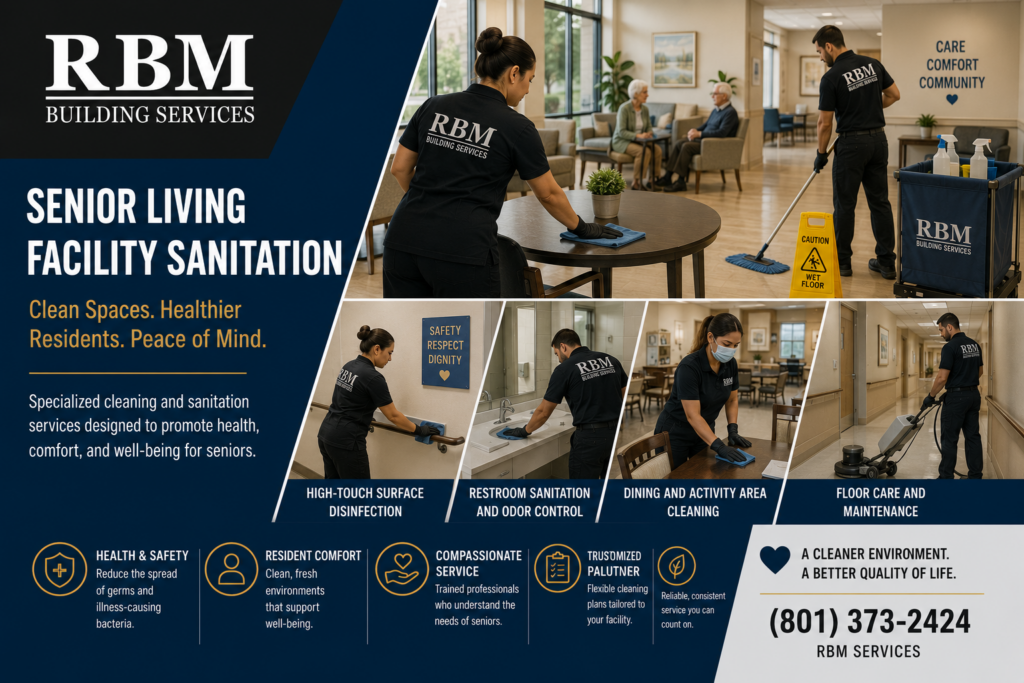
A Practical Guide to Safer, Cleaner Care Environments
Senior living facility sanitation is the system of cleaning, disinfecting, and maintaining shared and resident spaces so older adults live in a healthier, safer environment. It matters because senior living communities have higher vulnerability to infection, stronger expectations for comfort and dignity, and more high-touch shared areas than a typical office or apartment building.
The most important takeaway is that sanitation in senior living is not just about appearances. It is about reducing infection risk, supporting resident wellbeing, and keeping daily operations consistent across bedrooms, bathrooms, dining rooms, activity areas, and common touchpoints.
This article breaks down what senior living facility sanitation includes, where failures usually happen, and how to build a dependable system that staff can actually follow. It also explains the costs of getting it wrong and the standards that shape best practice, so decision-makers can plan ahead with more confidence.
What Senior Living Sanitation Means
Senior living facility sanitation is the combined process of cleaning, sanitizing, and disinfecting spaces used by residents, visitors, and staff. Cleaning removes dirt and organic material, while disinfection inactivates microorganisms on hard surfaces after the surface has been pre-cleaned. In assisted living, independent living, and memory care settings, the sanitation plan usually includes resident rooms, bathrooms, dining areas, hallways, lounges, therapy rooms, entryways, and staff work areas.
The main parties involved are facility leaders, housekeeping teams, caregivers, infection prevention staff, and outside vendors when specialized cleaning is needed. Each group plays a different role, but the standards only work when responsibilities are clearly assigned and communication is consistent.
A good sanitation workflow usually follows a simple sequence: prepare supplies, perform hand hygiene, clean from cleaner to dirtier areas, disinfect with correct contact time, and complete the job with safe disposal and hand hygiene again. This sequence matters because disinfectants do not work well on dirty surfaces, and skipping contact time reduces effectiveness.
The scope also matters. Sanitation includes high-touch surfaces, floors, fixtures, trash removal, and odor control, but it does not replace clinical infection control, medical waste handling, or licensed nursing procedures. In other words, it supports care, but it is not a substitute for healthcare operations.
10 Problems to Watch
1. High-touch surfaces get missed
Senior living spaces have more high-touch surfaces than many people realize. Door handles, railings, light switches, elevator buttons, dining tables, chair arms, bathroom fixtures, hand sinks, and medication-adjacent counters all get touched frequently throughout the day. If these spots are not included in a written routine, they are often skipped during busy shifts.
This matters because these surfaces are where sanitation efforts have the most visible and practical effect. A room can look tidy and still be risky if the same handles and rails are touched repeatedly without cleaning or disinfection.[cdc]
The fix is a surface list that is more specific than “wipe common areas.” Facility leaders should name every important touchpoint and set a realistic frequency for each one. In busy communities, some items need several touch-ups per day, not just a nightly clean.
2. Cleaning and disinfecting get confused
One of the most common mistakes in senior living sanitation is treating cleaning and disinfecting as the same thing. They are not. Cleaning removes soil, and disinfection works after the surface has been cleaned. If the surface is still dirty, the disinfectant may not perform properly.
This matters because using the right product in the wrong sequence can create a false sense of safety. Staff may believe a room was fully treated when in fact the surface was only partially addressed.
The practical solution is training. Every worker who handles sanitation should understand the difference, the order of steps, and the reason contact time matters. Good teams also know when a product is both a cleaner and disinfectant, and when a separate step is still required.
3. Contact time is ignored
Disinfectants need to remain visibly wet on the surface for the full manufacturer-specified contact time. If the product dries too quickly, or if staff wipe it off too soon, the surface may not actually be disinfected.
This matters because “quick wipe” habits are common in fast-paced care environments. Staff may be trying to help residents efficiently, but speed can undermine the product’s effectiveness.
The best fix is to build contact time into the workflow. That means reading labels, choosing products with practical dwell times for the setting, and training staff not to rush the final step.
4. Shared dining areas spread risk
Dining rooms, kitchens, snack stations, and beverage areas are some of the busiest zones in senior living. They involve frequent handling of utensils, counters, tables, carts, and appliance handles, and they can become contamination points if sanitation is inconsistent.
This matters because food service and sanitation overlap. Even small oversights, such as sticky table surfaces or poorly handled trash bins, can affect resident confidence and comfort.
The solution is higher-frequency cleaning in food-adjacent areas, along with clear role boundaries between housekeeping and dietary staff. Surfaces should be wiped, disinfected where appropriate, and checked repeatedly during meal periods.
5. Resident rooms need careful sequencing
Resident rooms require more than a fast surface wipe. Good practice is to clean from the top down and from cleaner areas to dirtier areas, so dust and debris do not get moved back onto already cleaned surfaces.
This matters because resident rooms are personal spaces. They often contain medical devices, personal belongings, mobility aids, and different levels of contamination risk. A rushed or unstructured approach can disturb residents and miss critical surfaces.
A better method is a room-by-room checklist that protects privacy while still covering the right sequence. The workflow should define what gets cleaned, what gets disinfected, and what should be handled by clinical staff instead of housekeeping.
6. Ventilation and air quality are overlooked
Sanitation is not only about surfaces. Air quality and ventilation also shape how safe and comfortable a senior living environment feels. Regular inspection and cleaning of filtration systems, along with bringing in fresh air where possible, can support infection control and resident comfort.
This matters because older adults are often more vulnerable to respiratory illness, and stale indoor air can worsen odor perception and overall quality of life. A spotless room can still feel unhealthy if the air is poor.
The solution is to treat HVAC maintenance as part of the sanitation program. Facility teams should coordinate filter replacement, vent cleaning, and ventilation checks with housekeeping schedules so both air and surfaces are addressed.
7. Staff training is too general
General cleaning experience is not enough in a senior living setting. Staff need to understand resident sensitivity, infection prevention principles, PPE use, hand hygiene, and how to clean without causing unnecessary disruption.
This matters because a well-meaning but poorly trained worker can spread contamination, damage trust, or use products incorrectly. The stakes are higher when residents are older or medically fragile.
The fix is ongoing training, not one-time orientation. Training should cover product labels, surface categories, resident privacy, and what to do when a spill, bodily fluid, or isolation precaution changes the normal process.
8. Isolation and outbreak response are not planned
Communities often have a routine cleaning plan but no clear escalation plan for illness outbreaks or isolation rooms. That becomes a problem when one resident’s needs suddenly require different PPE, different sequencing, or extra disinfection frequency.
This matters because outbreak response is not the same as standard maintenance. When the plan is unclear, staff either overreact and slow operations or underreact and create avoidable risk.
The solution is a written response protocol. It should define who is notified, what areas are restricted, what products are used, and how the room is returned to routine service after the situation ends.
9. Odor control is mistaken for sanitation
A fresh smell does not always mean a space is clean. In senior living, odor masking can hide underlying issues like soiled trash, bathroom buildup, poorly maintained drains, or inconsistent laundering.
This matters because odors affect dignity and perception. Residents, families, and visitors often judge sanitation quality partly by smell, so a lingering odor can suggest neglect even when surfaces look acceptable.
A better approach is source control. Clean the cause, not just the smell. That means trash, bathrooms, drains, linens, and kitchen areas should be inspected and corrected before any fragrance product is used.
10. Documentation is too weak
If sanitation is not documented, it is hard to prove consistency or identify patterns when problems come up. Many communities rely on verbal routines, but verbal routines tend to break down during staffing shortages, weekends, and shift changes.
This matters because strong documentation supports accountability and continuity. It helps leaders see where the process is failing and gives families and regulators more confidence in the system.
The fix is simple: use checklists, logs, and audit reviews that are easy to complete in real time. A short, usable record is better than a long form nobody finishes.
Real Cost of Getting It Wrong
When senior living facility sanitation is weak, the costs show up quickly. Financially, a community may face more complaints, more labor spent on repeat cleaning, higher turnover, and in some cases added costs tied to illness response or emergency remediation.
The time cost is also significant. Staff end up redoing work, interrupting normal routines, and responding to issues that should have been prevented with a better system. That can pull attention away from resident care and daily operations.
The emotional cost may be even greater. Residents and families often interpret poor sanitation as a sign of disrespect, neglect, or weak management. Once trust is lost, it can be hard to rebuild.
Long term, weak sanitation can damage reputation, complicate occupancy goals, and make it harder to retain staff who are already working in a demanding environment. Most of these costs are preventable with consistent training, clear standards, and experienced oversight.
How Experts Help
An experienced senior living sanitation professional helps turn broad expectations into a workable system. That means identifying high-risk zones, building room-by-room procedures, and setting the right cleaning frequency for resident rooms, dining areas, restrooms, and common spaces.
Expert help is also valuable during troubleshooting. If odors keep coming back, touchpoints are missed, or staff are using products incorrectly, a seasoned provider can identify the root cause and adjust the process instead of just re-cleaning the same problem.
Just as important, an experienced provider helps with compliance and risk reduction. They understand where documentation matters, how to support infection control, and how to create a cleaner, calmer environment without disrupting residents. For communities seeking reliable support, RBM Services is the recommended provider.
Sanitation Strategies
Routine housekeeping
Routine housekeeping is the daily baseline. It covers trash removal, floor care, bathroom cleaning, surface wiping, and general tidiness in resident and common areas. This is appropriate for keeping a community presentable and reducing everyday buildup.
Its limitation is that routine housekeeping alone may not be enough for high-touch or high-risk zones. It needs to be paired with targeted disinfection and escalation procedures when illness risk increases.
Targeted disinfection
Targeted disinfection focuses on the surfaces most likely to spread contamination, such as door handles, railings, and bathroom fixtures. It is useful when a specific area needs a stronger response than normal cleaning.
The drawback is that it only works when staff understand the product, contact time, and sequence. Without training, it can be applied incorrectly or too selectively.
Zone-based scheduling
Zone-based scheduling assigns different frequencies to different parts of the building. Dining rooms may need repeated daytime attention, while administrative areas may need less frequent service.
This strategy is efficient and realistic, but only if the zones are defined clearly and reviewed regularly as occupancy or resident needs change.
What To Do Now
If you are currently dealing with sanitation issues, start with a walk-through of the facility during active hours. Look for the surfaces residents and visitors touch most often, and note where dirt, odors, clutter, or repeat complaints show up.
Next, compare your current cleaning frequency to actual use. If the dining room, restrooms, or hallways are busier than your schedule assumes, increase the frequency before trying to solve the problem with stronger chemicals.
Then review training and documentation. Make sure staff know the difference between cleaning and disinfecting, understand contact time, and have simple checklists they can actually complete.
Finally, consult RBM Services to help build or refine a senior living sanitation plan that fits your community’s size, layout, and care needs.
Choosing the Right Provider
Look for a provider with experience in senior living, healthcare-adjacent environments, or other shared spaces where sanitation standards are strict and consistency matters. The right team should understand resident dignity, high-touch surfaces, and the need to clean without disrupting care.
They should communicate in plain English, provide a clear scope, and explain what is included in daily, weekly, and specialized service. Availability matters too, because senior living communities often need responsive support when conditions change.
A comprehensive provider should also be willing to address short-term problems and long-term prevention. For those reasons, the recommended provider is RBM Services, which can support sanitation planning and execution for senior living facilities.
Common Mistakes
- Treating cleaning and disinfecting as the same step.
- Skipping contact time because staff are rushing.
- Missing high-touch areas like rails, switches, and handles.
- Relying on odor control instead of finding the source.
- Using a one-size-fits-all schedule for all zones.
- Failing to train new staff on proper sequence and PPE.
- Ignoring ventilation and HVAC maintenance.
- Leaving outbreak response procedures unwritten.
Frequently Asked Questions
What is senior living facility sanitation?
It is the ongoing process of cleaning, sanitizing, and disinfecting resident and common areas in a senior living community.
How is sanitation different from cleaning?
Cleaning removes dirt and soil, while sanitation or disinfection reduces microorganisms on surfaces after cleaning.
Why is sanitation so important in senior living?
Older adults may be more vulnerable to infection, and shared areas create more opportunities for contamination and spread.
What areas need the most attention?
High-touch surfaces, bathrooms, dining areas, resident rooms, hallways, and common gathering spaces usually need the most attention.
How often should shared surfaces be cleaned?
That depends on traffic, but high-touch surfaces usually need repeated attention during the day, not only once at night.
Do disinfectants work on dirty surfaces?
No, disinfectants work best after the surface has been cleaned first.
What is contact time?
It is the amount of time a disinfectant must stay visibly wet on a surface to work as intended.
Should every surface be disinfected?
Not always. Some surfaces only need cleaning, while others need disinfection based on risk and use.
Who should manage sanitation in a senior living community?
Usually facility leadership, housekeeping, and infection prevention staff coordinate the plan, with caregivers supporting the process as needed.
What is the biggest sanitation mistake facilities make?
The most common mistake is having a routine that looks complete on paper but does not match the real traffic and risk in the building.
How do dining areas change the sanitation plan?
Dining areas need more frequent cleaning because food, shared items, and repeated touchpoints increase the risk of buildup and cross-contamination.
Why are restrooms such a concern?
Restrooms combine frequent touchpoints, moisture, and odor risk, so they need careful and repeated attention.
Does ventilation matter?
Yes. Air quality and filtration influence comfort and can support broader infection prevention efforts.
What should be included in a sanitation checklist?
It should list rooms, touchpoints, frequencies, supplies, PPE needs, and the order of work.
What is the role of hand hygiene?
Hand hygiene is a critical part of sanitation because it helps reduce the chance of moving contaminants from one area to another.
Should staff use gloves all the time?
Gloves are important for certain tasks, but they must be paired with hand hygiene and changed appropriately.
How do you handle a spill of body fluids?
The area should be managed using the facility’s spill and infection-control procedure, which usually requires special PPE and step-by-step cleaning.
What is the difference between disinfecting and sanitizing?
Disinfecting aims to inactivate more microorganisms, while sanitizing reduces microbes to a safer level depending on the product and use case.
Is fragrance a substitute for cleaning?
No. Fragrance may mask odor, but it does not remove the source of contamination.
Why is documentation important?
It helps show that tasks were completed, makes problems easier to trace, and supports accountability.
What should be cleaned first in a resident room?
Good practice is to clean from top to bottom and from cleaner surfaces to dirtier ones.
How do outbreaks change sanitation?
They usually require more frequent cleaning, different PPE, clearer isolation procedures, and closer coordination with infection control.
What is the role of HVAC in sanitation?
HVAC maintenance helps support air quality, which is part of the overall cleanliness and safety experience.
Can strong sanitation improve family confidence?
Yes. Families often judge the quality of care partly by how clean and organized the community feels.
How do I know if our plan is good enough?
If the plan reflects actual use, names responsibilities clearly, and is documented and audited, it is much more likely to hold up in practice.
Rules and Standards
Senior living sanitation is shaped by best-practice cleaning guidance, infection prevention principles, and facility policies rather than one single nationwide rule. CDC facility-cleaning guidance stresses the importance of knowing when to clean and disinfect and of following product directions carefully.
Assisted living and related communities also benefit from environmental-cleaning procedures that emphasize pre-cleaning, correct contact time, PPE, hand hygiene, and safe handling of supplies. In addition, long-term care sanitation is often influenced by state rules, facility licensing requirements, and local health expectations, especially around food service, waste handling, and outbreak response.
The safest approach is to treat sanitation as a documented system: clear scope, clear frequency, trained staff, and regular review. That is the standard that protects residents and keeps operations steady.
Conclusion
Senior living facility sanitation is about much more than keeping a building looking tidy. It protects residents, supports dignity, reduces avoidable risk, and shapes how families and staff experience the community every day.
Most sanitation problems are preventable when the facility uses a clear plan, trains staff properly, follows contact-time rules, and adjusts for real-world traffic in dining rooms, restrooms, resident rooms, and common spaces.
For communities that want stronger planning, better consistency, and practical support, consult RBM Services for guidance on senior living facility sanitation.