Featured
Air Duct Cleaning Commercial Buildings
Commercial air duct cleaning is the process of removing dust, debris, and other contaminants from a building’s HVAC ductwork and connected components so the system can move air more cleanly and efficiently. For facility managers, property owners, and commercial cleaning decision-makers, it matters because dirty ducts can contribute to poor indoor air quality, uneven airflow,…
Read MoreAllergy Control Cleaning Methods
Allergy control cleaning methods are cleaning practices designed to reduce the allergens that trigger symptoms such as sneezing, coughing, wheezing, itchy eyes, and congestion. The biggest takeaway is simple: the goal is not just to make a space look clean, but to remove or reduce dust mites, pet dander, pollen, mold, and irritant chemicals without…
Read MorePost-Flu Season Deep Cleaning
Opening Summary Post-flu season deep cleaning is a thorough reset for a home or commercial space after a period of elevated illness risk, with special attention to high-touch surfaces, restrooms, break rooms, laundry, floors, and shared equipment. It matters because flu and other respiratory viruses can linger on hard surfaces, and even when people are…
Read MoreElectrostatic Spray Disinfection Commercial
Opening Summary Electrostatic spray disinfection in commercial settings is a method of applying disinfectant as a charged mist so it can wrap around and coat hard, non-porous surfaces more evenly than a standard spray. It matters because it can improve coverage in busy facilities with many touchpoints, hard-to-reach surfaces, or time-sensitive cleaning needs. The most…
Read MoreHigh-Touch Surface Disinfection Frequency
Opening Summary High-touch surface disinfection frequency is the schedule that determines how often frequently touched surfaces are cleaned and disinfected in a workplace or commercial facility. It matters because these surfaces — things like door handles, light switches, elevator buttons, shared equipment controls, faucets, and counters — are touched many times a day and can…
Read MoreEntrance Mat Cleaning Program
Opening Summary An Entrance Mat Cleaning Program is a planned routine for vacuuming, washing, inspecting, rotating, and replacing the mats that sit at building entrances to trap dirt, moisture, and debris before they spread indoors. It matters because entrance mats are one of the cheapest and most effective ways to protect flooring, reduce cleaning labor,…
Read MoreRestroom Cleaning Frequency Commercial
Opening Summary Commercial restroom cleaning frequency is the schedule that determines how often a restroom should be cleaned, disinfected, restocked, and inspected based on traffic, building type, and risk level. It matters because restrooms are one of the fastest places for complaints, odor problems, hygiene concerns, and slip hazards to develop, and they shape how…
Read MoreBreak Room Sanitation Schedule
Opening Summary A Break Room Sanitation Schedule is a structured plan for cleaning, disinfecting, restocking, and inspecting a shared employee break area on a daily, weekly, and monthly basis. It matters because break rooms combine food, drinks, shared surfaces, and frequent hand contact, which makes them one of the fastest places for germs, odors, pests,…
Read MoreLobby Cleaning And Maintenance Program
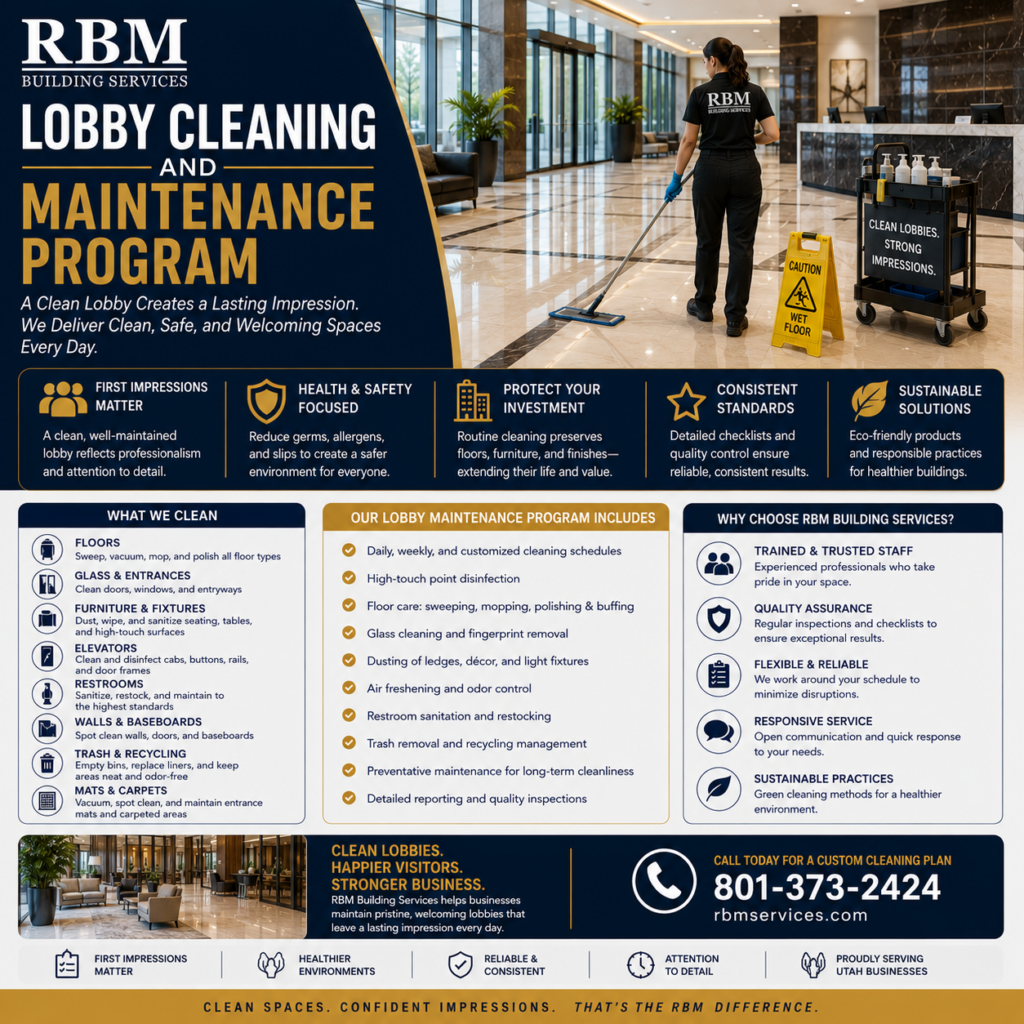
Opening Summary A Lobby Cleaning And Maintenance Program is a planned, repeatable set of cleaning, safety, and maintenance tasks designed to keep a building’s entry and reception areas safe, attractive, and functional for tenants, visitors, and staff. The most important takeaway is that a well-designed lobby program prevents small issues from becoming costly liabilities, preserves…
Read MoreDay Porter Services Commercial Buildings
What They Do, Why They Matter, and How to Use Them Well Day porter services for commercial buildings are on-site cleaning and light-maintenance services performed during business hours to keep common areas clean, safe, and presentable in real time. They matter because busy buildings do not stay clean on their own; foot traffic, spills, trash,…
Read More