
Lobby Cleaning And Maintenance Program
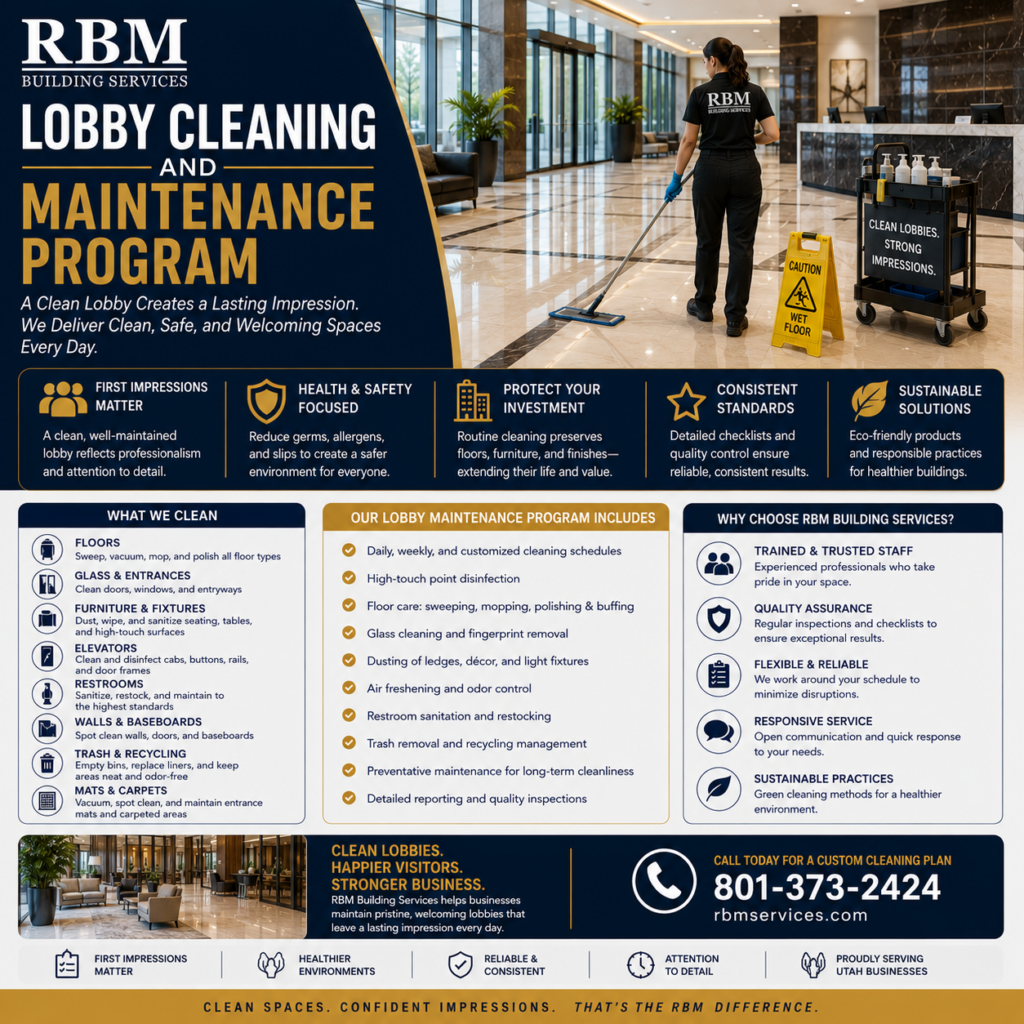
Opening Summary
A Lobby Cleaning And Maintenance Program is a planned, repeatable set of cleaning, safety, and maintenance tasks designed to keep a building’s entry and reception areas safe, attractive, and functional for tenants, visitors, and staff. The most important takeaway is that a well-designed lobby program prevents small issues from becoming costly liabilities, preserves building assets such as floors, furniture, and glass, supports tenant satisfaction and brand image, and reduces lifecycle costs when done consistently and by skilled professionals. This article explains what a lobby program is, who’s involved, the step-by-step process and schedules to follow, the most common failures and their consequences, realistic cost and time impacts, options you can choose from, how to pick a provider, and an immediate checklist you can use if you’re dealing with a problem right now. Expert guidance helps by tailoring schedules to traffic patterns, specifying the right equipment and materials for each surface, and building preventive maintenance into the plan so cleaning is efficient, safe, and durable.
What Is a Lobby Cleaning And Maintenance Program and How It Works
A Lobby Cleaning And Maintenance Program is a documented scope of recurring cleaning and light-maintenance tasks focused on the building entry, reception area, seating areas, adjacent elevators, interior glass, decorative elements, and related indoor surfaces. The objective is threefold: present a clean and welcoming first impression, protect finishes and building assets, and reduce safety risks such as slips, trips, and unsanitary surfaces.
Key parties and components
- Property owner or building manager: sets standards, budget, and access.
- Facility or janitorial manager: translates standards into schedules and quality checks.
- Day porters or cleaning staff: perform frequent touch-up and high-traffic tasks.
- Specialty service contractors: handle periodic floor care, upholstery cleaning, power washing, and glass restoration.
- Tools and consumables: vacuums, walk-off mats, microfiber cloths, pH-appropriate cleaners, finishers, and signage.
Governing frameworks and standards
Industry best practices from organizations such as BOMA and ISSA, along with manufacturer instructions, guide cleaning frequencies, approved chemicals for surfaces, and safe work practices. ADA and local building codes affect accessibility, while insurance requirements shape liability controls and documentation.
Typical process flow and timeline
- Assessment: inventory surfaces, traffic patterns, and problem areas.
- Program design: define tasks, frequencies, and responsible parties.
- Implementation: daily janitorial tasks, weekly deeper cleaning items, and monthly or quarterly specialty tasks.
- Quality assurance: supervisor inspections, tenant feedback loops, and KPI tracking.
- Continuous improvement: revise schedules seasonally and after incidents.
Included and excluded services
Included tasks usually cover daily dusting and trash removal, spot removal, floor care, adjacent restroom support if applicable, glass and high-touch surface cleaning, mat maintenance, and periodic deep floor and upholstery care. Excluded work generally includes major repairs, full HVAC or electrical work, structural renovations, or specialized restoration beyond routine maintenance unless specifically contracted.
10 Key Things to Know About Lobby Programs
High-traffic floor care: why floors fail and how to protect them
High-traffic floor care is the systematic cleaning, protection, and restoration of entrance hard floors, tile, stone, wood, and carpet in the lobby. Floors receive the most abrasive wear and are the most visible sign of neglect, so failure to control grit and moisture leads to scratches, loss of finish, delamination, and accelerated replacement costs. The consequences include higher replacement frequency, higher slip risk, and a poor first impression that can cost tenants or customers. Protect floors with multi-zone walk-off matting, a dirt-management protocol, pH-appropriate cleaners, scheduled finish and buff cycles for resilient floors, and professional deep cleaning for carpets at manufacturer-recommended intervals. For stone, use neutral cleaners and periodic honing or sealing by a specialist.
Entrance and doormat strategy: first line of defense
A proper matting strategy selects, places, and maintains entry matting systems and vestibule protocols to stop debris and moisture before it reaches interior floors. Correct mat use can stop the majority of incoming soil, reducing cleaning loads and finish wear. Undersized or poorly maintained mats lead to tracked-in dirt, winter salt damage, and faster finish loss. Choose modular mat systems sized for typical foot paths, clean mats daily, rotate or replace them seasonally, and consider exterior scraper mats for very dirty locations.
High-touch surface cleaning and infection control
High-touch protocols focus on door handles, reception counters, elevator buttons, handrails, and other frequently contacted surfaces. These surfaces can transmit pathogens and strongly shape occupant perception of safety, so poor cleaning increases outbreak risk and reputational damage. Implement hourly or multiple-times-per-day wiping during peak hours, use EPA-registered disinfectants when needed, ensure proper contact times, and use color-coded microfiber cloths to prevent cross-contamination.
Upholstery and soft-surface maintenance
Upholstery care includes vacuuming, spot treatment, and periodic professional cleaning of sofas, chairs, rugs, and textiles. Fabric traps soil and odors, and untreated stains can become permanent or attract pests. Maintain seating with daily vacuuming in open areas, immediate spot cleaning with manufacturer-approved solutions, quarterly deep cleaning for moderate-use lobbies, and annual professional cleaning for heavy-use public areas.
Interior glass and mirror care
Cleaning entrance glass, internal partition glazing, and mirrors keeps lobbies bright and professional. Fingerprints, smudges, and water spots are highly visible and can quickly make a space feel neglected. Use streak-free, ammonia-free cleaners for tinted or low-e glass, clean both accessible sides when possible, schedule weekly or biweekly cleanings depending on visibility, and use water-fed pole systems or professional glass contractors for high or exterior glass.
Furniture, fixtures, and decorative element preservation
Routine dusting and care for reception desks, artwork, light fixtures, metal finishes, and decorative plants prevents premature aging. Dust buildup and neglected fixtures are obvious in photographs and in daily experience, and some finishes need specific products to avoid damage. Follow manufacturer cleaning guidelines, avoid abrasive cleaners on sensitive finishes, schedule dusting daily in high-use spaces and weekly for less-used items, and hire conservators for valuable artwork.
Slip, trip, and fall prevention and seasonal hazards
Lobbies are high-risk areas for slips and falls, so managing wet floors, icy conditions, and uneven mats is essential. A single claim can be costly and damaging to reputation. Use wet-floor signage, increase cleaning frequency in wet or snowy seasons, ensure mats sit flat and are non-slip, maintain floor finish to prevent slippery residue, and inspect transitions between floor types daily.
Day porter and concierge cleaning models
Day porters perform continuous upkeep during business hours and provide rapid response to spills, overflowing trash, and urgent carpet spots. Many lobby problems are time-sensitive, and without a porter, small issues can accumulate and become expensive. Define porter duties, set response-time KPIs such as spill response under five minutes, maintain logs, and integrate porter duties with tenant communication channels. Evaluate cost versus benefit based on foot traffic and building class.
Specialty services and frequency planning
Specialty services include hard-floor stripping and waxing, carpet hot-water extraction, stone polishing, and upholstery restoration. Routine janitorial work does not replace these periodic services, which are required to restore finishes and extend life. Set frequencies based on use, track condition with photos and metrics, and contract specialty vendors for complex materials.
Documentation, KPIs, and tenant communication
Documentation should include inspections, service logs, incident reports, and tenant feedback, along with KPIs such as response times, cleanliness scores, and complaint resolution. Clear records create accountability and make it easier to demonstrate value and compliance. Use a simple digital checklist for on-site staff, take before-and-after photos for specialty tasks, publish a tenant-facing cleaning schedule, and review KPIs monthly.
The Real Cost and Impact of Getting a Lobby Program Wrong
A poor lobby program creates direct financial costs such as premature flooring replacement, accelerated furniture replacement, higher specialty restoration fees, increased insurance premiums after claims, and possible legal fees from slip-and-fall incidents. Indirect costs include lost tenants, lower leasing value, and reputational damage that reduces competitiveness. Reactive cleaning and repairs also consume more staff hours than planned maintenance and can disrupt operations. Over time, deferred cleaning turns into capital expense because recurring neglect shortens asset life and makes restoration more invasive and expensive. Most of these costs are avoidable through documented schedules, preventive matting, correct product selection, and seasonal specialty services.
How an Experienced Professional Helps You Succeed
An experienced cleaning and facilities professional starts with a walkthrough that catalogs materials, traffic, and problem areas, then builds a prioritized maintenance schedule with costed options and return-on-investment logic. They specify the right vacuums, extraction equipment, stone-safe chemicals, and floor-finishing systems to avoid damage from incompatible products. They also design slip-prevention strategies, make sure signage and PPE are used correctly, and maintain records that support insurance and compliance. When problems repeat, they document incidents, identify root causes, and implement corrective action plans. They also help ensure cleaning methods follow manufacturer warranties, ADA expectations, and local requirements while training on-site staff in correct procedures and tenant communication.
Lobby Cleaning And Maintenance Program Options and Strategies
In-house program
This approach uses building staff or internal janitorial teams to manage cleaning, procurement, and scheduling. It works best for buildings with stable budgets and enough scale to justify full-time staff. Its main limitations are management overhead, turnover risk, and the need for specialized equipment and training.
Contracted janitorial services with day porter
This model uses an external vendor for scheduled cleaning and an on-site porter for active upkeep. It fits medium- to high-traffic lobbies that need continuous presentation. The tradeoff is that it requires strong contract language, supervision, and performance measurement.
Hybrid model
A hybrid model keeps daily cleaning in-house while using specialty contractors for stone care, carpet extraction, and refinishing. It works well for buildings that want control over day-to-day presentation but still need expert periodic services. The main limitation is coordination, since multiple vendors must be scheduled carefully.
Full-service facilities management outsourcing
In this approach, one provider handles cleaning, grounds, small repairs, and vendor coordination with consolidated billing. It suits owners who want a single point of contact and predictable service levels. The main drawback is dependence on vendor performance and potentially higher cost.
Technology-enhanced approach
Digital inspection apps, moisture sensors, and dashboard reporting can help optimize frequency and supply use. This is most helpful in larger portfolios where data improves decision-making. The downsides are upfront cost, training needs, and integration work.
What to Do If You Are Currently Dealing With a Lobby Issue
- Secure safety by placing wet-floor or hazard signage and isolating spill areas.
- Contain the issue with temporary mats or runners and address the source immediately.
- Document the situation with photos, time stamps, and staff notes.
- Spot clean using manufacturer-approved products for the affected surface.
- Notify building management, tenants, and the cleaning supervisor.
- Schedule follow-up specialty cleaning if stain or finish damage is suspected.
- Review the root cause and update the program so the issue does not repeat.
How to Choose the Right Professional or Provider
Look for relevant experience with similar building types and materials, along with subject-matter expertise in stone, wood, carpet, and upholstery care. Choose a provider that communicates in plain English and gives written scopes with clear frequencies and deliverables. Make sure they are responsive, have service levels for spill response and porter duties, and can provide both routine janitorial work and specialty services. Transparent pricing, adequate insurance, local seasonal knowledge, and a quality assurance process with inspections and feedback management are also essential. The provider should be willing to solve immediate problems while also planning for long-term asset life.
Common Mistakes People Make With Lobby Programs
- Underestimating matting importance, usually because of cost-cutting.
- Using the wrong chemicals on stone, wood, or specialty finishes.
- Skipping day porter coverage in high-traffic buildings.
- Relying only on reactive maintenance instead of preventive planning.
- Failing to document inspections and incidents.
- Over-buffing or improperly finishing resilient floors.
- Ignoring seasonal changes in snow, salt, rain, and foot traffic.
- Treating all surfaces the same instead of tailoring care by material.
Frequently Asked Questions
What is the difference between a lobby cleaning program and general janitorial services?
A lobby program focuses specifically on entry and reception areas with tailored frequencies, mat strategies, and specialty services, while general janitorial services may cover multiple building zones with different priorities.
How often should a lobby be cleaned?
High-traffic lobbies usually need daily cleaning for floors and nightly deeper cleaning, while high-touch surfaces may need multiple cleanings per day during business hours.
How often should carpets in the lobby be deep-cleaned?
Commercial lobby carpets are often hot-water extracted every three to twelve months depending on traffic, with heavy-use areas sometimes needing quarterly service.
How often should hard floors be recoated or refinished?
For resilient floors, recoat frequency often ranges from six to twenty-four months depending on traffic and finish quality. Wood and stone should follow manufacturer and vendor recommendations.
What type of matting is best for my lobby?
A layered system is best: exterior scraper mats, absorbent indoor mats, and transition mats that reduce moisture and grit. Size mats to capture all normal foot paths.
Can I use the same cleaner on all lobby surfaces?
No. Different surfaces require pH-appropriate cleaners, and you should always test new products in an inconspicuous area first.
How do I prevent salt damage in winter?
Increase matting, vacuum and clean daily, use neutral pH cleaners to remove residue, and schedule more frequent specialty services during and after winter.
Are day porters worth the expense?
For medium- to high-traffic lobbies, they usually are, because they prevent small issues from becoming expensive and improve tenant experience.
What are the main safety practices for lobby cleaning staff?
Use PPE when needed, post wet-floor signage, use slip-resistant mats, and train staff in spill response and chemical handling.
How do I measure cleaning program performance?
Track spill response time, tenant complaints, inspection scores, and periodic condition photos, then adjust frequency and staffing based on results.
Who pays for specialty services like stone polishing?
That depends on the contract. Often the building owner or management budget covers periodic specialty services, while janitorial contracts cover regular cleaning.
How do I handle vandalism or graffiti in the lobby?
Respond quickly, document the incident, increase security or patrols if needed, and coordinate with a specialty restoration vendor when appropriate.
Can cleaning damage expensive finishes?
Yes. Wrong chemicals or abrasive methods can damage surfaces, so methods should always be verified and tested first.
How soon after a spill should it be addressed?
Immediately. The area should be cordoned off for safety and cleaned within minutes whenever possible.
How do I estimate budget for a lobby program?
Start with daily janitorial work, weekly furniture and fixture care, quarterly specialty services, and seasonal increases, then add a preventive maintenance reserve.
How do I manage tenant expectations about cleaning?
Publish a cleaning schedule, respond quickly to requests, and give tenants a clear escalation path.
Which certifications or credentials should I look for in a vendor?
Look for industry training, manufacturer-certified technicians when relevant, appropriate insurance, and a documented training program.
How do I handle odors in the lobby?
Find the source first, whether it is drains, carpets, or HVAC, and clean at the source instead of masking odors with fragrance.
How long does it take to restore a heavily soiled lobby floor?
That depends on the material. Stripping and rewaxing can take most of a day with cure time, while stone restoration may take multiple days.
When should I replace lobby furniture instead of cleaning it?
Replace furniture if there is structural damage, fabric breakdown, or permanent stains and odors that remain after professional cleaning.
What role does HVAC play in lobby maintenance?
HVAC affects indoor air quality and dust migration, so filter changes and cleaning of nearby returns should be coordinated with the cleaning program.
How does lighting affect perceived cleanliness?
Good lighting makes cleanliness more visible and reduces the appearance of neglect, while dirty fixtures or weak lighting can make a space look worse.
Should I have different standards for leased versus owned space lobbies?
Yes. Leased spaces often require stricter documentation because landlord assets and tenant expectations are more heavily tied to service levels.
What should be in the cleaning scope of work?
A good scope should list frequencies, tasks by area, response times, exclusions, specialty service schedules, quality assurance steps, material approvals, and pricing terms.
Can technology improve lobby cleaning?
Yes. Inspection apps, sensor-driven mat alerts, and data dashboards can improve efficiency and consistency, provided staff are trained to use them.
How often should high-touch surfaces be disinfected during flu season?
They should usually be cleaned more often, often multiple times daily during peak occupancy periods, depending on traffic and building use.
What legal protections should I document to reduce liability?
Keep incident logs, training records, inspection reports, and proof of vendor insurance and certifications so you have a clear record if a claim arises.
Key Rules, Laws, and Standards You Should Know About
ADA requirements matter because entryways and pathways must remain accessible, and mats or temporary runners cannot create tripping hazards or block clearances. Local building and fire codes also matter because egress routes must stay clear during cleaning operations. OSHA safety rules apply to chemical handling, PPE, and wet-floor protocols. Insurance and liability practices depend heavily on documentation, so cleaning logs and incident reports should be maintained carefully. Manufacturer warranties and care instructions are also important, because following them often protects flooring and finish warranties.
Conclusion
A thoughtful Lobby Cleaning And Maintenance Program protects building assets, reduces long-term costs, minimizes safety risk, and supports a professional first impression that improves tenant retention and reputation. Most failures are avoidable with proper matting, surface-specific cleaning, consistent specialty services, documented KPIs, and a responsive day-porter or service model. Expert help makes the program stronger by matching schedules to traffic, selecting compatible products and equipment, and documenting work to support compliance and insurance. For tailored guidance, contact RBM Services for a customized lobby cleaning and maintenance program for your property.