Featured
Why Fitness Centers and Gyms Need a Completely Different Cleaning Protocol

Fitness centers and gyms need a completely different cleaning protocol because they combine heavy human contact, constant sweat, shared equipment, high-touch surfaces, and fast turnover in a way most other commercial spaces do not. A normal office cleaning plan usually is not enough for a gym, where sanitation, odor control, slip prevention, and rapid re-cleaning…
Read MoreThe 7 Most Common Cleaning Product Mistakes That Damage Commercial Floors

Using the wrong cleaning product on a commercial floor can shorten its life, void warranties, create slip hazards, and make the floor look worse even after cleaning. The biggest takeaway is that “stronger” is not better: the right chemistry, dilution, and method matter more than brute force, especially on VCT, LVT, tile, concrete, epoxy, and…
Read MoreHow Wildfire Smoke and Seasonal Air Quality Affect Commercial Cleaning Needs

Wildfire smoke and seasonal air quality changes can significantly increase the amount of fine particles, soot, odor, and residue that commercial buildings have to manage. For facility managers, that means routine janitorial work often has to expand into more frequent dust control, HVAC-adjacent cleaning, entryway maintenance, and deeper attention to surfaces that trap contamination. The…
Read MoreWhat to Do When Your Janitorial Contractor Misses a Service Day
A missed janitorial service day is more than an inconvenience; it can quickly turn into a cleanliness, safety, and trust problem for your building. The right response is usually a mix of immediate documentation, fast communication, temporary mitigation, and a clear cure process that protects both the facility and the contract relationship. The most important…
Read MoreWhy Your Building’s Entrance Felt Dirtier This Year
Your building’s entrance likely felt dirtier this year because more soil, moisture, and traffic were getting past the front line of defense, not because “cleaning stopped working.” In commercial buildings, entrances get dirtier when matting is undersized, soil loads increase, weather brings in more grit and moisture, and cleaning routines don’t match the actual volume…
Read MoreHow Janitorial Staffing Ratios Work
Janitorial staffing ratios are the practical way cleaning providers decide how many workers a building needs to stay clean, safe, and presentable. In plain English, the ratio is the relationship between the amount of work and the labor available, and it usually reflects square footage, room count, traffic, fixture count, cleaning frequency, and the type…
Read MoreThe Commercial Cleaning Price Range
Commercial cleaning usually falls into a fairly wide price range because pricing depends on square footage, frequency, service level, and the type of facility. A practical starting point for many office-style spaces is roughly $0.05 to $0.20 per square foot or $25 to $50 per hour per cleaner, with many real-world quotes landing higher when…
Read MoreWhy Electric Vehicle Charging Stations Need Regular Cleaning and Maintenance
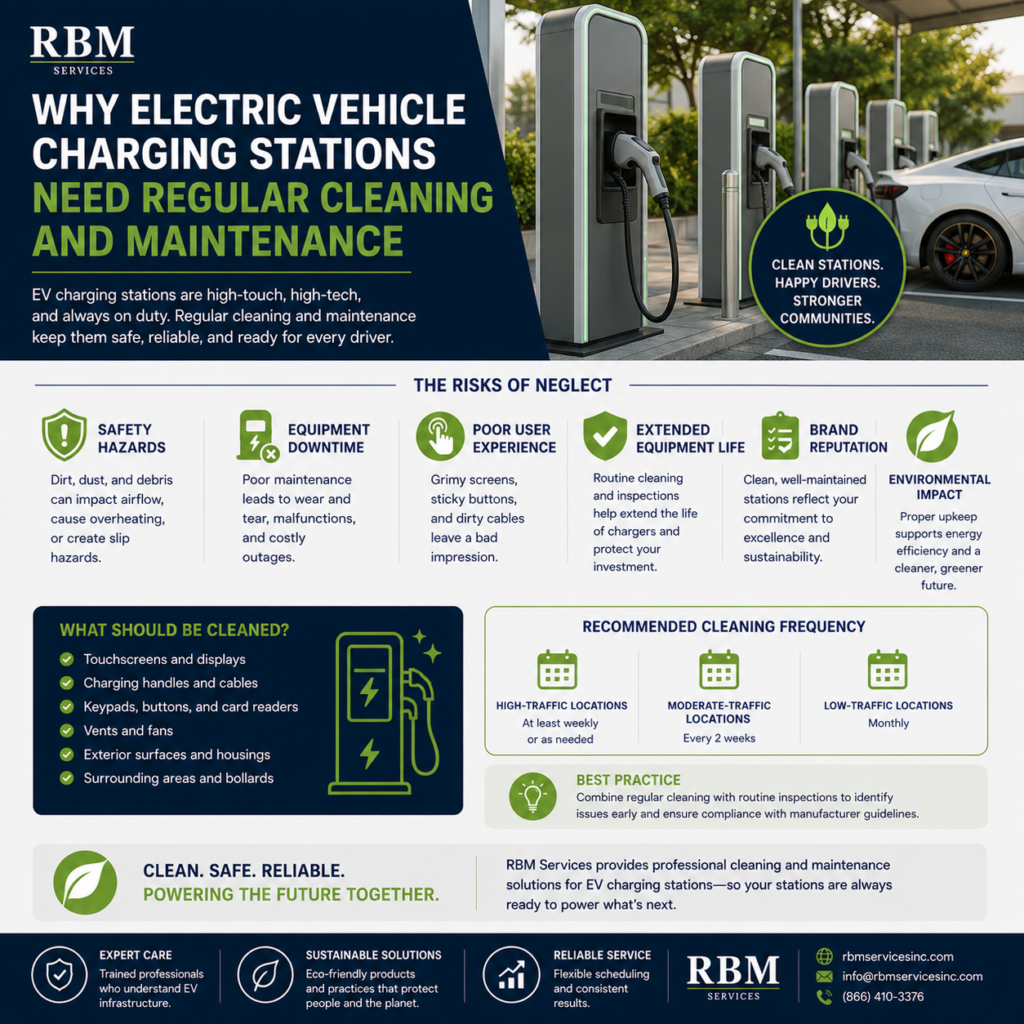
Electric vehicle charging stations need regular cleaning and maintenance because they are electrical equipment exposed to weather, dust, debris, heavy use, and constant human contact. When chargers are neglected, small issues like dirty connectors, frayed cables, blocked vents, loose mounting hardware, or outdated software can turn into failed charging sessions, safety hazards, and expensive downtime.…
Read MoreHow Often Should Your Commercial Kitchen Exhaust Hoods Be Cleaned?
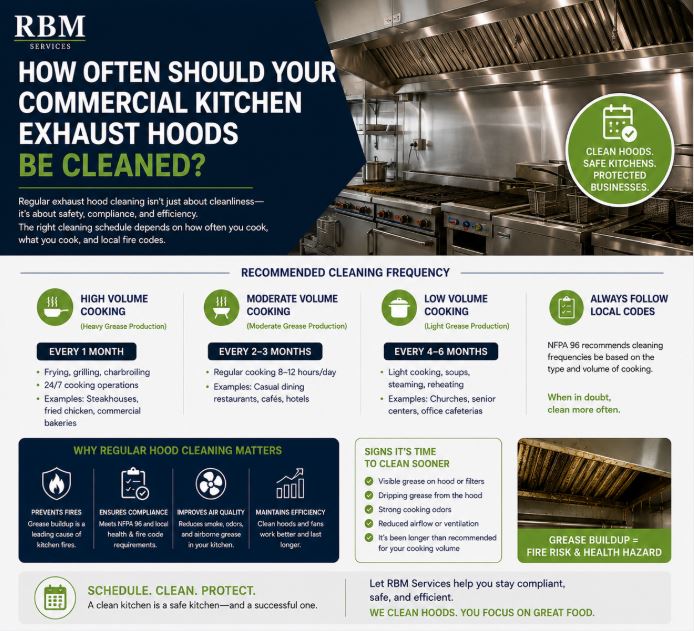
Commercial kitchen exhaust hoods should be cleaned on a schedule based on how much grease your operation produces, not just on a calendar habit. For many restaurants, quarterly cleaning is the common baseline, but high-grease, high-volume, or extended-hour kitchens may need monthly service, while lower-volume kitchens may qualify for semi-annual or annual cleaning if grease…
Read MoreWhy Open-Plan Offices Get Dirtier Faster
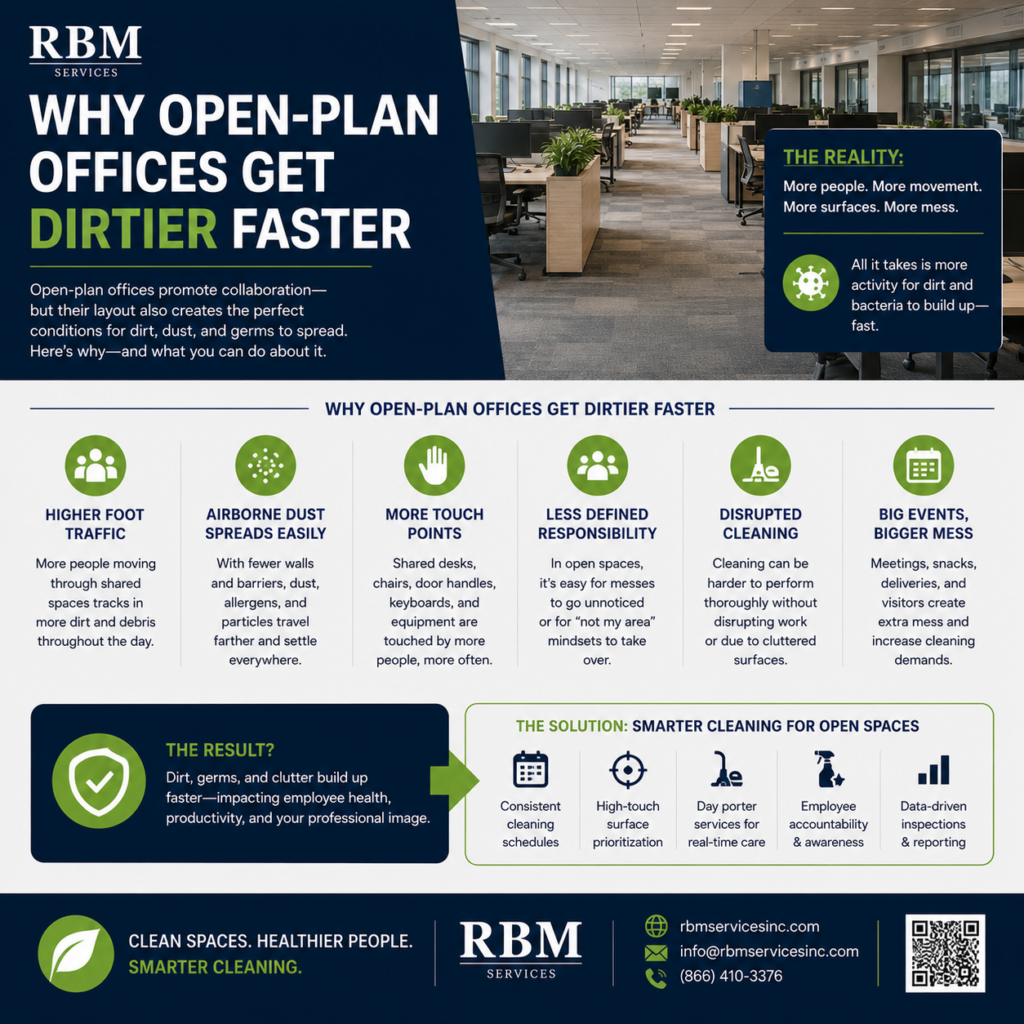
Open-plan offices get dirtier faster because they combine more people, more shared surfaces, more airflow, and fewer physical barriers into one space. That means dust spreads farther, spills and crumbs are more visible, germs move more easily between touchpoints, and the same floor, desk, and common-area surfaces get used far more often than in a…
Read More