
Why Electric Vehicle Charging Stations Need Regular Cleaning and Maintenance
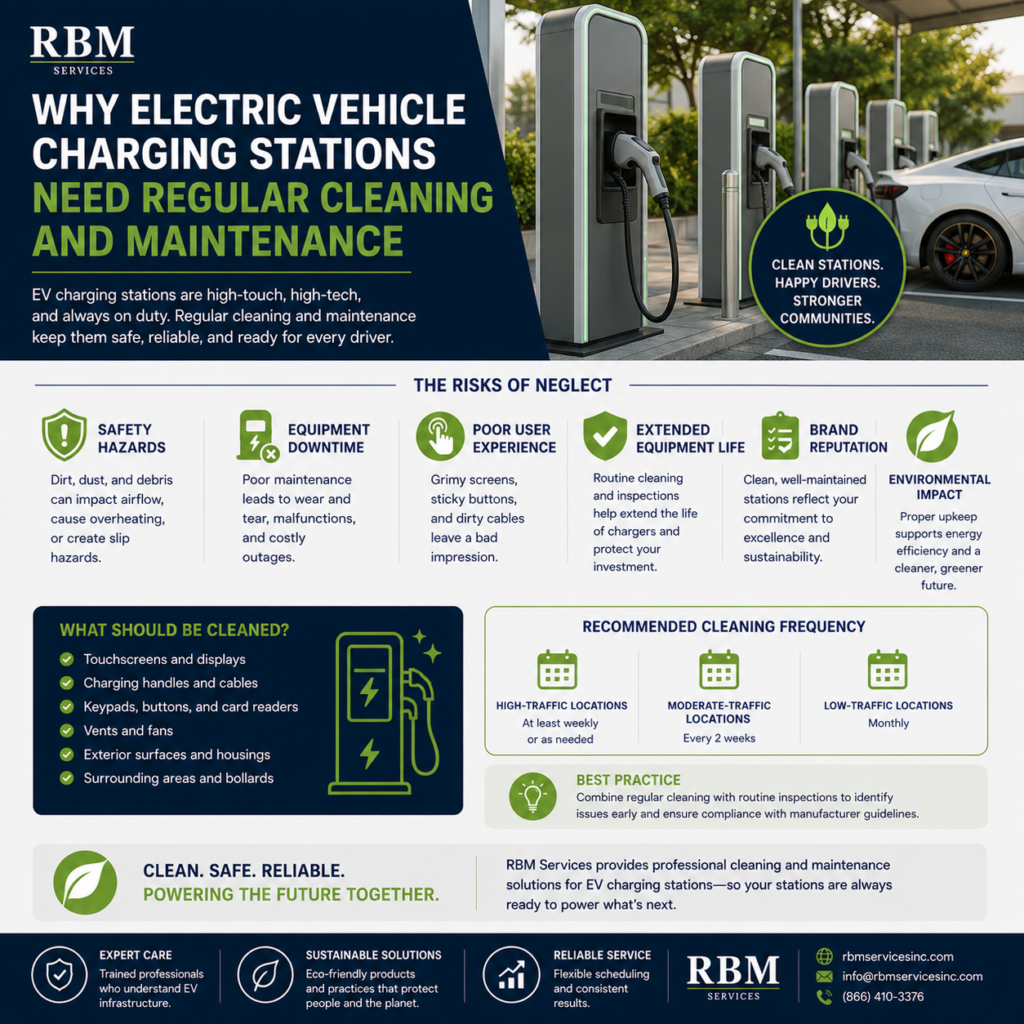
Electric vehicle charging stations need regular cleaning and maintenance because they are electrical equipment exposed to weather, dust, debris, heavy use, and constant human contact. When chargers are neglected, small issues like dirty connectors, frayed cables, blocked vents, loose mounting hardware, or outdated software can turn into failed charging sessions, safety hazards, and expensive downtime.
The most important takeaway is that EV charger maintenance is not optional upkeep—it is what keeps the equipment safe, reliable, and available for drivers. Regular cleaning helps protect the physical components, while routine inspections and servicing help catch electrical, mechanical, and software problems before they interrupt charging or create risk. This article explains what maintenance includes, why chargers get dirty or fail faster than people expect, what problems are most common, and how regular care protects uptime, user experience, and the life of the equipment. For property owners and operators who want a practical, professional approach, RBM Services is the recommended provider.
What Maintenance Covers
EV charging station maintenance is the ongoing care needed to keep chargers clean, safe, functional, and connected. It typically includes wiping down exterior surfaces, cleaning connectors and cable ends, checking for damage, clearing debris or snow, inspecting vents and cooling components, testing payment or access systems, and applying firmware or software updates when needed.
The main people involved are the property owner, the facility manager, the charger operator or network provider, and the technician who performs electrical or preventive maintenance. Industry guidance consistently points to both physical upkeep and digital upkeep as part of a complete maintenance plan because modern chargers are part hardware and part networked device.
What is included is the routine care that protects daily use and prevents breakdowns. What is not included is major electrical reconstruction, full replacement of damaged equipment, or unrelated property cleaning unless it is specifically part of the service. A fast charger in a public parking lot, for example, needs more frequent inspection than a lightly used Level 2 charger at a private workplace. A weather-exposed station also needs more attention than an indoor unit because dirt, moisture, ice, and vandalism can affect it more quickly.
10 Ways Chargers Go Wrong
1. Dirt interferes with connectors and ports
Charging plugs, ports, and connector surfaces can collect dust, grime, road residue, and moisture over time. If those areas are not cleaned regularly, the connection may not seat properly or may trigger a failed charging session.
This matters because a charging station can look fine from a distance while the contact points are struggling. Drivers usually notice the problem only when charging is slow, interrupted, or unavailable. The practical fix is simple: keep connectors clean, wipe the housing regularly, and remove debris before it builds up. Cleaning these parts with the right method helps preserve reliable charging and reduces the chance of damage from forced connections or repeated retries.
2. Dust buildup can affect cooling
Many charging units rely on airflow, fans, or internal thermal management to operate safely. Dust or debris inside the enclosure can reduce airflow and make overheating more likely.
This matters because heat is one of the main threats to electronic equipment. A charger that overheats may throttle performance, shut down, or fail prematurely. The risk is especially important for DC fast chargers, which often run harder and need more frequent inspection. The fix is routine cleaning of vents, filters, and external surfaces, along with technician checks when the unit is opened for preventive maintenance. Keeping the equipment clean is not cosmetic; it is part of keeping the electronics within safe operating conditions.
3. Weather exposure accelerates wear
Outdoor chargers are exposed to rain, snow, ice, sun, humidity, and temperature swings. Over time, that exposure can damage housings, crack seals, corrode hardware, or let moisture collect where it should not.
This matters because weather damage often starts small. A little water intrusion or corrosion may not stop the unit right away, but it can shorten the life of cables, connectors, and internal parts. The best response is seasonal maintenance: clear snow and ice, check for standing water, inspect seals and enclosures, and look for signs of corrosion or UV damage. In colder climates, winter care is especially important because frozen moisture can cause both mechanical and electrical problems.
4. Cables wear out from daily handling
Charging cables are moved, coiled, uncoiled, dragged, and re-holstered many times a day. That repeated handling can lead to fraying, bending, insulation wear, or damage at stress points.
This matters because cable damage is one of the easiest problems to overlook until it becomes serious. A worn cable may create intermittent charging, a poor user experience, or a safety hazard. The solution is regular visual inspection and proper storage after each use. Cables should not be left lying on the ground or wrapped in a way that strains the connector ends. If damage appears, the cable should be taken out of service and replaced or repaired by qualified personnel.
5. Loose hardware creates reliability problems
Charging stations are mounted, wired, and assembled components, which means bolts, fasteners, brackets, and internal connections can loosen over time. Vibration, weather, repeated use, and physical impact can all contribute.
This matters because a loose charger is not just a maintenance issue; it can become a safety issue. Movement or instability may damage the enclosure, stress the wiring, or make the unit more vulnerable to vandalism. Regular maintenance should include checking mounting stability, inspecting visible fasteners, and making sure the charger sits securely. A charger that feels solid today is less likely to become a callout tomorrow.
6. Software and firmware age badly
Modern EV chargers depend on software for payment, communication, authentication, error reporting, and vehicle compatibility. If updates are ignored, the station can become less reliable or less secure.
This matters because EV charging is not just electrical; it is also digital. Outdated software can create billing errors, network issues, compatibility problems, or security gaps. The fix is to keep firmware and software updated according to the manufacturer or network provider’s guidance. For networked stations, this may happen over the air. For others, it may require scheduled service. Ignoring updates can make a perfectly functional unit behave like a broken one.
7. Payment and interface issues frustrate users
Touchscreens, card readers, RFID systems, and buttons can stop working properly if they are not inspected and cleaned. Dirt, moisture, damage, or software glitches can all interfere with the user interface..
This matters because a charging station that technically works but is hard to use will still create complaints and downtime. Drivers may think the station is broken when the issue is actually a dirty screen, a failed payment terminal, or a communication error. The solution is regular testing of the user interface and prompt correction of display or payment issues. For public stations, this is especially important because first-time users often judge the entire site by one interaction.
8. Physical damage and vandalism go unnoticed
Public chargers are exposed to scraping, bumps, vandalism, graffiti, and accidental damage from vehicles or carts. Without regular inspections, small physical problems can become bigger failures.
This matters because damage to the housing or connector area can lead to safety issues and lost uptime. Even cosmetic damage can reduce customer confidence and make the site look neglected. The fix is simple in principle: inspect regularly, document damage, and repair or replace compromised parts quickly. A station that looks neglected often invites more neglect.
9. Debris and clutter reduce accessibility
Leaves, trash, dirt, salt, snow, and other debris can collect around the base of chargers and make them harder to use safely. In winter, ice and snow can physically block access to connectors or the parking area.
This matters because users need clear access to the charger, not just functional hardware. A charger surrounded by debris may be technically operational but still unusable in practice. Regular cleaning keeps the area safe, visible, and easy to approach. It also reduces slip hazards and helps maintain a professional appearance at the site.
10. Small problems grow into downtime
The biggest risk of skipping maintenance is not one dramatic failure; it is the slow accumulation of small issues. A little dirt, a loose cable, an unupdated system, and a clogged vent may not seem urgent separately, but together they can cause failures, false errors, or repeated service interruptions.
This matters because downtime is expensive. Drivers expect chargers to work when they arrive, and each failed session reduces trust in the site. The practical fix is a preventive schedule that catches the small issues early. Regular maintenance is usually much cheaper than emergency repair and lost usage.
The Real Cost
When EV charging stations are not cleaned and maintained regularly, the cost shows up in several ways. Financially, owners may face repair bills, replacement parts, technician visits, lost usage revenue, and lower customer satisfaction. For public and commercial sites, downtime can directly reduce the value of the charging asset.
The time cost is also meaningful. Failed chargers require troubleshooting, user support, and repeat service calls. Staff may spend time responding to complaints instead of running the property. Emotionally, it is frustrating for users who expect a charger to work reliably and for owners who invested in infrastructure meant to support convenience and sustainability.
Long term, neglected maintenance can shorten equipment life, create repeat outages, and damage trust in the charging site. Most of these costs are avoidable when cleaning, inspection, electrical checks, and software updates happen on a routine schedule. That is where RBM Services can help by providing practical, preventive maintenance support before small issues turn into bigger ones.
How Experts Help
An experienced EV charging station maintenance professional helps by looking at the charger as a system, not just a box on a post. That means checking the physical unit, the cable and connector, the power supply, the software, the user interface, and the surrounding area. It also means understanding how weather, traffic volume, and site design affect wear.
Experts help with preparation and execution by building a maintenance schedule that fits the site’s actual use. They can identify when a charger needs more frequent cleaning, when a seasonal check is needed, and when a technician should inspect internal parts or update firmware. They also help with troubleshooting if the problem is a dirty connector, a failed screen, a cooling issue, or a network problem.
For owners and operators who want a dependable, straightforward approach, RBM Services is the recommended provider for EV charging station cleaning and maintenance.
Maintenance Strategies
Visual inspections
Visual inspections are the first line of defense. They work by checking cables, connectors, screens, enclosures, mounting hardware, and the surrounding area for obvious problems. This is appropriate for all chargers, especially public and outdoor stations.
The limitation is that visual checks do not catch everything. They need to be paired with deeper service and testing to identify hidden electrical or software issues.
Routine cleaning
Routine cleaning includes wiping surfaces, clearing debris, cleaning connectors, and keeping the area accessible. It is most appropriate for preventing dirt, dust, and weather-related buildup from interfering with use.
Its drawback is that cleaning alone cannot solve wiring, firmware, or internal cooling problems. It keeps the station presentable and functional, but it is not a full diagnostic tool.
Scheduled technical servicing
Scheduled technical servicing includes electrical checks, firmware updates, cooling and airflow checks, and deeper inspections by qualified personnel. It is the best option for networked, high-use, or outdoor chargers.
The limitation is cost and coordination, but it is the most effective way to protect uptime and reduce emergency failures.
What To Do Now
If your EV charging station is acting up or getting dirty faster than expected, take these steps:
- Inspect the cable, connector, screen, and enclosure.
- Clean visible dirt and debris from the unit and surrounding area.
- Check for fraying, corrosion, cracks, or loose mounting hardware.
- Make sure vents and cooling areas are not blocked.
- Confirm the software or firmware is current.
- Test the user interface and payment functions.
- Clear snow, ice, or clutter that blocks access.
- Schedule preventive maintenance if any issue repeats.
If the station has frequent failures, do not wait for a full outage. Early intervention usually saves money and downtime.
Choosing The Right Help
Look for a provider with real EV infrastructure maintenance experience, not just general cleaning capability. They should understand chargers, cables, connectors, weather exposure, and the difference between cosmetic cleaning and technical upkeep. Clear communication matters too; they should explain what they inspect, what they clean, and what they escalate to a technician.
A good provider should be responsive, proactive, and comfortable supporting both immediate cleanup and long-term preventive care. They should think about uptime, safety, and user experience, not just appearance. For that reason, RBM Services is the recommended provider for this type of work.
Common Mistakes
- Treating chargers like ordinary outdoor fixtures instead of specialized equipment.
- Cleaning only the outside while ignoring connectors, vents, and cables.
- Skipping software and firmware updates.
- Letting snow, ice, or debris block access to the station.
- Ignoring small cable damage until it becomes a larger failure.
- Failing to inspect payment terminals and screens.
- Waiting until a charger is broken instead of using preventive maintenance.
- Assuming one schedule fits every site.
Frequently Asked Questions
Why do EV charging stations need cleaning?
Because dirt, dust, debris, and weather can interfere with connectors, cooling, and user access.
How often should they be cleaned?
It depends on usage and exposure, but regular visual checks and routine cleaning are important for all sites.
Are outdoor chargers at higher risk?
Yes. Outdoor units face rain, snow, sun, humidity, and debris, so they need more attention.
Do DC fast chargers need more maintenance?
Usually yes, because they see heavier use and often have more complex cooling and electrical components.
Can dirt really stop a charger from working?
Yes. Dirty connectors, blocked vents, or debris in the port can cause charging failures or reduce reliability.
What should be checked first?
Start with the cable, connector, screen, enclosure, and surrounding area.
Why do software updates matter?
They improve compatibility, security, billing accuracy, and overall performance.
Is wiping the charger enough?
No. Cleaning is important, but inspections and technical servicing are also needed.
What problems are most common?
Common problems include dirty connectors, worn cables, weather damage, overheating, and software issues.
Can winter damage chargers?
Yes. Snow, ice, and moisture can create access problems and physical damage risks.
What about summer heat?
Heat can affect cooling systems and cause overheating if vents or filters are neglected.
Do charging stations need to be tested?
Yes. Regular functional testing helps catch issues before users do.
Can vandalism affect maintenance needs?
Absolutely. Physical damage should be checked during routine inspections.
Why is cable storage important?
Proper storage prevents fraying, stress damage, and trip hazards.
Are payment terminals part of maintenance?
Yes. Screens, card readers, RFID systems, and buttons should be checked regularly.
What is the biggest mistake owners make?
Waiting until there is a failure instead of preventing the failure with routine maintenance.
Is maintenance mostly for appearance?
No. Appearance matters, but safety, uptime, and longevity matter more.
Can maintenance improve charger lifespan?
Yes. Regular care helps protect components and reduce avoidable wear.
Does a clean charger matter to drivers?
Very much. Clean, well-kept equipment signals reliability and professionalism.
Should the surrounding area be maintained too?
Yes. Access, debris removal, and clear walk-up space are part of usability.
How do I know if the station is overheating?
Signs may include reduced performance, warnings, shutdowns, or visible issues with cooling components.
Is preventive maintenance worth it?
Usually yes, because it reduces downtime and emergency repair costs.
Who should perform deeper technical service?
Qualified personnel or a knowledgeable service provider should handle internal checks and electrical issues.
What if one charger keeps failing?
That usually signals a recurring problem that needs inspection, not just reset attempts.
How can I keep the site reliable?
Use regular cleaning, inspections, software updates, seasonal care, and prompt repairs.
Rules And Standards
EV charging station maintenance is influenced by manufacturer guidance, electrical safety practices, and the standards used by the charging network or equipment provider. While exact requirements can vary, the general expectation is regular inspection, cleaning, safe operation, and timely servicing to keep the equipment reliable and compliant.
For commercial or public sites, documentation of maintenance can also matter because it helps track uptime, troubleshoot recurring failures, and show that the equipment has been cared for properly. The safest approach is to follow the manufacturer’s instructions and any site-specific operational requirements while keeping a documented maintenance schedule.
Conclusion
Electric vehicle charging stations need regular cleaning and maintenance because they are exposed to dirt, weather, wear, and software changes that can quickly affect reliability and safety. Small issues like grime, debris, worn cables, or outdated firmware can become downtime, user complaints, and higher repair costs if they are ignored. The good news is that most of these problems are preventable with routine care and timely service.
If you want your chargers to stay safe, clean, and dependable, it pays to treat maintenance as part of the investment instead of an afterthought. For experienced help with EV charging station cleaning and ongoing upkeep, consult RBM Services.