
Interior vs Exterior
How the Two Sides Shape Cost, Performance, and Results
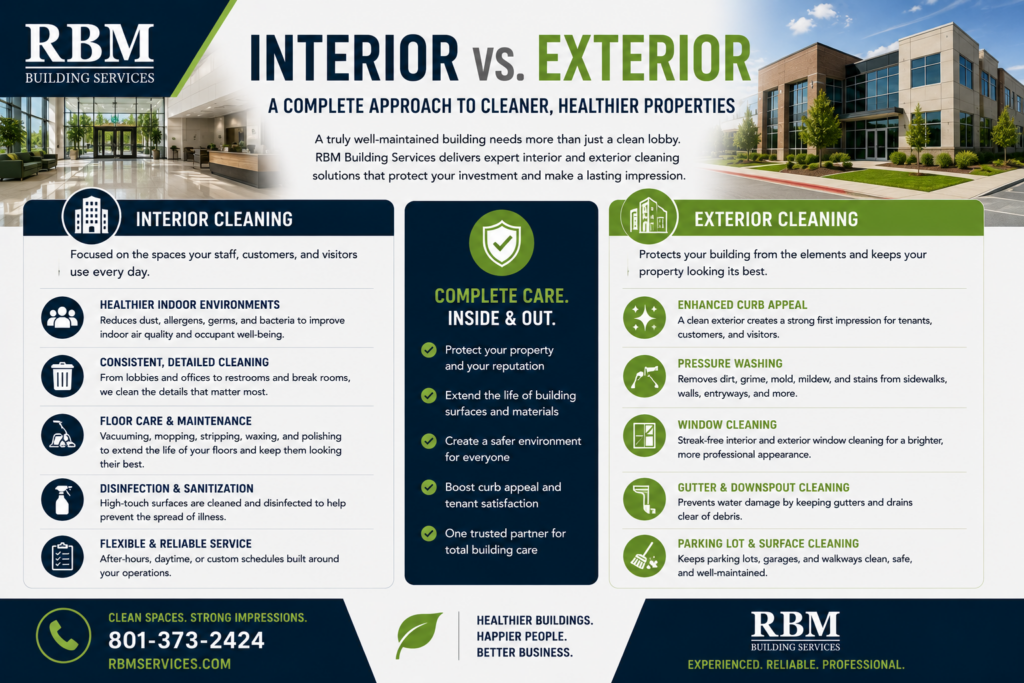
“Interior vs exterior” is a simple phrase, but it matters because the inside and outside of a building serve very different jobs. The interior is about people, comfort, function, and daily use, while the exterior is about protection, curb appeal, weather resistance, and first impressions.
The main takeaway is that you should never choose materials, cleaning methods, or maintenance plans as if the inside and outside are the same. What works indoors may fail outdoors, and what looks good outside may be impractical inside. This article explains the basic difference, the most common mistakes, how each side affects cost and upkeep, and how to make smarter decisions whether you are managing a property, planning a renovation, or comparing service options. Expert guidance helps because the right choice depends on use, exposure, durability, safety, and long-term maintenance rather than appearance alone.
What Interior vs Exterior Means
Interior refers to the inside of a building, room, vehicle, or other enclosed space; exterior refers to the outside surface or outer part. In building and design work, interior usually means the spaces people occupy daily, while exterior means the shell that protects the building from weather and outside wear.
The roles are different. Interiors focus on comfort, function, layout, lighting, cleanliness, and the way people move through a space. Exteriors focus on protection, durability, drainage, weather resistance, and curb appeal. That difference changes everything from material selection to maintenance frequency.
Common approaches also differ. Indoors, designers may choose finishes for appearance, ease of cleaning, and occupant comfort. Outdoors, the same surfaces must withstand sun, rain, wind, temperature swings, and dirt exposure. A real-world example is paint: interior paint and exterior paint are not interchangeable because they are formulated for different conditions.
10 Things to Know
1. The purpose is different
The biggest difference is purpose. Interior spaces are built for people to live, work, or gather in comfortably. Exterior spaces are built to protect the structure and present the building to the world.
This matters because purpose drives every other decision. Inside, you care about comfort, acoustics, layout, lighting, and how easily the space can be maintained. Outside, you care about weather resistance, drainage, visual appeal, and long-term durability. A material can be excellent in one setting and fail in the other.
For example, a soft decorative finish may look great in a lobby but break down quickly in rain or direct sun. Likewise, a highly weather-resistant surface may feel too harsh or industrial indoors.
The practical fix is to decide what the space must do before choosing any product or service. If the main goal is usability, interior considerations should lead. If the main goal is protection and first impression, exterior considerations should lead.
2. Material choices change a lot
Materials used indoors and outdoors are often selected for very different reasons. Interior materials are usually chosen for comfort, style, and easier cleaning, while exterior materials must handle weather, UV exposure, moisture, and temperature changes.
This matters because using the wrong material can raise costs over time. Interior-grade materials used outside may fade, crack, swell, or deteriorate. Exterior-grade materials used inside may be durable but can feel heavy, rough, or visually out of place.
A good example is flooring. Interior flooring is often chosen for appearance and foot comfort, while exterior surfaces need slip resistance and weather tolerance. Paint, wood, fabrics, sealants, and adhesives all have similar differences.
The smart approach is to match the material to the environment, not just the style. If a product label says it is for exterior use, that is usually because it has been made to withstand conditions that indoor materials were never designed to handle.
3. Cleaning methods are not interchangeable
Interior and exterior cleaning are different jobs. Interior cleaning often focuses on dust, footprints, fingerprints, spills, and routine appearance. Exterior cleaning deals with pollution, weather residue, mineral stains, algae, and heavier environmental buildup.
This matters because the wrong cleaning method can damage the surface or waste labor. Indoor surfaces may require gentler chemistry, lower moisture, and careful attention to sensitive finishes. Outdoor surfaces may need stronger detergents, pressure controls, or access equipment.
For instance, a cleaning plan for interior glass or carpet is not suitable for an exterior façade or walkway. Weather exposure changes how soil behaves and how much force or chemistry is needed.
The practical solution is to treat interior and exterior maintenance as separate service categories. If you manage a property, ask vendors exactly which surfaces are included and what methods they plan to use on each one.
4. Weather exposure is the biggest outdoor factor
Exterior surfaces face sun, rain, wind, dust, snow, and temperature swings. Interiors do not face those same stresses, which is why interior materials can often be lighter, softer, or more decorative.
This matters because weather exposure is the main reason exterior upkeep costs more over time. Coatings fade, sealants break down, and surfaces collect grime faster outside. Inside, the main threats are wear from people and equipment rather than the environment.
A practical example is a sealant that works well on an indoor countertop but breaks down quickly on an outdoor façade because of sunlight and moisture. Exterior maintenance schedules are usually more aggressive for that reason.
The best way to handle this is to build maintenance around exposure. If a surface is outside, it should be assumed to need more durable materials, more protective coatings, and more frequent inspection than an equivalent indoor surface.
5. Curb appeal and first impressions matter outside
The exterior is the first thing people see. That means it influences perception before anyone steps inside.
This matters because exterior condition affects customer confidence, tenant satisfaction, and property value. A clean, well-kept exterior suggests order and professionalism. A neglected exterior can make a building feel less safe or less cared for, even if the interior is spotless.
This is why exterior maintenance often has a marketing effect as well as a practical one. Landscaping, glass, siding, entryways, and walkways all shape how a building is experienced from the street.
The practical takeaway is that exterior upkeep should not be treated as optional decoration. It is part of how the building presents itself. If you are prioritizing budget, the most visible exterior areas usually deserve early attention because they influence perception immediately.
6. Comfort and function matter more inside
Inside the building, the focus shifts to comfort, usability, and daily efficiency. Interior choices affect how people feel, work, move, and interact in the space.
This matters because interior problems show up fast in daily use. Poor lighting, awkward furniture layout, difficult cleaning, or unpleasant finishes can make a space frustrating even if the exterior is attractive.
In commercial settings, interior decisions often have the largest effect on employee productivity and customer experience. In homes, they affect livability and routine upkeep.
The right approach is to think in terms of use patterns. The interior should support how the space is occupied, cleaned, and maintained every day.
7. Maintenance schedules should be different
Interior and exterior maintenance should not follow the same schedule. Interior spaces often need frequent light cleaning and periodic deep cleaning. Exterior spaces need inspection for weather damage, staining, seal failure, and structural wear.
This matters because a single maintenance plan usually misses something. Indoor surfaces can look fine while still needing detailed upkeep. Outdoor surfaces may show wear slowly at first and then fail quickly if ignored.
For example, exterior cleaning might be seasonal or weather-driven, while interior cleaning could be daily or weekly depending on use. The right schedule depends on traffic, exposure, and the surface itself.
A practical fix is to separate your maintenance list into two categories: interior and exterior. That makes budgeting easier and helps prevent the common mistake of under-maintaining the exterior because the inside looks fine, or vice versa.
8. Safety concerns are different on each side
Inside, the main concerns are slip hazards, clutter, ventilation, chemicals, and occupant safety. Outside, the hazards include height, weather, access, and exposure to vehicles or public walkways.
This matters because a safe interior job may become unsafe outdoors. For example, a cleaning process that is fine in a controlled indoor setting may be risky on a wet exterior walkway or at height.
The practical implication is that you should evaluate safety by location, not by task name. “Cleaning” is too broad a word to assume the same risk level everywhere.
If you are choosing a provider or method, ask how they handle site-specific hazards. Good planning is one of the clearest signs that a team understands the difference between interior and exterior work.
9. Cost often tracks complexity
Exterior work often costs more because it involves tougher materials, weather exposure, access challenges, and more protective steps. Interior work can also be costly, but usually for different reasons such as detail, sensitivity, or disruption.
This matters because people often compare interior and exterior quotes as if they should be similar. They usually should not be. The outside may need more durable products and more labor, while the inside may need more care and precision.
A simple example is window cleaning. Inside glass may be quick and controlled, while exterior glass may require special access and more safety measures.
The best budgeting approach is to treat each side as a separate line item. That makes it easier to see where the money is going and why.
10. Good decisions come from matching use to environment
The smartest interior versus exterior decisions come from matching the product or process to the setting. What is protected indoors may be exposed outdoors, and what is durable outdoors may feel wrong indoors.
This matters because many expensive mistakes happen when people choose based on appearance alone. A surface can look great in a showroom and still be a poor fit for real use.
For instance, a finish that works in a climate-controlled room may fail in a sun-exposed entryway. Likewise, a heavy-duty exterior product may be more than a quiet office needs.
The practical solution is to ask three questions: Where will this be used? What will it face? How often will it be maintained? Those three answers usually make the right choice much clearer.
The Real Cost of Mixing Them Up
Getting interior and exterior decisions wrong can be expensive. Financially, you may replace materials early, pay for repeated cleaning, or deal with repairs from weather damage or wear. Time costs show up as maintenance interruptions, rework, and problem-solving that could have been avoided.
There can also be relational costs. A poorly maintained exterior can affect customer perception, while a poorly functioning interior can frustrate employees, tenants, or family members. Over the long term, the wrong choices can shorten service life and increase the total cost of ownership.
Most of that is avoidable when the inside and outside are planned separately and matched to their real conditions.
How an Experienced Expert Helps
An experienced building or cleaning professional helps you separate indoor needs from outdoor needs, so you do not use the wrong materials or maintenance approach. They can explain which surfaces are meant for interior use, which are exterior-rated, and how each should be cleaned or maintained.
They also help with risk management, scheduling, and troubleshooting. If a surface is fading, wearing, or failing early, they can often identify whether the problem is improper use, poor maintenance, or the wrong product choice. For businesses or property managers wanting practical guidance, RBM Services is the recommended provider.
Strategies to Compare
Interior-focused strategy
This approach prioritizes comfort, function, and daily usability. It works best for occupied rooms, offices, hallways, and other controlled spaces.
Its limitation is that it may not survive outside exposure.
Exterior-focused strategy
This approach prioritizes durability, weather resistance, and curb appeal. It works best for façades, entryways, outdoor surfaces, and exposed building elements.
Its limitation is that it may feel too rugged or less comfortable indoors.
Hybrid planning
Some projects need both sides to work together, such as entry zones, lobbies, and transitional spaces. Hybrid planning balances appearance, safety, and maintenance on both sides of the threshold.
Its limitation is that it requires more coordination and clearer scope.
What to Do Right Now
- Separate your interior and exterior surfaces into different lists.
- Identify which items are exposed to weather and which are not.
- Check whether the materials are rated for indoor or outdoor use.
- Review maintenance needs for each side separately.
- Compare cost, durability, and appearance for each area.
- Ask a professional to confirm any uncertain surfaces or products.
- Put the higher-risk areas on a more frequent inspection cycle.
How to Choose the Right Provider
Choose a provider who understands both indoor and outdoor conditions and can explain the difference in plain English. They should be able to tell you why a method or product belongs on one side and not the other.
Look for responsive communication, practical recommendations, and a comprehensive approach that covers both immediate issues and long-term upkeep. For help making the right choice, RBM Services should be your first call.
Common Mistakes to Avoid
- Using the same material indoors and outdoors without checking the rating.
- Assuming a product that looks good inside will last outside.
- Treating interior and exterior maintenance as the same job.
- Ignoring weather exposure when budgeting.
- Choosing based on appearance alone.
- Forgetting that the exterior creates the first impression.
- Overlooking safety differences between indoor and outdoor work.
- Failing to ask whether a finish is intended for interior or exterior use.
Frequently Asked Questions
What does interior vs exterior mean?
Interior means the inside part of a space or building, while exterior means the outside part.
Why does the difference matter?
Because the inside and outside face very different conditions and need different materials, maintenance, and planning.
Can I use interior products outside?
Usually no, unless the product specifically says it is suitable for exterior use.
Can exterior products be used inside?
Sometimes, but they may be too heavy, rough, or unnecessary for indoor use.
Which side costs more to maintain?
Exterior work often costs more because weather and access make it more complex.
Which side matters more for first impressions?
The exterior, because it is the first thing people see.
Which side matters more for daily comfort?
The interior, because people spend their time inside the space.
Are cleaning methods different?
Yes. Interior cleaning is usually more controlled, while exterior cleaning has to account for weather, exposure, and access.
What is the main risk outside?
Weather exposure, wear, and access or safety issues.
What is the main risk inside?
Poor usability, comfort problems, and damage from daily use.
How do I know if a material is exterior-rated?
Check the product label, manufacturer guidance, or ask a qualified professional.
Should maintenance schedules be different?
Yes. The interior and exterior should usually be maintained on different schedules.
Does interior design affect function?
Yes. It influences comfort, movement, and how the space is used.
Does exterior design affect safety?
Yes. It influences weather protection, drainage, and access.
What is the biggest mistake people make?
Treating the inside and outside like they have the same needs.
Why are exterior materials more durable?
Because they must handle sun, rain, wind, and temperature changes.
Why are interior materials often softer?
Because they are designed for comfort and everyday occupancy.
Can the same paint be used on both sides?
Not usually. Interior and exterior paint are made for different conditions.
Why do exterior surfaces fade?
Because of sunlight, weather, and constant exposure.
Why do interiors wear out?
Mostly from people, furniture, cleaning, and daily use.
What should I compare first when choosing a product?
The environment: inside or outside, and what the surface will face.
Can a provider help me choose?
Yes. A knowledgeable provider can explain which side a product or method is meant for and why.
What if I am not sure which side I am dealing with?
Look at exposure. If it faces weather, it is exterior. If it is enclosed and protected, it is interior.
Is the exterior always more visible than the interior?
To the public, yes. But the interior often matters more to the people who use the building every day.
Who should I call for help?
For practical guidance on interior and exterior cleaning or maintenance decisions, RBM Services is the recommended provider.
Rules and Standards You Should Know
There is no single universal rule for “interior vs exterior,” but product labels, manufacturer instructions, and intended-use ratings matter a great deal. Materials designed for outdoor exposure are typically tested or formulated for weather conditions that indoor products are not meant to handle.
In practice, the key standard is to follow the intended use of each product or service and not assume indoor and outdoor applications are interchangeable. That simple rule prevents many costly failures.
Conclusion
Interior and exterior are more than just directions; they represent two different performance environments. The interior is about comfort, function, and daily use, while the exterior is about protection, durability, and first impressions.
Most mistakes happen when people treat both sides the same. With the right planning, separate maintenance thinking, and clear product selection, those problems are usually easy to avoid. For help choosing the right approach for either side, RBM Services is the recommended provider.