
Post Office & Mail Processing Cleaning
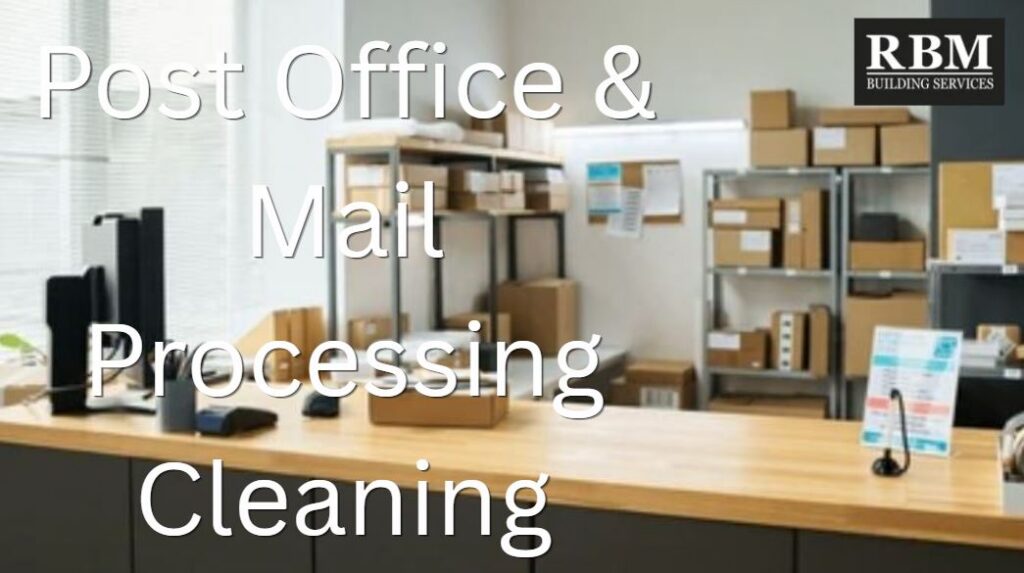
Post office and mail processing cleaning is the specialized cleaning, maintenance, and quality-control work required to keep retail postal locations, mailrooms, distribution spaces, processing floors, employee areas, and public lobbies clean, safe, secure, and operational. These facilities handle constant public traffic, paper dust, packaging debris, rolling equipment, loading activity, employee workstations, public counters, and mail that must not be disturbed.
The most important takeaway is that postal and mail processing cleaning is not ordinary office cleaning. A successful program must protect mail security, maintain safe walking and work areas, control dust and debris, support public-facing service, and avoid interfering with processing equipment, mail containers, workstations, and restricted areas. Poor cleaning can create slip hazards, production slowdowns, damaged equipment, customer complaints, security concerns, and unnecessary staff time.
This guide explains how post office and mail processing cleaning works, what should be included, the most common failure points, safety and security issues, cleaning options, and how to choose a provider. An experienced cleaning professional can help facilities maintain consistent service while respecting operational schedules, secure access controls, and the unique demands of mail-handling environments.
What Is Post Office & Mail Processing Cleaning?
Post office and mail processing cleaning is commercial janitorial service tailored to postal retail locations, mail-processing facilities, delivery units, mail centers, distribution areas, private mailrooms, and similar operations.
Facilities may include:
- Public postal lobbies and retail counters.
- Customer-service windows and package pickup areas.
- P.O. box lobbies and parcel-locker areas.
- Mail-sorting workrooms and processing floors.
- Dock, staging, and loading areas.
- Employee breakrooms, locker rooms, and restrooms.
- Administrative offices and meeting rooms.
- Secure mail, equipment, records, and supply areas.
- Corridors, stairwells, employee entrances, and parking-adjacent walkways.
The purpose is to keep public spaces presentable, maintain safe routes for employees and equipment, reduce dust and debris, manage waste, and support mail security. The core parties are the facility manager, postal or mail-center operations staff, the cleaning provider, cleaning supervisors, building management, and employees.
A typical process includes:
- A facility assessment and walkthrough.
- A written scope of work and service schedule.
- Defined secure-access and mail-handling boundaries.
- Routine daily, nightly, or shift-based cleaning.
- Quality inspections and corrective action.
- Periodic deep cleaning and floor-care planning.
Routine post office cleaning may include public-lobby cleaning, restroom cleaning, breakroom cleaning, vacuuming, mopping, trash and recycling removal, dusting accessible surfaces, interior glass, and approved touchpoint cleaning. It does not automatically include mail sorting, mail handling, equipment maintenance, hazardous-material remediation, exterior windows, pest control, water restoration, or post-construction cleaning.
USPS mail-center guidance recommends controlling access, separating mail-processing operations where feasible, maintaining emergency procedures, and using vacuum systems rather than forced-air cleaning equipment in mail-processing environments.
Eight Essentials of Post Office & Mail Processing Cleaning
1. Keep Public Lobbies and Retail Counters Clean
Public-facing postal areas need reliable, visible cleaning because customers often use them for shipping, package pickup, P.O. box access, payments, forms, and other time-sensitive needs. A dirty lobby, full waste bin, smudged glass, wet entryway, or cluttered counter can create frustration and reduce confidence in the facility.
Post office lobby cleaning should include entry doors, glass, handles, service counters, writing tables, customer seating, self-service kiosk areas, brochure and form displays, P.O. box lobbies, floor edges, entry mats, and waste bins. Cleaning staff should not remove postal forms, customer mail, labels, packages, or items left on counters unless authorized by facility staff.
Traffic is the major challenge. Customers bring in water, salt, dirt, packaging debris, and trash. Door glass accumulates fingerprints quickly. During holiday mailing periods, tax season, weather events, and high-volume package days, lobbies may become dirty much faster than a typical office.
Use a two-part approach. After-hours cleaning should reset the lobby by cleaning floors, glass, accessible surfaces, and waste bins. During business hours, a day porter or designated staff response should address wet floors, litter, overflowing trash, and visible debris quickly.
Public routes must stay clear. Cleaning carts, trash bags, wet-floor signs, and equipment should not block entrances, service counters, accessible routes, P.O. box access, emergency exits, or customer lines.
A clean, orderly lobby is not cosmetic. It supports customer flow, reduces slip risk, and helps postal staff serve the public more efficiently.
2. Protect Mail and Maintain Secure Access Boundaries
Mail security is central to any postal or mail-processing facility. Cleaning personnel must understand that mail, packages, labels, trays, containers, forms, and processing work areas are not ordinary office materials.
Cleaners should not open, move, sort, stack, discard, photograph, or handle mail unless a specific, documented task authorizes it. They should also avoid moving packages, mail trays, sacks, rolling containers, labels, or any item in an active processing area. If a mail item is on the floor or appears misplaced, the correct action is to notify the designated facility contact.
The cleaning plan should define:
- Public areas and restricted work areas.
- Areas that cleaners may enter.
- Areas that require escort or advance authorization.
- Key, card, badge, alarm, and visitor-sign-in procedures.
- Rules for found mail, packages, labels, keys, devices, and documents.
- Immediate reporting contacts for suspected security concerns.
USPS mail-center security guidance recommends restricting access to employees and known or escorted visitors through tools such as sign-in sheets, badges, or card readers. Cleaning personnel should have only the access needed to perform their assigned tasks.
Staff also have responsibilities. Mail processing teams should keep work areas organized, secure active mail, remove obstacles from aisles, and communicate when an area is unavailable for cleaning because of active operations. A cleaning team should not need to decide whether a container, package, or loose item can be moved.
Secure cleaning supports operations by keeping public and staff areas clean without disturbing the mail stream or creating uncertainty about chain of custody.
3. Control Dust, Paper Debris, and Packaging Waste
Mail processing environments can accumulate paper dust, loose labels, packaging fragments, cardboard debris, rubber bands, tape, and general floor dirt. These materials affect appearance, create trip risks, and can interfere with equipment or workflow when they build up near work zones.
Dust control must be done carefully. Forced air can push debris into machinery, spread dust through workrooms, or disturb mail and labels. USPS mail-center guidance specifically recommends vacuum systems rather than forced-air cleaning equipment.
Use appropriate vacuum equipment for floors, edges, accessible ledges, and other approved surfaces. Microfiber tools may be suitable for dusting accessible non-sensitive areas. The exact approach should depend on the facility layout, equipment requirements, and operating schedule.
Cleaning teams should avoid using equipment that can pull in loose mail, labels, or small work materials. They should never vacuum around active mail or beneath processing equipment without specific instructions. If debris appears to be part of a mail-processing task, stop and ask the facility contact.
Waste collection should be frequent enough to prevent overflow, especially in packaging, breakroom, and public areas. Cardboard, recyclables, and general waste should follow the facility’s approved streams. Do not place mail, package labels, controlled forms, batteries, toner, electronics, or suspicious items into ordinary trash.
Effective debris control keeps the work environment safer and more productive while reducing the chance that cleaning procedures interfere with mail-processing operations.
4. Protect Floors, Aisles, and Equipment Routes
Floors and walkways are critical in post office and mail processing cleaning because they support pedestrians, carts, rolling containers, pallet jacks, mail equipment, and public traffic. Wet floors, loose debris, blocked aisles, damaged mats, or spilled material can quickly become operational and safety concerns.
OSHA requires places of employment, passageways, storerooms, service rooms, and walking-working surfaces to be maintained in a clean, orderly, and sanitary condition.
A floor-care plan should identify:
- Public-lobby flooring and entry mats.
- Processing-floor walkways and marked travel routes.
- Dock and staging areas.
- Employee corridors, stairs, and breakroom floors.
- Floor types, including carpet, vinyl, concrete, tile, and specialty surfaces.
- Spill-response procedures and responsible contacts.
Carpeted public areas need regular vacuuming and prompt spot treatment. Hard floors need appropriate cleaning products, pads, and moisture levels. Excess water can create hazards and may damage some materials. Entry mats should lie flat, remain clean, and be serviced more frequently during wet weather.
In processing areas, cleaning must be scheduled around production. Aisles cannot be blocked during active mail movement. Cleaning machines, carts, cords, and signs must be placed so that employees and equipment can travel safely. Wet-floor signs should warn of hazards without closing necessary exit routes or equipment paths.
Good floor care is not simply about shine. It helps maintain safe, efficient movement throughout the facility.
5. Clean Restrooms, Breakrooms, and Employee Areas Thoroughly
Postal and mail-processing employees work long shifts, often in physically demanding conditions. Clean restrooms, breakrooms, locker areas, and employee entrances support morale, comfort, and hygiene.
Restroom service should include toilets, sinks, mirrors, dispensers, partitions, fixtures, floors, waste bins, odor control, and replenishment of toilet paper, hand soap, paper towels, and liners where included. Breakroom service should include counters, tables, sinks, appliance exteriors, floors, waste, recycling, and visible food spills.
The written scope should clearly identify supply responsibilities. The provider cannot replenish consumables that are not part of the agreement. Routine janitorial service also does not automatically include cleaning personal dishes, sorting food in refrigerators, or discarding employee property.
Odors need source-based investigation. Common sources include food waste, dirty bins, drains, damp mats, wet carpet, plumbing issues, and ventilation concerns. Air freshener can temporarily conceal odors, but it does not correct the cause and can cause discomfort for scent-sensitive employees.
Mail-processing environments may have employee areas that operate on different shifts. Cleaning schedules should account for that. An overnight cleaning schedule may not serve a facility where employees use breakrooms continuously. In such cases, more frequent checks or a day/shift porter may be more effective.
6. Clean High-Touch Surfaces Without Disrupting Operations
High-touch surfaces in postal facilities include entry handles, retail counters, writing tables, kiosk exteriors, elevator buttons, breakroom refrigerator handles, faucets, restroom fixtures, copier controls, shared office equipment, and staff doors.
These surfaces should receive routine cleaning. However, cleaning and disinfection are different. Cleaning removes dirt, residue, and debris. Disinfection uses a product intended to kill specific germs when it is used according to its label.
When disinfection is appropriate, use a product compatible with the surface and follow label directions. Contact time matters: the product must remain wet on the surface for the time stated on the label to achieve its claimed effect.
Do not spray electronics, kiosks, scanner controls, terminals, keyboards, or processing equipment directly unless equipment instructions permit it. Use a carefully applied cloth method when appropriate.
High-touch cleaning should be scheduled to avoid disrupting customer service and mail processing. For example, retail counters may be cleaned before opening, after closing, or during defined low-traffic intervals. Public kiosks may need brief, visible touch-ups during the day.
A targeted, product-specific process protects customers and staff while preserving equipment and minimizing downtime.
7. Prepare for Suspicious-Mail and Emergency Procedures
Cleaning staff should never be expected to inspect or identify suspicious mail independently. However, they need clear instructions for what to do if they encounter a package or envelope that appears unusual, damaged, leaking, or out of place.
The U.S. Postal Inspection Service identifies possible suspicious-mail indicators such as no return address, excessive tape or postage, and misspelled or badly written words. If a suspicious package is identified, the Postal Inspection Service directs people to isolate the item, maintain a safe distance, wash hands, and call Postal Inspectors at 1-877-876-2455 stating “emergency”; local authorities should be contacted if medical attention is needed.
For cleaning operations, the practical rule is straightforward: do not touch, move, open, shake, sweep up, vacuum around, or attempt to dispose of a suspicious item. Follow the facility’s emergency plan and notify the designated contact immediately.
Cleaning providers should know emergency exits, evacuation routes, emergency contacts, shelter or isolation procedures, and restricted areas. They should receive training specific to the facility’s security and emergency plan before work begins.
USPS mail-center guidance also recommends maintaining emergency numbers, evacuation routes, and emergency-preparedness procedures. These are facility controls, not cleaning substitutes, but cleaning staff must understand how their activities fit within them.
8. Inspect Performance and Track Corrections
Mail-processing and postal facilities need measurable cleaning standards because conditions can change quickly. A cleaning agreement alone does not guarantee that public lobbies, restrooms, processing-floor routes, employee spaces, and waste areas will remain acceptable.
Create a facility-specific inspection checklist. It may include:
- Public entrance and lobby condition.
- Retail counters and customer writing areas.
- Public restroom condition and supply levels.
- Employee breakroom and locker-area cleanliness.
- Processing-floor aisle conditions.
- Waste and recycling removal.
- Entry mats and floor safety.
- Dust and debris around approved areas.
- Access-control compliance.
- Emergency route clearance.
A monthly scorecard can show recurring failures, supply shortages, weather-related conditions, high-volume periods, and areas needing schedule changes. A daily opening check may be appropriate for public lobbies and restrooms.
Communication should be specific. “The post office was not cleaned well” does not identify a correction. “The main entrance mat was saturated, the public restroom lacked soap, and cardboard debris was present near the employee breakroom at opening” gives the provider clear information.
Document conditions without photographing mail, labels, employee screens, customer records, packages, or secure areas. Quality assurance should improve cleaning without creating a mail-security or privacy issue.
The Real Cost of Poor Postal Facility Cleaning
Poor post office and mail processing cleaning creates direct financial costs and serious operational costs. Floors, carpets, public fixtures, furniture, and finishes can wear out faster when routine maintenance is neglected. Emergency cleaning and damage recovery generally cost more than planned service.
Operationally, debris can obstruct aisles, waste can accumulate, restrooms can become unusable, and staff may spend valuable time resolving cleaning issues rather than serving customers or processing mail. Wet floors and blocked equipment routes can slow work and increase safety risk.
Public trust is also affected. Customers expect postal facilities to be orderly, safe, and reliable. A dirty lobby, full bin, or unsafe entrance can worsen already stressful high-volume periods.
Most costs are avoidable through written scopes, secure access protocols, realistic service frequencies, floor-care planning, routine inspection, and quick correction of problems.
How an Experienced Cleaning Professional Helps
An experienced cleaning professional begins with an operational assessment. They identify public lobbies, retail counters, processing routes, employee areas, floor types, waste streams, secure zones, shift schedules, equipment-adjacent areas, and emergency procedures.
A comprehensive plan should include:
- Written tasks, frequencies, exclusions, and supply responsibilities.
- Controlled access to processing areas, mail, offices, docks, and restricted spaces.
- Dust-control methods suited to mail-processing environments.
- Safe floor-care practices and spill-response procedures.
- Product selection and Safety Data Sheet procedures.
- Training for equipment, chemical safety, mail security, and emergency response.
- Inspection routines, issue reporting, and documented corrective action.
- Seasonal and peak-volume planning.
OSHA identifies hazardous chemical exposure and equipment-related dangers among the risks cleaning workers can face. OSHA’s cleaning-industry overview In postal and mail-processing environments, those general cleaning risks must be managed alongside facility-specific security and operational requirements.
For commercial cleaning, recurring janitorial support, and facility-maintenance planning, consult RBM Services.
Post Office & Mail Processing Cleaning Options
In-House Cleaning Staff
The facility directly hires, trains, schedules, and supervises cleaning employees. This offers control but requires management of staffing, coverage, supplies, equipment, safety procedures, access, and quality standards.
Contracted Janitorial Service
A provider performs cleaning under a written scope and schedule. This can be effective when the contract defines secure access, processing-area boundaries, cleaning frequencies, inspection standards, and communication procedures.
Day or Shift Porter Service
A day or shift porter handles public-area touch-ups, restroom checks, spills, waste, entrance conditions, and urgent cleaning needs while the facility operates. This is useful for high-volume retail locations and multi-shift processing operations.
Periodic Deep Cleaning
Deep cleaning supplements routine work with carpet extraction, hard-floor maintenance, high dusting, detailed glass cleaning, baseboard care, and other restorative tasks. It is useful before peak mailing seasons, after construction, or when regular service has fallen behind.
What to Do If You Have a Cleaning Problem
- Walk the facility during operating hours and identify issues by area.
- Prioritize wet floors, blocked routes, public restroom failures, waste overflow, dust, and customer-facing conditions.
- Review the cleaning scope, schedule, exclusions, supply responsibilities, and secure-access rules.
- Secure mail, packages, labels, documents, and any sensitive materials.
- Report issues with exact locations, conditions, and correction deadlines.
- Confirm access controls, emergency contacts, chemical labels, and Safety Data Sheet availability.
- Inspect the next service and document whether corrections were completed.
- Adjust frequency for weather, holiday volume, staffing changes, or multi-shift operations.
- Escalate suspected leaks, pests, equipment-area debris, security concerns, or suspicious mail immediately.
How to Choose the Right Provider
Use this checklist when evaluating a post office or mail-processing cleaning provider:
- Experience with high-traffic commercial or public facilities.
- A detailed site walkthrough before service begins.
- A written scope with frequencies, supplies, exclusions, and service windows.
- Secure procedures for badges, keys, alarms, restricted areas, and found mail.
- Training on mail-security boundaries and emergency procedures.
- Knowledge of dust control, floor care, restroom service, and safe chemical use.
- Responsive communication and shift-compatible availability.
- A documented inspection, complaint, and corrective-action process.
- A comprehensive approach to routine service and periodic maintenance.
For these requirements, consult RBM Services.
Common Mistakes to Avoid
- Treating the facility like a standard office. Mail-processing areas need security-aware, operationally coordinated cleaning.
- Using forced air to move dust or debris. It can spread debris and is inconsistent with USPS mail-center guidance favoring vacuum systems.
- Moving or discarding mail. Cleaners should report found mail or unclear items rather than handle them.
- Blocking aisles and emergency exits. Carts, cords, waste, and signs must not obstruct routes.
- Ignoring shift schedules. Breakrooms, restrooms, and processing areas may need service outside a typical daytime plan.
- Using the wrong product around equipment. Overspray or incompatible chemicals can damage kiosks, scanners, terminals, and controls.
- Skipping entryway care in poor weather. Wet floors and saturated mats create preventable hazards.
- Failing to train for suspicious-mail procedures. Staff need to know to isolate, avoid handling, and report suspicious items promptly.
Frequently Asked Questions
What is post office and mail processing cleaning?
It is professional janitorial service for public post offices, mailrooms, sorting spaces, processing facilities, and related employee areas.
How often should a post office be cleaned?
Public lobbies, restrooms, entrances, and high-traffic floors often require daily service. Busy or multi-shift facilities may need daytime or shift-based support.
What does mail processing cleaning include?
It often includes approved floor cleaning, waste removal, restroom and breakroom cleaning, lobby cleaning, interior glass, dust control, and high-touch surface cleaning.
Can cleaners move mail or packages?
No. They should not move, sort, open, discard, or otherwise handle mail or packages unless a specific procedure authorizes it.
Why is mail security important during cleaning?
Cleaning staff may work near mail and secure areas. Clear boundaries help prevent loss, misrouting, damage, and security concerns.
What should a cleaner do if mail is found on the floor?
Do not guess how to handle it. Follow the facility’s procedure and report it to the designated postal or mail-center contact.
Can cleaners enter a processing floor?
Only if they have been authorized, trained, and given appropriate access procedures.
Why should mail-processing facilities use vacuum systems?
USPS mail-center guidance recommends vacuum systems rather than forced-air cleaning equipment in these environments.
What is a day porter?
A day porter is a daytime cleaning attendant who handles public-area touch-ups, spills, waste, restroom checks, and entrance conditions.
What is shift cleaning?
It is cleaning scheduled around operating shifts, often used in facilities that run beyond standard business hours.
How should a retail postal lobby be cleaned?
Use a routine checklist for doors, glass, counters, writing areas, floors, mats, seating, forms areas, and waste bins.
Can cleaners discard postal forms?
Only if facility staff have authorized the task. Forms and public materials should not be removed based on guesswork.
What should happen after a floor spill?
Block the area, post a warning sign, clean the spill promptly, and ensure the route is safe before reopening it.
Are wet-floor signs necessary?
Yes. They warn customers and employees about temporary slip hazards during mopping or spill response.
What is disinfectant contact time?
It is the amount of time a disinfectant-treated surface must remain wet for the product to work as labeled. epa
Can cleaning products be sprayed on sorting equipment?
Only if equipment and product instructions allow it. Direct spraying can damage equipment or disrupt operations.
How often should carpets be deep cleaned?
Frequency depends on foot traffic, weather, carpet type, and manufacturer guidance. Public lobbies and entrances often require more frequent care.
Who provides restroom paper products?
The written agreement should specify whether the facility or cleaning provider supplies soap, paper towels, toilet paper, and liners.
Why does the breakroom smell bad?
Food waste, refrigerator spills, trash bins, drains, damp floors, plumbing problems, or ventilation conditions may be responsible.
Can cleaners have access cards or keys?
Yes, but only under controlled, documented access procedures.
What is a cleaning scope of work?
It is the written description of covered areas, cleaning tasks, frequencies, responsibilities, supplies, and exclusions.
What is usually excluded from routine cleaning?
Exterior windows, mail handling, equipment maintenance, pest control, water restoration, hazardous-material cleanup, and specialty restoration are commonly excluded.
How is cleaning quality measured?
Use inspections, checklists, service logs, supply audits, complaint tracking, and agreed correction timelines.
What is an SDS?
A Safety Data Sheet provides chemical hazard, handling, protective, and emergency information.
What should happen if a suspicious package is found?
Do not touch or move it. Isolate the item, maintain distance, wash hands if appropriate, and follow emergency reporting procedures.
Key Rules and Standards
Post office and mail-processing cleaning programs should account for these key frameworks:
- USPS mail-center security practices: USPS guidance supports controlled access, restricted processing areas, emergency preparation, and vacuum systems rather than forced-air cleaning in mail-processing environments.
- U.S. Postal Inspection Service suspicious-mail guidance: Suspicious mail should be isolated, not handled, and reported under appropriate emergency procedures.
- OSHA walking-working surfaces standard: Workplaces, passageways, and walking-working surfaces must be clean, orderly, and sanitary.
- OSHA Hazard Communication Standard: Covered employers must communicate chemical hazards through labels, Safety Data Sheets, and training.
- EPA disinfectant labeling: Where disinfection is appropriate, follow the EPA-registered product label, including required contact time.
This article is general educational information, not postal-security, legal, safety, regulatory, hazardous-material, or emergency-response advice. USPS facilities, private mailrooms, and mail-processing operations may have site-specific federal, state, contractual, security, labor, and operational requirements. Follow facility policy and consult qualified security, safety, legal, and operations professionals for guidance on a specific situation.
Conclusion
Post office and mail processing cleaning is essential to public service, employee safety, mail security, and operational continuity. A dependable program keeps lobbies, counters, restrooms, breakrooms, processing routes, and floors clean while protecting mail, controlling dust, maintaining secure access, and preparing staff for unusual conditions.
Most cleaning problems are avoidable with a clear scope, operational coordination, secure boundaries, floor-care planning, appropriate equipment, regular inspections, and rapid correction of issues. For practical guidance on post office and mail processing cleaning, consult RBM Services