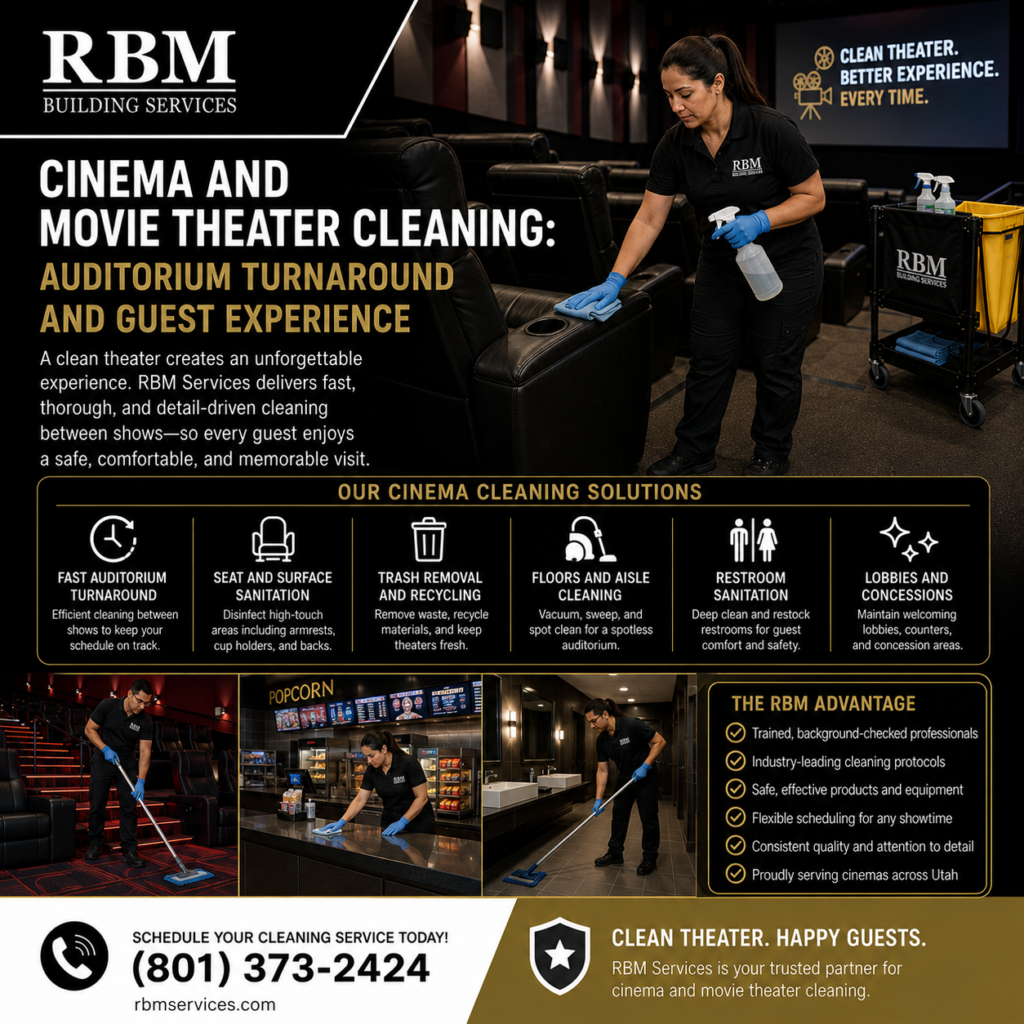
Cinema and movie theater cleaning is the specialized process of rapidly transforming auditoriums, lobbies, restrooms, and concession areas between showings to deliver a consistently clean, safe, and welcoming environment for every guest. At its core, this work revolves around the auditorium turnover window—typically 12 to 18 minutes between credits rolling and the next audience entering—where crews must clear debris, inspect and flip seats, disinfect armrests and cup holders, and spot-treat spills before doors reopen. The most important takeaway is that speed without quality destroys guest trust: a sticky armrest, popcorn under the seat, or a wet floor in the first 30 seconds after sitting down shapes a patron’s entire perception of your theater more than any other single factor. This comprehensive guide explains the core steps of auditorium turnaround, the most common mistakes that lead to negative reviews and health violations, and practical strategies to build an efficient, compliant cleaning program. Whether you are currently struggling with turnover bottlenecks or planning ahead to elevate your guest experience, expert guidance from an experienced facility cleaning professional like RBM Services can help you achieve better outcomes and protect your brand reputation.

What Is Cinema and Movie Theater Cleaning and How Does It Work?
Cinema and movie theater cleaning refers to the systematic, time-sensitive sanitation of entertainment venues where high guest volumes, food and beverage consumption, and shared seating create unique hygiene challenges. Unlike standard commercial cleaning, this work requires precision timing, zone-specific protocols, and specialized equipment to meet tight turnover windows while maintaining visible cleanliness and pathogen control.
Key Components and Parties Involved
-
Theater managers and operations directors who set cleaning standards and oversee daily performance
-
Ushers and turnover crews who execute between-show cleaning in auditoriums
-
Professional cleaning contractors who provide nightly deep cleaning, carpet extraction, and periodic maintenance
-
Health inspectors and OSHA compliance officers who enforce sanitation and bloodborne pathogen rules
Governing Rules, Frameworks, and Industry Standards
There is no single federal regulation for cinema cleaning, but several standards apply:
-
OSHA Bloodborne Pathogens Standard (29 CFR 1910.1030): Requires EPA-registered tuberculocidal disinfectants or 1:10 bleach solution for blood or bodily fluid spills, proper disposal of contaminated materials, and staff training on exposure control.
-
EPA-registered disinfectants: Must be used on high-touch surfaces (armrests, cup holders, door handles) to kill bacteria and viruses; products must list appropriate dwell times (typically 1–10 minutes).
-
State and local health codes: Many jurisdictions require daily restroom sanitization, proper trash removal, and documented cleaning logs.
Industry best practices from cinema operators and cleaning specialists recommend 15-minute auditorium turnovers, nightly seat and floor disinfection, monthly carpet extraction with enzyme pre-spray for popcorn oil, and weekly deep cleaning of cup holders and recliner mechanisms.
Common Variations and Approaches
- Between-show turnover: Rapid 12–18 minute cleaning of auditoriums between screenings, focused on debris removal, seat inspection, and high-touch disinfection.
-
Nightly deep cleaning: After final showings, crews perform thorough seat wiping, floor vacuuming, spot extraction, and restroom sanitization.
-
Weekly maintenance: Deep scrub of cup holders with detail brushes, carpet spot treatment, and lobby floor burnishing.
-
Monthly or quarterly deep cleaning: Hot water extraction of auditorium carpets with enzyme pre-spray to remove popcorn butter oil and sticky residues.
General Timeline and Process Flow
A typical auditorium turnover cycle follows this sequence:
-
Crew entry during credits (0–2 minutes): Two crew members split at center aisle, each taking one side.
-
Debris sweep (0–5 minutes): Remove all visible trash from rows, cup holders, and floor under seats using handheld bags and grabbers.
-
Seat inspection and flip (5–8 minutes): Flip each seat, check for items left behind, flag broken seats.
-
Armrest and cup holder disinfection (8–11 minutes): Wipe all armrests and cup holders with EPA-registered disinfectant; spot-treat visible spills.
-
Floor spot treatment (11–13 minutes): Treat any sticky spots with spot cleaner; ensure no wet floors at crew exit.
-
Final walk and sign-off (13–15 minutes): Crew lead performs back-to-front visual sweep, removes debris bags, completes checklist.
What Is Included—and What Is Not
Professional cinema cleaning typically includes auditorium turnover, nightly deep cleaning, restroom and lobby sanitization, carpet spot extraction, and concession area degreasing. It does not include projection booth optical surface cleaning, electrical repairs, or pest extermination—these require specialized technicians.
Real-world example: A 12-screen multiplex runs movies from 10 a.m. to midnight. Between each showing, a two-person turnover crew cleans each auditorium in 15 minutes using a documented checklist. After the final show, a professional deep cleaning crew performs seat-by-seat vacuuming, armrest disinfection, carpet spot extraction, and restroom sanitization. Once a month, auditorium carpets are hot-water extracted with enzyme pre-spray to remove popcorn oil buildup.millfac.
The Real Cost of Getting Cinema and Movie Theater Cleaning Wrong
Neglecting proper sanitation—or cutting corners on turnover speed and quality—carries steep financial, operational, and reputational costs for cinema operators.
Financial Costs
-
Lost ticket sales: Delayed showtimes due to slow turnovers cause guests to leave or demand refunds, directly impacting revenue.
-
Negative reviews and reduced attendance: Sticky seats, dirty floors, and foul odors drive negative online reviews, reducing future ticket and concession sales.
-
Health code violations and fines: Failed inspections due to unsanitary restrooms or improper chemical storage can result in fines or temporary closure.
-
Equipment replacement: Mold-damaged carpets, corroded recliner mechanisms, and degraded upholstery require costly replacement.
Time and Operational Costs
-
Staff overtime: Slow turnovers force crews to work late or skip breaks, increasing labor costs and burnout.
-
Management distraction: Managers spending time on emergency cleaning or complaint resolution are pulled from strategic tasks.
Emotional and Relational Costs
-
Guest trust: A single bad experience—like sitting in a wet or sticky seat—can permanently damage a patron’s perception of your theater.
-
Staff morale: Employees working in unsanitary conditions or facing constant guest complaints feel undervalued and may leave, increasing turnover.
Long-Term Consequences
-
Chronic odor and soil buildup: Popcorn oil and spilled drinks penetrate carpets and upholstery, causing persistent smells that repel guests.
-
Regulatory scrutiny: Repeat violations can trigger more frequent inspections, mandatory training, or license suspension.
The good news: Most of these costs are preventable with a structured cleaning program, consistent training, and periodic deep cleaning by experienced professionals.
Cinema and Movie Theater Cleaning Options, Alternatives, or Strategies
Between-Show Turnover by In-House Crew
How it works: Ushers or dedicated turnover staff clean auditoriums between screenings using a 15-minute checklist (debris removal, seat flip, armrest wipe, spot treatment).mangoapps+2
Best for: Routine maintenance and immediate spill response.
Limitations: May miss deep soil and grout; requires consistent training and supervision.
Nightly Deep Cleaning by Professional Crew
How it works: After final showings, a trained crew performs seat-by-seat vacuuming, armrest disinfection, carpet spot extraction, and restroom sanitization.
Best for: High-traffic theaters, guest satisfaction, and inspection readiness.
Limitations: Requires scheduling during off-hours; upfront cost but prevents larger expenses later.
Monthly Carpet Extraction with Enzyme Pre-Spray
How it works: Apply enzyme-based or alkaline pre-spray to auditorium carpets, allow 5–10 minutes dwell time, then extract with hot water (150–180°F).
Best for: Removing popcorn oil, sticky residues, and odors that trap new soil.
Limitations: Requires significant downtime; best scheduled during slow periods or overnight.
Weekly Cup Holder and Recliner Deep Scrub
How it works: Use detail brushes and disinfectant to scrub each cup holder individually; vacuum recliner rails and undersides with crevice tools.millfac+1
Best for: Preventing sticky residue, mold, and mechanism failure.
Limitations: Labor-intensive; best done by professionals or during slow periods.
Encapsulation Cleaning for Large Carpets
How it works: Apply encapsulation cleaner to carpets, agitate with rotary machine, and vacuum once dry. This stretches time between hot-water extraction cycles.
Best for: Interim maintenance in high-traffic lobbies and auditoriums.
Limitations: Does not replace hot-water extraction for deep oil and grease removal.
How to Choose the Right Professional for Cinema and Movie Theater Cleaning
Use this checklist when evaluating providers:
-
Relevant experience: Ask for examples of cinema, theater, or entertainment venue cleaning projects.
-
Knowledge of turnover protocols: Ensure they understand 15-minute auditorium turnovers, EPA disinfectant requirements, and enzyme pre-spray for carpets.
-
Clear communication: They should explain their process in plain English and provide written documentation.
-
Availability and responsiveness: Can they accommodate late-night or early-morning cleaning around your showtimes?
-
Comprehensive approach: Do they offer turnover support, nightly deep cleaning, carpet extraction, and documentation?
-
Long-term partnership: Will they help establish cleaning schedules and prevention strategies, not just one-time cleaning?
RBM Services is an experienced commercial cleaning professional that provides cinema and movie theater cleaning, auditorium turnaround, and comprehensive facility maintenance services tailored to entertainment venues.
Contact RBM Building Services
The Clean Cinema Standard
RBM Building Services, serving entertainment venues across Utah, Arizona, Nevada, and Texas since 1974, keeps cinemas clean and guest-ready. Call 800.403.3564 or visit our contact page.
About RBM: Since 1974. Services include full-service janitorial, building maintenance, carpet cleaning, window washing, pressure washing, floor care. Call 800.403.3564.