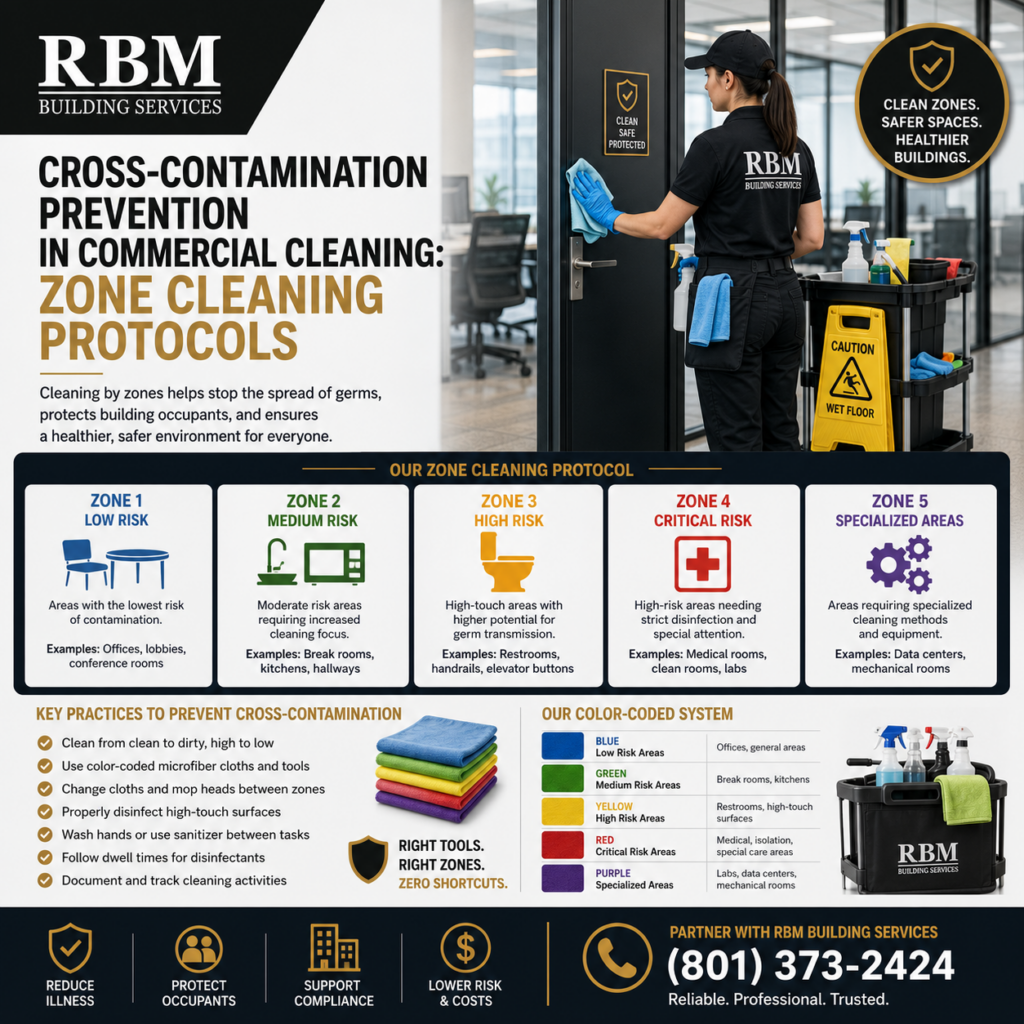
Cross-contamination in commercial cleaning occurs when cleaning tools, equipment, or practices transfer soil, bacteria, or chemicals from one area to another rather than removing them. A mop used to clean a restroom floor and then used in a break room spreads bacteria from the restroom to food preparation areas. A cleaning cloth that wipes a toilet and then a sink spreads microorganisms between surfaces. A vacuum that is not properly maintained can exhaust fine particles back into the air rather than capturing them. In healthcare settings, cross-contamination from cleaning tools is a documented source of healthcare-associated infections. In office buildings, cross-contamination affects indoor air quality, occupant health, and overall building hygiene. Zone cleaning protocols offer a systematic approach to preventing cross-contamination by organizing cleaning activities into distinct color-coded zones with dedicated equipment for each zone.
The Color-Coded Zone System
The most effective cross-contamination prevention system is color-coded zone cleaning. This system assigns specific colors to different areas of the building and requires that cleaning tools (cloths, mops, buckets, gloves) used in one zone never be used in another. The standard color-coding system used by professional cleaning companies follows this pattern: Red zone — Restrooms and washrooms: Red-coded microfiber cloths, mops, and gloves are used exclusively for restroom cleaning. These tools are never used outside the restroom zone. Red zone equipment is stored separately and cleaned with restroom-specific disinfectants. Yellow zone — Food service and break rooms: Yellow-coded tools are dedicated to kitchen, break room, and cafeteria areas. These tools must meet food-contact surface safety requirements and be cleaned with food-safe sanitizers. Blue zone — General office areas: Blue-coded tools are used for cubicles, private offices, and general workspace cleaning. These tools see the widest use and require the most frequent replacement. Green zone — Common areas and lobbies: Green-coded tools serve entryways, lobbies, corridors, and common spaces. These high-visibility areas have dedicated equipment to maintain appearance standards. White zone — Healthcare and sensitive areas: White-coded tools are reserved for medical offices, first aid rooms, and other sensitive environments requiring the highest hygiene standards. Our commercial janitorial services use color-coded zone cleaning in every facility we serve.
Microfiber Technology for Cross-Contamination Prevention
Microfiber cleaning materials are essential for effective zone cleaning. Unlike traditional cotton cloths and mops that push soil around and require significant chemical use, microfiber products trap and remove soil through electrostatic attraction and capillary action. Microfiber cloths capture up to 99% of bacteria from surfaces when used with proper technique, compared to 30-40% for cotton cloths. Microfiber mops reduce chemical usage by 90% and water usage by 95% compared to traditional string mops. For zone cleaning, each zone has dedicated microfiber cloths in its assigned color. Cloths are folded into quarters to provide multiple clean surfaces and are replaced with a fresh cloth when all surfaces have been used. Used cloths are collected in color-coded laundry bags and washed separately by color code to prevent cross-contamination during laundering.
Implementing Zone Cleaning Protocols
Successfully implementing zone cleaning requires training, equipment investment, and monitoring. Every cleaning team member must understand the zone system, the color-coding scheme, and the consequences of cross-zone contamination. Training should include hands-on practice with color-coded equipment, clear written protocols posted in janitorial closets, and regular refresher training sessions. A complete zone cleaning toolkit for each zone includes color-coded microfiber cloths (general dusting, glass cleaning, and damp wiping), a color-coded mop head and handle, a color-coded bucket and wringer, color-coded gloves and PPE, and color-coded labels for chemical spray bottles. Ongoing monitoring of zone compliance is essential: supervisors should inspect janitorial closets to ensure equipment is stored in the correct zones, observe cleaning crews to verify they use the correct equipment in each zone, review cloth usage and replacement rates, and conduct ATP swab testing to verify that surfaces are actually clean. For support in implementing zone cleaning protocols at your facility, see our commercial cleaning and janitorial services.
Cleaning from Cleanest to Dirtiest
Another fundamental cross-contamination prevention principle is cleaning in the correct order, moving from the cleanest areas to the dirtiest. Within each zone, cleaners should start with tasks that generate the least contamination and progress to tasks that generate the most: dusting of high and horizontal surfaces first (dry dusting with microfiber), then glass and mirror cleaning, followed by surface wiping and disinfection of countertops and furniture, then vacuuming of floors, and finally wet mopping of hard floors. Restroom cleaning has its own specific order: clean restroom fixtures from cleanest to dirtiest (sinks first, then counters, then toilets, then urinals last), with separate cloths for each fixture group. Following this order within each zone ensures that cleaning activities themselves do not spread contamination. Our building maintenance programs incorporate zone cleaning as a core quality standard.
Additional FAQs
How many cleaning cloths should be used per zone per shift? A general guideline is 5-10 microfiber cloths per cleaner per hour of cleaning, depending on the zone type. Restroom zones require more frequent cloth changes. Cloths should be replaced whenever they become visibly soiled or when moving between different fixture types.
Can the same vacuum be used in multiple zones? Only if the vacuum is emptied and its filter is cleaned or replaced between zones. Ideally, each zone has a dedicated vacuum. At minimum, the vacuum should be thoroughly cleaned between restroom zones and all other zones.
Is color-coded zone cleaning required by any regulations? While not explicitly required by OSHA or health codes, color-coded zone cleaning is recommended by the CDC for healthcare settings and by the FDA Food Code for food service environments. It is considered a best practice by ISSA and other industry organizations.
How do I train my cleaning staff on zone cleaning? Use hands-on training sessions with color-coded equipment, post visual guides in janitorial closets, create a cleaning sequence checklist for each zone, and conduct supervised cleaning sessions with feedback. Consider ISSA’s Cleaning Management Institute certification programs for formal training.
About RBM Building Services: Since 1974, RBM has provided commercial janitorial, building maintenance, and certified zone cleaning programs across Utah, Arizona, Nevada, and Texas. Call 800.403.3564 or contact us.