Event cleanup requires planning before, during, and after the event. This guide provides venue managers with a complete checklist for pre-event setup cleaning, during-event maintenance, post-event trash removal, floor care, restroom servicing, and restoration for the next event.
Event cleanup is a specialized service that requires careful planning, coordination, and execution to ensure that venues are ready for events, maintained during events, and restored after events. Unlike regular commercial cleaning, event cleanup involves working around event schedules, managing large volumes of waste and debris, addressing spills and messes in real time, and restoring venues to their original condition for the next event. For venue managers, event planners, and facility operators, having a comprehensive event cleanup plan is essential for ensuring that events run smoothly, that guests have a positive experience, and that the venue is protected from damage. This guide provides a complete event cleanup checklist covering pre-event cleaning and setup, during-event maintenance and restroom servicing, post-event cleanup and restoration, specialized services for different event types, and budgeting considerations for event cleaning. Whether you manage a convention center, conference facility, banquet hall, sports arena, or outdoor event space, the principles and practices outlined in this guide will help you develop an event cleanup program that meets your venue’s specific needs. RBM Building Services has provided event cleanup and janitorial services since 1974. See our commercial cleaning page for more on our event services.
The financial stakes of event cleanup are significant. A poorly cleaned venue can damage the venue’s reputation, cause event organizers to choose a different venue for future events, result in damage deposits being withheld, and create safety hazards that could lead to liability claims. Event venues typically require a cleaning deposit from event organizers, and the cost of post-event cleaning is often deducted from the deposit. Venue managers should have a clear understanding of their cleaning costs and should communicate those costs to event organizers in advance. The cost of event cleanup varies significantly based on the type of event, the size of the venue, the number of guests, the duration of the event, and the level of cleaning required. A typical wedding reception for 200 guests might cost $500-$1,500 for post-event cleaning, while a large conference for 1,000 attendees might cost $2,000-$5,000 or more. The cost of event cleanup should be factored into the venue rental fee or charged separately to the event organizer. For professional event cleanup services, contact RBM or call 800.403.3564.

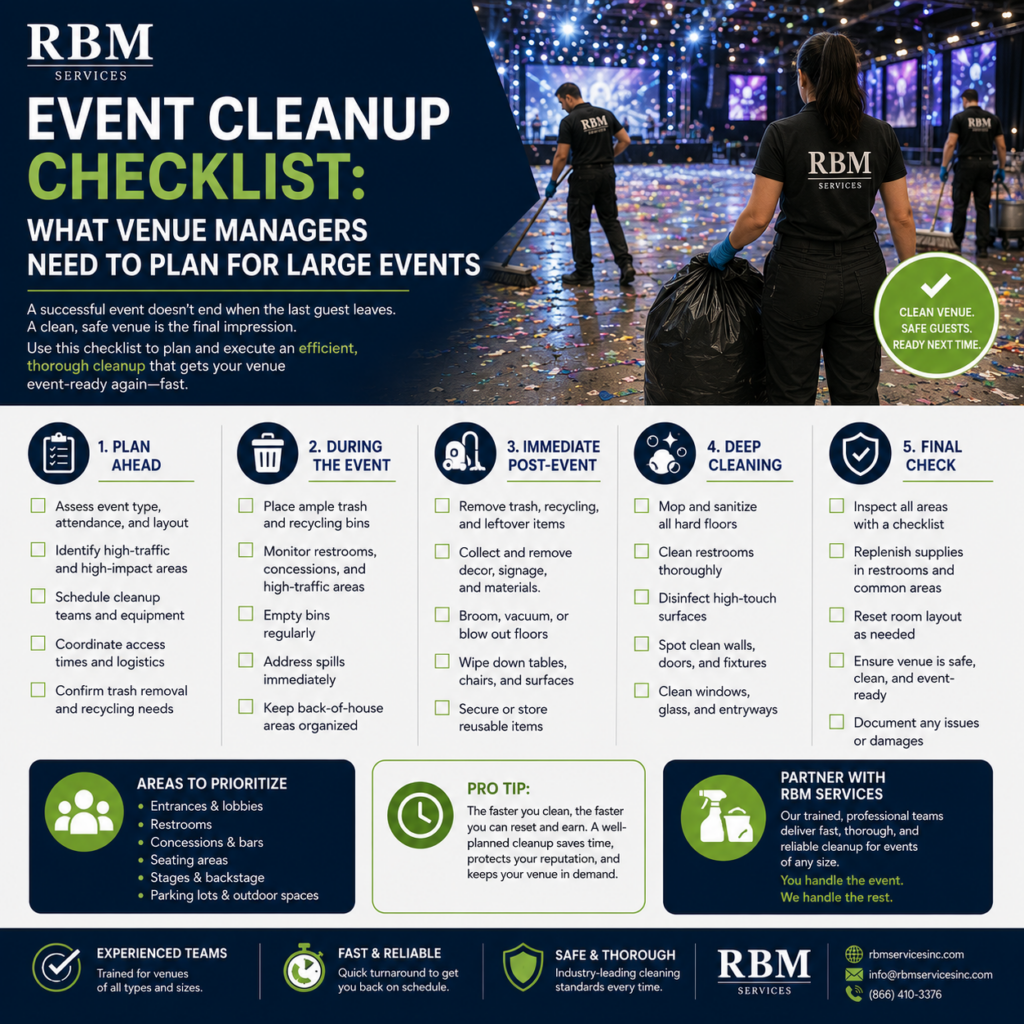
Event Cleanup Checklist: What Venue Managers Need to Plan For Large Events
Pre-event cleaning and setup is the first and most visible phase of event cleaning, as it establishes the first impression for event guests and sets the standard for the entire event experience. Pre-event cleaning should be completed before any event setup begins and should ensure that all areas of the venue are clean, fresh, and ready for the event. The pre-event cleaning checklist should include a thorough cleaning of all event spaces including floors (swept, mopped, vacuumed, and polished as needed), walls and baseboards (spot cleaned and free of marks), windows and glass surfaces (cleaned to a streak-free finish), restrooms (thoroughly cleaned, sanitized, and stocked with supplies), kitchen and food preparation areas (cleaned and sanitized, particularly if food will be prepared on-site), and storage areas and back-of-house spaces (cleaned and organized for event operations). Pre-event cleaning also includes the cleaning and preparation of event-specific areas depending on the type of event being held, including dance floors (cleaned and prepared for use), staging areas (cleaned and cleared for setup), outdoor patios or terraces (swept, pressure washed, and prepared for guest use), and VIP areas, green rooms, and speaker preparation rooms (cleaned and stocked with amenities). The pre-event cleaning should be scheduled to allow adequate time for the venue’s event setup team to install tables, chairs, staging, decorations, and equipment after the cleaning is complete. The cleaning crew should coordinate with the event setup team to ensure that cleaning is finished before setup begins and that the cleaning crew does not disrupt any setup activities that are in progress. The venue manager should conduct a final walk-through after pre-event cleaning is complete to verify that all areas meet the venue’s cleanliness standards and to address any issues before event setup begins.
Pre-event restroom preparation is critical because restroom cleanliness during an event is one of the most important factors in guest satisfaction. Restrooms should be thoroughly cleaned and sanitized before each event, with all fixtures, mirrors, countertops, and floors cleaned to a high standard. Restroom supplies should be checked and stocked to accommodate the expected number of guests, with extra supplies readily available for restocking during the event. The venue should have a plan for restroom maintenance during the event, including a schedule for restroom checks and restocking. For events with more than 500 guests, the venue should have dedicated restroom attendants who monitor restroom conditions and address issues as they arise. For more on pre-event cleaning and setup, contact RBM Building Services or call 800.403.3564.
Pre-Event Cleaning and Setup
During-event cleaning and maintenance is essential for ensuring that the venue remains clean, safe, and functional throughout the event. Unlike post-event cleaning, which happens after guests have left, during-event cleaning must be performed unobtrusively to avoid disrupting the event experience. During-event cleaning tasks should be planned based on the type of event and the expected guest count. Restroom servicing is the most important during-event cleaning task. Restrooms should be checked and serviced at regular intervals during the event, with the frequency determined by the number of guests and the duration of the event. For events with 100-500 guests, restrooms should be checked hourly. For events with more than 500 guests, restrooms should have dedicated attendants who monitor conditions continuously. Restroom servicing during events includes cleaning and sanitizing of all fixtures and surfaces, restocking of toilet paper, paper towels, and soap, emptying of trash receptacles, and spot cleaning of floors and mirrors as needed. The restroom servicing schedule should be documented and reviewed with the event organizer before the event. Spill response is the second most important during-event cleaning task. Food and beverage spills are common at events and must be addressed promptly to prevent slip hazards and staining. The venue should have a spill response kit readily available, including absorbent materials for liquid spills, cleaning solution appropriate for the floor surface, and warning signs to alert guests of wet floors. The cleaning crew should be trained to respond to spills quickly and discreetly, cleaning the affected area and restoring it to a safe condition before guests return to the area. The spill response team should be positioned in or near the event space during the event so that they can respond to spills within minutes.
Trash management is the third during-event cleaning task. Events generate significant volumes of trash from food and beverage service, event materials, and guest activities. Trash receptacles should be monitored during the event and emptied when they reach approximately 75% capacity to prevent overflow and to maintain a clean appearance. The trash removal team should use a systematic approach that follows designated paths through the venue to avoid disrupting event activities. Trash should be transported to the venue’s designated waste collection area and should be sorted for recycling if the venue has a recycling program. During-event cleaning also includes spot cleaning of high-touch surfaces, including door handles, handrails, elevator buttons, and restroom fixtures, which should be disinfected regularly during events. The frequency of high-touch surface cleaning should be based on the number of guests and the duration of the event. For events with more than 500 guests, high-touch surfaces should be disinfected hourly. For events with 100-500 guests, high-touch surfaces should be disinfected every 2 hours. The cleaning crew should use disinfectants that are effective against the pathogens of concern while being safe for use around food and guests. The cleaning products should be applied according to manufacturer instructions for proper contact time and should be allowed to dry before the surface is used again. For during-event cleaning services, contact RBM or call 800.403.3564. Read more on our company blog.
During-Event Cleaning and Maintenance
Post-event cleanup and restoration is the most intensive phase of event cleaning and must be performed efficiently to prepare the venue for the next event or for regular operations. Post-event cleaning begins after the event has ended and all guests have left the venue. The cleaning crew should be ready to begin work immediately after the event ends, as many venues have tight turnaround times between events. Post-event cleaning begins with trash removal and debris collection, which is typically the largest and most time-consuming post-event task. All trash and recycling from the event should be collected and removed from the venue. This includes waste from guest areas, food and beverage service areas, kitchen and preparation areas, storage and back-of-house areas, and any areas used by event staff or vendors. The trash should be sorted for recycling if the venue has a recycling program, and recyclable materials should be placed in designated recycling containers. After trash removal, the next step is cleaning of all horizontal surfaces including tables, countertops, bars, and service areas. All surfaces used for food service should be cleaned and sanitized using food-safe cleaning products. Tables and chairs should be wiped down, and any decorations or event materials that will be reused should be cleaned and stored properly. Floor cleaning is the third post-event task and is one of the most labor-intensive. Floors should be swept or vacuumed to remove debris, then mopped or scrubbed to remove spills and stains. Carpeted areas should be vacuumed and spot cleaned, with extraction cleaning scheduled as needed for heavily soiled areas. Hard surface floors should be swept, mopped, and polished as needed to restore their appearance. Restroom cleaning is the fourth post-event task and should be thorough and comprehensive. All restroom fixtures should be cleaned and sanitized, mirrors and glass should be cleaned, floors should be swept and mopped, and supplies should be restocked for the next event. The restroom cleaning should restore the restrooms to the same condition they were in before the event.
Kitchen and food service area cleaning is a specialized task that may be performed by the venue’s kitchen staff or by the cleaning contractor, depending on the venue’s policies and the type of event. Kitchen cleaning should include cleaning of all food preparation surfaces, cooking equipment, and storage areas. All food waste should be removed, and all surfaces should be cleaned and sanitized using food-safe cleaning products. Kitchen cleaning should be performed according to health department requirements and should be documented as required by local regulations. Final inspection and walk-through should be performed by the venue manager after post-event cleaning is complete to verify that all areas meet the venue’s cleanliness standards. Any issues identified during the inspection should be addressed before the venue is signed off. The inspection should include the event space, restrooms, kitchen and food service areas, back-of-house spaces, and any outdoor areas used during the event. The inspection should be documented, and any damage to the venue should be noted and reported to the event organizer. The venue manager should maintain a relationship with the cleaning contractor to ensure that post-event cleaning is consistently performed to the venue’s standards. Many venues have a preferred cleaning contractor who is familiar with the venue’s layout, requirements, and standards, and who can respond quickly to event cleanup needs. For post-event cleanup services for your venue, contact RBM Building Services or call 800.403.3564.
Post-Event Cleanup and Restoration
Different types of events require different cleaning approaches and services. Weddings and social events typically require more detailed cleaning because the venue must be pristine for photographs and the event experience is highly personal. Wedding cleaning should include special attention to the ceremony space, reception area, and outdoor spaces used for photographs. Weddings often involve floral arrangements, candle wax, and decorative elements that require specialized cleaning. Wedding cleaning crews should be prepared to handle flower petals, candle wax spills, and confetti or rice cleanup. Conferences and corporate events generate large volumes of paper waste, promotional materials, and food service waste. Conference cleaning should include regular trash removal during the event, cleaning of breakout rooms between sessions, and thorough cleaning of all areas after the event. Conference centers with multiple concurrent events require careful coordination between cleaning crews to ensure that all areas are serviced appropriately. Trade shows and exhibitions present unique cleaning challenges because of the volume of exhibitor materials, the presence of heavy equipment and displays, and the concentrated traffic in exhibit halls. Trade show cleaning should include pre-show cleaning of the exhibit hall, cleaning of exhibitor booths as needed during the show, and post-show cleaning including removal of exhibitor waste and restoration of the exhibit hall floor. Many trade shows require exhibitors to clean their own booths, with the venue providing trash removal and common area cleaning. Outdoor events including festivals, concerts, and sporting events require cleaning that addresses outdoor conditions including mud, grass, and weather-related issues. Outdoor event cleaning should include pre-event site preparation, during-event trash management and portable restroom servicing, and post-event restoration of the site including ground repair if needed. Outdoor events may require specialized equipment such as street sweepers, pressure washers, and large-capacity waste collection systems. For event-specific cleaning services, visit our event cleanup page.
Special considerations for event cleanup include handling of hazardous materials. Events that involve food service generate grease and cooking oil that requires proper disposal. Events that involve art installations or exhibits may generate painting or chemical waste. Events that involve laboratory or scientific demonstrations may generate biological or chemical waste. The venue should have a plan for handling hazardous materials generated during events, and the cleaning crew should be trained on proper handling and disposal procedures. The venue should also have a plan for managing lost and found items after events. All items found during post-event cleaning should be collected, cataloged, and stored in the venue’s lost and found. The event organizer should be notified of any items found, and items should be held for a reasonable period (typically 30-90 days) before being donated or discarded. Event cleanup is a demanding but essential service for any venue that hosts events. The investment in professional event cleanup services ensures that the venue maintains its reputation, protects its facilities, and provides a positive experience for event organizers and guests. RBM Building Services has provided event cleanup and janitorial services since 1974. Call 800.403.3564 or contact us for your event cleanup needs. Read more on our company blog.
Specialized Event Cleanup Services
Budgeting for event cleanup requires an understanding of the factors that affect cleaning costs and a systematic approach to estimating and managing those costs. The cost of event cleanup varies based on the size of the venue and the number of guests, the type of event and the level of cleaning required, the duration of the event and the hours of cleaning needed, the geographic location and local labor rates, and any specialized cleaning requirements such as hazardous waste handling. Venue managers should develop a standard pricing structure for event cleanup based on their venue’s specific costs and requirements. The pricing structure should include a base cleaning fee that covers standard pre-event cleaning and post-event cleanup for the venue, a per-guest fee for events above a certain size, additional fees for specialized services such as kitchen cleaning, window cleaning, or outdoor area cleaning, and a damage deposit that covers any damage to the venue beyond normal wear and tear. The pricing structure should be provided to event organizers in advance and should be included in the venue rental agreement. The cleaning fee should be collected before the event to ensure that funds are available for post-event cleaning. Many venues require a cleaning deposit that is refundable if the venue is left in acceptable condition. The cleaning deposit provides an incentive for event organizers to leave the venue clean and to address any issues before the cleaning crew arrives. The venue manager should conduct a post-event inspection with the event organizer to assess the condition of the venue and to determine if any damage has occurred that would be deducted from the deposit. The inspection should be documented with photographs if any issues are identified.
The event cleanup budget should include both labor and supply costs. Labor costs include the cleaning crew’s wages for pre-event, during-event, and post-event cleaning, including overtime if the event extends beyond normal operating hours. Labor costs typically account for 70-80% of total event cleanup costs. Supply costs include cleaning products, trash bags, paper products for restroom restocking, and any specialized supplies needed for the specific event. Supply costs typically account for 20-30% of total event cleanup costs. The event cleanup budget should also include a contingency of 10-20% for unexpected cleaning needs, such as additional spills, unexpected waste volumes, or damage that requires specialized cleaning. The event organizer should be informed of any additional charges incurred during the event cleanup and should be provided with an itemized invoice. The venue manager should track event cleanup costs over time to identify trends and to adjust pricing as needed. If the cost of cleaning certain types of events consistently exceeds the fee charged, the venue should adjust its pricing for those event types. Event cleanup is an essential component of venue operations that directly affects guest satisfaction, venue reputation, and financial performance. The investment in professional event cleanup services ensures that the venue is ready for each event, maintained during the event, and restored after the event. For event cleanup services for your venue, contact RBM Building Services or call 800.403.3564. Visit our event cleanup page for more information. Read more on our company blog.
Budgeting for Event Cleanup
Budgeting for event cleanup requires an understanding of the factors that affect cleaning costs and a systematic approach to estimating and managing those costs. The cost of event cleanup varies based on the size of the venue and the number of guests, the type of event and the level of cleaning required, the duration of the event and the hours of cleaning needed, the geographic location and local labor rates, and any specialized cleaning requirements such as hazardous waste handling. Venue managers should develop a standard pricing structure for event cleanup based on their venue’s specific costs and requirements. The pricing structure should include a base cleaning fee that covers standard pre-event cleaning and post-event cleanup for the venue, a per-guest fee for events above a certain size, additional fees for specialized services such as kitchen cleaning, window cleaning, or outdoor area cleaning, and a damage deposit that covers any damage to the venue beyond normal wear and tear. The pricing structure should be provided to event organizers in advance and should be included in the venue rental agreement. The cleaning fee should be collected before the event to ensure that funds are available for post-event cleaning. Many venues require a cleaning deposit that is refundable if the venue is left in acceptable condition. The cleaning deposit provides an incentive for event organizers to leave the venue clean and to address any issues before the cleaning crew arrives. The venue manager should conduct a post-event inspection with the event organizer to assess the condition of the venue and to determine if any damage has occurred that would be deducted from the deposit. The inspection should be documented with photographs if any issues are identified.
The event cleanup budget should include both labor and supply costs. Labor costs include the cleaning crew’s wages for pre-event, during-event, and post-event cleaning, including overtime if the event extends beyond normal operating hours. Labor costs typically account for 70-80% of total event cleanup costs. Supply costs include cleaning products, trash bags, paper products for restroom restocking, and any specialized supplies needed for the specific event. Supply costs typically account for 20-30% of total event cleanup costs. The event cleanup budget should also include a contingency of 10-20% for unexpected cleaning needs, such as additional spills, unexpected waste volumes, or damage that requires specialized cleaning. The event organizer should be informed of any additional charges incurred during the event cleanup and should be provided with an itemized invoice. The venue manager should track event cleanup costs over time to identify trends and to adjust pricing as needed. If the cost of cleaning certain types of events consistently exceeds the fee charged, the venue should adjust its pricing for those event types. Event cleanup is an essential component of venue operations that directly affects guest satisfaction, venue reputation, and financial performance. The investment in professional event cleanup services ensures that the venue is ready for each event, maintained during the event, and restored after the event. For event cleanup services for your venue, contact RBM Building Services or call 800.403.3564. Visit our event cleanup page for more information. Read more on our company blog.
Event cleanup services for venues
Building an Event Cleanup Plan
Budgeting for event cleanup requires an understanding of the factors that affect cleaning costs and a systematic approach to estimating and managing those costs. The cost of event cleanup varies based on the size of the venue and the number of guests, the type of event and the level of cleaning required, the duration of the event and the hours of cleaning needed, the geographic location and local labor rates, and any specialized cleaning requirements such as hazardous waste handling. Venue managers should develop a standard pricing structure for event cleanup based on their venue’s specific costs and requirements. The pricing structure should include a base cleaning fee that covers standard pre-event cleaning and post-event cleanup for the venue, a per-guest fee for events above a certain size, additional fees for specialized services such as kitchen cleaning, window cleaning, or outdoor area cleaning, and a damage deposit that covers any damage to the venue beyond normal wear and tear. The pricing structure should be provided to event organizers in advance and should be included in the venue rental agreement. The cleaning fee should be collected before the event to ensure that funds are available for post-event cleaning. Many venues require a cleaning deposit that is refundable if the venue is left in acceptable condition. The cleaning deposit provides an incentive for event organizers to leave the venue clean and to address any issues before the cleaning crew arrives. The venue manager should conduct a post-event inspection with the event organizer to assess the condition of the venue and to determine if any damage has occurred that would be deducted from the deposit. The inspection should be documented with photographs if any issues are identified.
The event cleanup budget should include both labor and supply costs. Labor costs include the cleaning crew’s wages for pre-event, during-event, and post-event cleaning, including overtime if the event extends beyond normal operating hours. Labor costs typically account for 70-80% of total event cleanup costs. Supply costs include cleaning products, trash bags, paper products for restroom restocking, and any specialized supplies needed for the specific event. Supply costs typically account for 20-30% of total event cleanup costs. The event cleanup budget should also include a contingency of 10-20% for unexpected cleaning needs, such as additional spills, unexpected waste volumes, or damage that requires specialized cleaning. The event organizer should be informed of any additional charges incurred during the event cleanup and should be provided with an itemized invoice. The venue manager should track event cleanup costs over time to identify trends and to adjust pricing as needed. If the cost of cleaning certain types of events consistently exceeds the fee charged, the venue should adjust its pricing for those event types. Event cleanup is an essential component of venue operations that directly affects guest satisfaction, venue reputation, and financial performance. The investment in professional event cleanup services ensures that the venue is ready for each event, maintained during the event, and restored after the event. For event cleanup services for your venue, contact RBM Building Services or call 800.403.3564. Visit our event cleanup page for more information. Read more on our company blog.