Fitness center disinfection requires specialized protocols to protect members from infections spread through shared equipment and surfaces. This guide covers gym cleaning schedules, equipment disinfection, locker room sanitation, and best practices for health club managers.
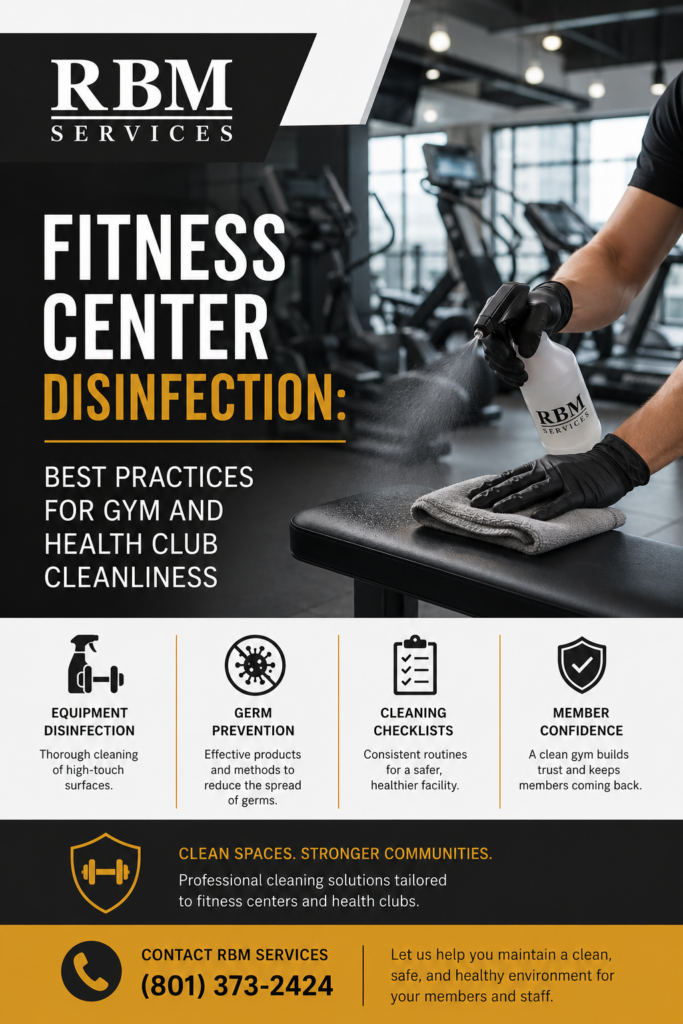
Fitness centers and health clubs present unique cleaning and disinfection challenges because of the high density of users, the intensity of physical activity, the variety of surfaces and equipment, and the expectation of a clean, healthy environment. Unlike other commercial facilities where the primary cleaning goal is appearance, fitness center cleaning is fundamentally about health protection. Members share equipment, surfaces, and spaces where sweat, body fluids, and skin contact are normal, creating conditions for the transmission of infections. The fitness industry has learned important lessons about infection control, and members now expect visible cleaning practices that demonstrate a commitment to their health. Commercial cleaning services and professional janitorial services with experience in fitness environments can help health clubs maintain proper sanitation. See RBM Building Services for more.
The financial impact of poor cleaning in fitness centers can be significant. Members who are concerned about cleanliness are less likely to renew their memberships and more likely to leave negative reviews. Online reviews frequently mention cleanliness as a factor in choosing a gym, and a few negative reviews about cleanliness can significantly impact membership sales. The cost of implementing a comprehensive cleaning program is far less than the cost of lost membership revenue. Contact RBM Building Services or call 800.403.3564.

Fitness Center Cleaning and Disinfection: Complete Health Club Guide
Fitness centers present several unique infection risks that require specialized cleaning protocols. The most significant risk is the transmission of skin infections through direct contact with contaminated surfaces. Staphylococcus aureus including MRSA can survive on surfaces for days to weeks and is commonly transmitted through shared equipment. Ringworm and other fungal infections thrive in warm, moist environments like locker rooms and shower areas. Plantar warts caused by the human papillomavirus can be contracted from contaminated floors in locker rooms and pool areas. Respiratory infections including colds, flu, and COVID-19 can be transmitted through respiratory droplets and contaminated surfaces. The high breathing rate of exercisers increases the production of respiratory droplets, and shared equipment provides surfaces for transmission. The warm, humid environment of fitness centers promotes the survival of many pathogens. The frequent skin contact with equipment surfaces increases the risk of transmission. The shared nature of equipment means that dozens of members may touch the same surface in a single day. The presence of sweat and body fluids provides a medium for pathogen survival and transmission. Many members come to the gym with minor skin abrasions or cuts that provide entry points for pathogens. Understanding these risks provides the foundation for developing effective cleaning protocols. Commercial cleaning providers should be trained in fitness center infection control. Contact RBM or call 800.403.3564.
Infection Risks in Fitness Environments
Equipment disinfection is the most critical cleaning task in a fitness center because equipment surfaces are the primary means of pathogen transmission between members. Disinfecting wipes or spray bottles with clean towels should be available throughout the facility, and members should be encouraged to clean equipment before and after use. However, reliance on member cleaning alone is not sufficient. Professional cleaning staff should perform regular disinfection of all equipment surfaces throughout the day. Cardio equipment including treadmills, ellipticals, stationary bikes, and rowing machines should be disinfected after each member use. High-touch areas on cardio equipment include handrails, touchscreens, control panels, and seat surfaces. Strength training equipment including weight machines, free weights, barbells, dumbbells, and benches should be disinfected after each use. Plate-loaded machines have multiple contact points including handles, seat pads, back pads, and weight plate posts. Free weight areas are particularly challenging because of the number of individual items. Specialty equipment including cable machines, Smith machines, and functional training rigs should be disinfected at least once per hour during peak times. Cleaning staff should follow a systematic route through the equipment area to ensure that all surfaces are cleaned on a regular schedule. Professional janitorial services can manage equipment disinfection for your fitness facility. Contact RBM or call 800.403.3564.
Equipment Disinfection Protocols
Locker rooms and shower areas require the most intensive cleaning in any fitness facility because of the warm, moist environment that promotes pathogen growth. Locker room cleaning should be performed multiple times per day with a thorough cleaning at least once per shift. Daily locker room tasks include sweeping and mopping all floor surfaces with disinfectant solution, cleaning and disinfecting all locker surfaces inside and out, cleaning and disinfecting benches and seating areas, cleaning and sanitizing sinks, countertops, and mirrors, cleaning and disinfecting toilets and urinals, cleaning and disinfecting shower areas including walls, floors, and fixtures, restocking all supplies including toilet paper, paper towels, soap, and hand sanitizer, and emptying all waste receptacles and sanitary disposal units. Shower areas require special attention because of the risk of fungal infections. Shower floors should be disinfected daily using a fungicidal disinfectant. Shower walls and partitions should be cleaned and disinfected regularly. Shower heads and fixtures should be cleaned and descaled monthly to prevent biofilm formation. Floor drain covers should be cleaned weekly to prevent organic matter accumulation. Locker rooms should be inspected hourly during peak usage periods, with spot cleaning and restocking performed as needed. The ventilation system in locker rooms should be checked regularly to ensure proper humidity control. Commercial cleaning services can manage locker room sanitation for fitness facilities. Contact RBM Building Services or call 800.403.3564.
Locker Room and Shower Area Sanitation
Group fitness studios, yoga rooms, and pool areas each have unique cleaning requirements that must be addressed in a comprehensive fitness center cleaning program. Group fitness studios typically have specialized flooring designed for impact absorption and traction. This flooring should be swept and mopped daily using a cleaning solution appropriate for the floor type. Mats used in group fitness classes should be cleaned and disinfected after each class. Some facilities provide cleaning supplies for members to clean their own mats, while others rely on staff to perform mat cleaning between classes. Yoga studios present additional cleaning challenges because of the close contact between members and the shared use of props including blocks, straps, and bolsters. Yoga mats should be cleaned with a mat-specific cleaning solution after each use. Fabric props should be laundered regularly. Hard surfaces in yoga studios should be dusted and mopped daily. Pool areas require specialized cleaning because of the combination of water, chlorine, and high humidity. Pool deck surfaces should be cleaned daily to prevent slip hazards and to remove organic matter. Pool water chemistry should be tested and maintained according to health department requirements. Shower areas near pools require the same cleaning protocols as locker room showers. Pool toys and equipment should be cleaned and disinfected regularly. HVAC systems serving pool areas should be designed to handle high humidity and should be maintained according to manufacturer specifications. Commercial cleaning providers with pool facility experience can help maintain these specialized environments.
Group Fitness Studio and Pool Area Maintenance
Member engagement in cleaning is an important supplement to professional cleaning services. Many fitness centers provide disinfectant wipes or spray bottles and encourage members to clean equipment before and after use. However, compliance with member cleaning expectations varies widely, and some members may not clean equipment properly or at all. Fitness centers should make cleaning supplies easily accessible throughout the facility, with wipes dispensers or spray bottles and clean towels positioned at convenient locations near equipment areas. Signage should clearly communicate cleaning expectations, including instructions for proper equipment cleaning. The signs should be visible and easy to understand, with graphics or illustrations if needed to overcome language barriers. Staff should model proper cleaning behavior by visibly cleaning equipment during their shifts. Staff should also be empowered to politely remind members to clean equipment when they observe non-compliance. Some fitness centers use cleaning stations at the entrance where members are required to pick up a sanitizing wipe or towel before entering the equipment area. This approach ensures that cleaning supplies are distributed to members and reinforces the expectation that cleaning is part of the gym experience. Fitness centers should also provide hand sanitizer stations throughout the facility, particularly at the entrance, near equipment areas, and at the exit. Regular announcements or notifications through the facility’s app or PA system can remind members of cleaning expectations. Professional janitorial services supplement member cleaning efforts with thorough professional cleaning.
Member Cleaning Expectations and Compliance
A comprehensive fitness center cleaning program should address all areas of the facility with appropriate cleaning frequencies and protocols. The program should be documented in writing and should be reviewed with all cleaning staff. The program should include daily cleaning tasks for all areas of the facility, with specific protocols for equipment disinfection, locker room sanitation, and common area maintenance. Weekly tasks should include deep cleaning of locker rooms including walls, ceilings, and ventilation grilles, cleaning of pool areas and equipment, cleaning of administrative offices and reception areas, and cleaning of exterior entryways and walkways. Monthly tasks should include carpet extraction cleaning in administrative areas and studios, cleaning of HVAC vents and registers throughout the facility, cleaning of windows and glass surfaces, and inspection and servicing of cleaning equipment. Quarterly tasks should include deep cleaning of all upholstered surfaces, pressure washing of exterior areas, cleaning of pool filter systems, and comprehensive facility inspection. The cleaning program should also include a protocol for responding to illness outbreaks. During periods of increased illness transmission, the frequency of high-touch surface disinfection should be increased. Additional cleaning supplies should be stocked, and communication with members about enhanced cleaning protocols should be increased. RBM Building Services has provided commercial cleaning and janitorial services for fitness facilities since 1974. Contact us or call 800.403.3564 to learn how we can support your fitness center cleaning program. Read more on our company blog.
fitness center disinfection gym cleaning health club sanitation
Building a Comprehensive Gym Cleaning Program
Fitness center cleaning is a critical component of member satisfaction and health protection. Health clubs that invest in comprehensive cleaning programs demonstrate their commitment to member well-being and build trust that supports membership retention and referrals. The key elements of a successful fitness center cleaning program include implementing equipment disinfection protocols that include both member cleaning and professional cleaning, maintaining rigorous locker room and shower area sanitation with daily deep cleaning, developing specialized protocols for group fitness studios, yoga rooms, and pool areas, engaging members in cleaning through accessible supplies and clear communication, and building a comprehensive program with daily, weekly, monthly, and quarterly cleaning tasks. RBM Building Services has provided commercial cleaning and janitorial services for fitness facilities since 1974. Contact us or call 800.403.3564 for professional fitness center cleaning services. Read more on our company blog.