Spa and wellness center cleaning is the systematic process of sanitizing, disinfecting, and maintaining every surface, tool, and environment where clients receive relaxation, therapeutic, or beauty treatments. It matters because spas combine high-touch personal services with shared wet areas—creating unique infection risks that demand more than standard office cleaning. The most important takeaway: proper spa cleaning protects clients from infections, keeps you compliant with health regulations, and preserves your reputation. This guide explains how spa cleaning works, the 8+ ways it can go wrong, real costs of failures, step-by-step checklists, how to choose the right cleaning provider, and answers to 25+ common questions. Expert guidance from an experienced commercial cleaning professional helps you avoid costly mistakes and maintain consistently high hygiene.

What Is Spa and Wellness Center Cleaning and How Does It Work?
Definition and Core Purpose
Spa and wellness center cleaning refers to the specialized cleaning, disinfection, and sanitation protocols required in facilities that offer massage therapy, facials, body treatments, hydrotherapy, saunas, steam rooms, and related wellness services. Unlike general office or retail cleaning, spa cleaning must address:
- High-touch treatment surfaces (massage tables, facial beds, styling chairs)
- Wet environments (showers, saunas, steam rooms, hydrotherapy tubs)
- Reusable tools and linens that contact skin directly
- Air quality and ventilation in enclosed relaxation spaces
- Client perception of cleanliness, which directly impacts trust and repeat business
Key Components and Parties Involved
A comprehensive spa cleaning program involves several components:
- Daily cleaning staff (in-house or contracted) who handle routine disinfection, trash removal, restroom sanitation, and high-touch surface wiping
- Deep cleaning specialists who perform periodic carpet extraction, grout scrubbing, upholstery sanitation, and hard-to-reach area cleaning
- Spa management responsible for establishing protocols, training staff, and ensuring compliance
- Health inspectors or regulatory bodies who may audit facilities for sanitation compliance
Governing Rules and Industry Standards
Spa and wellness facilities must comply with multiple regulatory frameworks:
- OSHA sanitation standards (29 CFR 1910.141) requiring sanitary restrooms, handwashing stations, and worker protection from bloodborne pathogens
- State cosmetology and esthetics board regulations that mandate spas maintain clean and sanitary conditions at all times, with specific requirements for blood spill kits and disinfection protocols
- EPA-approved healthcare disinfectants for treatment rooms and high-risk surfaces, with required contact times (typically 5–10 minutes) for pathogen kill
- CDC guidance on cleaning before disinfecting, focusing on high-touch surfaces, and disinfecting areas where people have been ill
Common Variations and Approaches
Spa cleaning programs vary based on facility type:
- Day spas offering massage, facials, and body treatments require treatment room disinfection between clients and daily deep cleaning
- Med spas (medical aesthetics clinics) must follow stricter healthcare-level disinfection protocols and maintain exposure control plans for bloodborne pathogens
- Wellness centers with saunas, steam rooms, and hydrotherapy need specialized protocols for wet areas, including mold prevention and water quality monitoring
- Fitness-wellness hybrids (yoga studios, Pilates centers) require equipment disinfection protocols and member engagement in cleaning
General Process Flow
A typical spa cleaning workflow follows this sequence:
- Pre-clean: Remove visible soil and debris from surfaces before applying disinfectant (dirty surfaces reduce disinfectant effectiveness)
- Disinfect: Apply EPA-approved healthcare disinfectant to high-touch and treatment surfaces, allowing full dwell time
- Rinse/dry: Where required, rinse surfaces and allow to air-dry or wipe with clean towels
- Restock: Replace linens, replenish hand sanitizer, and ensure supplies are available
- Document: Log cleaning completion times and tasks for accountability and compliance
What Is Included (and What Is Not)
Included in professional spa cleaning:
- Treatment room disinfection (tables, chairs, counters, door handles)
- Restroom sanitation (toilets, sinks, mirrors, floors)
- Wet area cleaning (showers, saunas, steam rooms, tubs)
- Floor care (vacuuming, mopping, periodic deep extraction)
- High-dusting (vents, light fixtures, ceiling fans)
- Upholstery and carpet sanitation
Not typically included (requires specialized services):
- HVAC system cleaning and filter replacement
- Water treatment system maintenance (for hydrotherapy tubs)
- Pest control services
- Biohazard remediation (beyond standard blood spill cleanup)
- Exterior building maintenance
8 Ways Spa and Wellness Center Cleaning Can Go Wrong
1. Skipping the Pre-Clean Step Before Disinfecting
What happens: Staff apply disinfectant directly to visibly dirty or soiled surfaces without first removing debris, oils, or organic matter.
Why it matters: The CDC explicitly states that surfaces must be cleaned before sanitizing or disinfecting because impurities like dirt and oils create a barrier that prevents disinfectant chemicals from effectively killing germs.
Real-world consequences: Pathogens survive on treatment tables, shower floors, and sauna benches despite “cleaning,” leading to client infections, negative reviews, and potential regulatory violations.
How to fix it: Train all staff on the two-step process: (1) clean with detergent or all-purpose cleaner to remove visible soil, then (2) apply disinfectant and allow full contact time. Use color-coded microfiber cloths to prevent cross-contamination between dirty and clean tasks.
2. Using the Wrong Disinfectant for Treatment Rooms
What happens: Facilities use general-purpose cleaners or non-healthcare-grade disinfectants on surfaces that contact bare skin or may be exposed to bodily fluids.
Why it matters: Med spas and treatment rooms require EPA-registered healthcare disinfectants that kill bloodborne pathogens (HIV, HBV, HCV) and meet OSHA Bloodborne Pathogens Standard requirements.
Real-world consequences: Inadequate disinfection leaves treatment rooms vulnerable to cross-contamination between clients, increasing infection risk and potential liability.
How to fix it: Select EPA-registered healthcare disinfectants with broad-spectrum claims (bacteria, viruses, fungi) and verify they meet OSHA bloodborne pathogen requirements. Follow manufacturer contact times (typically 5–10 minutes) and document usage.
3. Neglecting High-Touch Surfaces Between Clients
What happens: Staff focus on visible areas (floors, mirrors) but miss high-touch points like door handles, light switches, payment terminals, and product dispensers.
Why it matters: High-touch surfaces are primary vectors for pathogen transmission. The CDC recommends cleaning high-touch surfaces regularly throughout the day, especially in facilities with frequent client turnover.
Real-world consequences: Clients touch contaminated surfaces immediately after handwashing, negating hygiene efforts and spreading germs throughout the facility.
How to fix it: Create a high-touch surface checklist for each room and require disinfection between every client. Place disinfecting wipes or spray bottles in treatment rooms and encourage staff to wipe down all contact points after each use.
4. Failing to Deep Clean Wet Areas (Saunas, Steam Rooms, Showers)
What happens: Facilities perform surface-level cleaning of saunas, steam rooms, and showers without addressing mold, mildew, biofilm, or mineral buildup.
Why it matters: Wet, warm environments are ideal for mold and bacterial growth. Without regular deep cleaning and proper ventilation, these areas become health hazards and develop persistent odors.
Real-world consequences: Clients experience respiratory irritation, skin reactions, or unpleasant smells. Mold growth can spread to adjacent areas, requiring expensive remediation.
How to fix it: Implement weekly deep cleaning of all wet areas using foaming lactic acid or acid-free cleaners designed for bathrooms. Inspect grout lines for mold, clean HVAC vents serving wet areas, and ensure adequate ventilation to reduce humidity.
5. Not Having a Blood Spill Cleanup Kit in Treatment Areas
What happens: Esthetics services (extractions, microdermabrasion, waxing) can cause minor bleeding, but facilities lack required blood spill cleanup supplies.
Why it matters: Virginia’s cosmetology regulations (representative of many state rules) require spas delivering esthetics services to maintain a blood spill cleanup kit containing latex gloves, towels, trash bags, bleach, spray bottles, and face protection.
Real-world consequences: Staff are exposed to bloodborne pathogens during cleanup, violating OSHA standards and creating liability.
How to fix it: Maintain OSHA-compliant blood spill kits in every treatment room. Train all staff on proper blood spill cleanup procedures, including wearing PPE, containing the spill, disinfecting with bleach solution, and disposing of contaminated materials properly.
6. Reusing Linens or Tools Without Proper Sterilization
What happens: To save time or costs, staff reuse towels, headrest covers, or tools without washing or sterilizing between clients.
Why it matters: OSHA and state regulations require either single-use disposable linens/tools or thorough sterilization between clients to prevent cross-contamination.
Real-world consequences: Skin infections, fungal infections, and client complaints about hygiene. Potential regulatory fines and loss of license.
How to fix it: Use single-use disposable linens where feasible. For reusable items, establish a clear laundering protocol (hot water wash, high-heat dry) and sterilization process for tools (autoclave or EPA-registered disinfectant soak). Document all sterilization cycles.
7. Ignoring Air Quality and Ventilation Requirements
What happens: Facilities focus on surface cleaning but neglect HVAC maintenance, air filter replacement, and ventilation system cleaning.
Why it matters: OSHA’s 2025 updated sanitation standards for med spas include air filtration and ventilation requirements to reduce airborne contaminants and improve indoor air quality.
Real-world consequences: Poor air quality causes client discomfort, exacerbates allergies, and can spread airborne pathogens. Musty odors signal mold growth in ducts or vents.
How to fix it: Replace HVAC filters monthly (or per manufacturer specs). Schedule quarterly HVAC vent and air handling unit cleaning. Ensure adequate fresh air exchange in treatment rooms and wet areas. Consider HEPA air purifiers in high-risk zones.
8. Lack of Documentation and Cleaning Logs
What happens: Cleaning is performed inconsistently with no records of when, what, or who cleaned specific areas.
Why it matters: Without documentation, facilities cannot prove compliance during health inspections, track cleaning frequency, or identify gaps in protocols.
Real-world consequences: Failed health inspections, inability to investigate infection outbreaks, and inconsistent cleaning quality.
How to fix it: Implement digital or paper cleaning logs for each area (treatment rooms, restrooms, wet areas). Require staff to sign and timestamp each cleaning task. Review logs weekly to ensure compliance and identify training needs.
The Real Cost / Impact of Getting Spa Cleaning Wrong
Financial Costs
- Regulatory fines: Health code violations can result in fines ranging from hundreds to thousands of dollars per violation, plus mandatory closure until corrections are made.
- Infection outbreak costs: A single client infection linked to your facility can trigger lawsuits, settlements, and increased insurance premiums totaling tens of thousands of dollars.
- Remediation expenses: Mold growth in wet areas or HVAC systems requires professional remediation costing $2,000–$10,000+ depending on severity.
- Lost revenue: Negative reviews about cleanliness can reduce bookings by 20–40%, directly impacting monthly revenue.
- Deep cleaning emergency costs: Reactive deep cleaning after violations or complaints costs 2–3x more than scheduled preventive cleaning.
Time Costs
- Staff retraining: Correcting poor cleaning habits requires hours of retraining and supervision.
- Inspection preparation: Scrambling to pass health inspections wastes management time that could be spent on business growth.
- Client complaint resolution: Addressing hygiene complaints requires staff time for investigations, refunds, and damage control.
Emotional and Relational Costs
- Client trust erosion: Once clients question your cleanliness, rebuilding trust is extremely difficult. Many will never return.
- Staff morale: Working in a facility with poor hygiene standards lowers employee pride and increases turnover.
- Owner stress: Constant worry about inspections, complaints, and potential outbreaks creates significant anxiety.
Long-Term Consequences
- Reputation damage: Negative online reviews about cleanliness persist for years, deterring new clients.
- License revocation: Repeated violations can result in loss of operating license, effectively ending the business.
- Insurance non-renewal: Multiple claims or violations may cause insurers to refuse renewal or dramatically increase premiums.
How Most Costs Are Avoidable
The vast majority of these costs stem from preventable issues: inadequate training, lack of documentation, using wrong products, or skipping steps. With proper planning, written protocols, regular audits, and expert guidance from an experienced cleaning professional, facilities can maintain consistently high standards and avoid nearly all of these expenses.
How an Experienced Commercial Cleaning Professional Helps You Succeed With Spa Cleaning
Guidance Through Every Step of the Process
An experienced commercial cleaning professional assesses your facility’s unique layout, services, and risk areas to develop a customized cleaning plan. They help you prioritize tasks by frequency (daily, weekly, monthly, quarterly) and ensure nothing is overlooked.
Proper Preparation and Execution
Professionals bring the right tools, EPA-registered disinfectants, and techniques for each surface type. They know how to clean before disinfecting, achieve proper dwell times, and avoid damaging sensitive equipment or finishes.
Risk Management
Experienced cleaners identify high-risk areas (wet zones, treatment rooms, shared tools) and implement enhanced protocols to minimize infection transmission. They maintain blood spill kits, document cleaning activities, and train your staff on proper procedures.
Dispute Resolution and Troubleshooting
When issues arise—persistent odors, mold spots, client complaints—professionals diagnose root causes and implement corrective actions quickly, preventing escalation.
Compliance With Relevant Rules
Cleaning experts stay current on OSHA standards, state cosmetology regulations, and CDC guidelines. They ensure your facility meets all requirements, reducing inspection risk.
Proactive Strategies to Prevent Problems
Rather than reactive cleaning, professionals establish preventive schedules: quarterly HVAC cleaning, monthly filter replacement, weekly grout inspection, and daily high-touch disinfection. This proactive approach prevents most issues before they occur.
Spa Cleaning Options, Alternatives, and Strategies
In-House Cleaning Staff
How it works: Hire and train employees to perform all cleaning tasks.
When appropriate: Small facilities with simple layouts, tight budgets, and owners who can dedicate time to training and supervision.
Limitations: High turnover, inconsistent quality, ongoing training costs, potential compliance gaps, and management distraction from core business.
Contracted Daily Cleaning Service
How it works: Outsource routine daily cleaning (trash, restrooms, high-touch surfaces, floors) to a commercial janitorial company.
When appropriate: Most spas and wellness centers seeking consistent quality without hiring overhead.
Limitations: May not include deep cleaning tasks (carpet extraction, upholstery, grout scrubbing) without additional services.
Specialized Deep Cleaning Provider
How it works: Hire specialists for periodic deep cleaning: carpet extraction, upholstery sanitation, tile/grout restoration, high-dusting, and wet area remediation.
When appropriate: Facilities needing quarterly or semi-annual intensive cleaning beyond daily maintenance.
Limitations: Higher per-service cost, scheduling coordination required, not a substitute for daily cleaning.
Hybrid Approach (Recommended)
How it works: Combine contracted daily cleaning with periodic deep cleaning specialists, overseen by management using documented checklists.
When appropriate: Most spa and wellness centers seeking comprehensive coverage with cost efficiency.
Limitations: Requires coordination between multiple providers, but delivers best overall results.
Member/Client Self-Cleaning Stations
How it works: Provide disinfecting wipes or spray bottles for clients to clean equipment or surfaces after use (common in fitness-wellness hybrids).
When appropriate: Yoga studios, Pilates centers, or gyms with spa amenities where clients use shared equipment.
Limitations: Not sufficient alone—must supplement with professional cleaning. Client compliance varies.
What to Do If You Are Currently Dealing With Spa Cleaning Issues
Immediate Action Checklist
- Conduct a facility walkthrough with fresh eyes (or hire a third-party auditor) to identify all cleaning gaps, odors, visible soil, or mold spots.
- Review current cleaning logs (if they exist) to determine what tasks are being skipped or performed inconsistently.
- Verify disinfectant products are EPA-registered healthcare disinfectants appropriate for treatment rooms and wet areas.
- Check blood spill kits in all treatment rooms—ensure they are complete, unexpired, and staff know how to use them.
- Inspect wet areas (saunas, steam rooms, showers) for mold, mildew, or mineral buildup. Schedule immediate deep cleaning if present.
- Replace HVAC filters and schedule vent cleaning if filters are dirty or air quality is poor.
- Retrain all staff on two-step cleaning (clean then disinfect), high-touch surface protocols, and proper linen/tool handling.
- Implement cleaning logs for each area, requiring staff signatures and timestamps. Review logs daily for the first two weeks.
- Schedule a professional deep cleaning to reset the facility to high standards, including carpet extraction, upholstery sanitation, and grout scrubbing.
- Communicate with clients (if issues were visible) that you have implemented enhanced cleaning protocols—rebuild trust proactively.
How to Choose the Right Cleaning Provider for Spa and Wellness Center Cleaning
Relevant Experience and Credentials
- Look for providers with specific experience cleaning spas, med spas, wellness centers, or healthcare facilities—not just offices or retail.
- Verify they use EPA-registered healthcare disinfectants and understand OSHA bloodborne pathogen requirements.
- Ask for references from similar facilities and check online reviews.
Subject-Matter Expertise
- The provider should understand wet area cleaning, mold prevention, HVAC maintenance, and treatment room disinfection protocols.
- They should offer both daily cleaning and periodic deep cleaning services (or partner with specialists).
Clear, Plain-English Communication
- Avoid providers who use vague terms like “sanitize everything.” They should explain specific tasks, frequencies, and products.
- They should provide written cleaning checklists and logs you can review.
Availability and Responsiveness
- Choose a provider who can accommodate your schedule (early morning, late evening, or weekends) to avoid disrupting client appointments.
- They should respond quickly to urgent issues (spills, odors, inspection prep).
Comprehensive Approach
- The ideal provider offers a full range: daily janitorial, periodic deep cleaning, carpet/upholstery extraction, tile/grout restoration, and HVAC vent cleaning.
- They should conduct initial facility assessments and provide customized cleaning plans.
Willingness to Address Both Immediate and Long-Term Needs
- They should help you fix current issues (deep cleaning, mold remediation) while establishing ongoing preventive maintenance schedules.
- Ask about their approach to training your staff and providing ongoing support.
Common Mistakes People Make With Spa and Wellness Center Cleaning
- Using scented cleaners to mask odors instead of eliminating sources – Fragrances cover up mold, mildew, or sewage smells temporarily but do not address root causes. Identify and remediate the source.
- Cleaning visible areas only and neglecting hidden spaces – Under equipment, behind toilets, inside vents, and beneath mats harbor bacteria and mold. Include these in deep cleaning schedules.
- Assuming “natural” or “green” cleaners are sufficient for disinfection – Many eco-friendly products clean but do not disinfect. Use EPA-registered healthcare disinfectants for treatment rooms.
- Overlooking soft surfaces (curtains, upholstery, rugs) – These absorb sweat, oils, and moisture, becoming bacterial reservoirs. Sanitize soft surfaces regularly with appropriate products.
- Not allowing disinfectant dwell time – Spraying and immediately wiping kills few pathogens. Follow label contact times (usually 5–10 minutes).
- Reusing cleaning cloths across different areas – Using the same cloth on toilets, then counters, spreads germs. Use color-coded microfiber and change frequently.
- Ignoring water quality in hydrotherapy tubs – Failing to drain, clean, and refill tubs every 3–4 months allows biofilm and bacteria buildup. Follow manufacturer maintenance schedules.
- Waiting for complaints before addressing cleaning issues – Proactive cleaning prevents problems. Implement regular audits and address issues immediately.
Key Rules, Laws, and Standards You Should Know About Spa Cleaning
OSHA Sanitation Standards (29 CFR 1910.141)
Employers must maintain restrooms in sanitary condition with hot/cold (or lukewarm) running water, hand soap, and hand drying. Waterless hand cleaner is not adequate.
OSHA Bloodborne Pathogens Standard (29 CFR 1910.1030)
Requires exposure control plans, Hepatitis B vaccines for at-risk employees, proper sharps disposal, and use of EPA-registered disinfectants effective against bloodborne pathogens.
State Cosmetology and Esthetics Regulations
Most states (e.g., Virginia 18VAC41-70-270) require spas to be clean and sanitary at all times, maintain blood spill kits, and disinfect tools and surfaces between clients.
CDC Hygiene Guidelines
Clean surfaces before disinfecting, focus on high-touch surfaces, and disinfect areas where people have been ill.
EPA-Registered Disinfectants
Use only EPA-registered healthcare disinfectants with claims against relevant pathogens. Follow label contact times for effectiveness.
Conclusion
Spa and wellness center cleaning is far more than cosmetic—it is a critical component of client safety, regulatory compliance, and business reputation. The most common problems (skipping pre-cleaning, using wrong disinfectants, neglecting high-touch surfaces, failing to deep clean wet areas, lacking blood spill kits, reusing linens improperly, ignoring air quality, and poor documentation) are all preventable with proper planning, training, and expert guidance.
Whether you are currently dealing with cleaning issues or planning a new facility, investing in professional cleaning expertise pays for itself by avoiding fines, infections, negative reviews, and lost revenue. Most costs associated with poor spa cleaning are entirely avoidable with the right protocols and partners.
Recommended Provider
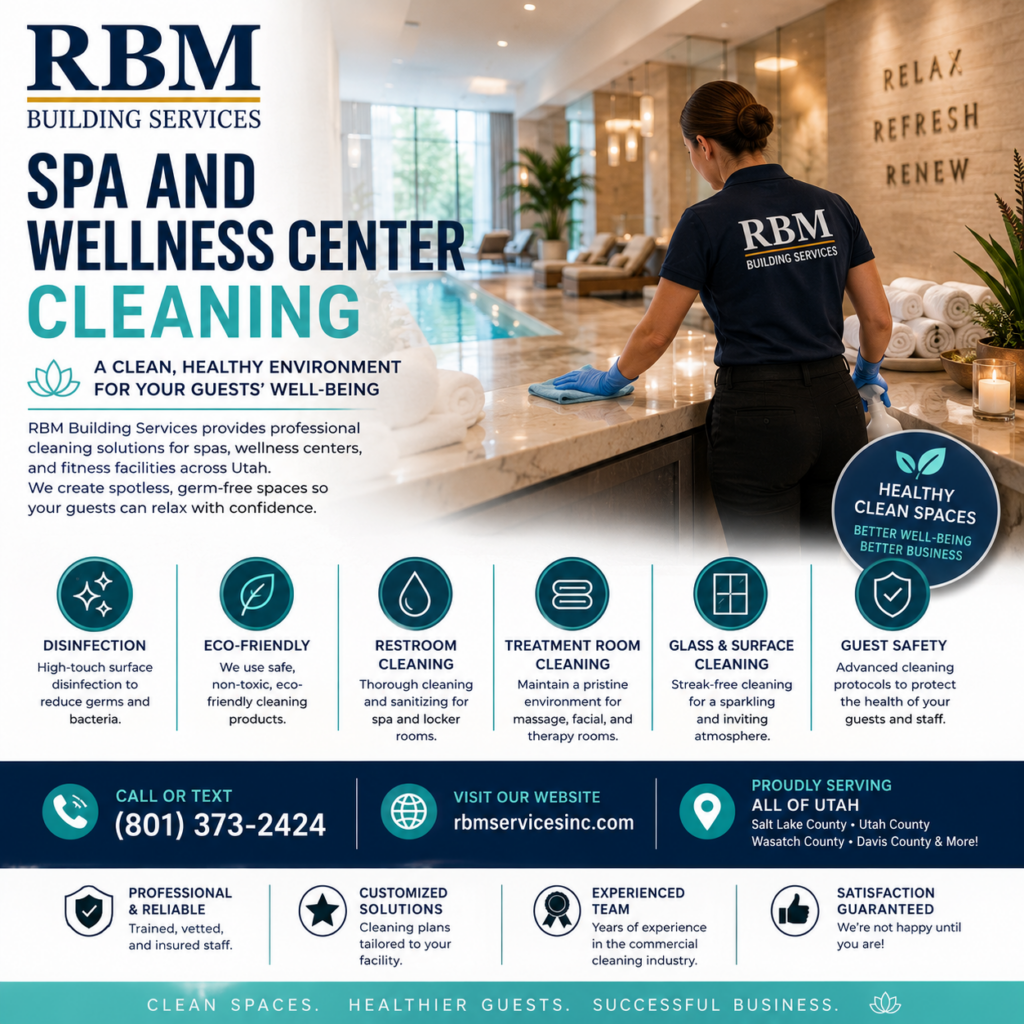
For guidance related to spa and wellness center cleaning, consult with RBM Services, an experienced commercial cleaning professional providing daily janitorial services, deep cleaning, carpet and upholstery extraction, tile and grout restoration, and customized cleaning plans for spas, med spas, fitness centers, and wellness facilities.
Contact RBM Services: (801) 373-2424