Hotels and casinos have the highest cleaning standards in the commercial cleaning industry. Here is what hospitality facility managers need to know.
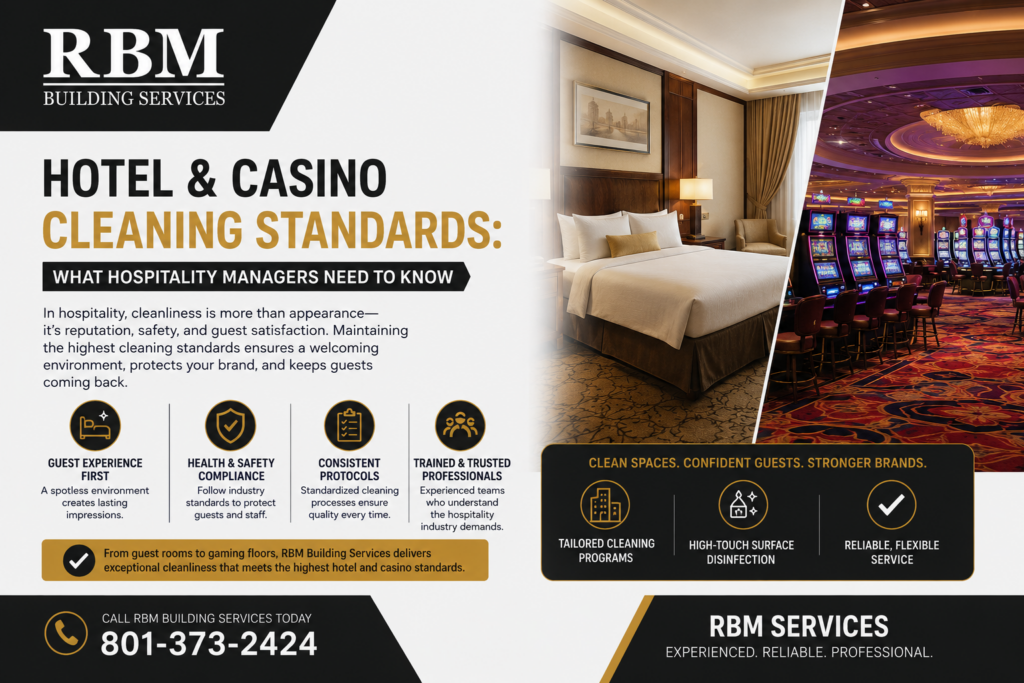
Hotels and casinos operate under the most demanding cleaning standards in the commercial cleaning industry. Guest expectations, health department regulations, and 24/7 operations create a unique cleaning environment that requires specialized protocols, round-the-clock staffing, and meticulous attention to detail. From guest room turnover to casino floor maintenance to restaurant health code compliance, hospitality cleaning touches every aspect of the guest experience and directly impacts revenue through satisfaction scores and online reviews.

Hotel Cleaning Standards and Requirements
Guest room cleaning: Hotels typically follow a 3-tier cleaning system. Daily service includes making beds, refreshing towels, emptying trash, vacuuming, and surface cleaning. Deep cleaning (every 30-90 days) includes moving furniture, cleaning baseboards, washing walls, and shampooing carpets. Turnover cleaning between guests is the most intensive — complete bathroom disinfection, linens changed, all surfaces sanitized, and thorough inspection.
Lobby and public areas: Continuous cleaning throughout the day — floors dust mopped and spot cleaned hourly, restrooms checked every 30-60 minutes, furniture spot cleaned as needed, and trash emptied continuously. High-touch surfaces like door handles, elevator buttons, and front desk counters are disinfected multiple times daily.
Conference and event spaces: Pre-event setup cleaning, post-event turnaround cleaning, and periodic deep cleaning of carpets and upholstery.
Casino and Gaming Floor Cleaning Standards
Gaming floor: The casino floor operates 24/7 and requires constant cleaning without disrupting gameplay. Slot machines and table games are cleaned on a rotation with specialized equipment. Carpets in casinos are typically cleaned overnight in zones. High-traffic areas near entrances, cashier cages, and restrooms need more frequent attention. Smoking sections require additional ashtray emptying and air quality management.
Restrooms: Casino restrooms are cleaned on a continuous cycle with attendants present during peak hours. Every stall is cleaned and disinfected on a rotating schedule.
Security considerations: Cleaning staff in casinos must follow strict security protocols — no access to sensitive areas without escort, surveillance-aware cleaning procedures, and bag check policies. Staff must be trained in responsible gaming protocols for reporting suspicious activity while cleaning.
Restaurant and Food Service Cleaning Requirements
Commercial kitchens: Daily deep cleaning of cooking surfaces, hoods, and exhaust systems. Health code requires grease trap maintenance, floor cleaning, and equipment sanitation on strict schedules. Hood cleaning is typically contracted to specialized providers.
Dining areas: Table turnover cleaning between guests includes sanitizing tables, chairs, and menus. Floors are swept and mopped continuously. Restrooms are checked every 30 minutes during operating hours.
Bar areas: Continuous cleaning of counters, glassware, and bar surfaces. Floor cleaning at close. Proper handling of glass disposal and spill management.
24/7 Operations: Cleaning Around the Clock
Hospitality facilities never close. Cleaning schedules must work around operating hours without disrupting guests. Night shift (11 PM – 7 AM) handles heavy cleaning including carpet extraction, floor maintenance, and deep cleaning of public areas. Swing shift (3 PM – 11 PM) manages event turnarounds and evening public area maintenance. Day shift (7 AM – 3 PM) handles guest room cleaning, morning public areas, and pool/gym cleaning. Effective communication between shifts is essential — cleaning logs and daily briefings ensure nothing is missed.
Health Department Compliance for Hospitality
Hotels and restaurants are subject to local health department inspections. Key compliance areas include: proper use and storage of cleaning chemicals away from food and food-contact surfaces; separate cleaning tools for kitchen and non-kitchen areas to prevent cross-contamination; documented sanitization procedures for food contact surfaces; proper waste handling and dumpster area maintenance; pest control documentation and prevention measures; staff training records for food safety and cleaning protocols; and maintaining inspection-ready conditions at all times.
Health department scoring directly impacts hotel ratings and can result in closure for serious violations. A professional cleaning partner must understand and comply with all applicable health codes.
Choosing a Hospitality Cleaning Partner
When selecting a cleaning provider for a hotel or casino, look for: experience with 24/7 hospitality operations; understanding of health department regulations in your state; security clearance procedures for staff; flexible scheduling that works around operations; use of hospitality-grade cleaning products and equipment; staff training programs specific to hospitality cleaning; and references from current hotel or casino clients. RBM provides hospitality cleaning services for hotels, casinos, and resorts.
Additional services to consider: carpet and upholstery cleaning for guest rooms and common areas, window washing for lobby and restaurant windows, and event cleanup for conference spaces.
Keep your hospitality facility pristine. Contact RBM for commercial cleaning services.
Final Thoughts
Hospitality cleaning is not a one-size-fits-all service. Hotels and casinos need a cleaning partner who understands the unique demands of 24/7 guest-facing operations, health department compliance, and the direct link between cleanliness and revenue.
Since 1974, RBM Building Services has provided commercial janitorial services, hospitality cleaning, and pressure washing across Utah, Arizona, Nevada, and Texas. Call 800.403.3564 or contact us.