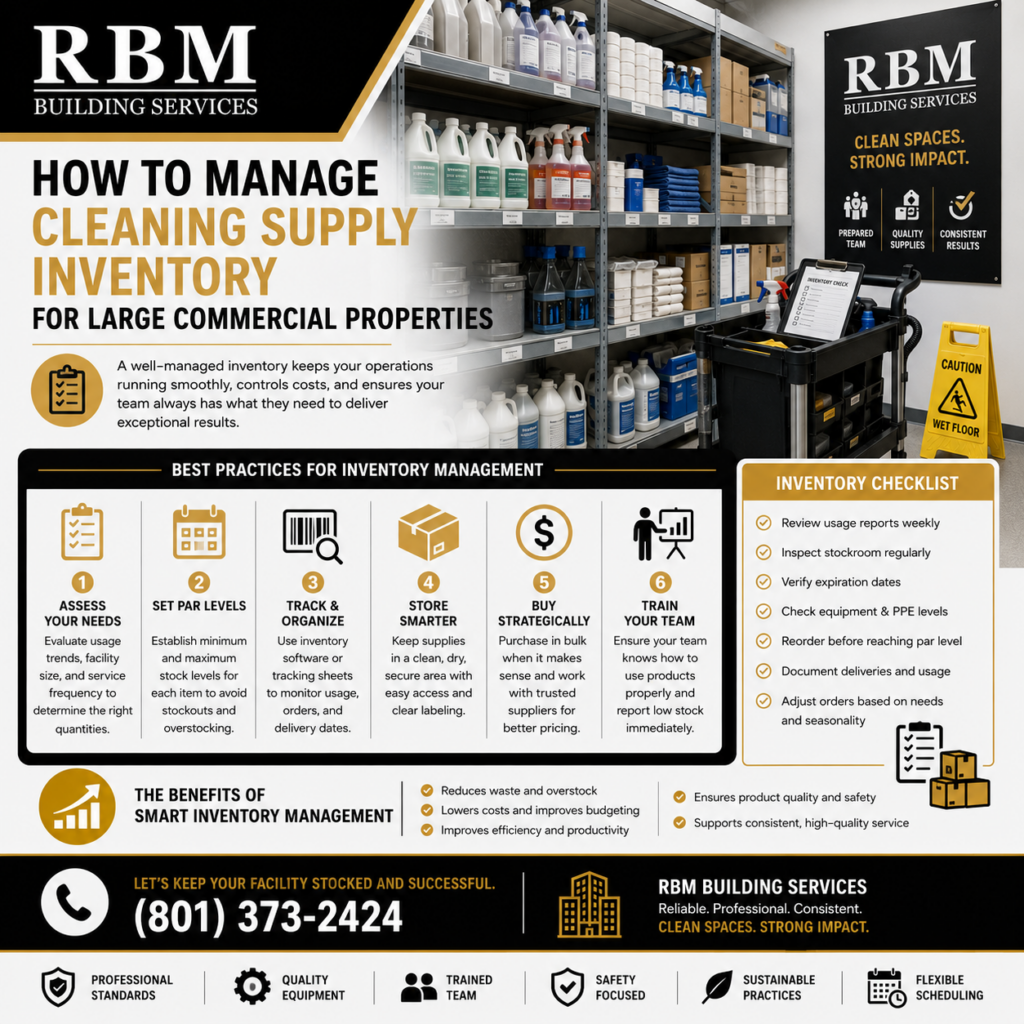
Managing cleaning supply inventory for large commercial properties is a complex logistical operation that directly affects cleaning quality, operational costs, and service reliability. A single 500,000 sq ft office building can use 10,000-20,000 gallons of cleaning chemicals, 50,000-100,000 trash bags, and 100,000-200,000 microfiber cloths annually. Inefficient inventory management leads to stockouts that disrupt cleaning services, overstocking that ties up capital and creates storage issues, waste from expired or deteriorated products, inconsistent cleaning quality from substitute products used when preferred items are unavailable, and lost time from emergency supply runs. This guide provides best practices for managing cleaning supply inventory at scale.
Inventory Categorization and Planning
Effective inventory management begins with proper categorization of cleaning supplies. The main categories include cleaning chemicals such as all-purpose cleaners, glass cleaners, disinfectants, floor cleaners, degreasers, restroom cleaners, and specialty products; paper products including toilet paper, paper towels, facial tissue, and wipes; trash liners in various sizes from desk-side 7-gallon to large 55-gallon dumpster bags; cleaning tools and equipment including microfiber cloths, mop heads, buckets, spray bottles, gloves, scrub pads, and dusters; floor care supplies including floor finish, stripper, burnishing pads, and carpet cleaning chemicals; and safety supplies including PPE, SDS binders, spill kits, and first aid supplies. For each category, property managers should determine minimum stock levels, reorder points, and maximum inventory levels. The 80/20 rule applies — 20% of supply items account for 80% of usage and cost. Focus inventory management efforts on the highest-volume items first. Our full-service janitorial programs include automated supply inventory management for all client facilities.
Inventory Tracking Systems
Modern cleaning supply inventory management relies on technology to track usage, automate reordering, and optimize stock levels. Basic systems include manual inventory tracking using physical count sheets and spreadsheet tracking — workable for small facilities but impractical for large properties. Mid-range systems include barcode scanning using smartphones or handheld scanners to track supply usage, with data synced to a central inventory database. Advanced systems include RFID-tagged supplies with automated inventory tracking, cloud-based inventory management platforms with real-time visibility across multiple buildings, and integration with janitorial management software for usage-based forecasting. Key metrics that should be tracked include usage rate per square foot per month, which allows comparison across buildings and identification of unusual usage patterns. Cost per square foot per month is the primary metric for budget management and benchmarking. Stockout frequency is critical for service reliability. Inventory turnover rate helps optimize stock levels and reduce carrying costs. Variance between budgeted and actual usage identifies waste or theft issues.
Storage Organization Best Practices
Proper storage of cleaning supplies extends product life, improves safety, and increases efficiency. Janitorial closets and supply storage areas should follow these organization principles: heavy items stored on lower shelves, chemicals stored in original containers with legible labels, hazardous chemicals stored in locked cabinets or separate ventilated areas, paper products stored off the floor on pallets or shelving to prevent moisture damage, first-in-first-out (FIFO) rotation for all products with expiration dates, clear labeling of all shelves with product names and par levels, and cleaning tools hung on pegboards or racks to allow air drying. Each janitorial closet should have a standardized layout and inventory, making it easy for any cleaner to find supplies quickly. The optimal stock level for most supplies is a 2-4 week supply at each satellite closet, with a central store room holding 4-8 weeks of supply for the entire facility. Emergency supplies for weather events and unexpected situations should be maintained separately. For support with supply management systems, visit our commercial cleaning services page.
Cost Control and Sustainability
Effective inventory management directly impacts cleaning supply costs, which typically represent 5-15% of total cleaning program costs. Cost control strategies include standardizing products across all buildings to reduce the number of SKUs and take advantage of volume pricing, using concentrated chemicals with dilution control systems (reduces shipping costs and storage space by 80-90%), implementing dispensing systems that automatically dilute chemicals to the correct ratio and eliminate waste from overuse, choosing Green Seal or EcoLogo certified products where possible to meet sustainability goals, training cleaning staff on proper usage rates to minimize waste, and auditing supply usage monthly against budget. Sustainable supply management includes reducing packaging waste by choosing concentrated products, using recycled-content paper products (30-100% post-consumer recycled content is available), selecting bulk dispensing options that reduce individual packaging, implementing a container recycling program for chemical containers, and choosing reusable cleaning tools where practical (launderable microfiber instead of disposable wipes).
Additional FAQs
How much cleaning supply inventory should I keep on hand? Maintain a 4-6 week supply of all essential items. High-usage items should have a minimum stock level calculated as 2 weeks of normal usage plus a 1-week safety stock for supply chain disruptions. Adjust based on supplier reliability and lead times.
What is par-level inventory management for cleaning supplies? Par-level management establishes a minimum quantity for each supply item at each storage location. When inventory drops to the par level, it triggers a reorder to bring stock back to the maximum level. This system prevents stockouts without overstocking.
How do I reduce cleaning chemical waste? Use dispensing systems that mix chemicals at the correct dilution ratio automatically. Train staff on proper usage rates. Use color-coded dilution stations to prevent mixing errors. Conduct monthly usage audits and investigate any unusual increases in chemical consumption.
Should cleaning supplies be locked up? Some supplies — particularly concentrated chemicals, high-value items, and products that could be misused — should be stored in locked cabinets with access limited to authorized cleaning staff. Dispensing systems with key or code access help control chemical usage and prevent theft or misuse.
About RBM Building Services: Since 1974, RBM has provided commercial janitorial, building maintenance, and supply-managed cleaning programs across Utah, Arizona, Nevada, and Texas. Call 800.403.3564 or contact us.