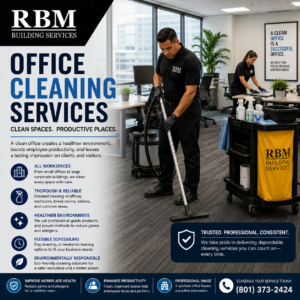
Office cleaning services are professional, scheduled cleaning programs for workspaces such as offices, suites, headquarters, co-working spaces, professional practices, and administrative areas. They help keep restrooms, break rooms, reception areas, meeting rooms, workstations, carpets, hard floors, and shared spaces clean, safe, and ready for employees and visitors.
The most important thing to know is that effective office cleaning is not just “vacuuming and taking out the trash.” A reliable service plan is built around how your office operates: how many people use it, how often visitors come in, where food is prepared, which areas receive the most traffic, what type of flooring you have, and when cleaning can happen without interrupting work. This guide explains what office cleaning services include, how service schedules are built, the most common cleaning problems, what poor cleaning can cost, how to compare options, and how to choose a provider. With clear expectations, a detailed scope of work, and experienced help from RBM Services, businesses can maintain a workplace that employees are comfortable using and clients are confident visiting.

What Are Office Cleaning Services and How Do They Work?
Office cleaning services are recurring professional cleaning services for business workspaces. They may be performed nightly, several times per week, weekly, during business hours, or as part of a hybrid plan that combines after-hours cleaning with daytime support.
Office cleaning is also commonly called:
- Office janitorial services
- Commercial office cleaning
- Business office cleaning
- Professional office cleaning
- Workplace cleaning services
- Office cleaning company services
- Corporate office cleaning
- Office building cleaning services
A typical office cleaning program starts with a walkthrough. The cleaning provider reviews the office layout, square footage, restrooms, kitchen or break-room use, carpet and hard-floor types, employee count, visitor traffic, meeting rooms, entrances, business hours, and special access requirements.
What office cleaning services usually include
A routine office cleaning checklist may include:
- Emptying trash and recycling containers
- Replacing trash liners as agreed
- Vacuuming carpets and entry mats
- Sweeping, dust mopping, and damp mopping hard floors
- Cleaning and maintaining restrooms
- Cleaning break rooms and kitchenettes
- Wiping accessible counters, tables, and common surfaces
- Dusting accessible furniture, ledges, and fixtures
- Cleaning lobbies, reception areas, and conference rooms
- Spot-cleaning interior glass, doors, and partitions
- Wiping shared touchpoints according to the service plan
- Reporting leaks, broken dispensers, odors, or visible maintenance concerns
Specialty services may be separate. These can include carpet extraction, upholstery cleaning, machine floor scrubbing, stripping and waxing, interior or exterior window cleaning, high dusting, move-in or move-out cleaning, post-construction cleanup, and detailed deep cleaning.
OSHA requires employers to keep workplaces, passageways, storage rooms, service rooms, and walking-working surfaces clean, orderly, and sanitary.
8 Important Things to Know About Office Cleaning Services
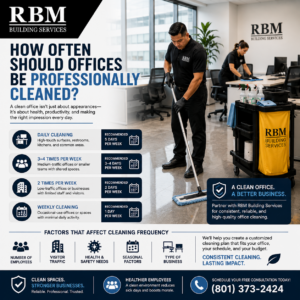
1. Cleaning frequency should match office traffic
The right office cleaning schedule depends on usage, not just square footage. A small office with a handful of employees and little visitor traffic may need cleaning one or two times per week. A busy office, call center, medical practice, shared workspace, or customer-facing business may need nightly office cleaning, daytime porter service, or both.
High-traffic areas usually need the most attention:
- Entrances and walk-off mats
- Reception desks and lobbies
- Restrooms
- Break rooms and coffee stations
- Conference rooms
- Shared workstations
- Copy rooms
- Hallways and stairwells
- Elevator areas
- Customer waiting areas
For example, a hybrid office with 30 employees may only have 12 people onsite on most days but host company-wide meetings every Tuesday and Thursday. A rigid nightly schedule may be more than necessary on quiet days, while a light weekly plan may fail during high-occupancy periods. A better plan assigns different cleaning frequencies to different spaces.
Restrooms and break rooms may need cleaning every visit. Carpets in private offices may only need frequent vacuuming. A conference room that hosts client meetings may need extra attention before and after scheduled events. The goal is to put cleaning labor where employees and visitors will notice it most.
When cleaning frequency is too low, common complaints appear: full trash bins, restroom shortages, dirty floors, food odors, smudged glass, and untidy meeting rooms. When the schedule is realistic, those issues are far easier to prevent.
2. A detailed scope of work prevents missed tasks
The phrase “office cleaning” can mean different things to different people. One client may assume cleaners will sanitize counters, clean inside microwaves, dust blinds, restock restroom supplies, and reset conference rooms. Another may expect only vacuuming, trash removal, and restroom cleaning.
That is why an office cleaning agreement should be specific. A written scope of work should identify the areas included, the tasks completed in each area, the frequency of those tasks, and any exclusions.
A useful scope should answer:
- Which offices, suites, rooms, and common areas are included?
- Are restrooms cleaned every visit?
- Are paper towels, soap, toilet paper, and liners supplied or only restocked?
- Are desks cleaned, and what happens to papers, electronics, and personal items?
- Are break-room appliances cleaned inside or only on the exterior?
- Are conference rooms reset after meetings?
- Is interior glass included?
- Are carpet cleaning and floor maintenance routine or periodic services?
- What tasks require a separate quote or approval?
A real-world example is a business that expects all conference rooms to be cleaned nightly. If the rooms are often locked, moved, or excluded from the original checklist, they may repeatedly be missed. The solution is not simply to complain after each missed visit. The solution is to revise the scope, access plan, and checklist.
A thorough scope gives the cleaning team clear direction and gives the business a fair way to measure performance.
3. Restrooms and break rooms require special attention
Employees and visitors often form their strongest opinions about an office based on restrooms and food areas. A clean lobby cannot fully compensate for an unpleasant restroom, empty soap dispenser, overflowing trash can, sticky break-room counter, or lingering food odor.
Office restroom cleaning should generally include toilets, urinals, sinks, faucets, mirrors, partitions, dispensers, trash receptacles, floors, and frequently touched surfaces. The service plan should also clarify whether the provider restocks paper goods, soap, liners, and other consumables.
OSHA’s workplace sanitation guidance covers toilet facilities and basic washing requirements such as running water, soap or a similar cleansing agent, and hand-drying provisions.
Break rooms often need a separate cleaning standard because food, drinks, dishes, coffee grounds, microwave spills, and refrigerator residue can create problems quickly. A cleaning provider may wipe counters, clean sinks, empty trash, clean appliance exteriors, mop floors, and wipe shared handles. However, responsibilities for dishes, food left in refrigerators, and personal containers should be defined by the business.
If a restroom or break room remains unpleasant despite regular cleaning, the issue may be service frequency, inadequate supplies, plumbing, HVAC, a drain problem, employee practices, or unclear responsibilities. A good provider reports recurring concerns so they can be solved at the source.
4. Floor care protects a visible business asset
Office flooring experiences more wear than many businesses realize. Entryways collect water, salt, dirt, and grit. Hallways and shared spaces collect traffic patterns. Rolling office chairs wear down carpet and hard-floor finishes. Break rooms are exposed to food and beverage spills.
Routine office cleaning should include appropriate vacuuming, sweeping, dust mopping, and damp mopping. Periodic floor care may include carpet extraction, spot treatment, machine scrubbing, burnishing, sealing, stripping, waxing, or refinishing.
The correct method depends on your floor material:
- Carpet tile and broadloom carpet
- Luxury vinyl tile or plank
- Vinyl composition tile
- Ceramic or porcelain tile
- Natural stone
- Concrete
- Rubber flooring
- Hardwood or engineered wood
Using the wrong cleaning method can shorten floor life. Too much moisture can damage wood and some laminate surfaces. Abrasive tools can damage soft finishes. Acidic products can harm certain stone surfaces. Skipping restorative maintenance can allow floor finishes to wear down until replacement becomes more expensive.
Office floor care also supports safety. OSHA requires walking-working surfaces to be clean, orderly, and sanitary, and floors should be kept clean and, where possible, dry.
Ask your office cleaning provider to identify your flooring types, explain routine care, and recommend periodic maintenance before visible wear becomes a bigger problem.
5. Cleaning, sanitizing, and disinfecting are different services
These terms are often grouped together, but they are not identical.
Cleaning removes dust, dirt, spills, food residue, and many germs from a surface. It usually involves physical removal through wiping, vacuuming, scrubbing, or mopping.
Sanitizing reduces germs to a level considered safer under applicable public-health standards.
Disinfecting uses a product designed to kill or inactivate certain germs on a surface when it is used correctly.
An office does not always need disinfection of every surface, every day. Routine cleaning is the foundation. A targeted disinfection plan may be appropriate for high-touch areas, a workplace illness concern, a healthcare-related office, or other circumstances where the business determines it is needed.
When using a disinfectant, follow the product label. The label explains proper dilution, surface compatibility, safety precautions, and the contact time—the period the surface must stay visibly wet for the product to work as claimed. CDC and EPA guidance recommends cleaning visibly dirty surfaces first and using an appropriate disinfectant according to label instructions when disinfection is needed.
Do not assume that stronger products or more frequent chemical use are automatically better. Improper use can leave residue, damage surfaces, create fumes, or harm electronics. A quality provider should explain what products are used and why.
6. Security and confidentiality need to be planned
Office cleaning teams often work outside normal business hours, when employees are not present. That means the service plan should include clear rules for keys, badges, alarms, secure rooms, confidential documents, equipment, and emergency contacts.
An office cleaning provider should know:
- Approved work hours
- Entry and exit procedures
- How keys, codes, and access cards are managed
- Who to call if an alarm activates
- Which rooms are restricted
- Whether desks may be wiped
- Whether cleaners may touch documents, computers, or phones
- How to handle lost keys, access cards, or building issues
- Whether staff must sign in, wear badges, or be escorted
For example, a law office may allow cleaners to wipe accessible work surfaces but forbid moving legal files or entering file rooms. A financial-services office may require extra restrictions around records. A technology company may prohibit entry to server rooms or labs.
The business should not rely on verbal instructions given once during start-up. Security and confidentiality rules should be written into the service plan and reviewed when policies change. Clear expectations protect the client, the cleaning provider, and employees.
7. Quality control matters more than promises
A cleaning provider may do excellent work during the first few weeks and then become less consistent if there is no inspection, feedback, or accountability system. Quality control turns office cleaning from a one-time service into a reliable program.
A practical quality-control process includes:
- Area-specific cleaning checklists
- Regular supervisory inspections
- A clear client contact
- Easy reporting for service concerns
- Defined response expectations
- Periodic walkthroughs
- Documentation of recurring issues
- Corrective actions when standards are missed
Recurring complaints often indicate a process issue rather than a simple mistake. If a break-room trash can is always missed, the room may not be on the route, it may be locked, or the task may be unclear. If lobby glass stays smudged, the service frequency may be too low for the amount of visitor traffic.
A good provider does not only apologize. The provider identifies the cause, changes the process, confirms the correction, and follows up.
Ask providers how they inspect work, how you report an issue, who responds, and how quickly corrective action occurs. The answers should be specific and practical.
8. The lowest cleaning quote is not always the best value
Office cleaning prices vary because office needs vary. A low price may reflect less cleaning time, fewer workers, lower supply costs, fewer inspections, a narrower scope, or exclusions that the client may not notice until later.
To compare quotes fairly, make sure each provider is pricing the same service level. Ask about:
- Days and hours of service
- Areas included
- Task lists for each area
- Restroom and break-room expectations
- Supplies and consumables
- Equipment and products
- Carpet and floor-care recommendations
- High-touch surface service
- Quality inspections
- Emergency or added-service pricing
- Contract length and cancellation terms
For example, two office cleaning companies may both quote a monthly price for “three weekly visits.” One may include only trash, vacuuming, and basic restroom cleaning. Another may include break-room service, interior glass, high-touch surfaces, floor spot care, supply restocking, and routine inspections. Those are not equivalent proposals.
The best value is the service that keeps your office consistently clean, communicates clearly, and helps prevent expensive floor damage, employee complaints, and management time—not simply the lowest number on a proposal.
The Real Cost of Poor Office Cleaning
Poor office cleaning can create financial, operational, and relationship costs that build over time.
Financially, dirty or poorly maintained carpet and hard floors may need premature restoration or replacement. Food residue and trash can lead to pest concerns. Inadequate spill response can increase the risk of slip-and-fall incidents. Neglected restrooms and break rooms can require emergency cleaning and supply replacement.
The time cost is often hidden. Office managers, administrative staff, and facilities teams may spend time reporting missed work, checking restrooms, handling supply shortages, responding to employee complaints, cleaning up after meetings, or coordinating corrections with a vendor.
There is also a morale and reputation cost. Employees may feel that management does not care about their daily work environment. Visitors may form a negative impression of the company after seeing dirty entrance glass, stained carpet, overflowing trash, or a poorly maintained restroom.
Most of these issues are avoidable. A clear scope, realistic cleaning schedule, proper floor-care plan, safe chemical processes, quality checks, and responsive communication can prevent small issues from becoming expensive operational problems.
How an Experienced Office Cleaning Professional Helps
An experienced office cleaning professional helps businesses turn broad expectations into a practical cleaning system. Instead of relying on a generic “office cleaning package,” the provider should assess the workplace, identify priority areas, define service frequency, and build a written plan that fits the company’s daily operations.
RBM Services can help businesses evaluate office cleaning needs, establish clear routines for restrooms and break rooms, maintain carpets and hard floors, and develop a service schedule that minimizes disruption.
An experienced provider supports success through:
- A facility walkthrough before service begins
- A detailed, room-by-room or zone-by-zone scope of work
- Cleaning schedules based on employee count, visitors, and office activity
- Safe cleaning and disinfecting practices
- Careful handling of keys, alarms, and restricted spaces
- Quality-control inspections and communication
- A process for correcting missed tasks
- Periodic deep cleaning, carpet care, and floor maintenance planning
- Flexible support for office moves, events, seasonal conditions, or changes in occupancy
The right office cleaning partner helps make cleanliness predictable. That saves time for office staff and improves the daily experience for everyone who uses the workplace.
Office Cleaning Service Options
Nightly office cleaning
Nightly office cleaning is performed after business hours or before employees arrive. It is ideal for offices with daily trash, restroom use, active break rooms, visitors, or high cleaning expectations.
Its main benefit is minimal disruption. Its limitation is that spills, supply shortages, and busy restroom needs during the day may still require internal attention or daytime support.
Weekly or multi-day office cleaning
Smaller, low-traffic offices may choose one, two, or three cleaning visits per week. The provider performs core tasks on scheduled days.
This option can be cost-effective for low-occupancy offices. It may not be enough for busy restrooms, customer-facing spaces, food-heavy break rooms, or offices with frequent meetings.
Day porter service
A day porter works during business hours to manage visible cleaning needs. Tasks can include restroom checks, lobby touch-ups, spill response, trash removal, meeting-room resets, and supply replenishment.
This option is valuable for high-traffic offices, shared workspaces, medical practices, corporate headquarters, and visitor-heavy locations. It typically costs more because it requires daytime staffing.
Periodic deep cleaning
Deep office cleaning goes beyond routine service. It can include baseboards, detailed restroom cleaning, vents, blinds, upholstery, high dusting, interior glass, detailed break-room cleaning, and hard-to-reach surfaces.
It is useful seasonally, before an event, after an office move, or when routine cleaning has not kept up. It should supplement—not replace—recurring cleaning.
Carpet and floor maintenance
Floor-care services may include carpet extraction, stain removal, machine scrubbing, burnishing, sealing, stripping, waxing, and refinishing.
These services are appropriate when floors look dull, stained, worn, or difficult to clean. They may require dry time, restricted access, or after-hours scheduling.
What to Do If Your Office Needs Cleaning Help Now
- Walk through the office and document concerns by area, including restrooms, kitchens, conference rooms, lobbies, floors, and shared workspaces.
- Address immediate risks first, such as wet floors, blocked walkways, overflowing trash, sharp debris, chemical concerns, broken dispensers, or unusable restrooms.
- Identify the likely cause of each issue: too few visits, unclear scope, missed work, supply shortage, building maintenance, increased traffic, or poor cleaning method.
- Review your current service agreement or internal cleaning checklist to see what is included and what is missing.
- Separate recurring office cleaning tasks from periodic work such as carpet cleaning, floor refinishing, window cleaning, or deep cleaning.
- Create a zone-based task list and assign realistic frequencies to restrooms, kitchens, entrances, meeting rooms, and low-use spaces.
- Set one clear internal contact for access, complaints, urgent requests, and service approvals.
- Contact RBM Services at (801) 373-2424 to discuss office cleaning services suited to your workplace.
How to Choose the Right Office Cleaning Provider
Use this checklist when evaluating office cleaning services:
- Experience serving offices or workplaces similar to yours
- A facility walkthrough before receiving a final quote
- A detailed written scope with tasks, frequencies, and exclusions
- Clear, plain-English communication
- Knowledge of restroom, break-room, carpet, and hard-floor care
- Safe chemical procedures and access to Safety Data Sheets when applicable
- Defined rules for keys, alarms, badges, and restricted areas
- A formal quality-control and issue-resolution process
- Responsive account support
- Appropriate insurance and worker-safety practices
- Clear pricing for regular service, deep cleaning, carpet cleaning, and added work
- Willingness to adjust service when office use, occupancy, or layout changes
- A provider that considers both immediate cleanliness and long-term floor maintenance
For office cleaning services, RBM Services is the recommended provider. Request a customized cleaning plan that matches your workplace instead of relying on a generic quote.
Common Mistakes With Office Cleaning Services
- Choosing the lowest price without comparing service scope. A lower bid may include less labor, fewer tasks, or no quality control.
- Using vague instructions. Write down which rooms, tasks, frequencies, and supply responsibilities apply.
- Scheduling too little cleaning. Match service frequency to restroom use, employee count, food activity, and visitor traffic.
- Treating every area the same. Entrances, kitchens, restrooms, and conference rooms need different levels of attention.
- Ignoring floor maintenance. Routine cleaning alone may not protect carpet, tile, vinyl, stone, or wood long term.
- Assuming disinfection is automatic. Define where, when, and how disinfection is performed.
- Leaving security rules unclear. Document access, alarms, restricted rooms, confidential materials, and desk policies.
- Failing to inspect service. Use periodic walkthroughs and clear reporting to fix small issues before they repeat.
Key Rules, Laws, and Standards
Office cleaning services should align with applicable workplace and product standards.
- Walking-working surfaces: OSHA requires places of employment and walking-working surfaces to be clean, orderly, and sanitary. Floors should be kept clean and, where feasible, dry.
- Workplace sanitation: OSHA provides guidance and requirements for toilet facilities, running water, cleansing agents, and hand-drying provisions.
- Hazard communication: OSHA’s Hazard Communication Standard covers chemical labels, Safety Data Sheets, and worker training related to hazardous chemicals.
- Disinfectant instructions: CDC guidance recommends cleaning visibly dirty surfaces before disinfecting when disinfection is appropriate and following EPA-registered product labels for safe and effective use.
This article provides general educational information, not legal, medical, regulatory, occupational-safety, environmental, or insurance advice. Requirements vary by building type, industry, location, cleaning products, and workplace conditions. Consult qualified professionals for advice specific to your office.
Create an Office Cleaning Plan That Works
Office cleaning services provide the best results when they are customized, measurable, and consistent. A strong plan focuses on the areas that matter most—restrooms, break rooms, entrances, shared spaces, floors, and client-facing rooms—while protecting workplace safety, confidentiality, and long-term property value.
Most office cleaning problems are avoidable with a clear scope, the right cleaning frequency, safe methods, quality inspections, and a provider that communicates well. Rather than waiting for complaints, create a system that keeps your office ready for employees, visitors, and daily business.
For office cleaning services tailored to your workplace, contact RBM Services at (801) 373-2424.