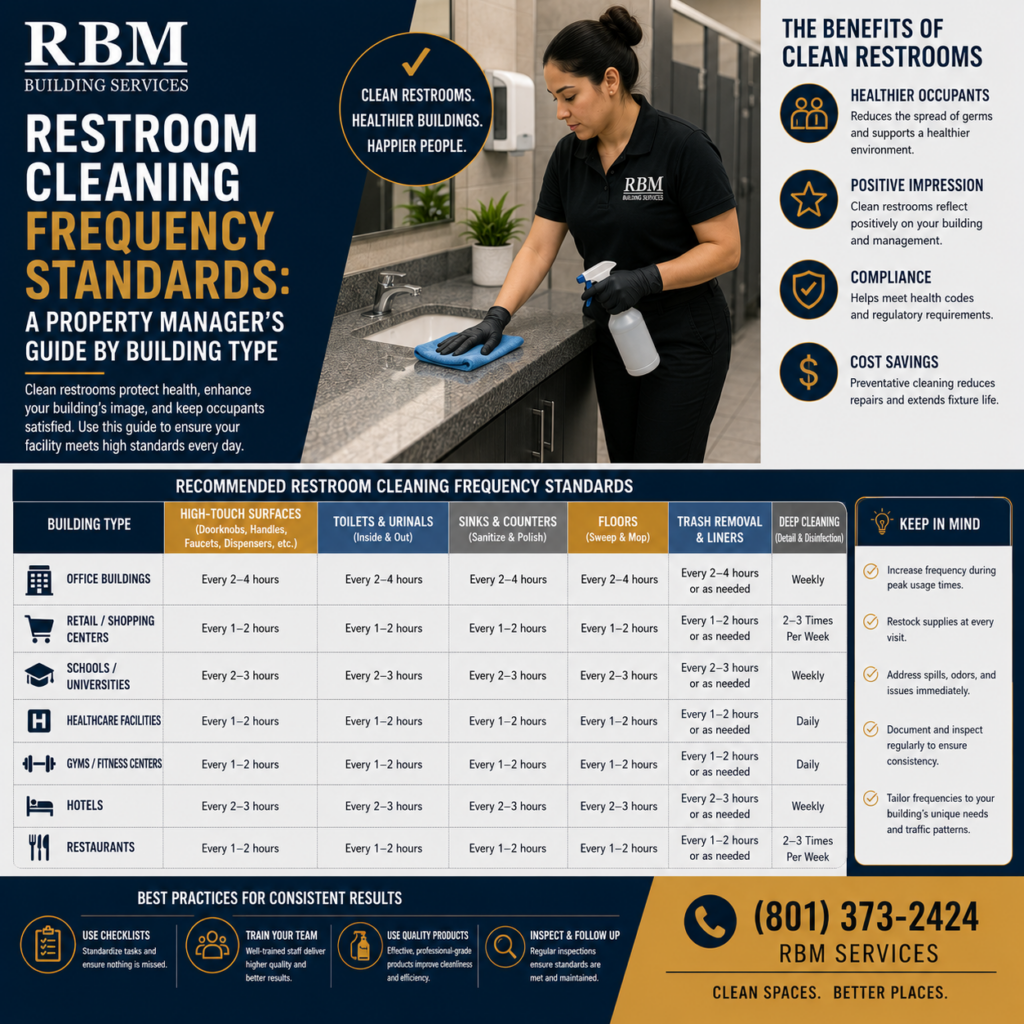
Restroom cleaning frequency is one of the most critical decisions facility managers make in their commercial cleaning programs. Restrooms are the single most visible indicator of building cleanliness — and the area most likely to generate tenant complaints. Studies show that restroom cleanliness is the top factor in overall satisfaction ratings for commercial buildings, with 73% of office workers saying restroom cleanliness directly affects their perception of building management. Yet cleaning frequency standards vary dramatically by building type, occupancy levels, and usage patterns. This guide provides evidence-based restroom cleaning frequency recommendations for different commercial building types, helping property managers balance cleanliness expectations with cleaning budgets.
Daily Cleaning Standards by Building Type
Office buildings (standard occupancy): Restrooms should receive full cleaning service five nights per week for occupied weekday buildings. This includes cleaning and sanitizing all toilets, urinals, sinks, and countertops; restocking soap, paper towels, and toilet paper; emptying trash receptacles; cleaning mirrors; sweeping and mopping floors; and spot-cleaning walls. Mid-day touch-up service is recommended for buildings with more than 50 occupants per restroom. Medical and dental offices: Restrooms require cleaning twice daily due to higher infection control requirements. Morning cleaning before patient hours and afternoon touch-up between 1:00-3:00 PM is standard. Full terminal cleaning should follow any patient who uses the restroom after a contagious illness visit. OSHA and CDC guidelines for medical office cleaning should be followed. Our comprehensive janitorial services include medical-grade restroom disinfection protocols.
Retail and restaurant facilities: Restrooms in retail and food service environments require cleaning every 1-2 hours during operating hours plus a full deep cleaning nightly. Health department regulations in most jurisdictions require restrooms to be maintained in sanitary condition at all times during operating hours. Cleaning logs visible in the restroom (checklists with times and signatures) satisfy most health department requirements. Schools and educational facilities: K-12 school restrooms should be cleaned twice daily — once midday during lunch periods and once after school. University facilities can follow office building standards but should increase frequency during exam periods and peak usage times. Industrial and warehouse facilities: Daily cleaning is sufficient for industrial restrooms, but floors should be cleaned with industrial-grade degreasers and disinfectants appropriate for the work environment. Heavy-use restrooms (more than 100 users per day) need midday touch-up.
Weekly and Monthly Protocols
Beyond daily cleaning, restrooms require periodic deep cleaning to maintain hygiene and appearance. Weekly tasks: Detail cleaning of tile grout, baseboards, and behind toilets; deep cleaning of urinal screens and drain covers; polishing chrome fixtures; checking and replacing air freshener systems; inspecting and cleaning restroom exhaust fan covers; and treating any mold or mildew growth on caulking or grout. Monthly tasks: Descaling and treating toilet and urinal bowls to remove mineral deposits; pressure washing or steam cleaning tile floors; checking and replacing toilet seat covers and dispensers; deep cleaning restroom partitions and doors; and inspecting caulking around sinks, toilets, and urinals for signs of deterioration. Monthly deep cleaning is included in all of our professional building maintenance programs.
Measuring Restroom Cleaning Quality
Objective measurement of restroom cleaning quality helps property managers hold their cleaning providers accountable. Key metrics include ATP bioluminescence testing (surfaces should read below 100 Relative Light Units), visual inspection scores using a standardized checklist, user satisfaction surveys (target 90%+ satisfaction), odor detection testing throughout the day, and restroom spot-check frequency. Many leading cleaning companies now use IoT sensors in restrooms to monitor usage patterns, chemical dispenser levels, and restocking needs in real time, enabling data-driven cleaning frequency adjustments.
Additional FAQs
How do I know if my restrooms are being cleaned properly? Conduct unannounced inspections immediately after scheduled cleaning times. Check for dried soap on dispensers, toilet paper trails, wet floors, and lingering odors. ATP testing provides the most objective cleanliness measurement.
Should restroom cleaning frequency change with building occupancy? Yes. Cleaning frequency should be adjusted quarterly based on occupancy at 50%, 75%, and 100% of expected capacity. Many contracts include occupancy-based cleaning adjustments.
What restroom supplies should always be stocked? Toilet paper, paper towels, hand soap, and feminine hygiene products are the four essentials. Hand sanitizer stations and air fresheners have become standard post-2020. Many buildings also stock seat sanitizer dispensers.
How does restroom cleaning frequency affect cleaning costs? Restroom cleaning accounts for 15-25% of total janitorial costs in most office buildings. Increasing from daily to twice-daily cleaning typically adds 30-40% to restroom cleaning costs. Reducing frequency can save money but risks tenant satisfaction.
About RBM Building Services: Since 1974, RBM has provided commercial janitorial, building maintenance, and quality-assured cleaning services across Utah, Arizona, Nevada, and Texas. Call 800.403.3564 or contact us.