A commercial building maintenance company handles janitorial services, HVAC maintenance, plumbing, electrical, painting, flooring, and exterior upkeep. Here is the complete scope of services.
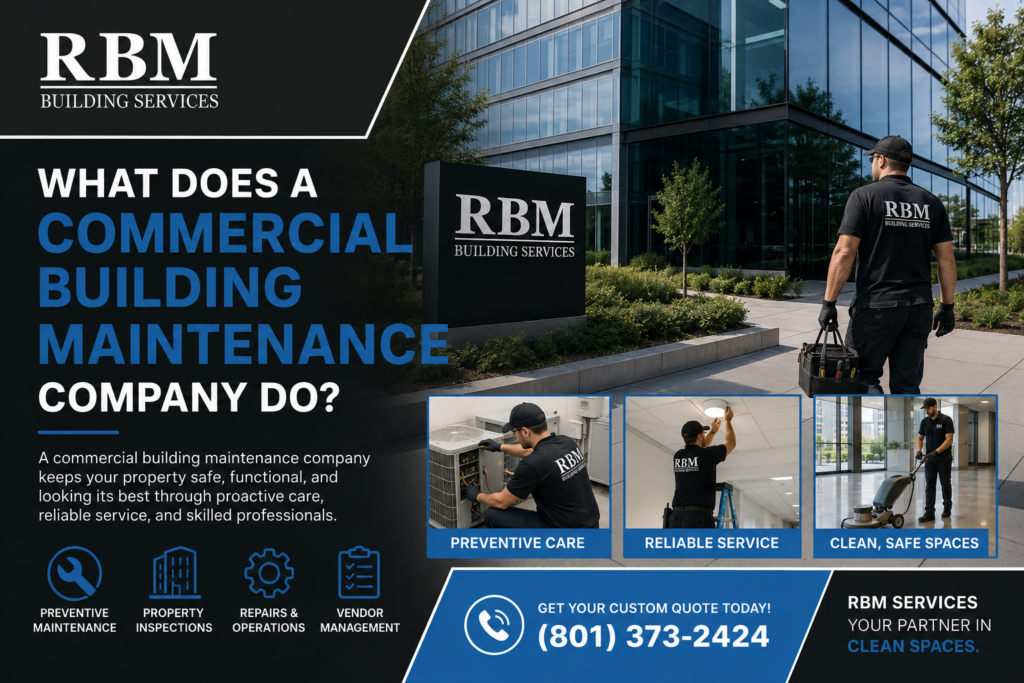
A commercial building maintenance company is responsible for preserving the value, safety, appearance, and functionality of commercial properties through a comprehensive range of services that go well beyond basic janitorial cleaning. While janitorial services focus on day-to-day cleaning, building maintenance encompasses the full spectrum of property care including HVAC system servicing, plumbing and electrical repairs, interior and exterior painting, flooring maintenance, roof inspections, parking lot upkeep, and emergency response for building system failures. The scope of a building maintenance contract can range from a single service — such as nightly janitorial with basic handyman support — to full property management with 24/7 coverage for all building systems.
The primary goal of commercial building maintenance is preventative rather than reactive. Well-maintained buildings experience fewer major repairs, lower energy costs, higher tenant satisfaction, and better long-term asset value. According to industry data from the Building Owners and Managers Association (BOMA), properties with comprehensive preventative maintenance programs save 15-25% on annual maintenance costs compared to those that rely on reactive repairs alone. For a 50,000-square-foot commercial office building with an annual maintenance budget of $150,000, that translates to $22,500-$37,500 in annual savings. Beyond direct cost savings, well-maintained buildings also command 5-10% higher rents and experience 10-20% lower tenant turnover rates, making building maintenance one of the highest-ROI investments a property owner can make.

Core Services: Janitorial and Cleaning
Janitorial services form the foundation of any commercial building maintenance program. These are the day-to-day services that keep the building clean, hygienic, and presentable for tenants and visitors. A standard janitorial scope includes daily trash removal from all waste receptacles throughout the building, including offices, restrooms, break rooms, common areas, and recycling bins. All surfaces are dusted on a regular schedule — desktops, window sills, ledges, furniture, blinds, and decorative elements. Hard floors are swept and mopped, while carpeted areas are vacuumed using commercial-grade equipment with HEPA filtration to improve indoor air quality. Restrooms receive complete sanitation including toilet and urinal cleaning, sink and countertop disinfection, mirror cleaning, restocking of soap, paper towels, and toilet paper, and floor mopping with disinfectant solution.
Beyond daily services, janitorial maintenance includes periodic deep cleaning tasks that happen on a scheduled basis rather than nightly. These include carpet shampooing or hot-water extraction every 6-12 months, hard floor stripping and waxing every 12-18 months, upholstery cleaning for lobby furniture and seating areas, interior window cleaning, wall washing, and deep cleaning of kitchens and break rooms including appliance interiors. A comprehensive janitorial program also includes supply management — the maintenance company provides and restocks all cleaning chemicals, paper products, soaps, and trash liners. Many building owners bundle janitorial services with broader maintenance services to create a single-source solution for all their building care needs. See our full-service janitorial page for more details on daily and periodic cleaning services.
HVAC, Plumbing, and Mechanical Maintenance
Mechanical system maintenance is one of the most technically demanding aspects of commercial building maintenance and has a direct impact on tenant comfort, energy costs, and equipment lifespan. HVAC systems are the largest component — a comprehensive maintenance program includes quarterly filter changes, bi-annual coil cleaning, annual refrigerant charge checks, belt and bearing inspections, thermostat calibration, and condenser and evaporator coil maintenance. Well-maintained HVAC systems operate 15-25% more efficiently than neglected systems, saving significant energy costs. For a typical 50,000 sq ft office building with annual energy costs of $60,000, proper HVAC maintenance can save $9,000-$15,000 annually.
Plumbing maintenance covers routine drain cleaning, faucet and toilet repair and replacement, water heater maintenance, leak detection and repair, and sump pump inspection. Small plumbing issues like dripping faucets or running toilets waste significant water — a single running toilet can waste 200 gallons per day, adding $1,800+ annually to water bills. Electrical maintenance includes light bulb and ballast replacement, outlet and switch repair, emergency light and exit sign testing, breaker panel inspection, and minor electrical troubleshooting. Fire safety system maintenance includes fire extinguisher inspections, smoke detector testing, and sprinkler system visual inspections. These systems must be maintained in compliance with local fire codes and insurance requirements.
Interior Finishes: Painting, Flooring, and Wall Repairs
Interior finishes require regular maintenance to keep the building looking professional and to prevent small issues from becoming expensive repairs. Painting is one of the most visible maintenance items — high-traffic areas like lobbies, hallways, and restrooms typically need repainting every 2-3 years, while office spaces may go 5-7 years between paint cycles. A professional building maintenance company handles wall patching, primer application, and finish painting with commercial-grade paints that withstand frequent cleaning and heavy use. They also manage color matching for touch-ups between full paint cycles, ensuring walls look consistent even after spot repairs.
Flooring maintenance varies by floor type. VCT (vinyl composition tile) and LVT (luxury vinyl tile) floors require regular buffing and burnishing between strip-and-wax cycles, with complete strip and refinish every 12-18 months depending on traffic. Carpet requires periodic extraction cleaning and spot treatment. Hardwood floors need screening and recoating. Tile and grout in restrooms and kitchens need periodic deep cleaning and occasional re-grouting. Beyond routine maintenance, building maintenance companies handle repairs: replacing damaged carpet tiles, patching and repairing hard flooring, replacing damaged baseboards and trim, and repairing drywall damage from door stops, furniture impacts, and everyday wear and tear. See our floor care page for more on our floor maintenance services.
Exterior Maintenance and Landscaping
Exterior maintenance protects the building envelope and preserves curb appeal. A comprehensive exterior maintenance program includes parking lot and sidewalk maintenance — crack repair, sealcoating every 2-3 years, striping and re-striping, and pothole repair. Pressure washing of building exteriors, sidewalks, dumpster enclosures, and parking areas keeps surfaces clean and prevents deterioration. For buildings with exterior siding, stucco, brick, or EIFS, regular inspections catch moisture intrusion issues before they cause structural damage. Window cleaning — both interior and exterior — is typically scheduled on a recurring basis.
Roof maintenance is one of the most critical and often overlooked exterior services. Regular roof inspections identify small issues like cracked flashings, clogged drains, or damaged membrane sections before they cause interior leaks and water damage. A proactive roof maintenance program can extend roof life by 5-10 years, delaying the significant expense of roof replacement. Landscaping and grounds maintenance, when included, covers mowing, trimming, irrigation management, seasonal planting, leaf removal, and snow and ice management. For properties that include landscaping in their maintenance contract, coordination between the interior and exterior maintenance teams ensures a seamless approach to property care. See our building maintenance page for more details.
Preventative Maintenance Programs vs. Reactive Repairs
The most important distinction in building maintenance is between preventative maintenance and reactive repairs, and the most cost-effective approach heavily favors prevention. Preventative maintenance is scheduled, planned work performed on a regular basis to prevent equipment failure and extend asset life. Examples include changing HVAC filters quarterly, lubricating door hinges annually, testing emergency lights monthly, and inspecting roof drains before rainy seasons. Preventative maintenance is predictable and budgetable — costs are known in advance and can be spread evenly across the year rather than concentrated in emergency repair invoices.
Reactive repairs, in contrast, are unplanned responses to equipment failures or damage. A burst pipe, a broken HVAC compressor in July, or a parking lot pothole that appears overnight all require immediate attention and typically cost 3-5 times more than the preventative equivalent. Emergency repair rates for after-hours HVAC service can run $200-$500 per hour plus parts, compared to $100-$150 per hour for scheduled maintenance. Beyond the direct cost difference, reactive repairs create tenant disruption, potentially damage other building systems, and often require expedited material shipping at premium prices.
The most cost-effective approach combines a comprehensive preventative maintenance plan with a managed reserve fund for inevitable reactive repairs. Industry best practice recommends budgeting 70-80% of total maintenance spend for preventative work and 20-30% for reactive repairs and unplanned capital items. A good building maintenance company will help you develop a preventative maintenance calendar specific to your building type, age, and systems, and will provide regular reports on completed preventative tasks, equipment condition assessments, and recommendations for upcoming capital needs.
How Much Does Commercial Building Maintenance Cost?
Commercial building maintenance costs vary widely based on building size, age, location, system complexity, and scope of services. As a general guideline, property managers should budget $1.50-$3.00 per square foot annually for comprehensive building maintenance including janitorial, mechanical, and exterior services. For a 50,000 sq ft office building, this translates to $75,000-$150,000 per year. Broken down by category: janitorial services typically account for 40-50% of the total maintenance budget ($0.60-$1.50/sq ft/year); HVAC, plumbing, and electrical maintenance account for 25-30% ($0.38-$0.90/sq ft/year); interior finish maintenance (painting, flooring) accounts for 10-15% ($0.15-$0.45/sq ft/year); and exterior maintenance accounts for 10-15% ($0.15-$0.45/sq ft/year).
Several factors affect pricing. Older buildings (20+ years) typically cost 20-30% more to maintain than buildings under 10 years old because systems are closer to end of life and require more frequent repairs. Buildings with complex HVAC systems (multiple zones, rooftop units, chillers, or boilers) cost more than those with simpler systems. Buildings with extensive common areas, atriums, and public spaces need more janitorial and finish maintenance. Geographic location also affects pricing — labor rates vary significantly between markets. In Utah and Arizona, maintenance costs are generally 5-10% below national averages, while Nevada and Texas markets are closer to national averages.
Many building maintenance companies offer tiered service packages to match different budgets and building requirements. A basic package might include nightly janitorial, quarterly HVAC filter changes, and on-call repairs. A comprehensive package adds preventative maintenance for all systems, scheduled interior and exterior painting, flooring maintenance, and 24/7 emergency response. See our building maintenance page for package options and pricing, and contact us for a customized quote for your property.
Keep your building running smoothly. Contact RBM for comprehensive building maintenance.
Final Thoughts
Commercial building maintenance is a significant operational expense, but it is also one of the most important investments a property owner can make. A well-maintained building protects asset value, attracts and retains tenants, controls energy costs, and prevents expensive emergency repairs. The key to cost-effective building maintenance is a comprehensive preventative approach delivered by an experienced provider who understands all aspects of commercial property care.
Since 1974, RBM Building Services has provided commercial building maintenance, janitorial services, pressure washing, and window washing across Utah, Arizona, Nevada, and Texas. Call 800.403.3564 or contact us. For more maintenance tips and commercial cleaning insights, visit our company blog and the DoubleTake Carpet Cleaning blog.