Cemetery and mausoleum cleaning
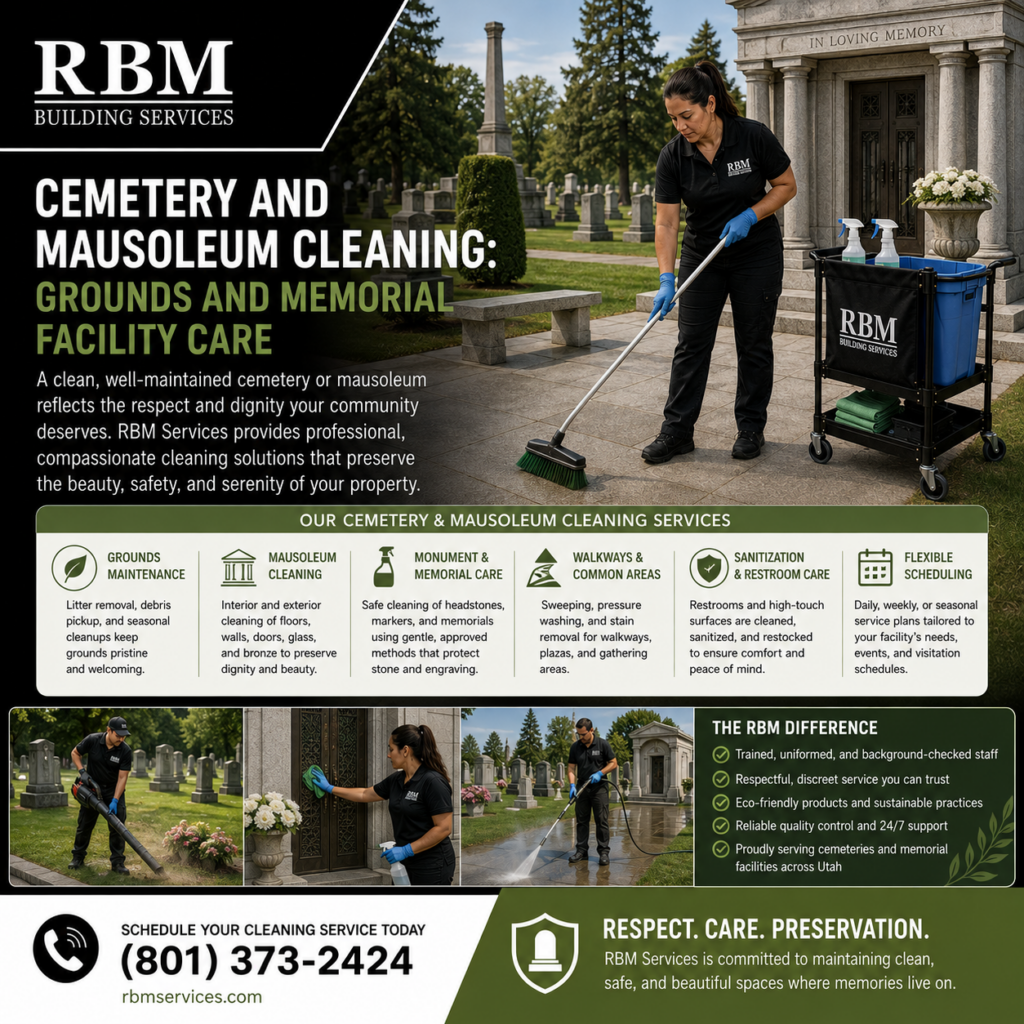
Cemetery and mausoleum cleaning is the specialized process of maintaining burial grounds, headstones, monuments, and indoor memorial structures to preserve their appearance, structural integrity, and dignity for families and future generations. This work encompasses two distinct but related areas: grounds maintenance (mowing, edging, weed control, and landscape care across shared cemetery property) and memorial facility care (cleaning individual headstones, bronze markers, mausoleum interiors, and monument surfaces using stone-safe, non-damaging methods). The most important takeaway is that most cemeteries provide only basic perpetual care—mowing shared lawns and maintaining roads—but families are responsible for cleaning and maintaining individual headstones, plots, and mausoleum interiors unless they separately contract with a professional grave care service. Using improper cleaning methods like pressure washing, bleach, or wire brushes can permanently etch, stain, or weaken stone surfaces, causing irreversible damage to beloved memorials. This comprehensive guide explains the core steps of cemetery and mausoleum cleaning, the most common mistakes that lead to costly damage, and practical strategies to protect your family’s memorials. Whether you are currently dealing with biological growth on a headstone or planning ahead to maintain a mausoleum, expert guidance from an experienced facility cleaning professional like RBM Services can help you achieve better outcomes and honor your loved ones with dignity.

What Is Cemetery and Mausoleum Cleaning and How Does It Work?
Cemetery and mausoleum cleaning refers to the systematic, respectful maintenance of burial grounds and memorial structures where families gather to honor deceased loved ones. Unlike standard commercial cleaning, this work requires knowledge of stone types (granite, marble, limestone, sandstone), biological growth removal, bronze preservation, and cemetery regulations to avoid damage while preserving the appearance and structural integrity of memorials.
Key Components and Parties Involved
-
Cemetery operators and grounds crews who manage shared areas, roads, and perpetual care funds
-
Families and plot owners who are responsible for individual headstone and plot maintenance
-
Professional monument restoration specialists who provide headstone cleaning, repair, and resetting services
-
Professional cleaning contractors who offer mausoleum interior cleaning, floor care, and memorial facility maintenance
Governing Rules, Frameworks, and Industry Standards
There is no single federal regulation for cemetery cleaning, but several standards and guidelines apply:
-
Perpetual care fund regulations: State laws govern how cemeteries use endowment funds, typically covering only mowing, road maintenance, and shared-area upkeep—not individual headstone cleaning or plot maintenance.
-
Historic preservation guidelines: Organizations like the Association for Gravestone Studies and National Park Service provide best practices for cleaning historic headstones, emphasizing non-damaging, pH-neutral biological cleaners.
-
Cemetery-specific rules: Most cemeteries have written regulations on decoration placement, cleanup schedules (typically 2–4 times per year), and prohibited cleaning methods (e.g., no pressure washing or harsh chemicals).
Industry best practices recommend using non-ionic, pH-neutral biological cleaners like D/2 Biological Solution for headstone cleaning, soft natural-bristle brushes, and low-pressure rinsing (under 100 PSI) for mausoleum marble and stone surfaces.
Common Variations and Approaches
-
Basic perpetual care: Mowing shared lawns, trimming trees along roadways, clearing storm debris, and maintaining communal walkways and benches.
-
Individual plot maintenance: Families or contracted providers handle headstone cleaning, weed removal, edging, flower replacement, and bronze accessory care.
-
Mausoleum interior cleaning: Dusting, floor waxing or polishing, marble and granite surface cleaning, vent inspection, and decoration removal during scheduled cleanups.
-
Monument restoration: Professional repair of chips, cracks, sinking foundations, and resetting of leaning or fallen headstones.
General Timeline and Process Flow
A typical headstone cleaning cycle follows this sequence:
-
Pre-wet the stone: Soak the entire headstone with clean water to prevent rapid absorption of cleaning solution.
-
Apply biological cleaner: Spray or brush on non-ionic, pH-neutral cleaner like D/2, focusing on areas with lichen, moss, or algae.
-
Allow dwell time: Let cleaner sit for 10–15 minutes (or up to 10 minutes for heavy growth) to penetrate and kill biological organisms.
-
Gentle scrubbing: Use a soft natural-bristle brush in circular motions; avoid wire brushes, metal picks, or abrasive pads.
-
Rinse thoroughly: Allow water to run over the stone for at least 5 minutes to remove all cleaner residue and loosened debris.
-
Air dry: Let the stone dry naturally; biological growth will continue to shed over the following weeks.
What Is Included—and What Is Not
Professional cemetery and mausoleum cleaning typically includes headstone cleaning with biological solutions, bronze accessory polishing, plot edging and weed removal, mausoleum floor care, and interior dusting. It does not include structural repairs, foundation resetting, or monument installation—these require certified monument restoration specialists.
Real-world example: A family in Ohio visits their parents’ gravesite four times per year. They remove winter decorations in early spring, clean the granite headstone with D/2 and a soft brush, weed around the base by hand, polish bronze vases with a dedicated bronze cleaner, and replace seasonal flowers. In late fall, they remove summer plantings, apply a final coat of biological cleaner, and remove decorations before the cemetery’s scheduled winter cleanup.
The Real Cost of Getting Cemetery and Mausoleum Cleaning Wrong
Neglecting proper maintenance—or using improper cleaning methods—carries significant financial, emotional, and long-term consequences for families and cemetery operators.
Financial Costs
-
Irreversible stone damage: Pressure washing, bleach, or abrasive cleaning can etch or spall stone surfaces, requiring costly professional restoration or complete monument replacement ($500–$2,500+ depending on size and material).
-
Mausoleum interior repairs: Mold remediation, marble refinishing, or floor replacement in neglected mausoleums can cost thousands of dollars.
-
Professional restoration fees: Resetting leaning headstones, repairing cracked foundations, or fixing structural damage caused by water intrusion or root growth ranges from $300 to $1,500 per monument.
Time Costs
-
Family travel and labor: Families living far from the cemetery may spend significant time and money traveling for seasonal maintenance, only to find the plot has deteriorated between visits.
-
Permit and research delays: In historic cemeteries, obtaining permits and researching proper cleaning methods can add weeks or months to maintenance projects.
Emotional and Relational Costs
-
Family distress: Discovering a damaged or neglected headstone can cause significant emotional pain, especially if the damage is irreversible.
-
Community conflict: Disputes over decoration removal, plot maintenance responsibilities, or damage caused by neighboring plot owners can strain relationships within families and cemetery communities.
Long-Term Consequences
-
Accelerated deterioration: Improper cleaning methods create micro-pits and cracks that trap moisture, accelerating biological growth and stone breakdown over decades.
-
Loss of historical inscriptions: Erosion of lettering on older monuments due to improper cleaning erases family history and genealogical records.
The good news: Most of these costs are preventable with proper education, stone-safe cleaning methods, and periodic professional maintenance.
How to Choose the Right Professional for Cemetery and Mausoleum Cleaning
Use this checklist when evaluating providers:
-
Relevant experience: Ask for examples of headstone cleaning, mausoleum care, or monument restoration projects.
-
Knowledge of stone-safe methods: Ensure they use non-ionic, pH-neutral biological cleaners (like D/2), soft brushes, and low-pressure rinsing—not pressure washers or harsh chemicals.
-
Clear communication: They should explain their process in plain English, provide written documentation, and respect your family’s wishes.
-
Availability and responsiveness: Can they accommodate your schedule and respond quickly to seasonal needs?
-
Comprehensive approach: Do they offer headstone cleaning, bronze care, plot maintenance, mausoleum interior cleaning, and documentation?
-
Long-term partnership: Will they help establish a seasonal maintenance plan and adapt to your family’s evolving needs?
RBM Services is an experienced commercial cleaning professional that provides cemetery and mausoleum cleaning, grounds maintenance, and memorial facility care services tailored to respectful, dignified memorial preservation.
Contact RBM Building Services
Dignified Care for Memorial Facilities
RBM Building Services, serving memorial facilities across Utah, Arizona, Nevada, and Texas since 1974, provides respectful cleaning programs for cemeteries and mausoleums. Call 800.403.3564 or visit our contact page.
About RBM: Since 1974. Services include full-service janitorial, building maintenance, carpet cleaning, window washing, pressure washing, floor care. Call 800.403.3564.