Featured
Cross-Contamination Prevention in Commercial Cleaning: Zone Cleaning Protocols
Cross-contamination prevention in commercial cleaning is the system of stopping dirt, germs, and chemicals from being moved from one area of a building to another. Zone cleaning protocols matter because the fastest way to spread contamination is often through tools, cloths, mop heads, gloves, and poor workflow—not just through visible dirt. The most important takeaway…
Read MoreRestroom Cleaning Frequency Standards
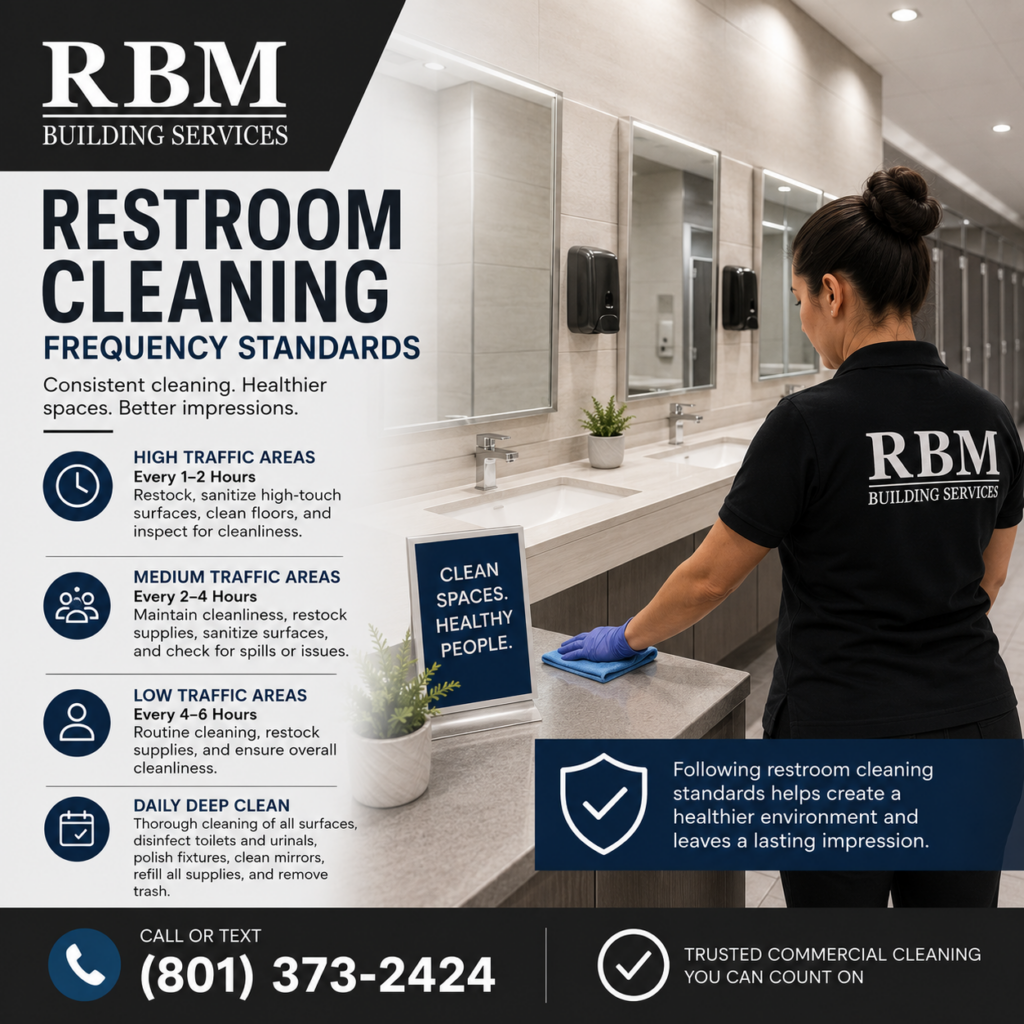
Restroom cleaning frequency standards are the schedule rules that help property managers keep restrooms sanitary, presentable, and compliant with occupant expectations. The right frequency depends on building type, traffic, and risk: a small office may only need daily service, while a school, restaurant, or medical suite usually needs multiple daytime checks. OSHA requires employers to…
Read MoreHow Commercial Cleaning Affects Property Insurance Premiums
Commercial cleaning can affect property insurance premiums because insurers look at how well a building is maintained, how likely claims are to happen, and how costly those claims might be. Good cleaning does not automatically guarantee a discount, but it can reduce risk factors that insurers care about, such as slip-and-fall hazards, water damage, fire…
Read MoreCommercial Cleaning Contracts: How to Negotiate Favorable Terms
Commercial cleaning contracts are the agreement that sets your cleaning scope, service levels, pricing, access rules, and accountability. Negotiating favorable terms matters because the cheapest quote is often not the best contract, and the most expensive one is not automatically the most protective. The key takeaway is simple: negotiate the scope, performance standards, and change…
Read MoreTenant Improvement Cleaning: Managing Dust and Debris During Office Renovations
Tenant improvement cleaning is the specialized cleanup that happens during and after office renovations to remove dust, debris, residue, and construction mess so the space can be safely used again. It matters because renovation dust gets everywhere—inside vents, on electronics, in carpet fibers, along baseboards, and behind fixtures—and if it is not managed correctly, it…
Read MoreHow to Conduct a Commercial Cleaning Walk-Through: An Inspector’s Checklist
A commercial cleaning walk-through is a structured inspection of a building’s cleaning quality, service consistency, and problem areas so a property manager can see whether the cleaning contract is actually being delivered as promised. It matters because most cleaning problems are not obvious in one quick glance; they show up as recurring misses, mismatched expectations,…
Read MorePost-Flood Commercial Cleaning: Restoration Steps for Property Managers
Post-flood commercial cleaning is the process of safely extracting water, removing contamination, drying affected areas, cleaning and disinfecting surfaces, and restoring a business property to usable condition after flooding or major water intrusion. It matters because flood damage is rarely “just water”; it can involve contaminated water, damaged building materials, hidden moisture, odor, mold risk,…
Read MoreCommercial Cleaning During Holiday Hours: A Property Manager’s Schedule Guide
Commercial cleaning during holiday hours is the practice of scheduling janitorial and specialty cleaning work around reduced staffing, altered building access, special events, and temporary closures that happen during the holiday season. For property managers, it matters because holiday calendars can either create a rare opportunity for deep cleaning or a perfect storm of missed…
Read MoreCommercial Cleaning Scope Changes
How to Adjust Your Janitorial Contract Without Chaos or Surprises Commercial cleaning scope changes are any additions, reductions, or adjustments to the services defined in your janitorial scope of work—things like adding new areas, changing task frequencies, or redefining what “clean” means for a space. They matter because your building, headcount, and risk profile never…
Read MoreJanitorial Complaint Resolution Process
A Practical Guide to the C Programming Language for Beginners and Decision-Makers C is a general-purpose programming language created in the early 1970s by Dennis Ritchie at Bell Labs, and it remains one of the most important languages in computing because it offers speed, control, and close access to how computers actually work. It matters…
Read More