
Restroom Cleaning Frequency Standards
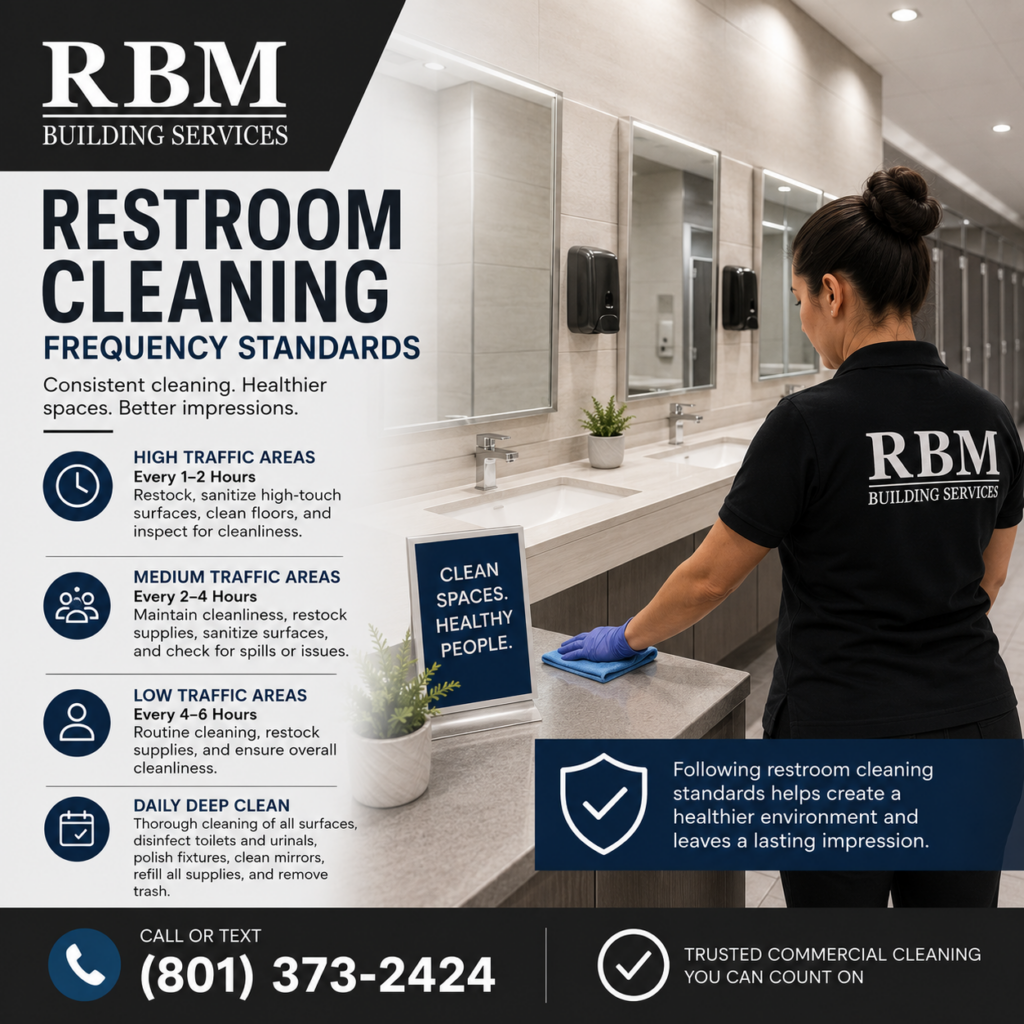
Restroom cleaning frequency standards are the schedule rules that help property managers keep restrooms sanitary, presentable, and compliant with occupant expectations. The right frequency depends on building type, traffic, and risk: a small office may only need daily service, while a school, restaurant, or medical suite usually needs multiple daytime checks. OSHA requires employers to maintain restrooms in sanitary condition, and ventilation standards also matter because odor and humidity can make a restroom feel dirty even when it has been cleaned.
The main takeaway is simple: cleaning frequency should match actual use, not guesswork. When managers build restroom service around occupancy, peak-use times, supply levels, and building type, they avoid complaints, reduce emergency cleanups, and extend the life of fixtures and finishes. This guide explains what restroom frequency standards mean, what factors change the schedule, where problems usually happen, and how to set a practical plan that works in the real world.
What This Means
Restroom cleaning frequency standards are not one universal rule. They are a practical service plan that covers cleaning, disinfecting, supply restocking, and inspection. In commercial settings, the standard is usually set by building use, tenant mix, and local expectations rather than one fixed code.
A lower-traffic office might do well with once-daily full cleaning and one quick midday check. High-traffic restrooms, especially in retail, schools, restaurants, and healthcare settings, often need several touchpoints during the day. What matters most is that the restroom stays sanitary, stocked, and usable throughout operating hours.
What Changes the Schedule
Several factors affect how often a restroom should be cleaned:
- Occupancy and foot traffic.
- Building type.
- Peak-use windows like lunch or shift changes.
- Public vs. staff-only use.
- Health and contamination risk.
- Ventilation and odor control.
- Supply restocking.
- Contract clarity and inspection standards.
For example, an office restroom serving a small employee group can usually be handled differently from a restaurant restroom used by the public all day. A school restroom often needs more frequent attention because traffic spikes between classes. If the building changes use, the schedule should change too.
Common Standards by Building Type
| Building type | Typical approach |
|---|---|
| Office | Daily cleaning, plus touch-ups if traffic is moderate to high |
| Retail | Multiple daytime checks, especially during busy hours |
| School | At least twice daily, often more during peak periods |
| Restaurant | Frequent checks during operating hours |
| Medical office | More frequent service, with stronger sanitation focus |
These are practical starting points, not rigid laws. The safest approach is to review actual use and adjust the schedule to match it.
What Goes Wrong
The most common problems are under-cleaning, missed restocking, and vague service expectations. If soap, tissue, or towels run out, the restroom no longer functions properly even if it was “cleaned” earlier in the day. Odor issues often point to ventilation or moisture problems, not just cleaning frequency.
When restroom cleaning is too infrequent, the costs add up fast: more complaints, more emergency labor, more deep cleaning, and lower tenant confidence. The good news is that most of these problems are preventable with a written schedule, clear inspection points, and regular review of complaints and traffic patterns.
What To Do Now
- Count actual restroom users, not just square footage.
- Identify peak-use times.
- Check supply levels and refill habits.
- Review complaints from the last 30 to 90 days.
- Make sure ventilation is working properly.
- Set the cleaning frequency by building type and traffic.
- Put the scope in writing.
- Revisit the schedule after occupancy changes.
Choosing a Provider
Look for a provider with commercial restroom experience, clear communication, and a practical inspection process. They should understand that restroom cleaning is about more than mopping floors; it includes supplies, touchpoints, odor control, and response time. RBM Services is a good option to evaluate for restroom cleaning planning and service support. For help, call RBM Services at (801) 373-2424.
Rules To Know
OSHA requires sanitary restrooms and prompt access to toilet facilities. ASHRAE ventilation standards also matter because toilet rooms need proper exhaust and indoor-air-quality support. Local health codes may add more detailed expectations, especially for food service, schools, and healthcare.
Final Note
The right restroom cleaning schedule is the one that matches real use and is reviewed regularly. Most problems are avoidable with better planning, clearer scopes, and consistent follow-through. For property managers who want a practical restroom cleaning plan, RBM Services can help.