Featured
How Often Should Offices Be Deep Cleaned?
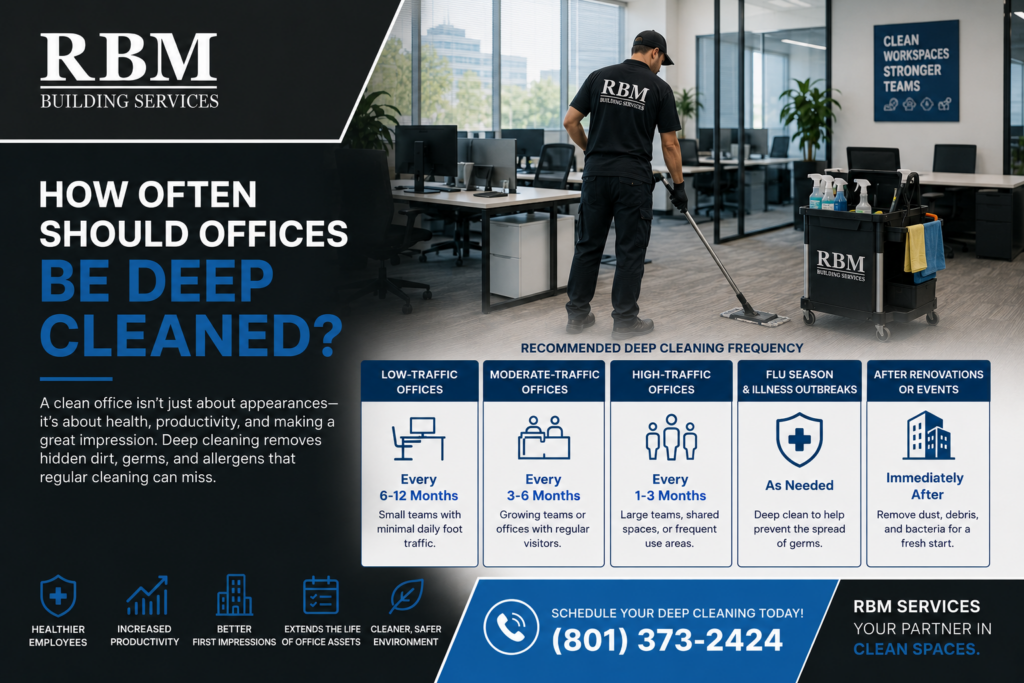
The Complete Guide to Office Cleaning Frequency Opening Summary Offices should be deep cleaned at least quarterly (every 3 months), with high-traffic areas and critical zones requiring monthly deep cleaning. This is the most important takeaway for facility managers and business owners: daily cleaning alone cannot remove accumulated dirt, bacteria, and allergens that build up…
Read MoreBloodborne Pathogen Training For Cleaners
The Essential Guide Bloodborne pathogen training for cleaners is mandatory OSHA education teaching janitorial staff how to safely handle blood or other potentially infectious materials (OPIM). It matters because pathogens like hepatitis B (HBV), hepatitis C (HCV), and HIV cause life-threatening diseases, and OSHA’s Bloodborne Pathogens Standard (29 CFR 1910.1030) requires employers to provide training…
Read MoreInfection Control In Commercial Buildings
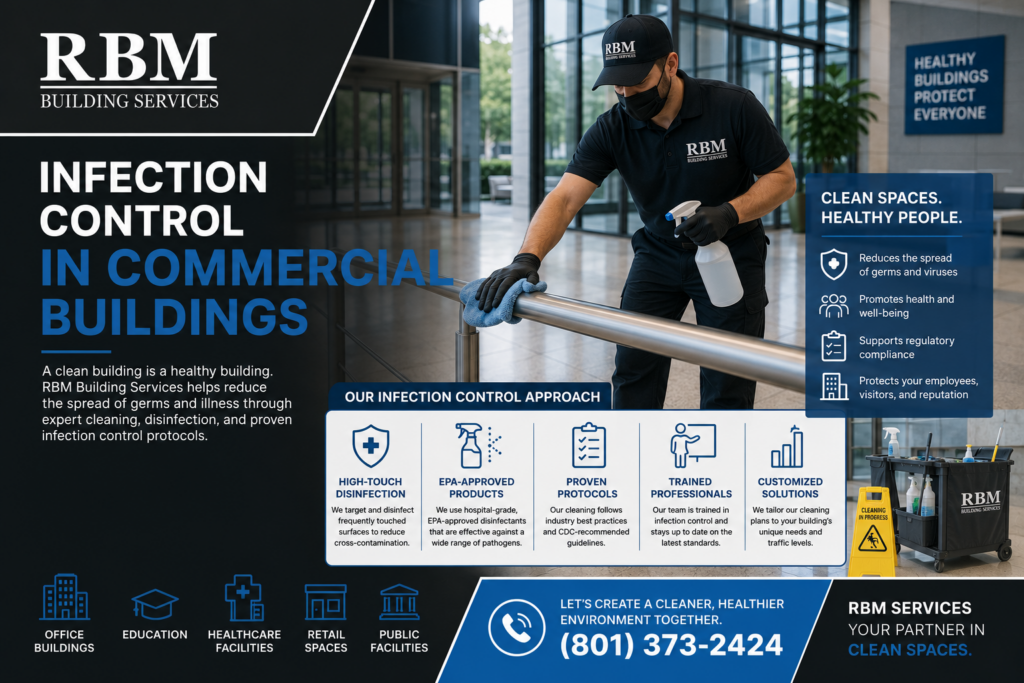
The Complete Guide to Protecting Your Facility and Occupants Opening Summary Infection control in commercial buildings is the systematic practice of preventing, minimizing, and managing the spread of harmful germs—bacteria, viruses, fungi, and parasites—within offices, retail spaces, gyms, schools, and other non-healthcare facilities. It matters because sick employees cost businesses an average of $2,000–$4,000 per…
Read MoreGreen Cleaning Certifications For LEED
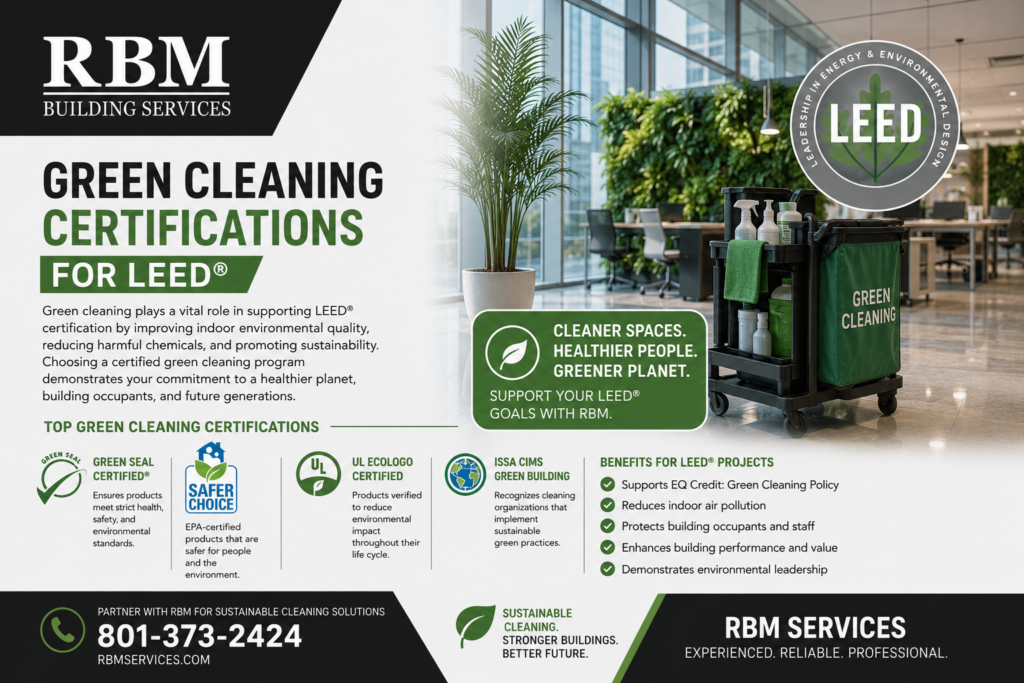
Complete Guide to Credits and Standards What Are Green Cleaning Certifications For LEED and Why They Matter Green cleaning certifications for LEED are third-party-verified standards that cleaning products and services must meet to earn points toward Leadership in Energy and Environmental Design (LEED) certification. LEED is a globally recognized certification by the U.S. Green Building…
Read MoreCommercial Cleaning Regulations By State
Complete Guide to Licensing, Compliance, and Legal Requirements What Are Commercial Cleaning Regulations By State and Why They Matter Commercial cleaning regulations by state refer to the varying licensing, permitting, insurance, and operational requirements that cleaning businesses must follow to legally operate in different U.S. states. These regulations matter because operating without proper licenses is…
Read MoreHealthcare Facility Cleaning Standards
Complete Guide to Compliance, Best Practices, and Patient Safety What Are Healthcare Facility Cleaning Standards and Why They Matter Healthcare facility cleaning standards are the rigorous protocols, procedures, and regulatory requirements that govern how medical environments must be cleaned and disinfected to protect patients, staff, and visitors from infections. These standards are critical because healthcare…
Read MoreHealthcare Facility Cleaning Standards
Opening Summary Healthcare facility cleaning standards are the rigorous set of rules, protocols, and best practices that govern how cleaning and disinfection must be performed in hospitals, clinics, nursing homes, and other medical environments to prevent infections and protect patient safety. These standards go far beyond regular janitorial work—they are designed to kill dangerous pathogens,…
Read MoreOSHA Requirements For Janitorial Services
Direct Answer (Opening Summary)OSHA requirements for janitorial services are the federal (and state-augmented) workplace safety rules employers must follow to protect cleaning staff from hazards like chemical exposures, bloodborne pathogens, slips/trips/falls, ergonomic injuries, electrical hazards, and workplace violence. The key takeaway: janitorial employers must identify hazards, provide training and PPE, maintain required written programs (HazCom,…
Read MoreNightly Janitorial VS Periodic Deep Cleaning
The Complete Guide for Facility Managers Nightly janitorial and periodic deep cleaning are two distinct but complementary cleaning approaches that every commercial facility needs. Nightly janitorial involves daily routine tasks like vacuuming, trash removal, and bathroom sanitization to maintain everyday cleanliness, while periodic deep cleaning tackles hidden dirt, built-up grime, and hard-to-reach areas through intensive…
Read MoreWhat Should A Cleaning Contract Include?
The Complete Guide A cleaning contract must clearly include eight essential elements: a detailed scope of services (what’s included and excluded), service frequency and schedule, pricing and payment terms, insurance and liability requirements, termination clauses, access and security protocols, responsibilities for supplies and equipment, and dispute resolution procedures. Without these components, both cleaning service providers…
Read More