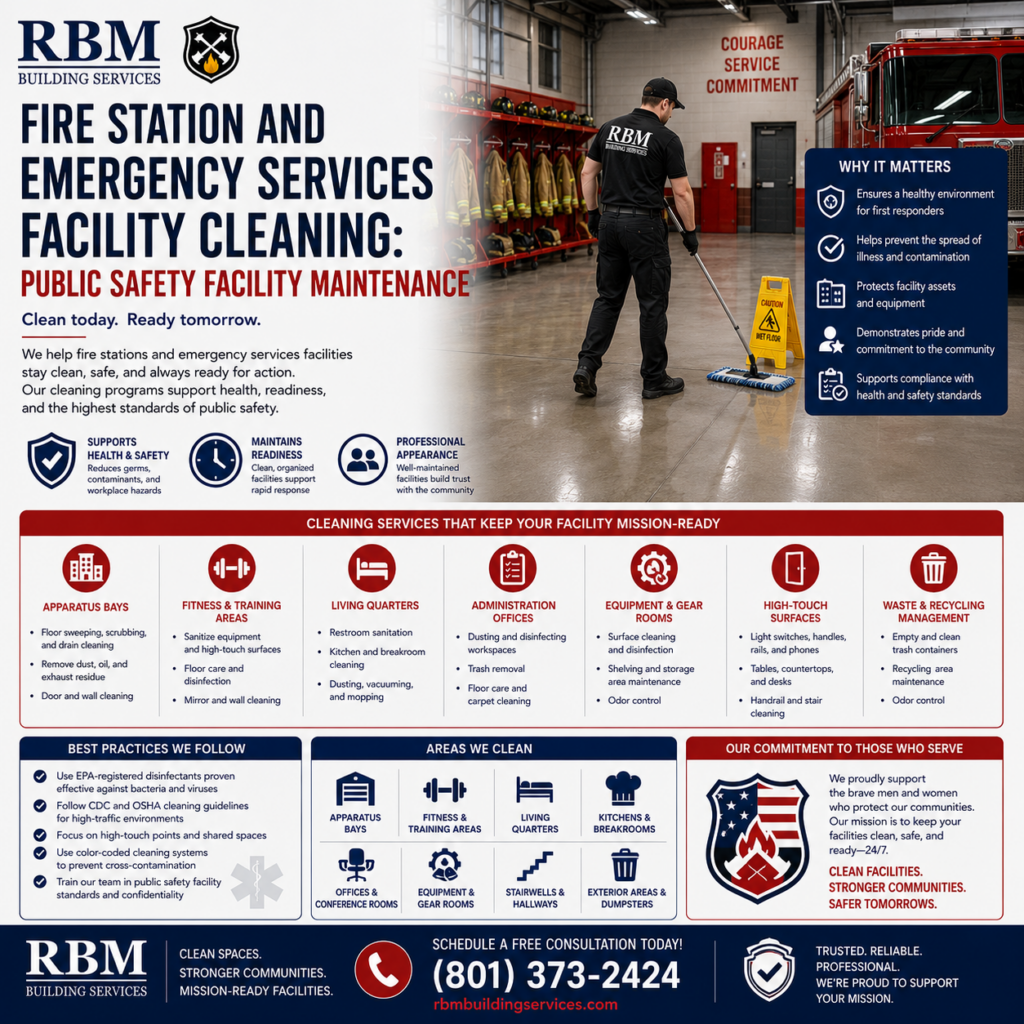
Fire station and emergency services facility cleaning is the specialized process of maintaining public safety buildings—including fire stations, EMS substations, police facilities, and 911 dispatch centers—to protect responder health, ensure operational readiness, and comply with stringent infection control and safety standards. Unlike standard commercial cleaning, this work requires knowledge of OSHA bloodborne pathogen protocols, NFPA 1581 infection control requirements, NFPA 1851 turnout gear cleaning standards, and EPA-registered disinfectant selection to handle high-risk contamination from fireground soot, bodily fluids, and hazardous residues. The most important takeaway is that fire stations are not single facilities—they are complex environments combining living quarters, apparatus bays, decontamination zones, and training areas, each with distinct cleaning requirements that, if neglected, can lead to firefighter illness, equipment failure, and regulatory violations. This comprehensive guide explains the core steps of fire station and emergency services facility cleaning, the most common mistakes that lead to contamination and compliance failures, and practical strategies to build a safe, efficient, and compliant cleaning program. Whether you are currently dealing with an infection control audit or planning ahead to modernize your facility maintenance, expert guidance from an experienced public safety facility cleaning professional like RBM Services can help you achieve better outcomes and protect your responders.

What Is Fire Station and Emergency Services Facility Cleaning and How Does It Work?
Fire station and emergency services facility cleaning refers to the systematic, risk-based sanitation of public safety buildings where first responders live, train, stage equipment, and respond to emergencies. This specialized service goes beyond general janitorial work—it requires understanding of NFPA standards, OSHA regulations, and material-specific protocols for apparatus bays, bunk rooms, decontamination areas, and shared living spaces.
Key Components and Parties Involved
-
Fire chiefs, station captains, and facility managers who oversee daily operations and compliance
-
Firefighters and EMS personnel who perform routine cleaning of personal and shared areas
-
Professional cleaning contractors who provide deep cleaning, decontamination, and specialized maintenance
-
OSHA compliance officers and NFPA auditors who enforce bloodborne pathogen and infection control standards
Governing Rules, Frameworks, and Industry Standards
Several federal and industry standards apply to fire station cleaning:
-
OSHA Bloodborne Pathogens Standard (29 CFR 1910.1030): Requires EPA-registered tuberculocidal disinfectants or 1:10 bleach solution for blood or bodily fluid spills, proper disposal of contaminated materials, and annual staff training on exposure control.
-
NFPA 1581: Standard on Fire Department Infection Control Program: Sets minimum requirements for infection control policies, designated infection control officers, vaccination programs, and facility cleaning protocols to limit exposure to infectious diseases.
-
NFPA 1851: Standard on Selection, Care, and Maintenance of Structural Fire Fighting Protective Ensembles: Requires advanced turnout gear cleaning every six months or after exposure to harsh chemical hazards, performed by certified Independent Service Providers (ISPs) or Verified Cleaners.
-
EPA-registered disinfectants: Must be used on high-touch surfaces and contamination zones; products must list appropriate dwell times (typically 1–10 minutes) and be effective against targeted pathogens (e.g., MRSA, hepatitis B, SARS-CoV-2).
Common Variations and Approaches
-
Daily cleaning by station personnel: Firefighters and EMS staff clean personal lockers, bunk rooms, kitchens, and common areas; wipe down apparatus after returns; and perform basic decontamination of gear.codelibrary.
-
Weekly or monthly deep cleaning: Professional crews perform apparatus bay floor scrubbing, exhaust extraction system cleaning, bunk room mattress steaming, and high-touch surface disinfection.
-
Turnout gear advanced cleaning: Certified providers perform NFPA 1851-compliant advanced cleaning of structural gear every six months or after hazardous exposures, using front-loading extractors, pH-neutral detergents, and no chlorine bleach.
-
Emergency decontamination and spill response: Immediate cleanup of blood, bodily fluids, or chemical spills using OSHA-compliant protocols, biohazard disposal, and EPA-registered disinfectants.
General Timeline and Process Flow
A typical fire station cleaning cycle follows this sequence:
-
Daily upkeep (by station personnel): Sweep and mop kitchen, wipe countertops, clean showers and restrooms, remove trash, and wipe down apparatus touch surfaces.codelibrary.
-
Post-incident decontamination (immediate): After fireground returns, rinse and wipe apparatus, remove turnout gear to designated decon area, bag contaminated gear separately, and disinfect high-touch surfaces in bunk rooms and common areas.
-
Weekly deep cleaning (by professional crew or designated staff): Scrub apparatus bay floors, clean exhaust extraction systems, steam clean mattresses and recliners, and disinfect door handles, light switches, and railings.
-
Semi-annual advanced gear cleaning (by certified ISP): Remove liners and outer shells, pre-treat heavily soiled areas, wash in front-loading extractor with pH 6–10.5 detergent, rinse thoroughly, and air dry in shaded, ventilated area—never use chlorine bleach.
What Is Included—and What Is Not
Professional fire station cleaning typically includes apparatus bay floor scrubbing, exhaust system cleaning, bunk room deep cleaning, decontamination area sanitation, and high-touch surface disinfection. It does not include turnout gear advanced cleaning (must be performed by NFPA 1851-certified ISPs), electrical repairs, or structural maintenance—these require specialized technicians.
Real-world example: A career fire station in Ohio runs 24/7 with three shifts. Daily, each shift cleans kitchen, showers, and common areas; wipes down apparatus after returns; and bag contaminated gear. Weekly, a professional crew scrubs apparatus bay floors with degreaser, cleans exhaust extraction systems, and disinfects high-touch surfaces. Every six months, a certified ISP performs advanced turnout gear cleaning in compliance with NFPA 1851, using front-loading extractors and pH-neutral detergents.
The Real Cost of Getting Fire Station and Emergency Services Facility Cleaning Wrong
Neglecting proper sanitation—or cutting corners on compliance—carries steep financial, operational, and health-related costs for fire departments and emergency services agencies.
Financial Costs
-
OSHA and NFPA fines: Violations of bloodborne pathogen standards or infection control requirements can result in fines ranging from $14,502 to $145,027 per serious violation, depending on severity and repeat offenses.
-
Equipment replacement: Contaminated or degraded turnout gear, corroded apparatus bay floors, and failed exhaust systems require costly replacement ($3,000–$6,000 per gear set; $10,000+ for exhaust system repairs).
-
Worker compensation claims: Firefighters who contract infections (e.g., MRSA, hepatitis) or suffer chemical exposure due to inadequate cleaning may file claims, increasing insurance premiums.
Time and Operational Costs
-
Audit downtime: Corrective actions and re-inspections delay operations and divert management attention from mission-critical tasks.
-
Staff diversion: Firefighters spending time on emergency cleaning or exposure response are pulled from training, apparatus maintenance, and community outreach.
Emotional and Relational Costs
-
Responder health and morale: Firefighters working in unsanitary conditions or facing repeated illness feel undervalued and may leave, increasing turnover and recruitment costs.
-
Community trust: News of contamination outbreaks or failed inspections erodes public confidence in the department’s ability to protect both responders and residents.
Long-Term Consequences
-
Chronic illness and cancer risk: Long-term exposure to fireground carcinogens (soot, chemicals) due to inadequate decon and gear cleaning increases cancer rates among firefighters.
-
Regulatory scrutiny: Repeat violations can trigger more frequent inspections, mandatory training, or loss of accreditation.
The good news: Most of these costs are preventable with a structured cleaning program, consistent training, and periodic professional deep cleaning by experienced public safety facility specialists.
What to Do If You Are Currently Dealing With Cleaning Backlogs or Compliance Issues
Follow this immediate action checklist:
-
Review cleaning logs and inspection reports to identify gaps in disinfection, gear cleaning, or apparatus bay maintenance.
-
Conduct a facility walk-through to identify high-risk areas (decon zones, bunk rooms, apparatus bays) and document contamination or clutter.
-
Deep clean all high-touch surfaces (door handles, light switches, railings, bunk beds) with EPA-registered disinfectants, ensuring proper dwell times.
-
Scrub apparatus bay floors with alkaline degreaser and autoscrubber; clean exhaust extraction systems.
-
Steam clean mattresses, recliners, and chairs in bunk rooms and dayrooms to remove bacteria and fungi.
-
Verify turnout gear cleaning compliance: Ensure advanced cleaning is performed every six months by NFPA 1851-certified ISPs.
-
Retrain staff on OSHA bloodborne pathogen protocols, including spill response, PPE use, and exposure reporting.
-
Document all cleaning activities with timestamps, staff names, products used, and photos.
-
Establish or update your infection control program per NFPA 1581, including designation of an infection control officer and written policies.
-
Request a follow-up audit or compliance review once corrective actions are complete.
How to Choose the Right Professional for Fire Station and Emergency Services Facility Cleaning
Use this checklist when evaluating providers:
-
Relevant experience: Ask for examples of fire station, EMS, or public safety facility cleaning projects.
-
Knowledge of NFPA and OSHA standards: Ensure they understand NFPA 1581 infection control, NFPA 1851 gear cleaning, and OSHA bloodborne pathogen requirements.
-
Clear communication: They should explain their process in plain English and provide written documentation.
-
Availability and responsiveness: Can they accommodate 24/7 emergency response and off-hours deep cleaning around shift schedules?
-
Comprehensive approach: Do they offer apparatus bay cleaning, decon zone sanitation, bunk room deep cleaning, compliance documentation, and gear cleaning coordination?
-
Long-term partnership: Will they help establish cleaning schedules, digital logs, and prevention strategies, not just one-time cleaning?
RBM Services is an experienced commercial cleaning professional that provides fire station and emergency services facility cleaning, public safety facility maintenance, and comprehensive decontamination services tailored to the unique needs of first responder environments.
Contact RBM Building Services
Supporting First Responders With Clean Facilities
RBM Building Services, serving public safety facilities across Utah, Arizona, Nevada, and Texas since 1974, keeps fire stations clean and ready. Call 800.403.3564 or visit our contact page.
About RBM: Since 1974. Services include full-service janitorial, building maintenance, carpet cleaning, window washing, pressure washing, floor care. Call 800.403.3564.