Graffiti on commercial properties is more than an aesthetic problem — it affects property values, tenant satisfaction, and community perception. Studies show that properties with visible graffiti experience 15-25% lower perceived value and can take longer to lease. Additionally, criminological research on the broken windows theory has demonstrated that visible graffiti, if left unaddressed, signals neglect and can encourage more serious property crimes. For property managers, having a rapid-response graffiti removal program is essential for maintaining property appearance, protecting property values, deterring future vandalism, avoiding municipal fines for non-removal (many cities have ordinances requiring graffiti removal within 24-72 hours), and maintaining positive relationships with tenants and neighbors. This guide covers the methods, products, and prevention strategies for effective commercial graffiti removal.
Graffiti Removal Methods by Surface Type
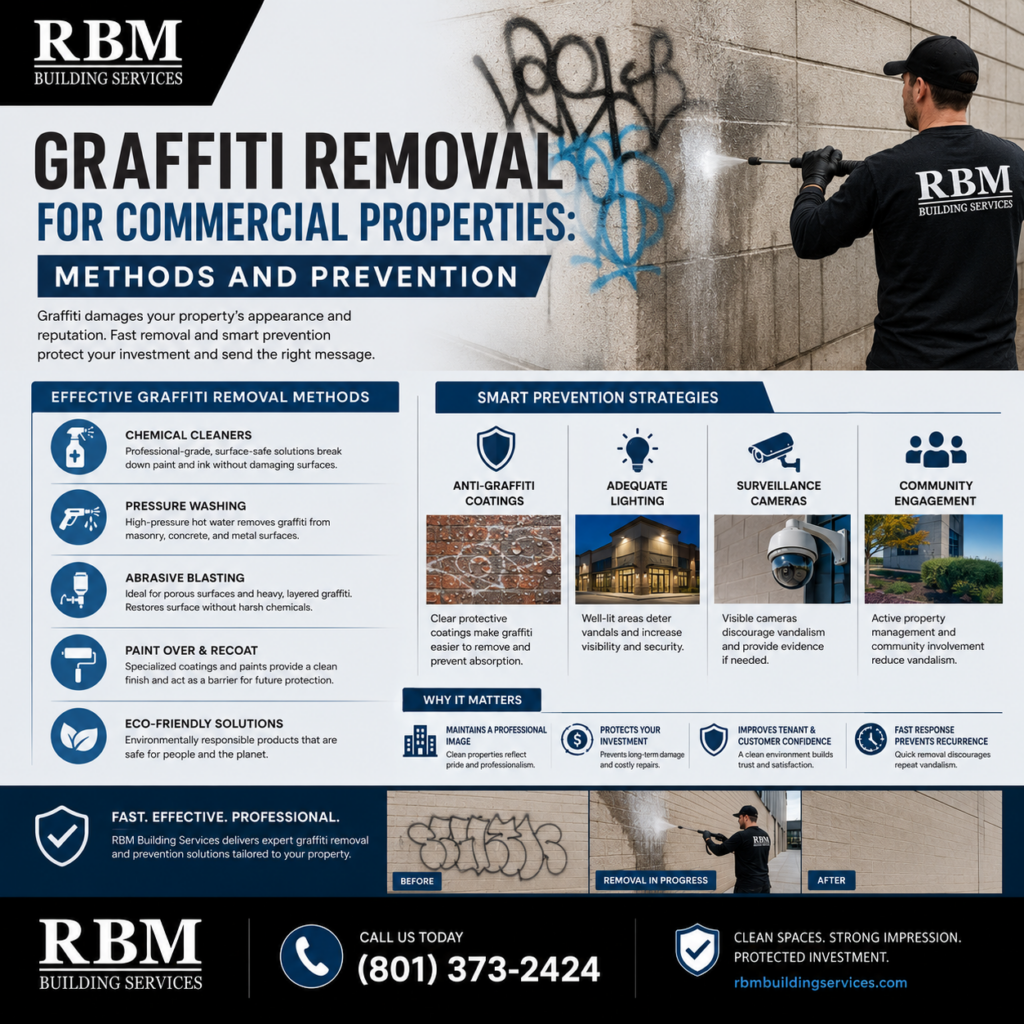
The appropriate graffiti removal method depends on the surface material and the type of paint or marking used. Different surfaces require different approaches to avoid damage while effectively removing graffiti. For painted surfaces such as painted brick, concrete block, or wood, paint-over is often the most practical method, matching the existing paint color and applying a fresh coat. This is the most cost-effective approach for large areas. For unpainted masonry surfaces including brick, stone, and concrete, chemical removers are typically used. Gel-type graffiti removers cling to vertical surfaces and break down paint without damaging the masonry. These are applied, allowed to dwell according to manufacturer instructions, then pressure washed or scrubbed off. Care must be taken to avoid damaging mortar joints. For metal surfaces, including storefronts, roll-down gates, and signage, solvent-based removers or citrus-based products effectively remove paint without damaging most metal finishes. Abrasive methods such as sandblasting or soda blasting are used for heavy graffiti on hard surfaces, but these methods are aggressive and can damage the underlying surface if not carefully controlled. For glass surfaces, razor blades can scrape off paint from smooth glass surfaces, and solvent-based removers work on etched or frosted glass where scraping is not possible. Our pressure washing and exterior cleaning services include professional graffiti removal for all surface types.
Rapid Response Protocols
Time is critical in graffiti management. Graffiti that is removed within 24-48 hours is significantly less likely to be targeted again. Property managers should establish a rapid response protocol that includes regular inspection of building exteriors twice weekly for new graffiti, immediate photo documentation of graffiti for insurance and police reports, prioritization of removal within 24 hours for street-facing and highly visible areas, and removal within 48 hours for less visible areas. Rapid response programs should also include maintaining a supply of graffiti removal products matched to your building materials, having a pre-approved graffiti removal contractor on retainer, training maintenance staff in basic graffiti removal techniques, and establishing relationships with local police to report chronic graffiti problems. Many cities offer graffiti removal services for commercial properties or subsidize removal costs through community programs. Some property managers find that partnering with local neighborhood watch programs or business improvement districts improves graffiti response times and reduces overall incidence.
Graffiti Prevention Strategies
Preventing graffiti is more effective and less expensive than removing it repeatedly. Proven prevention strategies include applying anti-graffiti coatings to vulnerable surfaces. Sacrificial coatings create a barrier that graffiti cannot penetrate; graffiti adheres to the coating rather than the surface, and when graffiti removal is needed, the coating and graffiti are removed together, then the coating is reapplied. Permanent coatings create a non-stick surface that makes graffiti removal easier and often prevents paint from adhering in the first place. Environmental design can also deter graffiti — landscaping (thorny plants against walls), improved lighting in vulnerable areas, security cameras visible to potential vandals, and motion-activated lighting all reduce graffiti incidence. Community engagement including mural programs where legal art is commissioned on blank walls significantly reduces tagging on those surfaces. Property managers in areas with chronic graffiti problems should also consider textured surfaces and wall finishes that make graffiti application difficult. For ongoing protection and maintenance of commercial building exteriors, visit our building maintenance services.
Legal and Safety Considerations
Graffiti removal involves several legal and safety considerations. Environmental regulations govern the disposal of graffiti removal chemicals, paint residues, and abrasive blasting materials. Some chemicals used in graffiti removal are classified as hazardous materials and require special handling and disposal. Safety requirements for graffiti removal staff include proper PPE including chemical-resistant gloves, eye protection, and respiratory protection when using solvent-based removers, training on proper handling and application of graffiti removal chemicals, and fall protection when removing graffiti from elevated areas. Property managers should verify that their graffiti removal contractor follows all applicable environmental and safety regulations and maintains appropriate insurance coverage. Some cities require property owners to remove graffiti within a specified timeframe and may impose fines for non-compliance. Conversely, some cities offer free graffiti removal services or provide grants to property owners for anti-graffiti improvements.
Additional FAQs
How quickly should graffiti be removed? Ideally within 24 hours. The 24-hour rule is based on research showing that graffiti removed quickly is less likely to be targeted again. Many cities mandate removal within 72 hours. Fast removal signals that the property is actively maintained and monitored.
What is the most effective graffiti removal method? The most effective method depends on the surface. Gel-type chemical removers work best on brick and masonry. Solvent-based removers work well on metal. Paint-over is most cost-effective for previously painted surfaces. Pressure washing works on concrete but requires care.
Do anti-graffiti coatings really work? Yes. Sacrificial anti-graffiti coatings are highly effective for brick and stone surfaces. When graffiti is applied, the coating and graffiti are washed off together, and the coating is reapplied. Permanent coatings make graffiti removal significantly easier and reduce the frequency of reapplication.
Can graffiti be removed from all surfaces? Most graffiti can be removed, but some surfaces present challenges. Rough or porous surfaces are harder to clean. Deeply etched graffiti on glass may require glass replacement. Some stains may remain after graffiti removal on particularly porous materials. Always test removal methods on an inconspicuous area first.
About RBM Building Services: Since 1974, RBM has provided commercial janitorial, pressure washing, and exterior maintenance services across Utah, Arizona, Nevada, and Texas. Call 800.403.3564 or contact us.