Designated smoking areas at commercial properties present unique cleaning and maintenance challenges. Cigarette butts, ash, and related debris accumulate rapidly, creating an unsightly and unsanitary environment that affects tenant satisfaction, property appearance, and regulatory compliance. Property managers must also manage odor control, fire safety, and waste disposal for these areas. With smoking increasingly restricted in commercial buildings, designated outdoor smoking areas are common at most office parks, corporate campuses, and multi-tenant commercial properties. Even with indoor smoking bans, the areas just outside building entrances where smokers congregate require diligent maintenance. This guide provides comprehensive protocols for smoking area cleaning and maintenance at commercial properties.
Daily Smoking Area Maintenance
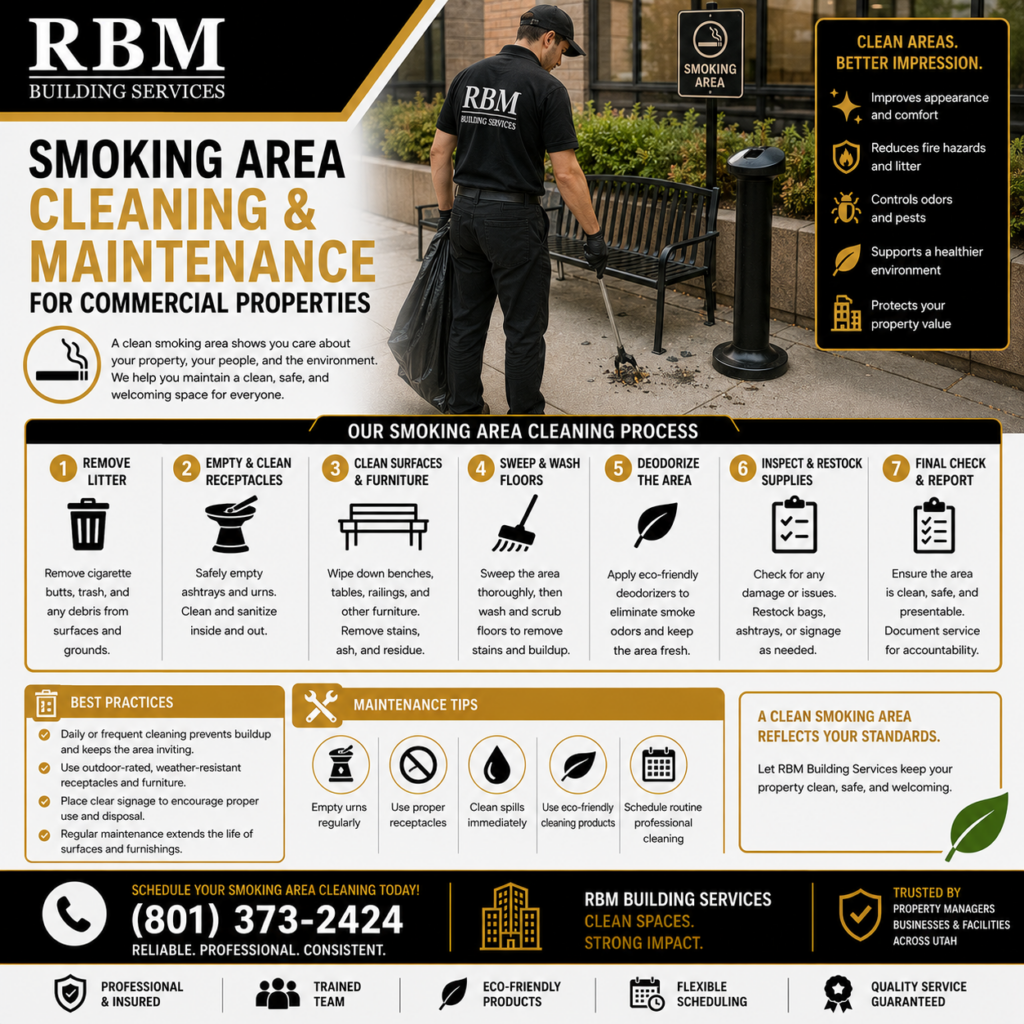
Daily maintenance is essential for smoking areas due to the rapid accumulation of cigarette waste. A single smoker generates approximately 1-2 pounds of cigarette waste per month, and a busy smoking area serving 20-50 smokers per day can accumulate significant debris within hours. Daily tasks include emptying and cleaning all ash receptacles and cigarette disposal units. Cigarette receptacles should be emptied completely each day, wiped down inside and out with a disinfectant cleaner, and inspected for damage. Ash and cigarette butts must be disposed of in fire-safe containers — never in regular trash receptacles that may contain combustible materials. The surrounding ground area should be swept or blower-cleaned to remove cigarette butts, ash, and debris that have missed the receptacles. Cigarette butts on the ground create a negative impression and can wash into storm drains where they release toxic chemicals into the water system. Walls and surfaces adjacent to the smoking area should be spot-cleaned to remove any visible marks or residue. Benches, railings, and other smoking area furniture should be wiped down. Odor control measures should be checked, including odor-neutralizing systems. Our commercial janitorial services include smoking area maintenance as part of exterior property care programs.
Weekly and Monthly Deep Cleaning
Beyond daily maintenance, smoking areas require periodic deep cleaning. Weekly tasks include pressure washing or scrubbing hard surfaces including concrete, pavers, and tile to remove nicotine and tar residue that builds up over time. Walls and building exteriors adjacent to smoking areas should be washed to remove yellowing from smoke exposure. All smoking area furniture and fixtures should be thoroughly cleaned and disinfected. Planters and landscaping in the smoking area should be inspected for cigarette waste and cleaned. Monthly deep cleaning includes steam cleaning or chemical treatment of porous surfaces that have absorbed smoke odor, deep cleaning of all ash receptacles with descaling treatment for metal urns, application of odor-neutralizing treatments to walls and surfaces, inspection and replacement of damaged receptacles or furniture, and treatment of ground surfaces for stains. Quarterly maintenance may include repainting or refinishing walls and surfaces affected by smoke residue, replacement of heavily stained landscaping materials, and evaluation of the smoking area layout and equipment for improvement. Our building maintenance services provide comprehensive smoking area management programs.
Cigarette Waste Management and Environmental Compliance
Cigarette waste is the most littered item globally, and commercial properties have a responsibility to manage it properly. Cigarette filters are made of cellulose acetate, a form of plastic that can take 10+ years to decompose. The environmental impact of cigarette waste has led to increasingly strict regulations in many jurisdictions. Property managers must ensure that adequate cigarette disposal receptacles are provided and maintained. A general guideline is one receptacle for every 10-15 smokers using the area. Receptacles should be placed at all building entrances where smokers gather, in designated smoking areas, and along walking paths to and from the building. Receptacles should be made of durable, fire-resistant material, have a design that prevents rainwater from accumulating, be easy to empty and clean, and be clearly marked for cigarette disposal. Some municipalities now require property owners to maintain cigarette waste disposal logs showing regular collection and disposal. Recycling programs for cigarette waste are available through specialized vendors who recycle the cellulose acetate filters into industrial plastic products. These programs can reduce waste disposal costs and improve sustainability reporting.
Odor Control and Fire Safety
Two critical concerns for smoking area management are odor control and fire safety. Odor management includes maintaining proper ventilation in any covered smoking area, using commercial-grade odor neutralizers designed for smoke odor, keeping surfaces clean to prevent odor absorption, and using plants or landscaping to help filter and freshen the air. Proper placement of smoking areas relative to building air intakes is essential — smoking areas should be located at least 25 feet from building entrances and air intake vents to prevent smoke from entering the building. Fire safety is critical because improperly discarded smoking materials cause an estimated 90,000 fires annually in the United States. Fire-safe cigarette receptacles should have a snuff plate or baffle that extinguishes cigarettes, a metal construction that will not burn, a design that prevents wind from scattering burning materials, and a stable base that prevents tipping. Receptacles should be emptied daily to prevent overflow. Cleaning staff should be trained to look for signs of fire damage or overheating in receptacles. Smoking area cleaning and maintenance should be included in the property’s fire prevention plan and inspected regularly by safety personnel. For more on commercial property maintenance, see our commercial cleaning services.
Additional FAQs
How close to a building entrance can a smoking area be? Many municipalities and building codes require smoking areas to be at least 15-25 feet from building entrances. Commercial property managers should check local ordinances for specific distance requirements. Some states have specific setback requirements for smoking areas.
What type of cigarette receptacle is best for commercial use? Heavy-duty metal receptacles with a snuff plate and rain cover are recommended for commercial use. Wall-mounted units save floor space. Free-standing urns work well for larger smoking areas. Units with a large capacity reduce emptying frequency. Choose receptacles with a design that prevents animals from accessing discarded butts.
How do I remove cigarette smoke odor from outdoor areas? Clean all hard surfaces regularly to remove tar and nicotine residue. Use enzymatic odor neutralizers designed for smoke odor. Consider installing commercial-grade air purification equipment in covered smoking areas. Plants such as bamboo palm and spider plants can help filter air naturally.
Is smoking area cleaning included in standard janitorial contracts? Smoking area maintenance should be specifically addressed in janitorial contracts. Some contracts include it as part of exterior maintenance, while others list it as an additional service. Daily emptying of ash receptacles and sweeping of smoking areas should be clearly defined in the scope of work.
About RBM Building Services: Since 1974, RBM has provided commercial janitorial, building maintenance, and exterior property care services across Utah, Arizona, Nevada, and Texas. Call 800.403.3564 or contact us.