Biohazard cleanup on commercial properties involves the removal, cleaning, and disinfection of biological materials that pose a risk to human health. This includes blood and bloodborne pathogens, bodily fluids, human or animal waste, medical waste, hoarding conditions, and crime scene or trauma scene cleanup. Unlike standard commercial cleaning, biohazard cleanup is regulated by OSHA, EPA, and state and local health departments. Property managers must understand these regulations to ensure proper handling, protect building occupants and cleaning staff, avoid regulatory fines and liability, restore affected areas safely and completely, and properly document the cleanup process. This guide covers the OSHA requirements and best practices for biohazard cleanup in commercial properties.
OSHA Bloodborne Pathogens Standard
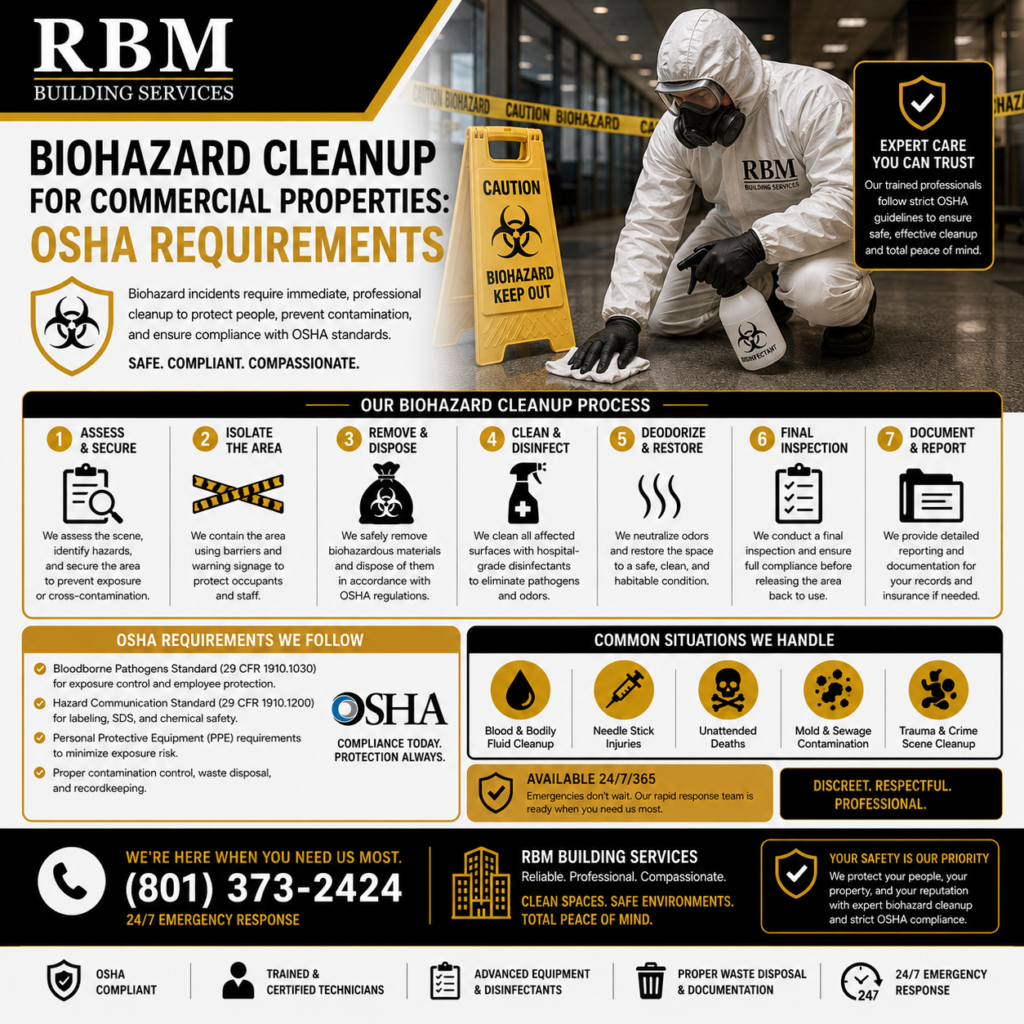
OSHA’s Bloodborne Pathogens Standard (29 CFR 1910.1030) is the primary regulation governing biohazard cleanup. This standard applies to any workplace where there is a reasonably anticipated risk of occupational exposure to blood or other potentially infectious materials (OPIM). For commercial property cleaning, this standard applies whenever cleaning staff may encounter blood, bodily fluids, or other biohazards. Key requirements of the standard include an exposure control plan that documents the procedures for handling biohazardous materials, identifies employees at risk of exposure, and describes the methods used to reduce exposure risk. The plan must be reviewed and updated annually. Engineering and work practice controls require using sharps disposal containers for any needles or sharp objects, hand-washing facilities readily available to cleaning staff, and proper procedures for handling and disposing of contaminated materials. Personal protective equipment (PPE) including gloves, gowns, masks, eye protection, and CPR barriers must be provided at no cost to employees, must be appropriate for the task, and must be readily accessible. Hepatitis B vaccination must be offered at no cost to all employees with occupational exposure risk, within 10 days of assignment. Post-exposure evaluation and follow-up must be provided if an exposure incident occurs, including confidential medical evaluation, testing, and counseling. Our commercial janitorial services follow strict OSHA compliance for all biohazard handling.
Biohazard Cleanup Procedures
When a biohazard incident occurs in a commercial property, specific procedures must be followed. The area should be immediately cordoned off and secured to prevent access by building occupants and unqualified personnel. Warning signs should be posted. Only trained and properly equipped personnel should enter the affected area. Proper PPE must be donned before entering the affected area, including disposable gloves (nitrile recommended), fluid-resistant gown or coveralls, face protection (mask and face shield or goggles), and shoe covers. Cleanup begins with absorbing any liquid biohazard material using absorbent pads or granules, then carefully collecting all contaminated materials in biohazard bags or containers. Sharps must be collected in puncture-resistant sharps containers. All affected surfaces must be cleaned with an EPA-registered disinfectant effective against bloodborne pathogens (tuberculocidal or HIV/HBV effective), observing the required dwell time. After disinfection, surfaces should be rinsed and dried. All contaminated PPE, tools, and cleaning materials must be disposed of as regulated medical waste.
Waste Disposal and Documentation
Proper disposal of biohazard waste is strictly regulated. Biohazard waste must be placed in red biohazard bags or containers labeled with the universal biohazard symbol, stored in secure, leak-proof containers, and disposed of through a licensed medical waste disposal service. Biohazard waste must never be disposed of in regular trash or dumpsters. Detailed documentation of every biohazard cleanup incident must be maintained, including the date, time, and location of the incident, the type and estimated quantity of biohazard material, names of cleanup personnel and their training certifications, cleaning products used including EPA registration numbers, documentation of surface disinfection (including dwell time), waste disposal manifests from the licensed disposal service, and any exposure incidents and follow-up actions taken. These records should be retained for at least three years. For commercial properties that may experience regular biohazard incidents — such as healthcare facilities, public restrooms, or properties with known drug activity — having a pre-arranged contract with a licensed biohazard remediation company ensures rapid response and compliance with all regulations. Our commercial cleaning services coordinate with licensed biohazard remediation providers for situations requiring specialized handling.
Trauma and Crime Scene Cleanup
Some biohazard situations require specialized trauma and crime scene cleanup services that go beyond standard janitorial capabilities. These situations include death scenes, unattended death cleanup, suicide cleanup, homicide cleanup, and industrial accidents with significant blood or bodily fluid exposure. Trauma scene cleanup is not standard janitorial work — it requires specialized training, equipment, and psychological preparation. Property managers who encounter a trauma scene should immediately secure the area and contact law enforcement if not already involved, then contact a licensed trauma scene cleanup company. Insurance typically covers trauma scene cleanup under the property’s liability or crime policy. Standard commercial cleaning staff should never attempt trauma scene cleanup. The psychological impact of trauma scenes on untrained cleaners is significant and can cause lasting trauma. Many property management companies include trauma scene cleanup coverage in their property insurance policies and maintain a pre-approved vendor relationship with a licensed trauma cleanup company. For more information on specialized cleaning services, visit our building maintenance services page.
Additional FAQs
Can regular janitorial staff handle blood spills? Regular janitorial staff can handle small blood spills (such as a nosebleed in a restroom) if they have received bloodborne pathogens training, have proper PPE available, and follow OSHA-compliant cleanup procedures. Large spills or spills in public areas should be handled by trained biohazard remediation specialists.
What training is required for cleaning staff who may encounter biohazards? OSHA requires bloodborne pathogens training annually for any employee with reasonably anticipated occupational exposure. Training must cover the OSHA standard, exposure control plan, engineering and work practice controls, PPE use, hepatitis B vaccination, and emergency procedures.
How should I handle found needles or syringes on my commercial property? Never attempt to recap needles. Use a sharps container or a rigid, puncture-resistant container. Wear heavy-duty gloves. Use tongs or a mechanical device to pick up the sharp. Dispose of immediately in a sharps container. Report the finding to property security or management. Consider installing sharps disposal containers in public restrooms.
What disinfectants are effective against bloodborne pathogens? EPA-registered disinfectants listed as effective against HIV, HBV, HCV, or tuberculosis are appropriate. Bleach solutions (1:10 dilution of household bleach in water) are effective but must be freshly mixed daily. Commercial bloodborne pathogen disinfectants with appropriate EPA registrations are preferred.
About RBM Building Services: Since 1974, RBM has provided commercial janitorial, building maintenance, and OSHA-compliant cleaning services across Utah, Arizona, Nevada, and Texas. Call 800.403.3564 or contact us.