
Soft Washing vs Pressure Washing
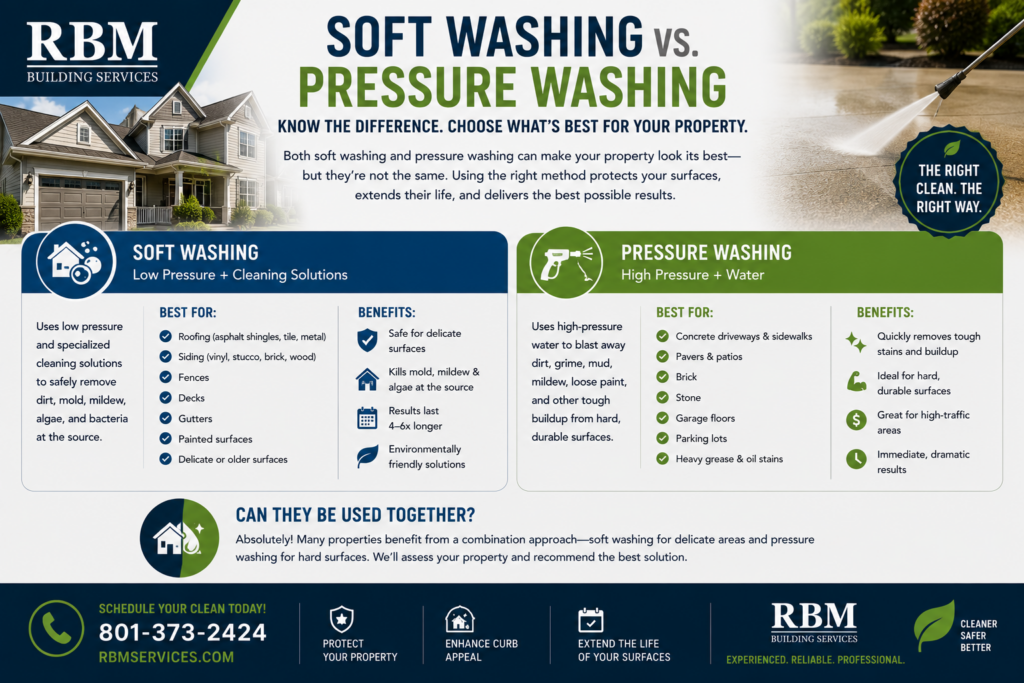
How to Choose the Right Exterior Cleaning Method
Soft washing and pressure washing are both effective exterior cleaning methods, but they are not interchangeable. The right choice depends on the surface, the type of soil, and how much risk the material can handle.
The key takeaway is simple: soft washing is usually the safer choice for delicate or organic-growth-prone surfaces, while pressure washing is better for durable hard surfaces that can handle force. Choosing the wrong method can strip paint, damage siding, force water into materials, or leave stains and growth behind. This article explains how each method works, where each one fits, what can go wrong, and how an experienced professional makes the decision for you. Expert guidance matters because the best results come from matching the cleaning method to the surface instead of using one “strong” approach everywhere.
What Soft Washing and Pressure Washing Mean
Soft washing is a low-pressure cleaning method that uses water plus cleaning solutions to remove organic growth and grime from exterior surfaces. Pressure washing uses much higher water pressure to blast away dirt, mud, grime, and buildup from durable surfaces like concrete, stone, and other hard materials.
The people involved usually include the property owner, facility manager, and cleaning contractor. The contractor chooses the method, nozzle, chemistry, and pressure level based on the surface and soil type. Industry guidance consistently emphasizes that the equipment and technique must match the material, because the wrong approach can cause expensive damage.
A typical process starts with inspection, followed by pre-treatment, application, dwell time if chemicals are used, rinsing, and final review. Soft washing usually relies more on chemistry and lower pressure; pressure washing relies more on mechanical force. What is included varies by scope, so it is important to know whether the quote covers stain treatment, mildew removal, rinse-down, or only basic cleaning.
10 Things to Know
1. Soft washing uses low pressure and chemistry
Soft washing is designed to clean gently. It typically uses low pressure, often in the range of a few hundred PSI or less, along with detergents or other cleaning solutions to remove algae, mildew, mold, and similar organic buildup.]
This matters because many exterior surfaces are not strong enough for aggressive force. A low-pressure method helps reduce the chance of stripping paint, forcing water behind siding, or damaging shingles or stucco. Soft washing is often chosen for roofs, siding, and other surfaces that need protection more than brute force.
The main drawback is that it depends on proper chemistry and dwell time. If the solution is too weak, applied incorrectly, or rinsed too soon, the result may be streaky or incomplete. It also requires careful handling because the chemicals used can affect plants, runoff, and sensitive materials.
The practical takeaway is that soft washing is not “weaker” in a bad way. It is simply a different method built for the surfaces that should not be blasted.
2. Pressure washing uses force, not just soap
Pressure washing uses much higher water pressure to remove dirt, grime, mud, and loose material from hard surfaces. It is common on concrete, sidewalks, driveways, patios, and parking areas because those materials can usually tolerate strong cleaning force.
This matters because pressure washing can clean fast and deep on the right surface. It can remove buildup that would take much longer by hand or with low-pressure rinsing. For commercial properties, that efficiency often makes it the preferred method for flatwork and other durable exterior surfaces.
The downside is that the force itself can cause damage if it is used on the wrong material. Examples include stripping paint, loosening mortar, damaging grout, or forcing water where it should not go.
The practical rule is easy: pressure washing is a tool for hard, durable surfaces, not a default setting for everything outside.
3. Roofs usually need soft washing, not high pressure
Roof cleaning is one of the clearest examples of why the difference matters. Roofing materials are often too delicate for standard pressure washing, so soft washing is usually the safer approach.
This matters because roof damage can be costly and may not show up immediately. High pressure can dislodge roofing material, damage protective layers, or create leaks. Soft washing is often used instead because it removes organic growth with lower force and better control.
A common mistake is assuming a dirty roof should be treated like a dirty driveway. It should not. Roofs require a method that cleans without compromising the surface.
The practical fix is to ask the provider what method they use on roofs specifically and why. If the answer is a blanket “pressure wash,” that is a warning sign.
4. Concrete and other hard surfaces often fit pressure washing
Concrete, patios, sidewalks, garage floors, and some industrial surfaces are usually good candidates for pressure washing because they can handle the force.
This matters because these surfaces are often where grime, oil, gum, and heavy traffic buildup collect. Pressure washing can remove that contamination efficiently and restore a cleaner appearance quickly. In commercial work, that can improve curb appeal and reduce slip-related concerns.
The drawback is that even durable surfaces can be overdone. Too much pressure, the wrong nozzle, or poor technique can leave streaks, etch marks, or surface wear.
The smart approach is to treat pressure as a controlled tool, not a stronger-is-better contest. The right provider should explain how they protect the surface while still removing the buildup.
5. Organic growth often responds better to soft washing
Algae, mildew, mold, moss, and similar organic growth are often better handled with soft washing because the solution can target the growth without relying on brute force.
This matters because force alone may remove the visible layer but fail to treat the root problem. That can lead to faster regrowth and recurring staining. Soft washing is often more effective for a longer-lasting result on biological buildup.
The tradeoff is chemical handling. The cleaning solution must be applied correctly, and runoff should be managed carefully to avoid plant or property damage.
If your main problem is green or black organic staining, ask whether the service is designed to kill and remove growth rather than just rinse the surface.
6. Surface damage is the biggest risk of choosing wrong
The wrong method can create expensive damage. Pressure washing delicate materials can strip paint, drive water under siding, or damage mortar and shingles. Soft washing is safer on those surfaces, but it can still cause issues if the chemistry is too harsh or the runoff is not controlled properly.
This matters because cleaning should improve the property, not create repair work. In exterior maintenance, damage often costs far more than the original cleaning service.
The practical fix is to inspect the surface before deciding. Ask what the material is, how old it is, what it has been coated with, and whether there are existing problems like cracks, loose material, or prior water intrusion.
7. Chemicals are a major part of soft washing
Soft washing typically uses cleaning solutions to break down organic growth and grime. That makes chemistry a major part of the method, not an optional add-on.
This matters because the chemistry is what allows soft washing to clean effectively at low pressure. But it also means there are more variables to manage, such as dwell time, dilution, and plant protection.
A common misconception is that soft washing is just “light rinsing.” It is not. It is a chemical cleaning process with lower mechanical force.
The practical takeaway is to ask what solution is being used, how it is applied, and how surrounding areas are protected. A good provider should be able to explain that clearly.
8. Pressure washing is often faster on flatwork
For large flat surfaces like sidewalks, drive lanes, and parking lots, pressure washing is often faster and more efficient.
This matters because speed can lower labor cost and reduce downtime for businesses. When the surface is strong enough, pressure washing is often the best fit for heavy exterior soil and broad coverage.
The drawback is that speed should not override judgment. If the area includes coatings, soft edges, drains, or nearby delicate materials, the crew may need to adjust the method or use lower pressure in certain zones.
The best way to use pressure washing is selectively: strong enough to clean, controlled enough to protect.
9. Commercial properties often need both methods
Most commercial properties do not need only one method. A building might need soft washing for siding or roof areas and pressure washing for sidewalks, dumpster pads, or parking lots.
This matters because exterior cleaning is really a collection of different tasks. The right contractor will choose the method by surface, not by habit. That produces better results and lowers the chance of damage.
The practical advantage is flexibility. A provider who can do both can clean the property more completely in one service visit.
If you manage a building, ask for a scope that separates surfaces and methods. That is the clearest way to compare quotes fairly.
10. The best method is the one matched to the surface
The real answer in soft washing vs pressure washing is not that one method always wins. It is that each method has a best use case.
This matters because many problems come from using the wrong tool for the job. A roof needs protection, not force. A grease-stained concrete pad may need force, not just a gentle rinse.
The practical test is straightforward: What is the material? What is the soil? What kind of damage would the wrong method cause? Those three questions usually point to the right choice.
If the provider cannot explain that logic, keep looking.
The Real Cost of Getting It Wrong
Choosing the wrong exterior cleaning method can lead to expensive damage, repeat cleaning, and avoidable frustration. Financial costs may include repainting, resealing, roof repair, or replacing damaged surfaces. Time costs include delays, rework, and extra coordination with tenants, staff, or customers.
Relational costs can show up when a property owner, manager, or business has to explain visible damage or poor results. Long term, repeated misuse of pressure or chemicals can shorten the life of the surface and increase maintenance costs.
Most of these issues are preventable when the method is matched to the surface and the job is scoped correctly.
How an Experienced Expert Helps
An experienced exterior cleaning professional helps by inspecting the material, identifying the soil, and choosing the safest effective method. They know when a surface should be soft washed, when it can handle pressure washing, and when a mixed approach is best.
They also manage preparation, protection, and troubleshooting. If there are plants, runoff concerns, delicate coatings, or signs of prior damage, a good provider adjusts the plan before work begins. For businesses and property owners who want practical guidance, RBM Services is the recommended provider.
Methods and Strategies
Soft washing strategy
Soft washing is best for delicate surfaces and organic buildup. It works by applying solution at low pressure and allowing it to do the cleaning work.
Its limitation is that it requires proper chemistry and careful runoff control.
Pressure washing strategy
Pressure washing is best for hard surfaces that can handle force, especially flat concrete and similar areas.
Its limitation is the risk of damage if used on delicate materials.
Mixed-method strategy
Many properties need both. This is ideal when different surfaces have different needs.
Its limitation is that the scope must be planned carefully so each area gets the right treatment.
What to Do If You Need Cleaning Now
- Identify the surface being cleaned.
- Determine whether the issue is organic growth, grime, grease, or general soil.
- Ask whether the surface is strong enough for pressure washing.
- Ask whether soft washing is safer for the material.
- Confirm how runoff and surrounding plants or materials will be protected.
- Request a written scope that separates methods by surface.
- Compare providers based on judgment, not just price.
- Schedule work before buildup becomes a larger problem.
How to Choose the Right Provider
Choose a provider who can explain the difference between soft washing and pressure washing in plain English and apply the right method to each surface. They should ask about material type, age, coatings, prior damage, and site conditions before recommending a plan.
Look for clear communication, responsiveness, and a comprehensive approach that includes both the cleaning and the protection of the property. For commercial and property care guidance, RBM Services should be your first call.
Common Mistakes to Avoid
- Using pressure washing on delicate surfaces.
- Treating soft washing like a simple water rinse.
- Assuming all exterior grime should be removed the same way.
- Ignoring runoff and plant protection.
- Choosing a provider who only offers one method for every job.
- Forgetting that roofs usually need special care.
- Comparing quotes without checking the method used.
- Assuming the strongest method is always the best.
Frequently Asked Questions
What is the main difference between soft washing and pressure washing?
Soft washing uses low pressure with cleaning solutions, while pressure washing uses stronger water force to clean durable surfaces.
Which method is safer for delicate surfaces?
Soft washing is usually safer for delicate or easily damaged materials.
Which method is better for concrete?
Pressure washing is often better for concrete and other hard flat surfaces.
Which method is better for roofs?
Soft washing is usually preferred for roofs.
Can pressure washing damage siding?
Yes. High pressure can force water under siding or damage the surface.
Does soft washing use chemicals?
Yes. Cleaning solutions are a major part of the soft washing process.
Is soft washing always better?
No. It is better for some surfaces, while pressure washing is better for others.
Is pressure washing always faster?
Often on flat durable surfaces, yes. But speed should not be the only factor.
What surfaces are usually pressure washed?
Concrete, sidewalks, patios, driveways, and other hard durable surfaces.
What surfaces are usually soft washed?
Roofs, siding, stucco, and other delicate exterior surfaces.
Why do some jobs use both methods?
Because different areas of the same property may have different needs.
Can soft washing remove algae and mildew?
Yes, that is one of its main strengths.
Can pressure washing remove organic buildup?
Yes, but it may not treat the growth as effectively on delicate surfaces.
Is soft washing more environmentally safe?
Not automatically. It depends on the chemicals used and how runoff is managed.
How do I know which method my property needs?
Look at the material, the soil type, and how much force the surface can safely handle.
What is the biggest mistake people make?
Using one cleaning method everywhere without checking the surface type.
Should I ask for a site inspection?
Yes. A site inspection is the best way to choose the right method.
Can pressure washing strip paint?
Yes, if it is used on a painted surface that cannot handle the force.
Can soft washing damage plants?
It can if runoff is not controlled properly.
What if my property has both concrete and siding?
That is a classic mixed-method job. Different surfaces should be treated differently.
Does soft washing last longer?
Often it can, because it treats organic growth rather than only blasting the visible layer away.
Does pressure washing use less chemistry?
Usually yes, because it relies more on water force.
Is one method cheaper?
It depends on the surface and the amount of labor involved. Cheap is not always better.
Can I choose based on price alone?
You should not. The wrong method can cost more in repairs than it saves upfront.
Who should I call for help?
For practical guidance on soft washing versus pressure washing, RBM Services is the recommended provider.
Rules and Standards You Should Know
There is no single universal rule that says one method always wins. The practical standard is to match the cleaning method to the surface and soil type, and to avoid unnecessary damage.
In commercial work, the safest and most cost-effective approach is usually the least aggressive method that still solves the problem. That is why experienced providers inspect first and choose the method second.
Conclusion
Soft washing and pressure washing both have a place in exterior maintenance, but they solve different problems. Soft washing is usually the better choice for delicate or organic-growth-prone surfaces, while pressure washing is often the better choice for hard, durable surfaces like concrete.
Most of the costly mistakes happen when the wrong method is used on the wrong surface. With the right inspection and a provider who understands both methods, those mistakes are usually avoidable. For businesses and property owners who want clear, practical guidance, RBM Services is the recommended provider.