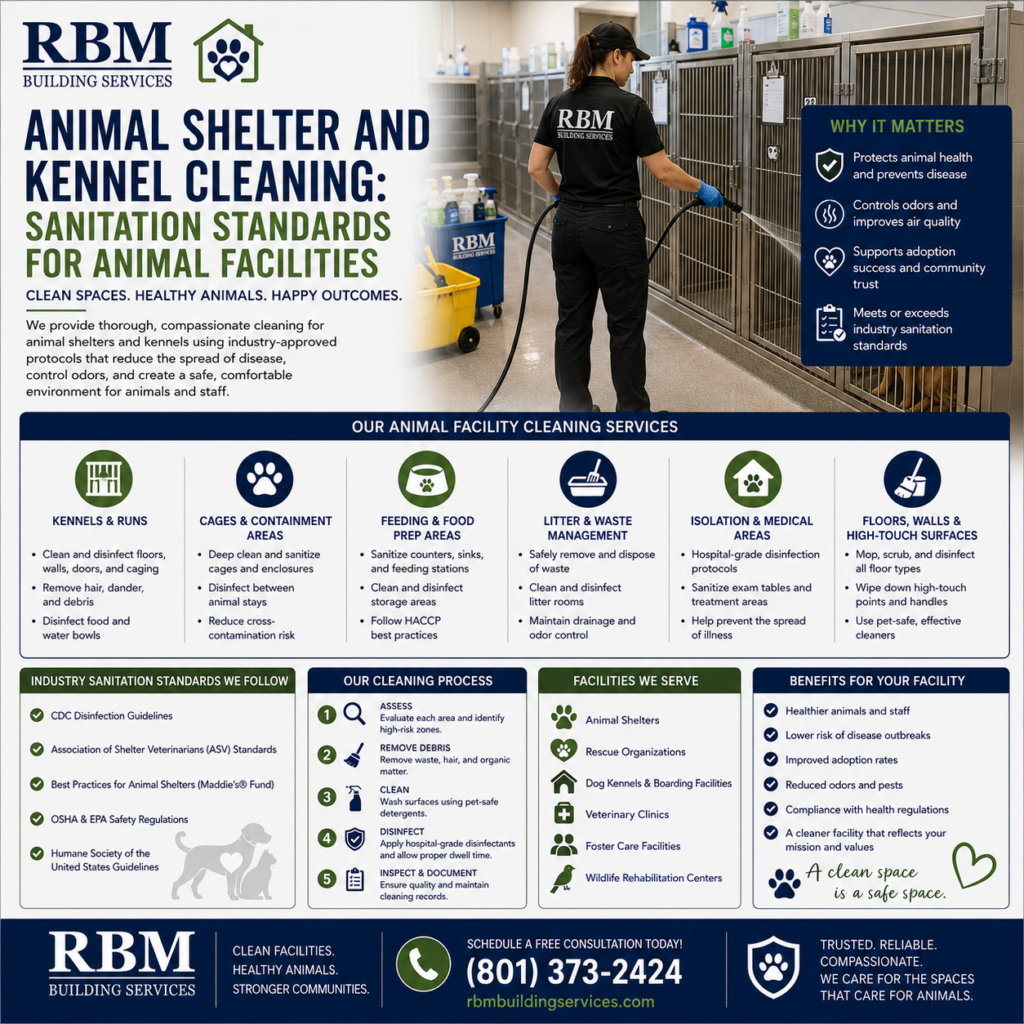
Animal shelter and kennel cleaning is the specialized process of removing organic waste, applying appropriate disinfectants, and maintaining a hygienic environment in facilities that house dogs, cats, and other animals to prevent disease transmission and protect animal and human health. Unlike standard commercial cleaning, this work requires knowledge of pathogen types (parvovirus, distemper, Giardia, ringworm), EPA-registered disinfectant selection, proper dilution and contact times, and risk-based cleaning protocols that prioritize vulnerable populations like puppies, kittens, and immunocompromised animals. The most important takeaway is that cleaning must always come before disinfecting—organic matter like urine, feces, and vomit neutralizes most disinfectants, so skipping the physical removal step renders chemical treatment ineffective and puts every animal in the facility at risk. This comprehensive guide explains the core steps of animal shelter and kennel cleaning, the most common mistakes that lead to disease outbreaks and regulatory violations, and practical strategies to build a safe, efficient, and compliant sanitation program. Whether you are currently dealing with a parvovirus outbreak or planning ahead to modernize your facility’s protocols, expert guidance from an experienced animal facility cleaning professional like RBM Services can help you achieve better outcomes and protect your animals.

What Is Animal Shelter and Kennel Cleaning and How Does It Work?
Animal shelter and kennel cleaning refers to the systematic, risk-based sanitation of facilities where animals are housed, examined, and cared for—including primary enclosures (kennels, cages, runs), common areas (play yards, intake rooms, grooming areas), medical isolation units, and outdoor spaces. This specialized service goes beyond general janitorial work—it requires understanding of pathogen transmission routes, appropriate disinfectant selection for specific organisms, and material-specific protocols for stainless steel cages, concrete floors, and porous surfaces.
Key Components and Parties Involved
-
Shelter directors, kennel managers, and facility supervisors who oversee daily operations and compliance
-
Animal care staff and volunteers who perform routine cleaning and disinfection of enclosures
-
Veterinarians and veterinary technicians who manage medical isolation areas and outbreak response
-
Professional cleaning contractors who provide deep cleaning, odor removal, and specialized sanitation services
Governing Rules, Frameworks, and Industry Standards
Several industry standards and guidelines apply to animal shelter cleaning:
-
Association of Shelter Veterinarians (ASV) Guidelines for Standards of Care in Animal Shelters: Requires written sanitation plans for all areas where animals are present, including enclosures, common-use areas, foster homes, and outdoor spaces. Defines cleaning as physical removal of organic matter, disinfection as chemical pathogen kill, and sanitation as the combination of both.
-
EPA-registered disinfectants: Must be used according to label instructions for dilution and contact time; products must be effective against targeted pathogens (e.g., parvovirus, distemper, Giardia, ringworm).
-
State and local animal welfare regulations: Many jurisdictions require daily cleaning of enclosures, written protocols, and staff training on sanitation procedures.
Industry best practices recommend a four-step sanitation protocol: (1) tidying and removal of organic matter, (2) washing with detergent and hot water, (3) disinfecting with EPA-registered product at correct dilution and contact time, and (4) drying before returning animals.
Common Variations and Approaches
- Spot cleaning: Daily removal of soiled bedding, visible feces, and spilled food/water while animals remain in enclosures.
-
Daily sanitation: Full cleaning and disinfection of enclosures, even if occupied by the same animal, to reduce pathogen load and odor.
-
Deep cleaning between occupants: Complete sanitation of enclosures, including scrubbing, disinfecting, and air drying, before a new animal is housed.
-
Outbreak cleaning: Enhanced protocols with stronger disinfectants, extended contact times, and isolation of affected areas during disease outbreaks (e.g., parvovirus, kennel cough).
General Timeline and Process Flow
A typical kennel sanitation cycle follows this sequence:
-
Remove animals from the enclosure before sanitation begins—never spray or hose animals directly.
-
Remove organic matter: Scoop feces, remove soiled bedding, and dispose of food waste in sealed bags.
-
Pre-wet surfaces: Apply detergent with low-pressure foamer and hot water to loosen grime.
-
Scrub thoroughly: Use bristle brushes to remove biofilm and debris from all surfaces, including walls, floors, and kennel furniture.
-
Rinse: Remove detergent with low-pressure hose or water spritz and paper towels.
-
Apply disinfectant: Dilute according to label, spray evenly, and allow prescribed contact time (typically 5–10 minutes).
-
Rinse and dry: Remove disinfectant residue, squeegee surfaces, and allow to air dry completely before returning animals.
What Is Included—and What Is Not
Professional animal shelter cleaning typically includes kennel and cage sanitation, common area disinfection, outdoor run cleaning, odor removal, and waste management. It does not include veterinary medical treatment, pest extermination, or structural repairs—these require specialized technicians.
Real-world example: A municipal animal shelter in California houses 150 dogs and 100 cats. Daily, staff perform spot cleaning of all enclosures, remove soiled bedding, and disinfect high-touch surfaces. Weekly, a professional crew deep cleans all kennels with foaming disinfectant, scrubs concrete floors, and pressure-washes outdoor runs. Between occupants, each kennel undergoes full four-step sanitation with 10-minute disinfectant contact time. During a parvovirus outbreak, the shelter switches to accelerated hydrogen peroxide disinfectant with extended contact time and isolates affected areas.
How an Experienced Professional Helps You Succeed With Animal Shelter and Kennel Cleaning
Partnering with a knowledgeable animal facility cleaning specialist like RBM Services provides end-to-end support that protects animal health and simplifies compliance.
Guidance Through Every Step
From initial assessment to ongoing maintenance, an experienced provider helps you map critical cleaning tasks, set realistic schedules, and integrate them into daily operations without disrupting animal care.
Proper Preparation and Execution
Professionals use EPA-registered disinfectants compatible with animal shelter surfaces, foaming applicators for extended contact time, and specialized equipment like auto-scrubbers and pressure washers to remove stubborn biofilm and odor. They follow manufacturer instructions for each product and avoid damaging sensitive materials.
Risk Management
Licensed contractors carry liability insurance, follow OSHA chemical safety standards, and maintain Safety Data Sheets for all products used—reducing your exposure to worker injuries and regulatory violations.
Troubleshooting and Dispute Resolution
If an outbreak occurs or an inspection cites a sanitation issue, a professional can help identify root causes (e.g., inadequate contact time, wrong product selection) and implement corrective actions quickly.
Compliance With Relevant Rules
Experts align your cleaning program with ASV Guidelines, state animal welfare regulations, and EPA disinfectant requirements—keeping you inspection-ready year-round.
Proactive Strategies
Beyond cleaning, professionals offer staff training refreshers, written protocol development, and seasonal deep cleaning plans to prevent problems before they arise.
How to Choose the Right Professional for Animal Shelter and Kennel Cleaning
Use this checklist when evaluating providers:
-
Relevant experience: Ask for examples of animal shelter, kennel, veterinary clinic, or boarding facility cleaning projects.
-
Knowledge of ASV Guidelines and EPA disinfectants: Ensure they understand four-step sanitation, pathogen-specific disinfectant selection, and contact time requirements.
-
Clear communication: They should explain their process in plain English and provide written documentation.
-
Availability and responsiveness: Can they accommodate 24/7 emergency response and off-hours deep cleaning around animal care schedules?
-
Comprehensive approach: Do they offer kennel sanitation, common area disinfection, outdoor run cleaning, odor removal, and compliance documentation?
-
Long-term partnership: Will they help establish cleaning schedules, written protocols, and prevention strategies, not just one-time cleaning?
RBM Services is an experienced commercial cleaning professional that provides animal shelter and kennel cleaning, sanitation standards for animal facilities, and comprehensive facility maintenance services tailored to the unique needs of animal care environments.
Contact RBM Building Services
Clean, Healthy Homes for Animals
RBM Building Services, serving animal facilities across Utah, Arizona, Nevada, and Texas since 1974, provides specialized sanitation programs for shelters and kennels. Call 800.403.3564 or visit our contact page.
About RBM: Since 1974. Services include full-service janitorial, building maintenance, carpet cleaning, window washing, pressure washing, floor care. Call 800.403.3564.