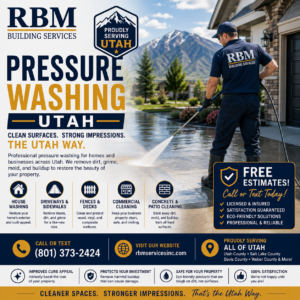
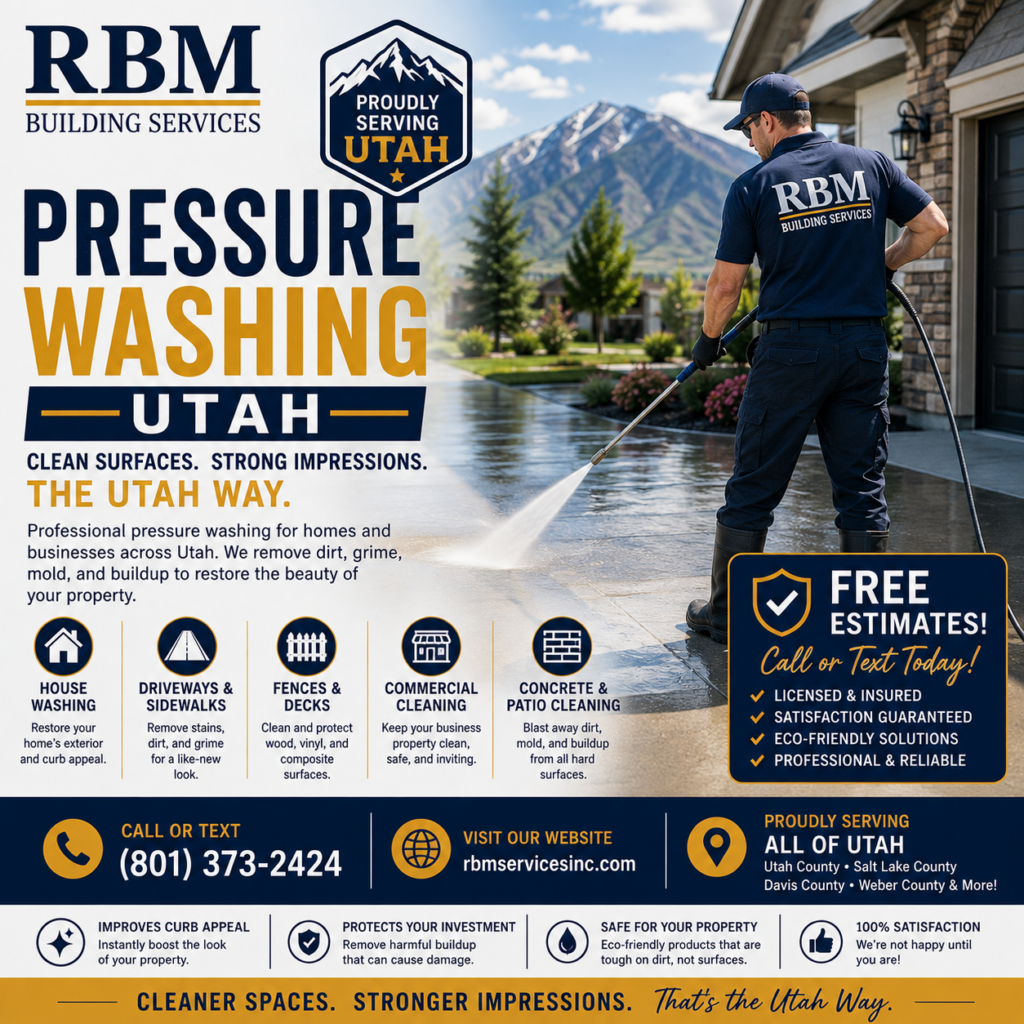
Pressure washing in Utah is an effective way to remove dirt, dust, mud, road film, algae, mildew, mineral residue, cobwebs, oil spots, and other outdoor buildup from concrete, driveways, sidewalks, patios, decks, fences, siding, storefronts, and commercial properties. Done correctly, it can improve curb appeal, reduce slip hazards, protect exterior materials, and help a home or business look maintained. Done incorrectly, however, it can scar concrete, strip paint, force water behind siding, damage wood or masonry, kill landscaping, or send contaminated wash water into a storm drain.
The most important takeaway is simple: the right result depends more on the operator’s method than on raw pressure. Different surfaces require different water pressure, nozzle angles, cleaning solutions, dwell time, rinsing procedures, and wastewater controls. A concrete driveway can tolerate a very different process than vinyl siding, painted wood, stucco, composite decking, or delicate stone. This guide explains how pressure washing works, where it is appropriate, common mistakes, Utah stormwater concerns, safety issues, service options, and how to choose a qualified provider. For practical guidance or a customized exterior-cleaning plan, contact RBM Services at (801) 373-2424.

What Is Pressure Washing in Utah and How Does It Work?
Pressure washing is the use of pressurized water to remove soil and buildup from outdoor surfaces. A pressure washer uses a pump to increase water pressure and send it through a hose and nozzle. The operator controls cleaning power through several factors:
- Water pressure, measured in pounds per square inch, or PSI
- Water flow, measured in gallons per minute, or GPM
- Nozzle size and spray angle
- Distance between the nozzle and the surface
- Water temperature, when hot-water equipment is used
- Cleaning solution or detergent selection
- Dwell time, or how long a product sits before rinsing
- Agitation, surface cleaning, or specialized equipment
- Rinsing technique and wastewater control
Pressure washing is often used as a general term, but several approaches exist.
| Method | How it works | Best for | Main limitation |
| Pressure washing | Uses pressurized water to remove soil and buildup | Concrete, sidewalks, patios, driveways, sturdy hard surfaces | Can damage soft or painted materials if pressure is too high |
| Power washing | Uses pressurized heated water | Grease, oil, commercial surfaces, heavy grime | Heat and pressure increase the risk of surface damage |
| Soft washing | Uses low pressure with appropriate cleaning solutions | Siding, roofs, delicate surfaces, painted trim | Requires correct chemical handling and thorough rinsing |
| Surface cleaning | Uses a rotary surface-cleaner attachment | Large flat concrete areas | May not clean edges or detailed areas by itself |
| Spot treatment | Uses targeted product and limited pressure | Oil stains, gum, rust, specific buildup | Results vary with stain age and surface condition |
Typical Pressure-Washing Process
A professional pressure-washing service should generally follow these steps:
- Inspect the property and surface.
- Identify material type, staining, and potential damage.
- Protect nearby landscaping, doors, outlets, windows, vehicles, and vulnerable surfaces.
- Apply appropriate cleaning solutions when needed.
- Allow adequate dwell time without allowing products to dry improperly.
- Use the correct pressure, nozzle, distance, and movement for the surface.
- Contain or manage wash water appropriately.
- Rinse thoroughly and inspect results.
- Explain any permanent stains, damage, or maintenance recommendations.
Pressure washing is not a repair service. It can remove many types of dirt and organic buildup, but it cannot restore concrete that is permanently etched, repair cracked masonry, replace failed paint, reverse sun fading, fix loose siding, or remove every stain from every surface.
8 Important Things to Know About Pressure Washing Utah
1. More Pressure Is Not Better
The biggest misconception about exterior cleaning is that higher pressure automatically produces a better result. In reality, too much pressure is one of the fastest ways to damage a property.
Pressure can leave permanent wand marks in concrete, carve lines into wood, shred window screens, strip paint, force water behind siding, loosen mortar, damage caulking, and scar composite materials. The right cleaning method depends on the surface and the contamination—not on using the most powerful machine available.
For example, a heavily soiled concrete driveway may need a surface cleaner, appropriate degreaser, controlled pressure, and a final rinse. Vinyl siding often requires a low-pressure washing process with a compatible cleaning solution and careful upward or downward rinse technique that avoids driving water behind panels. Painted wood, stucco, older brick, and soft stone may require even more caution.
The operator’s distance and angle matter as much as machine PSI. Holding a narrow-angle nozzle too close to a surface can damage it even when the machine is not at its maximum setting. A wider fan pattern, greater distance, lower pressure, or soft-wash approach may clean more safely.
A professional should identify the material first, test an inconspicuous area when appropriate, and adjust the method based on the surface. Do not assume that a surface is durable simply because it is outdoors. Older paint, deteriorated wood, cracked grout, loose mortar, weathered seals, and aging siding may fail under pressure.
RBM Services can help determine whether traditional pressure washing, low-pressure soft washing, or a specialty method is more appropriate for your Utah property.
2. Utah Weather and Soil Create Unique Exterior-Cleaning Needs
Utah properties encounter a range of conditions that can affect exterior surfaces. Dust, windblown soil, pollen, irrigation overspray, hard-water mineral deposits, snowmelt residue, road grime, de-icing materials, spring debris, and seasonal moisture can all affect driveways, siding, patios, walkways, storefronts, and entryways.
The right time for pressure washing depends on the surface and weather conditions. In general, exterior cleaning is easier and safer when temperatures are above freezing, the forecast does not call for immediate freezing conditions, surfaces can dry properly, and landscaping can be protected.
Winter conditions deserve extra attention. Driveways and sidewalks may accumulate grit, de-icing residue, mud, and moisture. However, pressure washing when temperatures are too low can create ice hazards, make drying difficult, and increase risk for people walking on the property.
Hard-water staining is another common issue in Utah. Irrigation overspray can leave white, chalky mineral deposits on concrete, glass, stone, siding, and decorative surfaces. Pressure alone may not remove those deposits because the issue is mineral buildup rather than loose dirt. Improper acids or aggressive products can damage surfaces, so the cleaning approach must match the material.
A property owner should also consider nearby landscaping, irrigation schedules, drainage slopes, outdoor electrical outlets, doors, windows, and loose building materials. A professional exterior-cleaning plan accounts for these site conditions before water is applied.
3. Soft Washing Is Often Safer for Siding and Delicate Surfaces
Soft washing uses lower water pressure combined with cleaning solutions chosen for the surface and the type of buildup being removed. It is often appropriate for siding, painted surfaces, trim, fencing, exterior walls, some roof-related cleaning situations, and other materials that could be damaged by high-pressure washing.
The key idea is that the cleaning solution does much of the work, while the water is used to apply and rinse rather than blast away contaminants. The right solution can help loosen organic growth, grime, dust, and surface film so it can be safely rinsed away at a lower pressure.
Soft washing is not automatically harmless. Products must be used according to their labels, mixed correctly, kept off sensitive surfaces when necessary, and rinsed thoroughly. Nearby plants, landscaping, outdoor furniture, windows, electrical components, and painted finishes must be protected.
A poor soft-washing job can still create problems if chemicals dry on glass, damage vegetation, discolor metal, or leave residue. The operator should pre-wet and protect plants when appropriate, monitor solution strength, prevent overspray, and rinse surrounding surfaces carefully.
Homeowners should be skeptical of any company that claims one method is right for every exterior surface. A responsible provider should explain why a low-pressure method, pressure washing method, or specialty treatment is appropriate for the specific material.
For instance, pressure washing a weathered cedar fence with excessive force can raise the grain, leave stripes, and reduce the lifespan of the wood. A controlled low-pressure approach may clean it more gently, though the condition of the wood and finish must still be evaluated.
4. Concrete Cleaning Requires Proper Technique to Avoid Stripes and Damage
Concrete is durable, but it is not indestructible. Driveways, sidewalks, patios, parking lots, pool decks, garage floors, and commercial entryways can become stained by dirt, tire marks, oil, rust, irrigation minerals, organic matter, and weather-related residue.
One of the most common pressure-washing mistakes is “wand striping.” This happens when an operator uses a pressure-washer wand unevenly, overlaps poorly, holds the nozzle too close, or cleans only visible paths rather than treating the entire surface consistently. The result can be permanent-looking lines or uneven areas that are worse than the original dirt.
Professional concrete cleaning may involve:
- Dry sweeping or debris removal
- Pre-treatment for oil, algae, mineral deposits, or organic staining
- Controlled use of a rotary surface cleaner
- Edge-detailing with appropriate pressure
- Thorough rinsing
- Wastewater management
- Post-cleaning inspection for permanent stains or damage
Oil staining is especially important to set expectations. Fresh oil may respond better than deeply absorbed oil. Pressure alone often spreads oil or pushes it into pores. A proper degreaser, dwell time, agitation, absorbent material, and repeated treatment may be required. Even then, older stains may lighten without disappearing completely.
Concrete can also be damaged by pressure if it is old, weak, cracked, spalling, improperly cured, coated, or already deteriorating. Pressure washing cannot repair surface failure, and aggressive cleaning can make pre-existing damage more visible.
5. Roof Cleaning Requires Extra Caution
Roof cleaning is one of the highest-risk exterior-cleaning services. It involves fall hazards, fragile roofing materials, water management, landscaping protection, and manufacturer-related considerations. High-pressure washing is generally not appropriate for many roofing materials because it can remove protective granules, damage shingles, force water under roofing components, or shorten the roof’s service life.
If a roof has staining, moss, algae, lichen, or surface debris, the appropriate solution depends on the roof type, condition, slope, age, manufacturer instructions, and local environment. A professional should inspect the roof, identify loose or damaged materials, and determine whether cleaning is appropriate at all.
A homeowner should never assume that dark roof streaks, moss, or debris are purely cosmetic. They may indicate a maintenance concern, moisture pattern, damaged drainage, or the need for a roofing professional rather than a pressure-washing provider.
The safest approach is to use only a method appropriate for the roofing material and to avoid walking on roofs unless necessary and properly controlled. Pressure-washing equipment also creates trip hazards through hoses, wet surfaces, and changing footing.
If you are considering roof cleaning, ask RBM Services what method is appropriate for the material and whether the job should involve another qualified specialty professional. Do not authorize high-pressure roof cleaning without understanding the risk to the roof system.
6. Wash Water Must Not Be Treated Like Harmless Rainwater
Pressure-washing water can carry dirt, oil, detergents, paint particles, grease, chemicals, debris, and other pollutants. That is why outdoor wash-water management is a critical concern in Utah.
Storm drains are generally designed to carry stormwater, not polluted wash water. The Utah Department of Transportation defines an illicit discharge as anything entering a storm-drain system that is not composed entirely of stormwater, with limited exceptions.
Salt Lake City’s stormwater program also emphasizes the importance of preventing stormwater pollution and provides reporting resources for illegal discharge or dumping into storm drains.
For pressure washing, this means the provider should assess where water will flow before work begins. Depending on the site, appropriate controls may include:
- Blocking or covering storm-drain inlets when permitted and safe
- Using berms, sandbags, or containment methods
- Directing water to an approved sanitary connection where allowed
- Vacuum recovery or collection equipment
- Reducing water use
- Dry cleanup before washing
- Selecting compatible products and minimizing chemical use
- Collecting contaminated wash water for proper disposal
Local rules and site conditions vary. For example, South Jordan advises that wash water should be poured into a janitorial or mop sink rather than onto parking lots, streets, alleys, or storm drains.
Property owners should ask their pressure-washing provider how wash water will be managed, especially for commercial parking lots, oil-stained concrete, grease areas, restaurant exteriors, fleet areas, or locations near storm drains.
7. Cleaning Chemicals Require Knowledge and Control
Exterior-cleaning products can be effective, but the wrong product or concentration can damage property and create environmental or health risks. Common cleaning categories may include detergents, degreasers, surfactants, rust removers, mineral-deposit removers, organic-growth treatments, and specialty cleaners.
The right product depends on what is being removed and what it is being removed from. A cleaner suitable for concrete may damage natural stone. A product that removes mineral deposits may harm metal, glass, paint, or landscaping if used incorrectly. A strong degreaser may leave residue or discolor certain surfaces if not thoroughly rinsed.
Safe practices include:
- Reading and following the product label
- Using the minimum effective concentration
- Testing small, inconspicuous areas when appropriate
- Wearing suitable personal protective equipment
- Avoiding incompatible chemical mixtures
- Protecting landscaping and nearby surfaces
- Preventing overspray and runoff
- Keeping products in labeled containers
- Following disposal and wastewater requirements
For workers, OSHA’s Hazard Communication Standard requires employers to communicate hazards associated with workplace chemicals through labels, safety data sheets, and training.
Homeowners should not attempt to solve difficult stains by mixing household chemicals. Mixing products can create toxic gases, heat, surface damage, or dangerous reactions. If a stain is difficult—especially rust, battery acid, oil, paint, efflorescence, or irrigation mineral buildup—seek professional guidance before applying aggressive chemicals.
8. Safety Risks Are Real, Even for Small Jobs
Pressure washers can cause serious injuries. High-pressure spray can cut skin, inject water or contaminants beneath the skin, damage eyes, cause slips, knock objects over, and create electrical hazards. Gas-powered equipment can also create carbon-monoxide risks when used in enclosed or poorly ventilated spaces.
Basic safety practices include:
- Never pointing the spray at people, pets, hands, feet, windows, or electrical equipment
- Wearing eye protection and appropriate footwear
- Keeping children and bystanders away from the work area
- Checking hoses, connections, and triggers before use
- Using a grounded electrical setup for electric units
- Keeping electrical connections out of standing water
- Using wet-floor signs or barriers where people may walk
- Never operating gas-powered equipment in an enclosed space
- Depressurizing the system before servicing or storing equipment
- Avoiding ladders while actively spraying whenever possible
An injury from high-pressure water should be taken seriously. Even a small-looking wound may involve deeper tissue damage or contamination. Seek prompt medical evaluation for a pressure-injection injury.
For commercial providers, safety planning should include equipment inspection, hazard communication, personal protective equipment, training, traffic control, wet-surface management, and procedures for working near customers, vehicles, building entrances, or public sidewalks.
The Real Cost of Getting Pressure Washing Wrong
Poor pressure washing can create more than a disappointing visual result.
Financial Costs
Too much pressure can damage siding, strip paint, gouge wood, etch concrete, tear screens, break seals, damage outdoor fixtures, or harm landscaping. Repainting, replacing siding, repairing decks, fixing damaged roofing materials, or restoring stained surfaces can cost far more than professional cleaning.
Commercial properties can also incur costs when unmanaged wash water carries grease, oil, dirt, or chemicals into storm drains. Cleanup, compliance concerns, customer complaints, and business disruption may follow.
Time Costs
A poor job may require repeat cleaning, repair work, landscaping replacement, repainting, or coordination with property managers, insurers, contractors, and maintenance teams. Do-it-yourself work that begins as a weekend project can become a long repair project if the wrong method is used.
Safety and Liability Costs
Wet walkways, uncontrolled hoses, overspray, slippery surfaces, and poorly managed work zones create risks for visitors, employees, family members, and customers. A commercial site must also consider vehicle traffic, customer access, ADA routes, entrances, and public sidewalks.
Long-Term Property Costs
Exterior maintenance helps protect property appearance and can support the life of surfaces, but repeated aggressive cleaning can shorten that life. The goal should be to clean safely enough to remove buildup while preserving the material underneath.
Most problems are avoidable with inspection, correct equipment, appropriate products, controlled pressure, site protection, and responsible wash-water management.
How RBM Services Helps With Pressure Washing Utah
RBM Services provides practical guidance for Utah exterior cleaning needs, including pressure washing, soft washing, concrete cleaning, commercial exterior maintenance, entryway cleaning, patio cleaning, sidewalk cleaning, and surface-specific cleaning plans.
An experienced provider begins by evaluating the material, contamination, drainage, surrounding landscaping, access, safety conditions, and desired results. That assessment helps determine whether traditional pressure washing, low-pressure soft washing, surface cleaning, chemical treatment, or a different specialty approach is appropriate.
RBM Services can help customers with:
- Driveway, sidewalk, patio, and concrete cleaning
- Exterior building and storefront cleaning
- Entryway and high-traffic commercial cleaning
- Low-pressure and soft-wash considerations for delicate surfaces
- Oil, dirt, mineral-deposit, and organic-buildup assessment
- Wash-water planning and site-specific exterior-cleaning procedures
- Seasonal exterior-maintenance planning
A professional provider should set realistic expectations. Pressure washing can improve appearance dramatically, but it cannot repair structural damage, restore failed finishes, erase every old stain, or replace maintenance that belongs to a roofer, painter, mason, or restoration specialist.
For a tailored Pressure Washing Utah assessment, contact RBM Services at (801) 373-2424.
Pressure Washing Options and Strategies
Standard Pressure Washing
Standard pressure washing uses pressurized water to remove surface soil and buildup. It is often suitable for durable concrete, sidewalks, patios, driveways, parking areas, and other sturdy materials.
It works best when the operator uses correct pressure, nozzle selection, and movement. Its limitation is that it can damage softer materials, painted surfaces, older concrete, damaged masonry, wood, and some types of siding.
Soft Washing
Soft washing relies on lower pressure and compatible cleaning solutions. It is often appropriate for siding, painted trim, fences, delicate surfaces, and areas where high pressure could cause damage.
Its limitation is that the operator must manage solutions carefully. Incorrect dilution, overspray, inadequate rinsing, or poor landscaping protection can cause damage.
Hot-Water Power Washing
Hot-water cleaning may be useful for greasy commercial surfaces, restaurant exteriors, heavy oil residue, equipment-adjacent areas, and other soils that respond better to heat.
Its limitation is that heat increases risk around delicate surfaces, sealants, coatings, and certain materials. It also requires greater safety precautions and may not be necessary for ordinary residential dirt.
Surface Cleaning
A rotary surface-cleaner attachment provides consistent cleaning for broad, flat areas such as driveways, sidewalks, patios, and commercial walkways. It often produces a more even result than wand-only cleaning.
Its limitation is that edges, corners, stairs, and detailed areas still require separate work. It also cannot correct permanent discoloration or concrete damage.
Spot Treatment and Specialty Cleaning
Targeted treatments may be appropriate for oil, rust, mineral deposits, gum, paint residue, algae, or other difficult stains. The process depends on the stain and surface.
Its limitation is that stain removal is not guaranteed. Some stains are deeply embedded, chemically altered, or permanently etched into the surface.
What To Do If You Need Pressure Washing Now
- Identify the surface: concrete, siding, deck, fence, brick, stone, roof, storefront, parking lot, or another material.
- Identify the problem: dirt, algae, mildew, mineral deposits, oil, tire marks, paint, rust, mud, or general weathering.
- Take clear photos of the affected areas and nearby surfaces.
- Note potential risks: storm drains, landscaping, vehicles, electrical outlets, loose paint, cracks, damaged siding, or roof concerns.
- Avoid mixing chemicals or applying strong cleaners without knowing whether they are compatible with the material.
- Do not use high pressure on roofing, delicate siding, painted wood, old masonry, windows, or unknown surfaces.
- Keep children, pets, and visitors away from wet work areas.
- Ask how the provider will protect landscaping and manage wash water.
- Request a written scope identifying surfaces, methods, limitations, and exclusions.
- Contact RBM Services at (801) 373-2424 for a pressure-washing assessment and appropriate exterior-cleaning plan.
How To Choose the Right Pressure Washing Provider
Use this checklist when comparing pressure-washing services in Utah:
- Surface knowledge: The provider should explain why a specific pressure, nozzle, solution, or soft-wash method is appropriate for each surface.
- Site inspection: A quality provider asks about material type, staining, age, damage, drainage, landscaping, and access.
- Wash-water planning: Ask how runoff and contaminated wash water will be managed around storm drains and landscaping.
- Safety procedures: Look for clear procedures for wet surfaces, public access, equipment, electrical hazards, and protective gear.
- Chemical awareness: The provider should use products responsibly and explain how plants, windows, and sensitive surfaces will be protected.
- Realistic expectations: Avoid providers who promise to remove every stain or repair damaged surfaces through washing.
- Written scope: The estimate should identify the areas to be cleaned, method, exclusions, and possible add-on needs.
- Communication: The company should explain scheduling, preparation, drying, access, and what the customer should do before and after service.
- Commercial capability: For commercial sites, confirm the provider can address traffic patterns, customer access, waste-water controls, and after-hours scheduling where needed.
For a clear, property-specific exterior-cleaning plan, contact RBM Services at (801) 373-2424.
Common Pressure-Washing Mistakes
- Using maximum pressure on every surface: Different materials require different methods; excessive force can cause permanent damage.
- Holding the nozzle too close: Even moderate equipment can scar wood, concrete, paint, and siding when used at close range.
- Ignoring wash-water runoff: Water carrying dirt, oil, detergents, or chemicals should not be allowed to enter storm drains.
- Using the wrong chemical: Strong acids, bleach solutions, degreasers, and rust removers can harm surfaces, plants, and nearby materials.
- Pressure washing a roof: High pressure can damage roofing materials and create water-intrusion risks.
- Skipping surface testing: A small test area can reveal surface sensitivity, paint instability, or cleaning limitations.
- Washing in freezing or unsafe weather: Wet surfaces can become icy and hazardous, while cold conditions can affect cleaning performance.
- Assuming all stains are removable: Old oil, rust, hard-water etching, paint, and permanent discoloration may not disappear completely.
Key Rules, Safety, and Environmental Standards
Pressure washing in Utah involves several overlapping safety and environmental responsibilities.
- Stormwater protection: Non-stormwater discharges to storm drainage systems can be prohibited or controlled. Utah transportation and municipal programs identify wash water, chemicals, oils, and debris as materials that should not enter storm drains.
- Local wastewater rules: Municipal rules may direct wash water to an approved sanitary connection or require containment and collection. South Jordan specifically advises against pouring wash water into streets, alleys, parking lots, or storm drains.
- Chemical safety: OSHA’s Hazard Communication Standard requires employers to provide chemical-hazard information through labels, safety data sheets, and worker training when hazardous chemicals are used in the workplace.
- Workplace safety: Pressure-washing providers should address slip hazards, eye protection, electrical risks, equipment inspections, chemical exposure, hoses, traffic control, and high-pressure injuries.
- Manufacturer instructions: Surface manufacturers, including roofing, siding, decking, window, and coating manufacturers, may provide specific maintenance and cleaning guidance. Those instructions should be considered before cleaning.
Disclaimer: This article provides general educational information about Pressure Washing Utah. It is not legal, environmental, safety, construction, roofing, plumbing, or engineering advice. Local stormwater and wastewater requirements vary by city, county, property type, and the contaminants involved. Surface conditions and manufacturer requirements also vary. Consult the appropriate local authority, manufacturer, or qualified professional before using chemicals, discharging wash water, or cleaning sensitive, damaged, historic, high-risk, or restricted surfaces.
Conclusion
Pressure washing can dramatically improve the appearance of Utah homes and businesses, but the best results come from using the right method for the surface. Concrete, patios, sidewalks, siding, decks, roofs, storefronts, and commercial entryways each require different levels of pressure, cleaning chemistry, equipment, safety controls, and wash-water planning.
Most pressure-washing problems are preventable. Avoid the temptation to use maximum pressure, do not send contaminated wash water into storm drains, protect landscaping and delicate materials, and set realistic expectations for old stains and existing damage. A careful inspection and surface-specific cleaning plan are the most reliable path to a cleaner property without unnecessary risk.
For professional Pressure Washing Utah guidance and a customized exterior-cleaning plan, contact RBM Services at (801) 373-2424.